
Turbine systems feel different from compressor-based setups because they deliver a finer, more uniform spray. You get better atomization and consistent application, which enhances overall effectiveness. With less material waste and lower operational costs, turbine systems also require less maintenance than compressors. This precision makes them ideal for tasks needing meticulous detail. If you want to know more about how these differences impact performance, there’s plenty more to explore.

Get business pricing on tools and workshop supplies
- Business-only prices and quantity discounts
- Tax-exempt purchasing
- Multiple users, one account, clear invoices
Key Takeaways
- Turbine systems produce finer and more uniform spray patterns, enhancing precision in applications compared to compressors.
- Compressors struggle with atomization quality, leading to uneven coverage and potential overspray issues.
- Turbine systems minimize material waste, making them more cost-effective for long-term use than compressors.
- Maintenance for turbine systems is typically lower, resulting in reduced downtime and operational costs compared to compressors.
- The suitability of turbine systems for precision tasks ensures consistent and high-quality results, unlike compressor systems which may hinder performance.
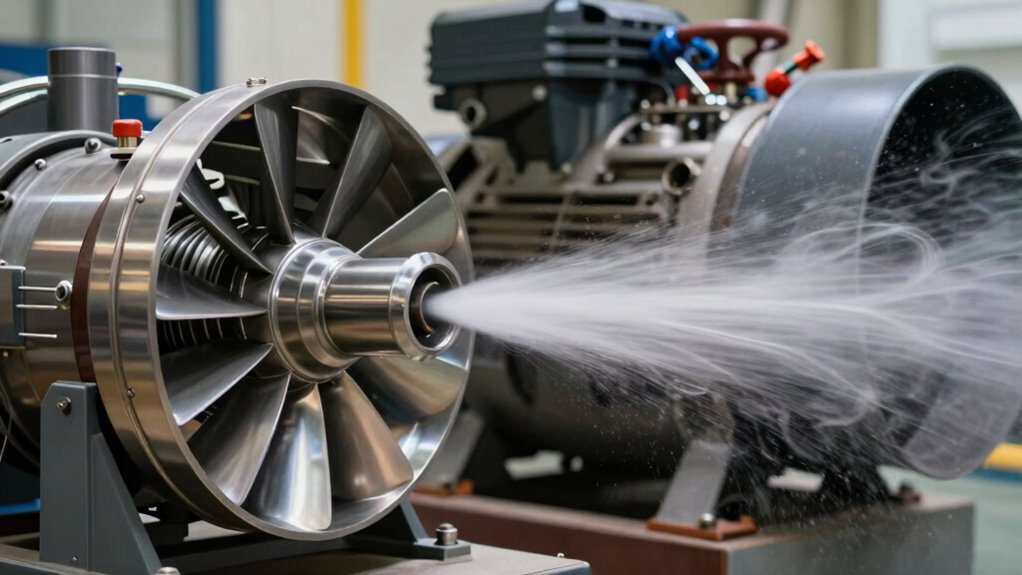
When it comes to industrial applications, choosing between turbine and compressor spray systems can considerably impact efficiency and performance. You might notice that turbine systems feel different from compressor-based setups, and understanding why can help you make better decisions for your operations.
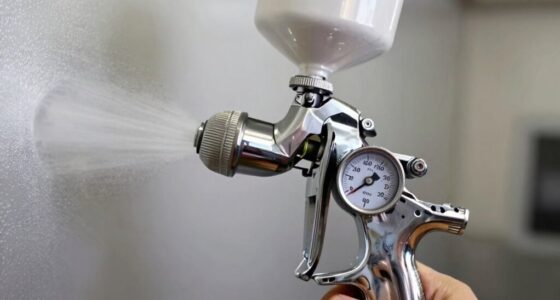
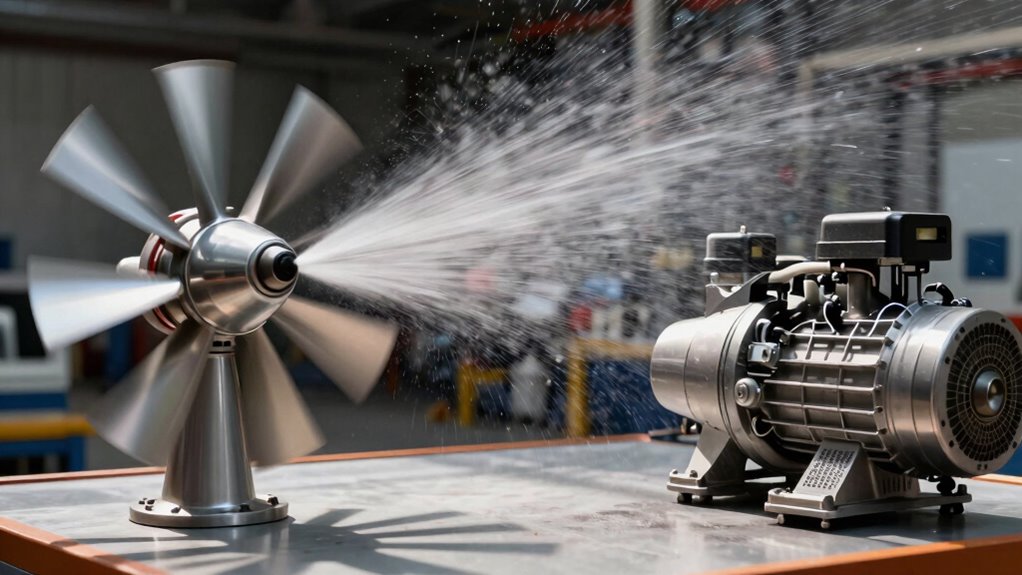
One key factor is turbine efficiency. Turbine systems often deliver finer and more uniform spray patterns, which can enhance the overall effectiveness of your processes. This improved atomization means that you can achieve better coverage and distribution of materials, leading to more consistent results. If you’re looking for precision in your applications, turbine systems usually excel in this area, making them ideal for tasks requiring meticulous attention to detail.
Turbine systems deliver superior spray patterns, enhancing atomization for better coverage and consistency in precision applications.
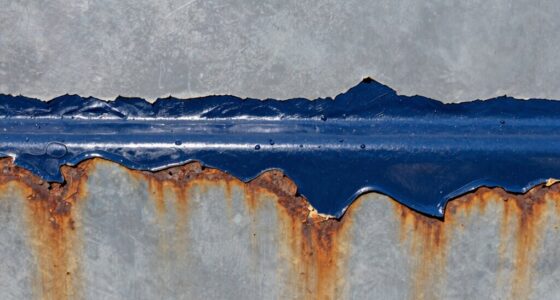
On the other hand, compressor limitations can hinder performance in specific applications. While compressors can produce adequate spray patterns, they often struggle with finer atomization, which can lead to uneven coverage. This inconsistency can impact the quality of your final products, especially in industries like coatings or food processing, where uniformity is critical. If you’ve ever experienced issues with overspray or uneven application, it’s likely tied to the limitations of a compressor system. Additionally, the atomization quality of turbine systems often results in less material waste, making them more cost-effective in the long run.
Maintenance differences between the two systems are also worth considering. Turbine systems generally require less maintenance than their compressor counterparts. This reduced need for upkeep can save you time and money in the long run. With compressors, you often face more frequent maintenance tasks, such as checking for leaks, oiling components, and ensuring proper airflow. Proper system design can also contribute to easier maintenance and better performance. If you’re managing a busy operation, the last thing you need is to deal with constant compressor issues.
turbine spray system for industrial applications
As an affiliate, we earn on qualifying purchases.
As an affiliate, we earn on qualifying purchases.
Frequently Asked Questions
How Do Turbine Systems Affect Spray Pattern Uniformity?
Turbine systems considerably enhance spray distribution and uniformity. They create a consistent droplet size, which helps achieve an even coverage across surfaces. Unlike compressor-based setups, turbine systems generate a more controlled airflow, allowing for better atomization. This leads to fewer clumps and more precise application. You’ll notice that the resulting spray pattern minimizes overspray and maximizes efficiency, making your work easier and more effective.
What Maintenance Is Required for Turbine Spray Systems?
To keep your turbine spray system running smoothly, regularly inspect turbine components for wear and tear. You’ll want to clean filters and nozzles frequently to guarantee peak performance. Depending on usage, maintenance frequency can vary; aim for at least quarterly checks. Don’t forget to lubricate moving parts and replace worn components when needed. Staying on top of these tasks helps maintain efficiency and extends the life of your system.
Can Turbine Systems Handle Different Fluid Viscosities?
Yes, turbine systems can handle a variety of fluid viscosities. You’ll find that their design accommodates a broad viscosity range, making them versatile for different applications. Just verify you check the fluid compatibility to avoid issues. If you’re using thicker or thinner fluids, adjust your settings accordingly to maintain peak performance. Keeping these factors in mind will help you get the best results from your turbine system.
Are Turbine Systems More Energy-Efficient Than Compressors?
Absolutely, turbine systems can be more energy-efficient than compressors. Imagine a sleek sports car zipping down the highway—this is how turbines slice through energy consumption, minimizing operational costs. With their streamlined design, they convert energy into motion more effectively, reducing waste. You’ll notice lower electricity bills and improved performance. While both systems have their merits, turbines often deliver a smoother ride regarding energy efficiency, making them a smart choice for many applications.
How Do Noise Levels Compare Between Turbine and Compressor Setups?
Turbine systems generally produce less noise than compressor setups due to their efficient turbine design, which focuses on noise reduction. You’ll notice that turbine systems often operate more quietly, making them ideal for environments where sound levels matter. While compressors can create a noticeable hum or roar, turbines minimize vibrations and airflow turbulence, leading to a more pleasant working atmosphere. So, if noise is a concern, you might prefer turbine systems.
Conclusion
In the grand showdown between turbine and compressor spray systems, it’s like comparing a rollercoaster to a merry-go-round! Turbine systems whip up an exhilarating dance of fluid dynamics, while compressors play it safe, like a gentle stroll in the park. You can practically feel the difference in your bones! So, the next time you choose a spray system, remember—do you want the thrill of a ride that makes your heart race or a smooth cruise that lulls you to sleep?
Halloween Picks
halloween
As an affiliate, we earn on qualifying purchases.