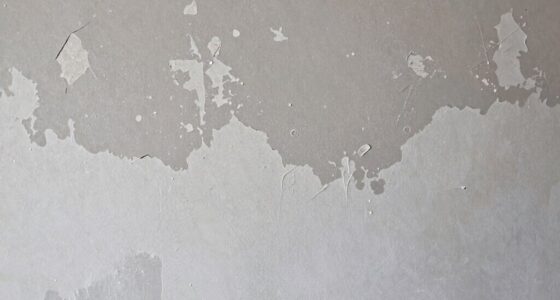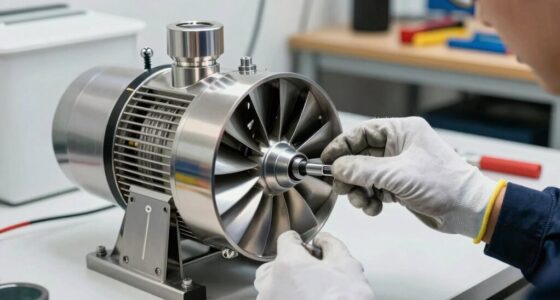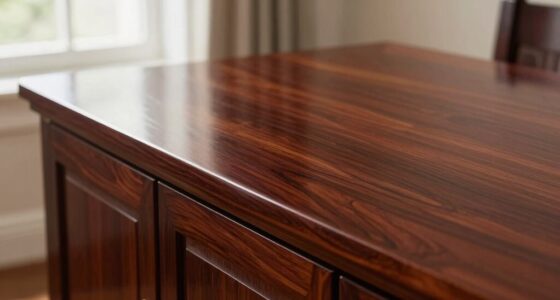

To prevent dust nibs, control indoor airflow by using HEPA air purifiers and keeping your workspace well-ventilated without stirring up dust. Seal surfaces with a primer or sealer before painting to create a dust barrier and guarantee surfaces are smooth and properly dried. Keep your space tidy, vacuum often, and wipe down surfaces with a damp cloth. Managing humidity and spacing out painting sessions during less dusty times also helps. Keep exploring for more tips to achieve a flawless finish.

Get business pricing on tools and workshop supplies
- Business-only prices and quantity discounts
- Tax-exempt purchasing
- Multiple users, one account, clear invoices
Key Takeaways
- Seal surfaces with primer or sealer before applying final coats to prevent dust nib formation.
- Use controlled airflow and HEPA air purifiers to minimize airborne dust during painting.
- Schedule painting during less dusty times, like early mornings or late evenings.
- Keep the workspace clean by regularly wiping surfaces and vacuuming to reduce dust presence.
- Allow proper drying time between coats and after sealing to ensure a smooth, dust-free finish.
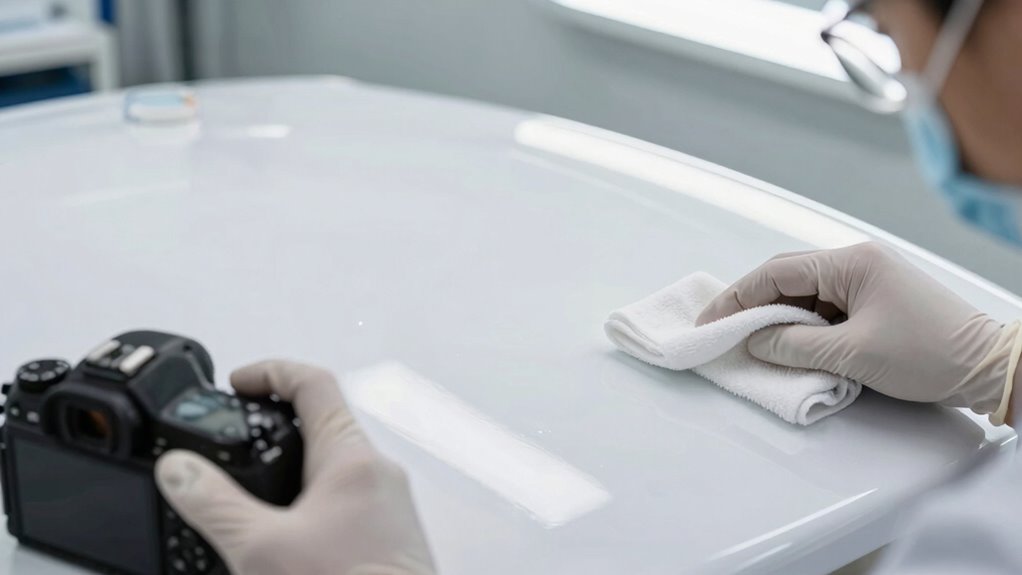
Dust nibs often appear on your painted surfaces when dust particles settle into wet paint or varnish, ruining the smooth finish you’re aiming for. To prevent this, you need to focus on controlling the environment in which you’re working. Good air filtration is essential. Use high-quality air purifiers with HEPA filters to remove airborne dust, pollen, and other particles that could land on your freshly painted surface. Keep the workspace well-ventilated but avoid open windows or fans that can stir up dust. Instead, opt for controlled airflow, which minimizes airborne debris. Regularly clean the air filters in your workspace, and consider setting up temporary air filtration systems if you’re working in a particularly dusty environment. This proactive step reduces the number of particles floating around and settling into your wet paint.
Use HEPA air purifiers and controlled airflow to minimize dust settling on wet paint.
Another key step is surface sealing, which creates a barrier that helps keep dust from settling into your paint. Before applying your final coat, verify the surface is properly sealed with a compatible primer or sealer. This layer not only enhances adhesion but also reduces the chances of dust nibs forming later on, especially if some dust manages to settle despite your efforts. When applying the sealer, do so in thin, even coats, and allow each layer to dry completely before proceeding. This careful approach minimizes surface imperfections that can trap dust and makes subsequent coats more uniform. Additionally, controlling indoor air quality by managing humidity levels can help prevent dust from becoming airborne in the first place. Proper humidity control can also reduce static that attracts dust to surfaces.
Timing also plays an essential role in preventing dust nibs. Plan your painting sessions during times when the environment is less dusty—early mornings or late evenings often have fewer airborne particles. Keep the workspace free of unnecessary clutter, and cover furniture or nearby surfaces with drop cloths to prevent dust from settling on those areas and migrating onto your work. When you’re ready to paint, avoid rushing; slow, deliberate strokes help maintain a smooth finish and reduce the chances of dragging dust into the paint. Proper workplace organization can also make a significant difference in reducing dust contamination. Additionally, controlling indoor air quality by managing humidity levels can help prevent dust from becoming airborne in the first place.
Finally, maintaining a clean workspace is indispensable. Regularly wipe down surfaces and vacuum the area to keep dust levels low. Use a damp cloth rather than a dry one to trap dust rather than just moving it around. Ensuring proper ventilation during and after painting can also help clear residual dust particles from the air more quickly. By combining effective air filtration, surface sealing, proper timing, and a clean environment, you create ideal conditions that greatly reduce the risk of dust nibs forming. Taking these steps before you begin painting ensures a smoother, more professional finish, saving you time and effort in touch-ups later.
HEPA air purifier for painting rooms
As an affiliate, we earn on qualifying purchases.
As an affiliate, we earn on qualifying purchases.
Frequently Asked Questions
Can Dust Nibs Occur on All Types of Paint Finishes?
Dust nibs can occur on all types of paint finishes if dust control isn’t maintained and paint consistency isn’t achieved. You need to keep your workspace clean and free of airborne particles, especially during the drying process. Ensuring your paint has the right consistency helps it flow smoothly, reducing the chances of dust nibs forming. By controlling dust and maintaining proper paint consistency, you minimize imperfections on any finish.
What Tools Are Best for Detecting Dust Nibs Early?
You should use a bright, portable light or magnifying glass for dust particle identification, enabling you to spot dust nibs early. Inspection techniques like close visual checks and raking light help reveal surface imperfections. A flashlight held at a shallow angle highlights dust particles, allowing you to identify nibs before they set. These tools and methods are essential for early detection, helping you correct issues before finishing touches are applied.
How Does Humidity Affect Dust Nib Formation?
Humidity control plays a vital role in dust nib formation, as higher humidity levels reduce dust particle adhesion to surfaces. When the air is moist, dust particles are less likely to stick, preventing nibs. Conversely, low humidity causes dust to cling more firmly, increasing the risk. You should maintain ideal humidity levels to minimize dust nibs, ensuring a smoother finish. Proper humidity regulation is essential for consistent, high-quality results.
Are There Specific Primers That Reduce Dust Nibs?
Yes, using primers designed to improve primer adhesion can help reduce dust nibs. Look for primers that seal surface contaminants and create a smooth base, preventing dust particles from sticking and forming imperfections. Applying a high-quality, dust-resistant primer guarantees better adhesion and minimizes surface issues. Be sure to follow the manufacturer’s instructions for proper application and drying times, which also contribute to a flawless finish free of dust nibs.
Can Surface Preparation Prevent Dust Nibs Effectively?
Surface preparation can effectively prevent dust nibs if you thoroughly remove surface contamination and use proper painter techniques. Start by cleaning the surface to eliminate dust, grease, and dirt, ensuring a smooth base. Sand lightly to create a uniform texture, and always use quality primers designed to minimize dust nibs. Applying paint in controlled, even strokes reduces the chance of dust settling on wet surfaces, resulting in a flawless finish.
Conclusion
By staying proactive and maintaining a clean workspace, you markedly reduce the chances of dust nibs ruining your projects. Regularly cleaning your tools and surfaces can cut down dust buildup by up to 80%, saving you time and frustration in the long run. Remember, prevention is always better than correction. Keep these habits consistent, and you’ll enjoy smoother finishes and more professional results every time. Dust nibs won’t stand a chance when you stay one step ahead.
Fall yard work Picks
leaf blowers
As an affiliate, we earn on qualifying purchases.