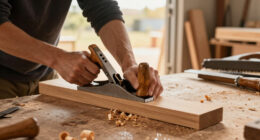
Dust nibs are tiny imperfections caused by residual dust particles that cling to your tools and surfaces during sanding, resulting in unwanted marks and a rough finish. To prevent them, keep your workspace clean with tack cloths or compressed air, switch to finer grits, and regularly wipe down surfaces. Use dust collection systems and gentle sanding techniques to minimize debris. Stick with these tips, and you’ll learn more ways to achieve smooth, professional results every time.

Get tools and workshop supplies delivered free — and shop member deals
- Fast, free delivery on millions of items
- Access to Prime Big Deal Days deals on October 6–7
- Prime Video, Amazon Music and more included
Key Takeaways
- Keep your workspace clean and free of dust using tack cloths or compressed air before sanding.
- Use fine grit sandpaper and a gradual sanding process to minimize dust nib formation.
- Employ dust collection systems or vacuum attachments during sanding to reduce airborne dust.
- Regularly clean tools and surfaces to prevent residual dust from causing imperfections.
- Practice gentle, consistent sanding motions and change sandpaper frequently to achieve a smooth finish.

Dust nibs are tiny particles of dust or debris that cling to your printing or writing tools, often causing unwanted marks or imperfections on your work. When you’re working with wood or other surfaces, dust nibs can be a persistent problem, especially after sanding. Wood dust, in particular, is notorious for settling on your project and sticking to your tools, creating tiny specks that show up once you finish. To prevent this, understanding how dust nibs form and applying effective sanding tips is essential.
Most dust nibs happen because dust particles, like wood dust, linger on your sanding tools or your workpiece. When you sand, these particles get pressed into the surface, leaving behind small bumps or marks. The key to avoiding this is to keep your tools and workspace clean. Regularly wiping down your surface and tools with a tack cloth or compressed air can remove loose dust that would otherwise settle during sanding. Additionally, choosing the right sanding tips—such as using finer grit sandpaper—can help you achieve smoother surfaces and reduce the chances of dust nibs forming.
Using proper technique is equally important. You want to sand in a consistent, gentle motion, avoiding excessive pressure that can push dust into the material rather than removing it. Always start with a coarser grit to shape the surface, then switch to finer grits to refine it. This gradual approach minimizes the chance of dust nibs, as the finer grits smooth out the surface and reduce surface imperfections. When sanding wood, it’s especially crucial to clean the surface frequently, as wood dust tends to cling stubbornly and can easily be trapped under the surface if not removed regularly. Incorporating air purification techniques or tools can further improve the cleanliness of your workspace by reducing airborne dust particles, leading to better results.
Another sanding tip is to change your sandpaper frequently. Worn-out or clogged sandpaper loses its effectiveness and can deposit more dust rather than remove it. Fresh sandpaper produces cleaner results and helps prevent dust nibs. Using a dust collection system or a vacuum attachment can further reduce airborne wood dust and debris, keeping everything cleaner as you work. This also minimizes the chance of dust settling back onto your project before you finish sanding.
dust collection system for woodworking
As an affiliate, we earn on qualifying purchases.
As an affiliate, we earn on qualifying purchases.
Frequently Asked Questions
Can Dust Nibs Be Completely Eliminated With Proper Techniques?
Yes, dust nibs can be nearly eliminated with proper sanding techniques. By using fine-grit sandpaper, maintaining consistent pressure, and sanding in the direction of the grain, you reduce the chances of dust nibs forming. Additionally, applying a primer or filler before sanding helps smooth the surface. Regularly cleaning your work area and tools also prevents dust nibs from sticking, ensuring a flawless finish every time.
Are Certain Wood Types More Prone to Dust Nib Formation?
Certain wood types are more prone to dust nib formation due to their wood characteristics, such as softer or more porous surfaces. These traits can affect finish adhesion, making dust nibs harder to avoid. You should pay close attention to these woods, use proper sanding techniques, and apply suitable finishes to minimize dust nibs. By understanding the wood’s nature, you can prevent dust nibs and achieve a smoother, professional-looking finish.
How Does Humidity Affect Dust Nib Development?
Environmental humidity critically affects dust nib development, so maintaining proper moisture control is key. When humidity levels are too low, wood dries out quickly, increasing the likelihood of dust nibs forming during sanding. Conversely, higher humidity helps keep the wood surface more stable and less prone to dust nibs. To prevent this, monitor and regulate environmental humidity, ensuring ideal conditions for a smooth finish and reduced nib formation.
What Tools Are Best for Removing Stubborn Dust Nibs?
Removing stubborn dust nibs can feel like battling a mountain of cement, but the right tools make it easier. Use fine-grit sandpaper or a detail sander for precise sanding techniques, ensuring you don’t damage the surface. A craft knife or small file can also help get into tight spots. Select tools based on nib size and surface type, and work carefully to achieve a smooth, flawless finish.
Can Dust Nib Prevention Methods Be Applied to Painted Surfaces?
Yes, dust nib prevention methods can be applied to painted surfaces. You should focus on dust control during surface preparation to minimize dust settling on wet paint or freshly coated surfaces. Keep the work area clean, use tack cloths regularly, and cover surrounding areas. Properly preparing the surface and maintaining a dust-free environment helps prevent dust nibs, ensuring a smooth, flawless finish without the need for extensive sanding later.
Conclusion
By understanding and preventing dust nibs, you might believe you can eliminate sanding forever. While it’s tempting to think perfection is achievable, dust nibs are a natural part of woodworking that even pros deal with. But with the right prevention plan, you can drastically reduce them and enjoy a smoother finish. So, don’t let dust nibs discourage you—embrace the process, improve your technique, and take pride in every flawless project you complete.
Fall yard work Picks
leaf blowers
As an affiliate, we earn on qualifying purchases.