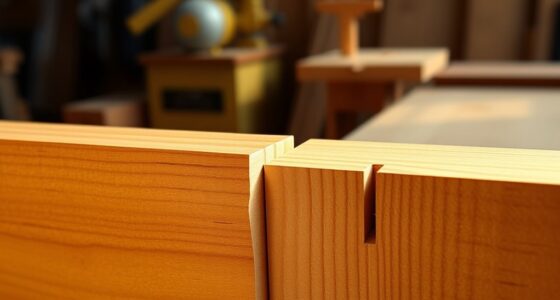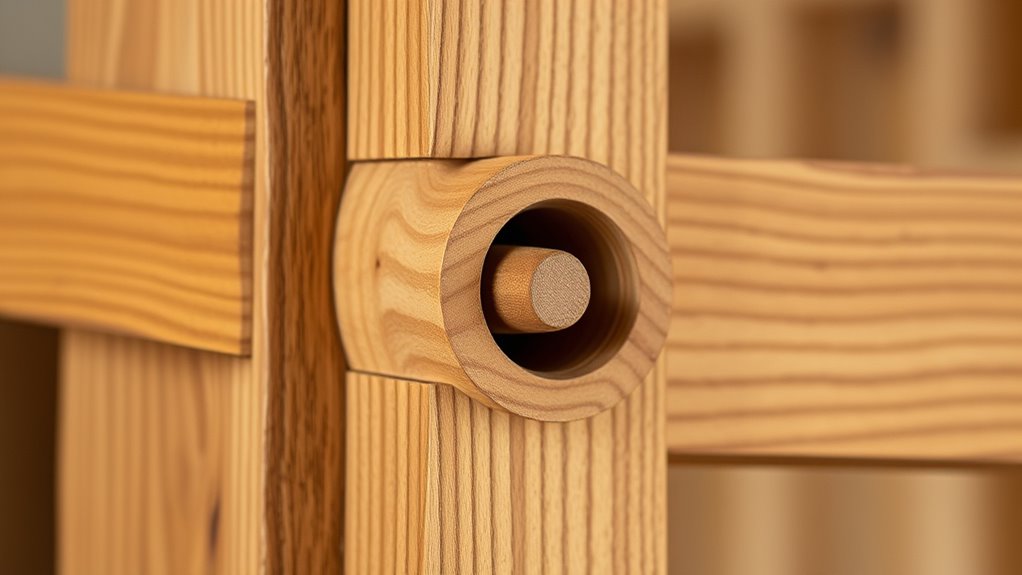
Mortise and tenon joints are a time-tested method for creating strong, durable frames in woodworking. This technique involves fitting a protruding tenon into a matching mortise, forming a tight, mechanical connection that resists pulling apart. It handles stress well and distributes loads evenly, making it ideal for furniture and framing projects. When crafted properly, these joints provide longevity and aesthetic appeal. Keep exploring to uncover more tips on mastering this classic joinery technique.

Get business pricing on tools and workshop supplies
- Business-only prices and quantity discounts
- Tax-exempt purchasing
- Multiple users, one account, clear invoices
Key Takeaways
- Mortise and tenon joints have been used for centuries to create strong, durable wood connections without fasteners.
- They distribute structural loads evenly, ensuring stability and long-term durability in frames.
- Modern tools like routers and jigs allow precise cutting for tight-fitting, high-strength joints.
- Properly crafted joints are resistant to pulling apart and handle stress effectively.
- Their seamless appearance and mechanical interlock make them ideal for high-quality furniture and framing projects.
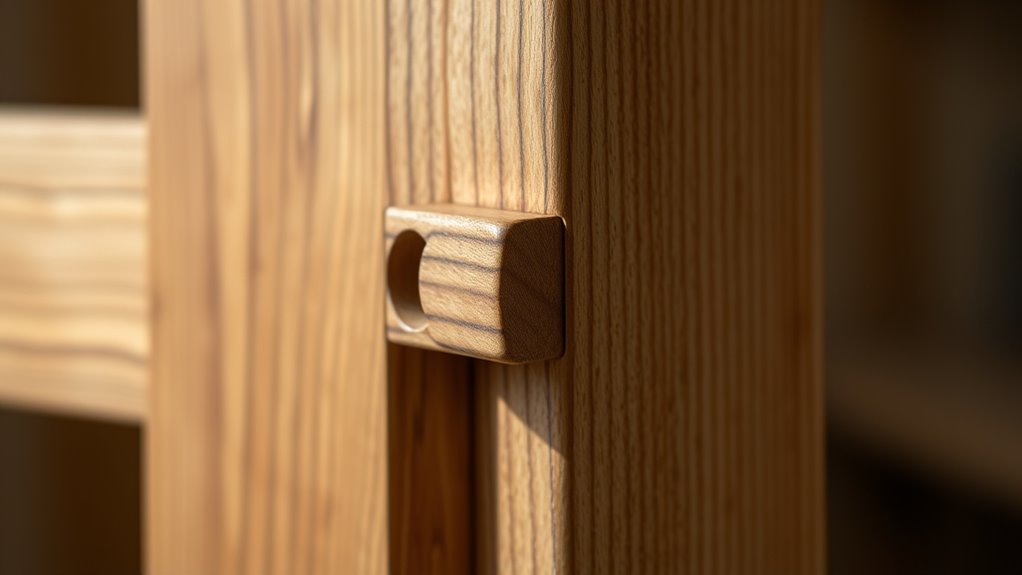
Mortise and tenon joints are a fundamental woodworking technique used to connect two pieces of wood securely. This traditional method has stood the test of time, playing an essential role in woodworking history for centuries. Originally developed by ancient craftsmen, these joints allowed artisans to create strong, durable frameworks without relying on nails or screws. Over time, the technique has been refined, but its core principles remain unchanged. Today, the mortise and tenon continues to be a go-to joint for furniture makers, woodworkers, and carpenters seeking reliability and craftsmanship. Its enduring popularity speaks to its proven strength and versatility, especially in constructing frames, doors, and furniture.
In modern applications, you’ll find the mortise and tenon joint used in both traditional and contemporary projects. While advanced power tools and machinery make the process faster, the fundamental technique remains the same. Modern woodworkers often use routers, mortising machines, or jigs to cut precise mortises and matching tenons, ensuring tight fits and structural integrity. This adaptability makes it suitable for a wide range of applications, from high-end custom furniture to architectural woodwork. The joint’s ability to handle stress and weight makes it ideal for framing, where stability is essential. Whether in a handcrafted dining table or a bespoke door frame, the mortise and tenon provides a level of strength that modern fasteners sometimes can’t match.
You’ll appreciate how this joint allows for a clean, seamless look, especially when crafted with care. The mortise is a cavity cut into one piece of wood, while the tenon is a protruding piece on the adjoining wood, designed to slide into the mortise. When assembled, the joint is often secured with glue, wedges, or pegs, adding extra strength. Its mechanical interlock distributes loads evenly and resists pulling apart, making it perfect for structural components. This makes it especially valuable in framing systems, where long-term stability is essential. Proper joinery technique ensures the joint remains durable and visually appealing over time. Plus, with some practice, you can master the technique to produce joints that are not only strong but also aesthetically pleasing.
mortise and tenon woodworking joints
As an affiliate, we earn on qualifying purchases.
As an affiliate, we earn on qualifying purchases.
Frequently Asked Questions
What Are the Common Mistakes to Avoid When Cutting Mortise and Tenon Joints?
When cutting mortise and tenon joints, you should avoid misalignments that can weaken the connection. Make certain your joint alignment is precise to ensure a tight fit. Be cautious of wood splitting; use proper tools and techniques to prevent this issue. Rushing the process or applying too much force can cause damage. Taking your time and double-checking measurements will help you create strong, durable joints without common mistakes.
How Do Mortise and Tenon Joints Compare to Modern Fasteners?
When it comes to comparing mortise and tenon joints with modern fastening methods, you’re getting a classic powerhouse in wooden joinery. These joints offer durability and a timeless strength that fasteners like nails or screws can’t match. While modern methods are quick and convenient, they often lack the same level of craftsmanship and long-term stability. Think of it as trading speed for a bond that truly stands the test of time.
Can Mortise and Tenon Joints Be Used in Outdoor Furniture?
Yes, you can use mortise and tenon joints in outdoor furniture. They offer excellent outdoor durability and weather resistance when properly crafted and sealed. By choosing rot-resistant hardwoods and applying protective finishes, you guarantee your joints withstand outdoor elements. Regular maintenance, like resealing, helps prolong their strength and appearance, making mortise and tenon joints a reliable, traditional choice for beautiful, long-lasting outdoor furniture.
What Tools Are Essential for Creating Precise Mortise and Tenon Joints?
You need essential hand tools like chisels, a marking gauge, and a mallet to create precise mortise and tenon joints. A dovetail saw helps you cut accurately, while a square ensures your measurements are spot-on. Use measurement techniques such as marking out carefully and double-checking dimensions to guarantee a perfect fit. These tools and techniques help you achieve strong, clean joints that last.
How Long Does It Take to Master Making Traditional Mortise and Tenon Joints?
You can expect the learning curve for mastering traditional mortise and tenon joints to take several months of consistent practice. Skill development varies depending on your experience and dedication, but with patience, you’ll notice steady improvement. It often takes around 20-50 hours of hands-on work to develop decent proficiency, while becoming truly skilled may require ongoing practice over a year or more. Stay persistent, and your craftsmanship will improve steadily.
Conclusion
By choosing mortise and tenon joints, you guarantee your frames are built to last with traditional strength. Imagine constructing a farmhouse door that withstands years of heavy use—this joint’s reliability keeps it sturdy over time. Whether for furniture or framing, embracing this classic technique means investing in durability and craftsmanship. So, next time you build, consider the mortise and tenon—your project’s strength depends on it.
Fall Picks
fall essentials
As an affiliate, we earn on qualifying purchases.