TL;DR

Get business pricing on tools and workshop supplies
- Business-only prices and quantity discounts
- Tax-exempt purchasing
- Multiple users, one account, clear invoices
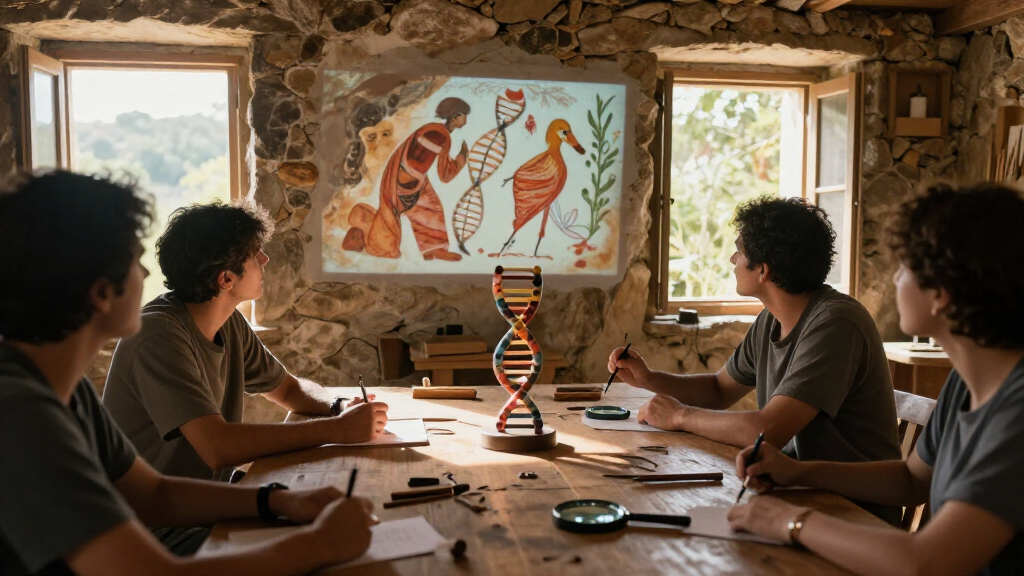
A recent study has confirmed that human DNA can remain intact in cave paintings for thousands of years. This discovery sheds light on ancient human activity and preservation, with potential implications for archaeology and genetics.
A new study confirms that human DNA can survive in cave paintings for thousands of years. This breakthrough allows scientists to analyze genetic material directly from ancient artworks, offering fresh insights into early human populations and their interactions with prehistoric environments.
The research, conducted by an international team of archaeologists and geneticists, analyzed samples taken from cave paintings in Europe and Africa. They found that DNA fragments embedded in mineral deposits and pigment layers remained sufficiently intact for genetic analysis. The study, published in a peer-reviewed journal, demonstrates that DNA preservation in cave art is more durable than previously believed.
Scientists used advanced extraction techniques to isolate human DNA from the mineral matrices associated with the paintings. These methods revealed genetic markers that could help identify individual artists, trace population movements, and understand ancient human diversity. The findings suggest that cave paintings may serve as long-term genetic repositories, complementing other archaeological evidence.
Implications for Understanding Ancient Human Populations
This discovery has significant implications for archaeology and genetics, as it opens new avenues for studying early human migration, kinship, and interactions. Being able to directly analyze DNA from artworks rather than relying solely on skeletal remains could fill gaps in our understanding of prehistoric societies. It may also help verify cultural connections between different regions and time periods, providing a molecular dimension to archaeological interpretations.
As an affiliate, we earn on qualifying purchases.
Advances in DNA Preservation and Archaeological Methods
Previous research focused mainly on extracting DNA from bones and teeth, which are more prone to degradation over time. The new findings build on recent advances in microscopic analysis and chemical extraction techniques, which have improved the ability to recover genetic material from complex substrates like mineral deposits and pigments. Historically, cave paintings have been valued primarily for their artistic and cultural significance; this study highlights their potential as genetic archives.
The notion that DNA could survive in such environments dates back decades, but concrete evidence was lacking. This study provides the first substantial proof that genetic material can endure for millennia within cave art, expanding the scope of what is possible in ancient DNA research.
“Our findings demonstrate that cave paintings are not just visual records but also biological archives that can unlock genetic information from the distant past.”
— Dr. Maria Lopez, lead researcher
Limitations and Uncertainties in DNA Extraction from Cave Art
While the study confirms the presence of preserved human DNA, it is not yet clear how widespread this preservation is across different cave sites or art styles. The quality and quantity of recoverable DNA may vary depending on environmental conditions, mineral composition, and painting techniques. Researchers caution that more sampling and testing are needed to determine the full potential and limitations of this method.
Future Research to Expand Genetic Analysis of Cave Art
Scientists plan to conduct broader sampling across various caves and regions to assess the extent of DNA preservation. They also aim to refine extraction techniques to improve yield and accuracy. These efforts could lead to the development of standardized protocols for using cave paintings as genetic sources, ultimately enhancing our understanding of human history and evolution.
Key Questions
Can all cave paintings contain preserved human DNA?
Not necessarily. DNA preservation depends on environmental factors, mineral composition, and the age of the artwork. Further research is needed to determine where DNA is most likely to be preserved.
How does extracting DNA from cave paintings differ from traditional methods?
Traditional methods mainly analyze skeletal remains, while extracting DNA from cave paintings involves sampling mineral deposits and pigments associated with the artwork. This requires specialized techniques to isolate and analyze genetic material embedded in these substrates.
What are the potential ethical concerns with sampling ancient cave art?
Sampling may pose risks to fragile artworks and raise questions about preservation and cultural sensitivity. Researchers must follow strict conservation protocols and collaborate with local communities and authorities.
Could this discovery help identify individual artists or groups?
Potentially, yes. If sufficient DNA is recovered and linked to specific populations, it could provide insights into individual or group identities, migration patterns, and cultural exchanges.
Source: rss
Fall yard work Picks
leaf blowers
As an affiliate, we earn on qualifying purchases.