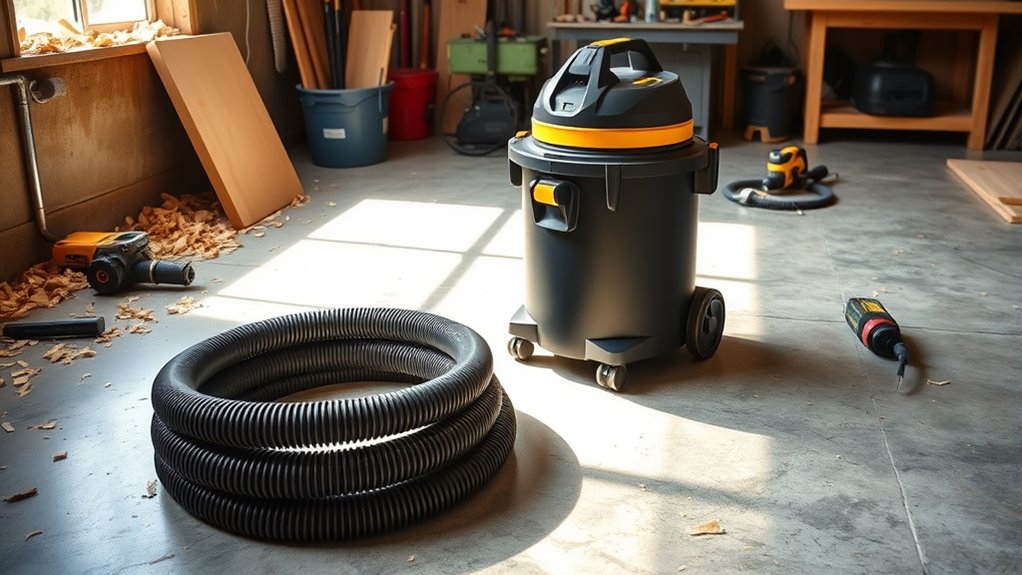

Among these high-CFM shop vacuums for workshops, I’d give the Vacmaster Professional Beast 14-Gallon the best-overall spot for its balance of capacity and workshop-ready power. The DEWALT DXV16P-QTA STEALTHSONIC stands out for quieter operation in a larger format, while the Farag Janitorial JM773 is the specialized choice for buyers who prioritize a two-motor industrial design. The main tradeoff is between airflow and capacity on one side, and noise, storage space, and easy movement on the other. Peak horsepower alone does not tell you how well a vacuum will capture dust through a long or narrow hose. Read on for the full breakdown, comparison criteria, and advice on matching a vacuum to your workshop.

Get business pricing on tools and workshop supplies
- Business-only prices and quantity discounts
- Tax-exempt purchasing
- Multiple users, one account, clear invoices
Complete the kit



Key Takeaways
- The Vacmaster Professional Beast 14-Gallon is my best-overall pick: it combines a substantial tank with a workshop-oriented design, without pushing buyers to the largest commercial-format machines.
- Large capacity is not the same as high airflow: a bigger tank reduces how often you empty it, while hose diameter, filter condition, and tool compatibility shape real dust pickup.
- The DEWALT DXV16P-QTA makes a different compromise: its STEALTHSONIC design suits workshops where noise matters, while still offering a 16-gallon format for larger cleanup jobs.
- Compact models fill a distinct role: the Vacmaster Beast 5-Gallon and the two DEWALT 6-Gallon STEALTHSONIC options are easier to store and move, but need more frequent emptying than larger vacuums.
- The Farag Janitorial JM773 is a specialist, not a default pick: its two-motor, 2000-watt design targets buyers seeking an industrial-style machine, while its size and less familiar format may be excessive for routine home-shop cleanup.


| high cfm shop vacuums for workshop | Capacity | Motor power | Hose length |
|---|---|---|---|
| Vacmaster 16-Gallon 6.5 Peak H | 16 gallons | — | — |
| Dapper Supply 26.5-Gallon Comm | — | — | — |
| DEWALT DXV16P-QTA 16-Gallon ST | 16 gallons | — | — |
| Shop-Vac 8 Gallon 6.0 Peak HP | — | 6.0 peak HP | 7 feet |
| Vacmaster Professional Beast S | 5 gallons | 1,320 W | 7 feet |
| DeWalt 6 Gallon Poly Wet/Dry S | 6 gallons | 4 HP | 7 feet |
| CRAFTSMAN 16-Gallon 6.5 Peak H | 16 gallons | 6.5 peak HP | 7 feet |
| Vacmaster Wet/Dry Vacuum with | 6 gallons | 5 peak HP | — |
| DEWALT 6-Gallon STEALTHSONIC U | 6 gallons | 5 peak HP | 7 feet |
| DEWALT STEALTHSONIC Wet Dry Sh | 6 gallons | 5 HP | 7 feet |
| Shop-Vac 12-Gallon Wet/Dry Sho | 12 gallons | — | 7 feet |
| Vacmaster Professional Beast 1 | — | 6.5 peak HP | — |
| Shop-Vac 5761011 10 Gallon Wet | 10 gallons | — | 7 feet |
| Vacmaster VOC812SF 8-Gallon St | — | — | — |
| Farag Janitorial JM773 Industr | — | — | — |
More Details on Our Top Picks
Vacmaster 16-Gallon 6.5 Peak HP Heavy-Duty Wet/Dry Vacuum
The 145 CFM airflow gives this Vacmaster a strong case for workshop cleanup, especially when you need to move sawdust and general debris across a broad floor area. Its 16-gallon tank also means fewer interruptions to empty it than with the compact 5-gallon Vacmaster Professional Beast. A 27-foot combined cleaning reach helps cover more of a garage without shifting the outlet, while the 10 accessories and onboard storage make switching between surfaces less fussy.
It is not the largest-capacity choice here: the Dapper Supply holds 26.5 gallons and lists higher airflow at 206 CFM. That model is a better fit for long cleanup sessions, but it is also heavier. This Vacmaster balances airflow, capacity, and reach more evenly; its tradeoffs are a corded setup and a 25.8-pound body that can be awkward to move. The large drain port is a practical bonus for wet work.
Pros:- 145 CFM airflow paired with a 16-gallon tank for substantial workshop cleanup
- 27-foot combined reach reduces how often the outlet needs to be changed
- Ten included accessories and onboard storage support varied tasks
- Large drain port and blower conversion add utility beyond dry debris pickup
Cons:- Corded power limits use away from available outlets
- At 25.8 pounds, it is less convenient to lift and reposition than the 5-gallon Vacmaster Professional Beast
Best for: Workshop owners who want strong listed airflow, a mid-to-large tank, and enough reach for routine floor and vehicle cleanup.
Not ideal for: Buyers who need the highest listed airflow or tank capacity in this group, or who frequently carry a vacuum between distant work areas.
- Capacity:16 gallons
- Airflow:145 CFM
- Peak horsepower:6.5 HP
- Power:Corded electric, 120 V, 12 A, 1440 W
- Cleaning reach:27 feet
- Included accessories:10, including cartridge and foam filters
- Weight:25.8 pounds
- Special features:Blower conversion, onboard storage, large drain port
Our verdict“Choose this Vacmaster for a capable balance of airflow, capacity, and reach, but pick the Dapper Supply if maximum listed CFM and tank size matter more.”
Dapper Supply 26.5-Gallon Commercial Wet/Dry Shop Vacuum
Among these five, the Dapper Supply has the highest stated airflow: 206 CFM, alongside a 26.5-gallon stainless steel tank. That combination suits workshops where cleanup runs are frequent or involve large amounts of debris and liquid. The Vacmaster 16-Gallon lists 145 CFM and is lighter, but this model offers more tank volume and airflow on paper, reducing the chance that a big job is interrupted by emptying.
The capacity comes with a handling cost. At 36 pounds and nearly 41 inches tall, it is less appealing for buyers who need to lift a vacuum into a vehicle or tuck it into a tight shop corner. Its 8.2-foot hose and 13.2-foot cord also give less stated reach than the Vacmaster’s 27-foot combined reach. A drain port, four wheels, and dual-filtration setup help with wet and dry cleanup, though the stated 78–80 dBA noise level may matter in shared spaces.
Pros:- Highest stated airflow in this group at 206 CFM
- 26.5-gallon stainless steel tank reduces emptying during larger cleanup jobs
- Built-in drain port supports disposal of collected liquids
- Four wheels and included attachments help with shop-floor use
Cons:- 36-pound weight and tall body make lifting and compact storage difficult
- The 8.2-foot hose and 13.2-foot cord offer less stated reach than the Vacmaster 16-Gallon
- Listed noise level is 78–80 dBA
Best for: Commercial or high-volume workshop users who prioritize the largest tank and highest listed airflow in this group over easy lifting and compact storage.
Not ideal for: Small-shop owners who need a lightweight vacuum, long reach without moving the unit, or a model that is easy to carry between floors.
- Tank capacity:26.5 gallons
- Airflow:206 CFM
- Maximum suction:26 kPa
- Water lift:80.4 inches
- Tank material:Stainless steel
- Hose and cord:8.2-foot hose; 13.2-foot power cord
- Filtration:HEPA filter
- Weight:36 pounds
- Noise level:78–80 dBA
Our verdict“Pick the Dapper Supply for high-volume cleanup where its 206 CFM and large tank outweigh its size, weight, and shorter stated reach.”
DEWALT DXV16P-QTA 16-Gallon STEALTHSONIC Wet/Dry Vacuum
The DEWALT DXV16P-QTA is the quiet-minded pick in this set: it is described as 50% quieter than the current model, while still listing 135 CFM airflow and a 16-gallon tank. That airflow is below the Vacmaster 16-Gallon’s 145 CFM and well below the Dapper Supply’s 206 CFM, so I would rank those models ahead for buyers focused strictly on maximum air movement. DEWALT’s case is a more balanced one for workshops where noise is a concern but a compact tank would require too many trips to empty.
A 20-foot power cord, four wheels, and a crush-resistant hose make it suited to garage or jobsite cleanup, and its accessory set covers common floor and crevice tasks. The supplied details do not give a combined reach figure, and the 7-foot hose is shorter than the Vacmaster’s stated 27-foot combined reach. Its 16-gallon body also takes more storage space than the 5-gallon Vacmaster Professional Beast.
Pros:- Described as 50% quieter than the current model
- 135 CFM airflow and 16-gallon capacity suit routine workshop cleanup
- 20-foot power cord provides useful outlet reach
- Includes a washable cartridge filter, dust bag, and multiple nozzles
Cons:- Listed airflow is lower than the Vacmaster 16-Gallon and Dapper Supply
- The 16-gallon body needs more storage room than compact options
- Seven-foot hose is shorter than the Vacmaster’s listed 27-foot combined reach
Best for: Garage and workshop users who want a full-size wet/dry vacuum with a stated noise-reduction design and a broad accessory set.
Not ideal for: Buyers whose main priority is the highest CFM, a small storage footprint, or the longest documented combined cleaning reach.
- Capacity:16 gallons
- Airflow:135 CFM
- Motor:6.5 HP
- Power source:Corded electric
- Power cord:20 feet
- Hose:7 feet
- Noise reduction:Described as 50% quieter than the current model
- Filter:Washable cartridge filter
- Wheels:4
Our verdict“Choose this DEWALT if quieter operation and a full-size tank matter more than leading the group in CFM or reach.”
Shop-Vac 8 Gallon 6.0 Peak HP Wet/Dry Vacuum with Accessories
This Shop-Vac makes more sense for a crowded workshop than the full-size Vacmaster 16-Gallon or DEWALT 16-Gallon: its 8-gallon tank is easier to fit into a smaller work area, while the listed 6.0 peak HP motor and wet/dry capability cover general cleanup. It also converts to a blower, giving it another job for clearing loose debris from benches or walkways. Its 19-foot total reach is useful, though shorter than the Vacmaster’s 27-foot combined reach.
The main compromise for a high-CFM roundup is that no CFM figure is provided, so I cannot rank its airflow directly against the Vacmaster or Dapper Supply. The smaller tank also means more frequent emptying during heavy cleanup. A stainless steel tank, caster system, handles, and included filters make it versatile, but the source does not list a noise figure, and the unit may feel cumbersome when fully loaded. I would choose it for space-conscious shops, not for buyers seeking a proven airflow leader.
Pros:- Eight-gallon stainless steel tank takes less space than the 16-gallon models
- Wet/dry suction and blower function cover multiple cleanup tasks
- Caster system and handles support moving it around a workshop
- Listed 19-foot total reach offers useful coverage for its size
Cons:- No CFM figure is supplied, making airflow comparison difficult
- Smaller tank needs more frequent emptying than the Vacmaster 16-Gallon
- Can be cumbersome to carry when fully loaded, and accessory storage takes space
Best for: Owners of compact home workshops who want wet/dry cleanup, blower use, and a smaller tank than the 16-gallon models.
Not ideal for: Buyers comparing vacuums strictly by CFM, or anyone routinely collecting large volumes of debris who would benefit from a larger tank.
- Tank capacity:8 gallons
- Tank material:Stainless steel
- Motor power:6.0 peak HP
- Hose length:7 feet
- Power cord length:12 feet
- Total reach:19 feet
- Functions:Wet/dry suction and blower
- Included accessories:Hose, extension wands, nozzles, filters, foam sleeve
Our verdict“Choose this Shop-Vac for a space-conscious shop that values blower versatility, but skip it if a verifiable high-CFM rating is your main requirement.”
Vacmaster Professional Beast Series 5-Gallon Wet/Dry Vac
The Professional Beast is the easiest choice here to fit into a small workshop or carry between work areas: it weighs 15.4 pounds and has a 5-gallon tank, compared with the 25.8-pound, 16-gallon Vacmaster. Its 25-foot cleaning reach is notably long for a compact unit, and the cartridge filter plus dust bag are specified to capture particles down to 1 micron. That makes it more appealing for targeted fine-dust cleanup than its tank size alone might suggest.
For a roundup centered on high CFM, though, this model has a key limitation: no CFM rating is provided. Its 320 air watts and 20 kPa suction describe other aspects of performance, but they do not let me compare airflow directly with the 145 CFM Vacmaster or 206 CFM Dapper Supply. The short 7-foot hose and single speed also limit flexibility. I would favor it for mobile, focused jobs, not sustained cleanup across a large shop.
Pros:- Compact 15.4-pound design is easier to move than the full-size Vacmaster
- Filter and dust bag are specified to capture particles down to 1 micron
- 25-foot cleaning reach is generous for a 5-gallon vacuum
- Nine accessories and onboard storage help keep a small work area organized
Cons:- No CFM figure is provided for direct airflow comparison
- Five-gallon capacity requires more frequent emptying than larger workshop models
- Seven-foot hose and single speed limit reach at the tool end and operating flexibility
Best for: Woodworkers and hobbyists who need a portable vacuum for focused fine-dust pickup and value filtration and reach over tank capacity.
Not ideal for: Large-shop users who need a stated high-CFM rating, extended heavy-duty cleanup, or fewer trips to empty the tank.
- Capacity:5 gallons
- Motor power:1,320 W
- Air power:320 air watts
- Maximum suction:20 kPa
- Dust capture:Down to 1 micron
- Hose length:7 feet
- Cleaning reach:25 feet
- Weight:15.4 pounds
- Noise level:72 dB
Our verdict“Pick the Professional Beast for portable, fine-dust jobs in a small shop, but choose a larger model with a stated CFM rating for broad workshop cleanup.”
DeWalt 6 Gallon Poly Wet/Dry Shop Vacuum with Blower Function
The DeWalt 6 Gallon is a portable workshop cleanup choice for buyers who value mobility and a blower as much as raw capacity. Its listed 4 HP motor and 50-inch maximum suction support routine pickup, while the built-in blower port adds a way to move loose debris out of corners or off a workbench. Compared with the CRAFTSMAN 16-Gallon, it is easier to position in a crowded shop but holds much less, so large volumes of chips or liquid will mean more stops to empty it. Four rubberized casters and a 10-foot cord help with repositioning, though corded operation still limits reach. At 77 dB, it is not a quiet-shop choice, and the filter must be installed before use.
Pros:- Four rubberized casters make it easier to move around a compact workshop.
- Built-in blower port adds utility for clearing loose debris.
- A 10-foot power cord provides useful reach for a small corded vacuum.
- 50-inch maximum suction is specified for wet and dry pickup.
Cons:- Six-gallon capacity is limiting for extended or high-volume cleanup.
- 77 dB operation may be disruptive in an occupied workshop.
- Filter installation is required before operation, and the cord restricts placement.
Best for: Woodworkers with limited floor space who need a mobile vacuum for short cleanup jobs and occasional blowing.
Not ideal for: Shops that routinely collect bulky debris or large liquid spills; the 6-gallon tank will need frequent emptying compared with the CRAFTSMAN 16-Gallon.
- Capacity:6 gallons
- Motor power:4 HP
- Maximum suction:50 inches
- Hose length:7 feet
- Power cord length:10 feet
- Noise level:77 dB
- Weight:14.8 pounds
- Dimensions:15.5 x 19.5 x 16.5 inches
Our verdict“Choose this DeWalt for mobile, everyday cleanup in a small shop, but pick the CRAFTSMAN 16-Gallon for longer jobs and higher debris volume.”
CRAFTSMAN 16-Gallon 6.5 Peak HP Wet/Dry Shop Vacuum
For shops where capacity matters more than a compact footprint, the CRAFTSMAN’s 16-gallon tank is the standout here. It pairs that volume with a 6.5 peak HP motor, a 2.5-inch-diameter hose, and a 46-inch maximum suction rating, making it better suited to bigger debris loads and liquid cleanup than the six-gallon DeWalt models. Its oversized drain reduces the effort of emptying collected liquid, while the Dual-Flex hose is designed to resist kinks and move at both ends. The tradeoff is a larger, less nimble setup with only two wheels, and its 77 dB rating will not suit noise-sensitive spaces. Unlike the Vacmaster detachable-blower model, this CRAFTSMAN is better distinguished by tank volume and included workshop accessories than by quick blower conversion.
Pros:- 16-gallon capacity reduces interruptions to empty the tank during larger jobs.
- Oversized drain simplifies liquid disposal.
- 2.5-inch hose and Dual-Flex design support flexible handling and resist kinking.
- Includes nozzles, extension wands, a cartridge filter, and a dust collection bag.
Cons:- Large capacity makes it a less space-efficient choice for compact workshops.
- Two wheels offer less maneuverability than the four-caster DeWalt 6 Gallon.
- Corded operation and 77 dB noise limit convenience in some shop layouts.
Best for: Workshop owners tackling frequent, large cleanup jobs who want a roomy tank, a wide hose, and accessories ready for varied tasks.
Not ideal for: People with cramped shops or frequent small cleanup needs; its 16-gallon body takes more space and is less convenient to move than six-gallon options.
- Capacity:16 gallons
- Motor power:6.5 peak HP
- Maximum suction:46 inches
- Hose diameter:2.5 inches
- Hose length:7 feet
- Wattage:1440 watts
- Noise level:77 dB
- Warranty:3-year limited warranty
Our verdict“Pick the CRAFTSMAN when your workshop produces enough debris to justify a 16-gallon tank and you can accommodate its larger, corded design.”
Vacmaster Wet/Dry Vacuum with Detachable Blower 6 Gallon 5 Peak HP-VBVB611PF 1101
The Vacmaster’s clearest advantage is its detachable blower: a one-hand release turns the six-gallon vacuum into a separate blower, with listed blowing speeds up to 190 MPH. Its stated 70 CFM airflow gives buyers a direct airflow figure for workshop cleanup, unlike several models here whose supplied specs focus on horsepower or suction. Ten accessories and onboard hose, cord, and tool storage make it a flexible kit for moving between indoor pickup and outdoor debris clearing. Compared with the DeWalt 6 Gallon, it offers a more explicit blower-conversion setup and more supplied accessories, but neither is a high-capacity solution for a shop that fills a tank quickly. The Vacmaster is corded, and its six-gallon tank and 10.5-amp draw make it a better fit for targeted cleanup than continuous heavy-duty collection.
Pros:- Specified 70 CFM airflow gives a useful airflow benchmark for this lineup.
- Detachable blower converts with a one-hand release and reaches listed speeds of 190 MPH.
- Ten accessories support different cleanup tasks.
- Onboard storage and wide-stance casters aid transport and organization.
Cons:- Six-gallon capacity is small for sustained high-volume workshop cleanup.
- Corded design limits where it can be used without an outlet.
- The listed 10.5-amp draw may need attention when sharing a circuit with other tools.
Best for: DIY workshop owners who want one portable machine for dry and wet pickup plus frequent outdoor blowing, with accessories kept onboard.
Not ideal for: Users collecting large quantities of sawdust or liquid in long sessions; a 16-gallon CRAFTSMAN will require fewer emptying breaks.
- Capacity:6 gallons
- Motor power:5 peak HP
- Airflow:70 CFM
- Maximum blowing speed:190 MPH
- Cleaning reach:16 feet
- Accessories:10 included
- Wattage:1200 watts
- Noise level:75 dB
Our verdict“Choose the Vacmaster if detachable blower function and accessory versatility matter more than the larger tank capacity of the CRAFTSMAN.”
DEWALT 6-Gallon STEALTHSONIC Ultra Quiet Poly Shop Vacuum Wet and Dry with Dust Bags, 5 Peak HP
Among these picks, this DEWALT is the clearest choice for buyers who want high stated airflow without the usual shop-vac noise profile. Its listed 90 CFM airflow is higher than the Vacmaster’s 70 CFM, and the manufacturer describes operation as 50% quieter than previous models. That combination favors nearby bench cleanup where noise can make a standard vacuum unpleasant to run. Six included dust bags add a practical way to contain dry debris, while the 7-foot hose and 10-foot cord provide a stated 17 feet of combined reach. The limitation is tank size: at six gallons, it cannot match the CRAFTSMAN 16-Gallon for long cleanup sessions or large liquid pickups. The supplied data also gives no specific decibel figure, so buyers seeking a directly comparable noise rating should look to the other DEWALT STEALTHSONIC model, listed at 65 dB.
Pros:- Specified 90 CFM airflow is the highest explicit airflow figure among these five products.
- Manufacturer describes it as 50% quieter than previous models.
- Six included dust bags support contained dry-debris collection.
- Seven-foot hose and 10-foot cord provide extended reach for a six-gallon unit.
Cons:- Six-gallon tank is less suited to large or prolonged cleanup than the CRAFTSMAN 16-Gallon.
- No exact decibel rating is provided in the supplied product data.
- Noise reduction does not mean silent operation during heavy workshop cleanup.
Best for: Woodworkers and garage-shop users who vacuum frequently near other people and want a stated 90 CFM with quieter operation and dust-bag containment.
Not ideal for: High-volume shops that need a large tank or buyers who require a published decibel figure for direct noise comparisons.
- Capacity:6 gallons
- Motor power:5 peak HP
- Airflow:90 CFM
- Noise information:Described as 50% quieter than previous models
- Hose length:7 feet
- Power cord length:10 feet
- Dust bags included:6
- Lifespan:900 hours
Our verdict“Choose this STEALTHSONIC when airflow and quieter operation take priority over the tank capacity of the CRAFTSMAN 16-Gallon.”
DEWALT STEALTHSONIC Wet Dry Shop Vac 6 Gallon 5 HP
This six-gallon STEALTHSONIC is the more straightforward pick for buyers who want quiet operation with a clear noise rating. The listed 65 dB gives a concrete reference, unlike the other DEWALT STEALTHSONIC entry, which describes noise reduction without supplying a decibel figure. Its 5 HP motor, cartridge filter, four wheels, and included attachments suit routine wet and dry workshop cleanup, and the all-floor recommendation broadens its use beyond a dedicated shop. However, the product data does not list CFM, so shoppers choosing strictly by airflow have stronger evidence for the other STEALTHSONIC’s 90 CFM or the Vacmaster’s 70 CFM. Capacity is also modest beside the CRAFTSMAN 16-Gallon, and the listed 960 watts and 8 amps are details buyers should match against their intended circuit and other running equipment.
Pros:- Published 65 dB noise level offers a direct noise reference.
- 5 HP motor and cartridge filter support wet and dry cleanup.
- Four wheels and non-marring casters help move it across workshop floors.
- Attachments and indoor/outdoor use add flexibility beyond a single shop task.
Cons:- No CFM figure is supplied, making airflow comparisons difficult.
- Six-gallon capacity means more frequent emptying than the CRAFTSMAN 16-Gallon.
- At 960 watts and 8 amps, buyers should account for its electrical load when sharing a circuit.
Best for: Home workshop users who prioritize a published 65 dB noise level, wet/dry flexibility, and included attachments over a large collection tank.
Not ideal for: Buyers selecting by verified CFM or shops that generate debris continuously; this listing gives no airflow figure and its six-gallon capacity trails the CRAFTSMAN 16-Gallon.
- Capacity:6 gallons
- Motor power:5 HP
- Noise level:65 dB
- Hose length:7 feet
- Wattage:960 watts
- Voltage:120 volts
- Amperage:8 A
- Filter type:Cartridge
Our verdict“Choose this model for a clearly specified 65 dB noise level and versatile routine cleanup, but favor the 90 CFM STEALTHSONIC if documented airflow is your priority.”
Shop-Vac 12-Gallon Wet/Dry Shop Vacuum, 6 Peak HP, 1.5 Inch Hose, 20 Foot Cord
The 12-gallon tank and 6 peak HP motor give this Shop-Vac a useful middle ground for routine workshop cleanup: it holds more debris than the 10-gallon Shop-Vac 5761011 without moving up to the larger Vacmaster Professional Beast 14-Gallon. Its stainless steel tank and easy-drain design suit a shop that handles both dry debris and occasional liquid spills, while the blower function adds flexibility for clearing work areas. Casters and onboard storage help keep the unit manageable between jobs. The tradeoff is reach: its 7-foot hose may require frequent repositioning around larger benches, and the machine can be cumbersome to carry when full. I’d choose it for balanced capacity rather than maximum coverage or fine-dust filtration, which the Beast’s 1-micron cartridge better addresses.
Pros:- 12-gallon capacity offers more room than the 10-gallon Shop-Vac 5761011
- Stainless steel tank is suited to recurring wet and dry cleanup
- Built-in drain simplifies liquid disposal
- Casters and onboard storage support shop-floor mobility
Cons:- Seven-foot hose can limit reach across a large workshop
- Heavy to carry when the tank is full
- No fine-particle filtration rating is provided
Best for: Workshop owners who want a durable, mid-size wet/dry vac for regular cleanup and occasional liquid spills.
Not ideal for: Large workshops where a short hose means frequent repositioning, or users prioritizing stated fine-dust filtration.
- Capacity:12 gallons
- Peak horsepower:6 HP
- Hose diameter:1.5 inches
- Hose length:7 feet
- Power cord:20 feet
- Tank material:Stainless steel
- Functions:Wet/dry vacuum and blower
Our verdict“Choose this Shop-Vac for a sturdy, mid-size workshop cleaner, but look to the Vacmaster Beast for longer reach and specified fine-dust capture.”
Vacmaster Professional Beast 14-Gallon Wet/Dry Vacuum, 6.5 Peak HP
For workshops where sanding and general cleanup generate fine debris, the 1-micron cartridge filter is the standout distinction: the product data gives it a specific fine-particle capture claim, unlike the Shop-Vac 12-Gallon, whose filtration rating is not listed. This Vacmaster pairs that filter with a 14-gallon stainless steel tank and 6.5 peak HP, giving it more capacity and slightly higher rated peak horsepower than that Shop-Vac. Its 18 accessories, onboard storage, and stated 27-foot cleaning reach make it better equipped for moving among work areas without constant tool changes or outlet hunting. That reach is not cordless freedom, though: it still needs a power outlet, and at 28.4 pounds it is a substantial unit to lift. I’d favor it over the smaller Shop-Vac 5761011 for bigger, dustier jobs, while recognizing its bulk.
Pros:- Cartridge filter is specified to capture particles down to 1 micron
- 14-gallon stainless steel tank supports longer cleanup sessions
- 27-foot cleaning reach reduces the need to reposition frequently
- Includes 18 accessories and onboard storage
Cons:- Corded operation requires access to a power outlet
- At 28.4 pounds, it is heavy to lift or carry
- Large dimensions can take up substantial workshop storage space
Best for: Woodworkers and workshop owners who need a large wet/dry vacuum with a stated fine-dust filter and broad accessory coverage.
Not ideal for: Users who need a lightweight vac to carry between floors or a cordless machine for areas without an outlet.
- Tank capacity:14 gallons
- Tank material:Stainless steel
- Motor power:6.5 peak HP
- Filter:Cartridge; captures particles down to 1 micron
- Accessories:18, including 5 bonus dust collection bags
- Cleaning reach:27 feet
- Power cord:20 feet
- Weight:28.4 pounds
- Voltage and current:120 V; 12 A
Our verdict“Pick the Beast for a larger shop that needs stated fine-dust capture and extended reach, provided its weight and footprint fit your workspace.”
Shop-Vac 5761011 10 Gallon Wet/Dry Shop Vacuum, 4.5 Peak HP, 1.5 Inch Diameter x 7 Foot Hose, 12 Foot Cord
The Shop-Vac 5761011 is the more compact-capacity choice in this group: its 10-gallon tank and 4.5 peak HP sit below the 12-gallon, 6 HP Shop-Vac and the 14-gallon Vacmaster Beast. That makes it a sensible fit for a smaller garage shop or cleanup that mixes floor debris, vehicle interiors, and occasional liquid spills, rather than a large shop running long sessions. Its three filter options—cartridge, filter bag, and foam sleeve—let owners match the setup to different cleanup tasks, and the blower function adds another use. The limits show up in coverage and workload: a 7-foot hose and 12-foot cord mean more repositioning than the Beast’s 27-foot stated reach, while the smaller tank needs more frequent emptying during heavy debris collection. I’d pick it for versatility in a compact shop, not sustained high-volume cleanup.
Pros:- Three filter types support different wet and dry cleanup tasks
- Blower function adds flexibility beyond vacuuming
- Built-in drain helps with liquid disposal
- Four wheels and handles make it portable around a small shop
Cons:- 10-gallon capacity may require frequent emptying on large jobs
- Seven-foot hose and 12-foot cord limit working reach
- 4.5 peak HP is lower than the 6 and 6.5 peak HP options in this group
Best for: Owners of compact workshops or garages who want one corded vac for dry debris, liquid spills, and occasional blower use.
Not ideal for: Large workshops or users collecting heavy debris for long periods who need a bigger tank and longer cleaning reach.
- Capacity:10 gallons
- Peak horsepower:4.5 HP
- Hose diameter:1.5 inches
- Hose length:7 feet
- Power cord:12 feet
- Filter options:Cartridge, filter bag, and foam sleeve
- Functions:Wet/dry vacuum and blower
- Power:120 V, corded electric
Our verdict“Choose this model for versatile cleanup in a smaller shop, but step up to the 12-gallon Shop-Vac or 14-gallon Beast for heavier, longer-running work.”
Vacmaster VOC812SF 8-Gallon Stainless Steel Wet/Dry Vacuum, Red Edition
Where the larger Shop-Vac 12-Gallon and Vacmaster Beast prioritize capacity, this Vacmaster VOC812SF offers a smaller 8-gallon stainless steel tank for shops where storage and maneuverability matter more than long collection runs. Its listed 83 inches of water lift gives buyers a suction measure to compare, while the 17-foot cleaning reach provides more coverage than the 7-foot hoses listed for the two Shop-Vac models here. It also converts to a blower, includes 10 accessories, and rolls on 360-degree casters. The compromise is capacity: frequent heavy sawdust or debris collection will fill it sooner than the 12- and 14-gallon options. Its stainless construction may also make it less appealing to buyers seeking the lightest unit, and the supplied specs do not state CFM. I’d choose it for a compact, mobile shop setup, not as the group’s clearest high-airflow pick.
Pros:- 83 inches of water lift provides a stated suction measure
- 17-foot cleaning reach exceeds the listed hose length of the Shop-Vac models here
- Stainless steel tank and 360-degree casters suit mobile shop cleanup
- Includes 10 accessories and blower conversion
Cons:- Eight-gallon capacity is smaller than the other workshop vacuums in this batch
- No CFM figure is provided in the product data
- Stainless steel construction may be cumbersome for frequent lifting
Best for: Garage and hobby-shop owners who need a compact stainless-steel vac with useful reach and blower capability.
Not ideal for: Large workshops collecting substantial debris, or buyers who require a stated CFM figure to compare airflow.
- Tank capacity:8 gallons
- Tank material:Stainless steel
- Water lift:83 inches
- Cleaning reach:17 feet
- Accessories:10, including a dust brush
- Filters:Cartridge and foam filters
- Mobility:360-degree rotating casters
- Function:Wet/dry vacuum with blower conversion
Our verdict“Choose the VOC812SF for compact storage and mobile cleanup, but select a larger model for extended debris collection or a published CFM specification.”
Farag Janitorial JM773 Industrial Wet/Dry Vacuum Cleaner, 2 Motors, 2000 W
The Farag Janitorial JM773 is the clear airflow-focused choice here because its product data specifies 225 CFM, while the Shop-Vac and Vacmaster listings in this batch give peak horsepower or water lift rather than a CFM figure. That makes it the most directly comparable option for buyers prioritizing high air volume, though airflow alone does not describe every aspect of pickup performance. Its two motors and 21-gallon stainless steel tank suit larger cleanup jobs better than the 8- to 14-gallon units, and the 24-foot cord and four-wheel trolley base support movement across commercial work areas. The tradeoffs are scale and control: its listed dimensions are substantial, it has only one power level, and the 110 V design ties it to compatible outlets. Compared with the Vacmaster Beast, this is built around capacity and stated airflow rather than a fine-dust capture claim.
Pros:- Published airflow of 225 CFM directly addresses a high-airflow buying priority
- Two motors and a 21-gallon tank suit large cleanup jobs
- Stainless steel body supports wet and dry use
- 24-foot cord and four-wheel base aid movement across work areas
Cons:- Large dimensions require considerable storage and floor space
- Single power level offers no listed adjustment for different tasks
- Cloth filter has no fine-particle capture rating in the supplied data
Best for: Workshop managers and commercial users who prioritize published high airflow and large wet/dry cleanup capacity.
Not ideal for: Small shops with limited storage, users needing variable power settings, or anyone requiring a specified fine-particle filter rating.
- Airflow:225 CFM (106 L/s)
- Motor count:2
- Power:2000 W
- Voltage:110 V
- Maximum suction:2000 mmH2O
- Tank capacity and material:21 gallons; stainless steel
- Filter:Cloth
- Hose and cord:9-foot hose; 24-foot power cord
- Dimensions:22.5 x 23.5 x 37.5 inches
Our verdict“Choose the JM773 for large-scale cleanup when its stated 225 CFM and 21-gallon capacity matter more than compact storage or adjustable power.”

How We Picked
I compared the 15 models around the demands of a working shop: sustained debris pickup, tank capacity, mobility, noise, hose and accessory practicality, and suitability for wet and dry cleanup. Because peak horsepower figures alone do not establish airflow at the hose, I treated them as one clue rather than a direct performance ranking. I also looked at whether a model’s form factor and features matched a clear workshop use, such as moving between stations, handling larger debris loads, or keeping noise down.
The order favors machines that offer a persuasive balance of workshop capacity and usability, then gives distinct roles to compact, quiet, blower-equipped, stainless-steel, and commercial-style options. A larger tank or a higher advertised motor figure did not automatically move a product up the list: weight, storage demands, and practical fit matter too. Product details can vary by configuration, so I’d verify the included hose, filters, bags, and accessories before choosing.
Factors to Consider When Choosing High Cfm Shop Vacuums For Workshops
Choosing a workshop vacuum is less about finding the biggest number on a label and more about matching airflow, hose setup, and capacity to the work you actually do. I’d use these factors to avoid buying either an undersized cleanup tool or a cumbersome machine that spends most of its time in storage.
Match Airflow to the Tool, Not Just the Tank
Airflow matters most when the vacuum is pulling through the hose and attachment you plan to use, not just when the motor is described by a peak horsepower figure. A narrow hose can be handy for general cleanup, but it may restrict the flow needed for some dust-collection tasks. Before buying, check the hose diameter and whether the vacuum can connect securely to the saw, sander, or other tool you use most. For fine dust, filtration and a suitable bag matter alongside airflow because a strong motor does not stop fine particles from escaping a poorly matched setup. A common mistake is choosing a model based on its tank size while overlooking its tool connection. If you need source capture from power tools, prioritize a practical connection and filtration setup over a larger tank alone.
Choose Capacity Around Your Cleanup Routine
A large tank reduces interruptions when collecting sawdust, chips, or renovation debris, but it also takes up more floor space and can be harder to move when full. Compact 5- and 6-gallon vacuums make sense for small shops, quick cleanup, or work that shifts between rooms. Mid-size and 16-gallon models suit longer sessions and larger messes, while a very large commercial-style unit may be excessive if you only collect small amounts at a time. Think about the material you collect: bulky chips fill a tank quickly, while fine dust can load a filter before the tank is full. Plan for both emptying frequency and the space needed to store and maneuver the vacuum. The right capacity is the one that limits interruptions without making the machine awkward for your workspace.
Account for Hose Length, Diameter, and Tool Reach
Hose dimensions change how a vacuum feels in daily use and can affect pickup at the tool. A longer hose lets the canister stay out of the way, but long runs and tight bends can reduce practical suction. A wider hose can move larger debris and support stronger airflow, though it may be less convenient around small tools or cramped benches. Check whether the supplied hose reaches your work area without stretching the cord or dragging the vacuum across the floor. Also confirm that adapters are available for your tools rather than assuming a generic fit. Buyers often focus on motor claims and only discover later that their preferred sander or saw needs a separate connector.
Treat Filtration as Part of Dust Control
Workshop dust can be much finer than the debris a standard wet/dry vacuum is designed to collect, so the filter and bag setup deserve attention. Confirm that the filter type suits the materials you handle and that replacement filters or compatible bags are easy to source. A bag can make emptying cleaner and help protect the filter from heavy dust loads, but it adds an ongoing supply requirement. Wet pickup may call for a different filter arrangement, so check the manual before switching between wet and dry jobs. Do not assume that a vacuum marketed for workshop use is automatically suitable for fine dust or hazardous materials. If your work creates fine or regulated dust, follow the tool and filter maker’s guidance rather than relying on motor power alone.
Weigh Noise and Mobility Against Power
In a shared or enclosed workshop, noise can shape whether you are willing to run a vacuum during a job. Quieter designs such as the STEALTHSONIC models may be appealing when the vacuum runs near the workbench, though buyers should still compare capacity and setup with their needs. A large canister may hold more but take more effort to roll around, lift, and store; compact models are easier to reposition but need more frequent emptying. Check the wheel arrangement, handle, cord length, and where the hose attaches, since these details affect everyday movement. If the vacuum will stay in one place beside a machine, a larger format may be reasonable. If you move between stations or carry it upstairs, portability may matter more than extra capacity.
Pay for Features That Solve a Workshop Problem
Blower functions, stainless-steel tanks, quieter motors, and commercial-style dual motors are useful only when they address a real need in your shop. A blower can clear leaves or move loose debris, but it does not replace dust collection at a power tool. Stainless steel may appeal for durability or cleanup preferences, while a poly tank can be easier to handle and is common across portable models. A dual-motor industrial unit may suit demanding use, yet its footprint and operating demands can be more than a small workshop needs. Compare included accessories and replacement-part availability before paying for a feature you may rarely use. I’d spend extra when a feature improves dust capture, lowers noise that would otherwise limit use, or reduces interruptions during frequent cleanup.
Frequently Asked Questions
Is a shop vacuum with higher peak horsepower always better for workshop dust?
No. Peak horsepower is not a direct measure of airflow at the hose, and it does not account for restrictions from a narrow hose, clogged filter, or poor tool connection. For workshop dust, I’d check the hose size, filter compatibility, and whether the vacuum can connect securely to the tool creating the dust. Fine-dust collection also calls for suitable filtration and, in many cases, a bag. A model with a more modest headline figure may work better for your setup if its hose and accessories match the job.
Should I choose a 5- or 6-gallon model or a 14- to 16-gallon vacuum?
Choose a compact model if you have limited storage, move the vacuum between work areas, or mostly collect small amounts of debris. A 14- to 16-gallon unit is a better fit for longer cleanup sessions, bulky chips, or a shop where frequent emptying would interrupt work. The larger models take up more space and can be harder to maneuver, especially once loaded. I’d base the decision on how quickly your typical debris fills a tank, not on the idea that a larger vacuum must clean better.
Can any of these wet/dry vacuums serve as a dust collector for a table saw or sander?
Not automatically. A shop vacuum can capture dust at some tools, but the connection, hose diameter, filter, and dust volume all affect how well it works. A sander may need a smaller, well-fitting adapter, while a tool producing larger volumes of chips may benefit from a wider hose and a setup designed to move more air. Check the tool maker’s dust-port requirements and the vacuum’s included fittings before relying on it for source capture. For frequent fine-dust work, filtration and safe emptying matter as much as suction.
When is a quieter model worth choosing over a larger conventional vacuum?
A quieter vacuum can make sense if you work in a shared building, use it near your bench, or run it for extended periods. Reduced noise may make regular cleanup less disruptive, but it does not by itself indicate stronger pickup or better filtration. Compare its tank capacity and hose setup with the larger alternative, especially if you regularly collect bulky debris. If noise is not a limiting factor and you need longer runs between emptying, a larger conventional model may suit you better.
Do I need a commercial or dual-motor vacuum for a home workshop?
Usually not for occasional cleanup or a small set of stationary tools. A commercial-style or dual-motor design is more compelling when the machine will see frequent, demanding use and its capacity and setup fit the space. It can also bring added size and handling demands that make routine jobs less convenient. Before choosing an industrial format, consider whether a mid-size vacuum with the right hose and filtration would meet your workload. The best match depends on frequency, debris volume, and the practical limits of your shop.
Conclusion
For most workshop owners, I’d start with the Vacmaster Professional Beast 14-Gallon as the best overall balance of capacity and workshop use. The best value depends on your needs: the Vacmaster Professional Beast 5-Gallon is a sensible compact option for smaller shops, while buyers who need more room should compare the larger models on included setup and handling. For a best premium-style pick, I’d look at the DEWALT DXV16P-QTA STEALTHSONIC when quieter operation and a larger tank matter. Beginners with limited space can start with a compact 6-gallon model, while buyers prioritizing industrial-style use can consider the Farag Janitorial JM773. Choose by matching capacity, noise, hose fit, and filtration to your actual work rather than selecting by peak horsepower alone.