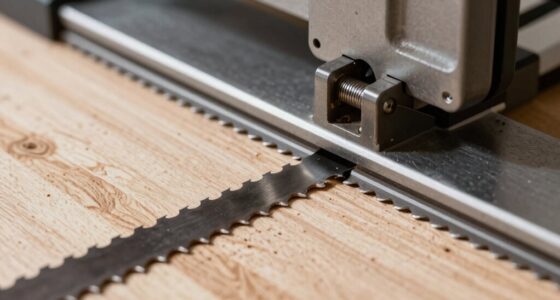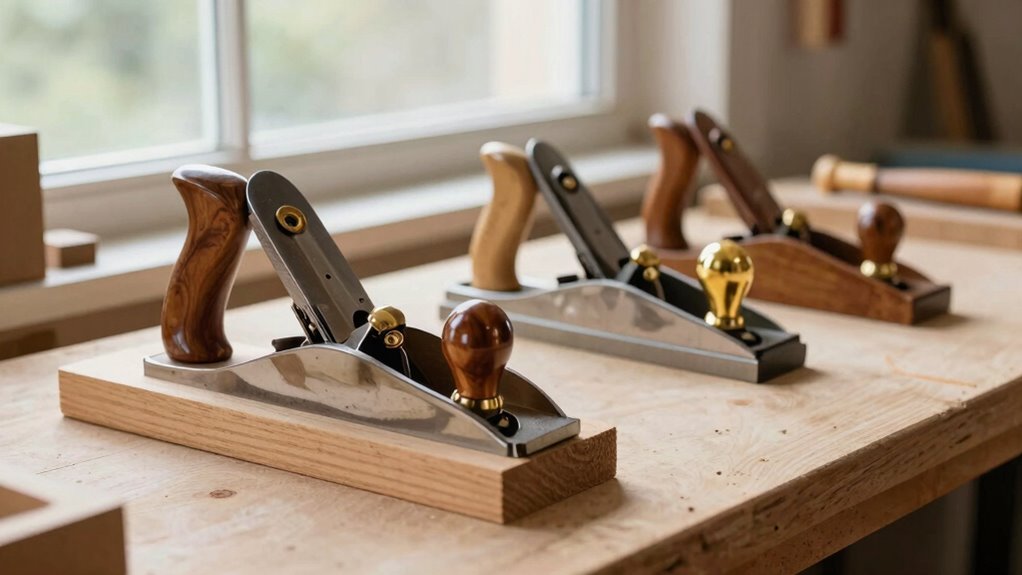

To keep your hand planes ready with minimal fuss, regularly clean and inspect them after each use, removing dirt and rust with soft brushes and rust remover when needed. Keep the blades sharp and properly aligned, and store your tools in a dry, organized space with silica gel or rust inhibitors. Applying light oil helps protect metal parts, and routine maintenance guarantees they’re always performance-ready. Staying consistent with these tips will help you master smooth woodworking—discover even more expert strategies ahead.
Key Takeaways
- Perform quick post-use cleanings and inspections to prevent rust and debris buildup.
- Regularly sharpen and align blades to ensure optimal cutting performance.
- Store hand planes in a dry, organized space with moisture control measures.
- Apply light protective oil to metal parts after each use for rust prevention.
- Incorporate simple maintenance routines into your woodworking schedule for consistent readiness.
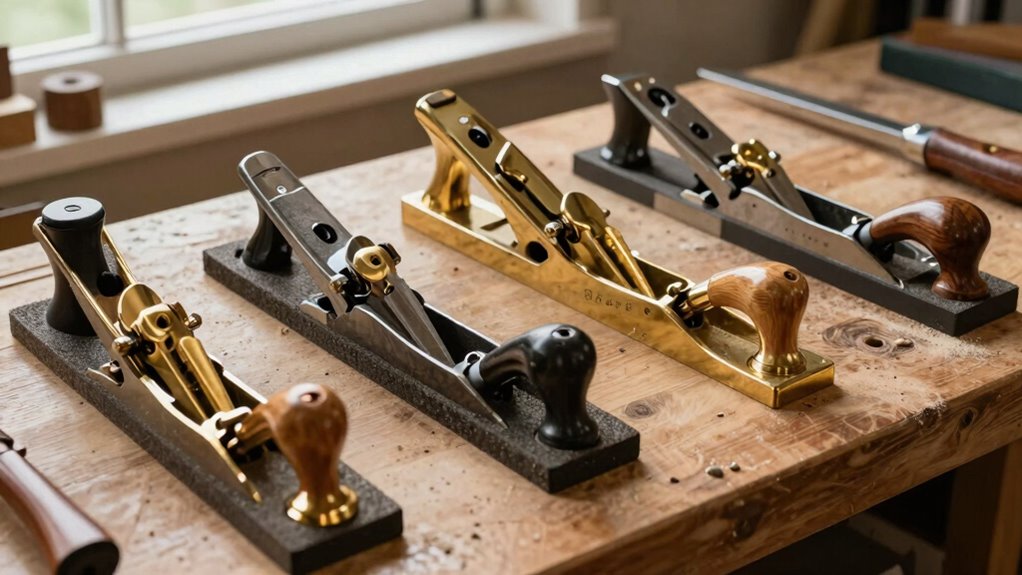
Keeping your hand planes ready for use guarantees smooth, accurate woodworking every time you pick one up. To achieve this, you need a simple, consistent approach to tool maintenance that minimizes downtime and frustration. Proper care isn’t just about keeping your tools sharp; it’s about assuring they perform at their best whenever you need them. Developing effective woodworking techniques for tool upkeep helps you avoid the hassle of constant fuss and keeps your hand planes in prime condition. Regular inspection and cleaning prevent the buildup of dirt, rust, or debris that can hinder performance. Start by regularly inspecting your hand planes for dirt, rust, or debris. A quick wipe-down after each use prevents buildup that can interfere with the plane’s movement. Use a soft brush or cloth to remove dust and shavings, especially around the mouth and sole. For stubborn rust, a gentle application of rust remover or fine steel wool does the trick without damaging the metal. Remember, rust isn’t just unsightly—it can compromise the tool’s performance, so addressing it early is crucial. Proper tool maintenance also involves periodically checking the blade’s sharpness. A dull blade not only hampers your woodworking techniques but also increases the risk of damage to the wood and frustration during use. Keep your blades sharp with a honing stone or file, and ensure they are properly aligned and adjusted before each project. Another key aspect of keeping your hand planes ready is understanding how to store them. Avoid leaving them in damp environments, as moisture accelerates rust and dulls blades faster. Instead, store your planes in a dry, organized space, preferably with silica gel packets or a dehumidifier nearby. A dedicated tool chest or rack keeps everything accessible and prevents accidental drops or damage. When storing, also consider applying a light coat of oil to the metal parts. A thin layer of machine oil or specialized tool oil creates a protective barrier against moisture, extending the lifespan of your hand planes. Incorporating proper storage practices is essential for maintaining your tools in top condition. Additionally, being aware of rust prevention techniques can help you take proactive steps to protect your tools from corrosion. Regularly applying a protective coating or rust inhibitor can further enhance your corrosion resistance, ensuring your tools remain in optimal condition for longer periods. Routine maintenance becomes even more effective when you understand the best storage methods for your tools, which can prevent common issues like rust and dullness. Incorporating simple preventive measures into your routine can significantly extend the life of your hand planes. Finally, integrating routine maintenance into your woodworking techniques simplifies the process. Set aside a few minutes after each project to clean and inspect your tools. This habit ensures your hand planes are always ready to deliver precise results without the need for extensive repairs or sharpening sessions. Consistent tool maintenance not only prolongs the life of your hand planes but also guarantees that your woodworking techniques remain effective, smooth, and enjoyable. With a little attention and care, you’ll find yourself reaching for your hand planes with confidence, knowing they’re always prepared to help you craft your best work.
hand plane blade sharpener
As an affiliate, we earn on qualifying purchases.
As an affiliate, we earn on qualifying purchases.
Frequently Asked Questions
How Often Should I Sharpen My Hand Planes?
You should sharpen your hand planes whenever the blade starts to dull or if you notice tear-out or rough surfaces. Regular sharpening, part of your blade maintenance, guarantees smooth cuts and efficient work. The sharpening frequency varies based on usage, but a good rule is to check the blade before each project. Keeping the blade sharp minimizes effort and keeps your hand planes ready for precise, clean cuts every time.
What Type of Oil Is Best for Lubrication?
When lubricating your hand plane, choose a light mineral oil or camellia oil. As you glide the oil over the wood grain, you’ll notice how it seeps into tiny pores, preventing rust and reducing friction. The oil’s absorption guarantees smooth operation, keeping your tool ready without fuss. A simple, natural oil enhances performance and protects your hand plane, making each woodworking session more enjoyable.
Can I Store Planes in a Humid Environment?
Storing planes in a humid environment isn’t ideal, as excess moisture can cause rust. To protect your tools, use proper humidity control methods, like silica gel packs or dehumidifiers. Keep your planes in well-ventilated storage containers that prevent moisture buildup. Regularly check and maintain these conditions to prevent rust and corrosion, ensuring your hand planes stay in good shape and ready for use whenever you need them.
How Do I Prevent Rust on My Hand Planes?
To prevent rust on your hand planes, you should regularly clean and dry them thoroughly after use. Apply a thin coat of light oil or rust inhibitor to all metal parts to create a protective barrier. Keep storage humidity low by storing your planes in a cool, dry place. Using silica gel packs or a dehumidifier helps control moisture, ensuring rust prevention and keeping your hand planes in top condition.
Is It Necessary to Disassemble for Regular Maintenance?
No, you don’t need to disassemble your hand planes frequently. For regular maintenance, disassembly should only happen when you notice rust, buildup, or performance issues. Follow maintenance tips like cleaning, oiling, and sharpening without taking apart the entire tool every time. Disassemble only periodically, perhaps every few months, to thoroughly inspect and replace worn parts, ensuring your hand planes stay in top shape without unnecessary fuss.
woodworking hand plane rust remover
As an affiliate, we earn on qualifying purchases.
As an affiliate, we earn on qualifying purchases.
Conclusion
By keeping your hand planes properly maintained and ready to go, you guarantee smooth, precise results every time. But don’t just rely on routine care — a simple oversight could turn your project into a frustrating ordeal. Stay vigilant, check your tools regularly, and master the secret to effortless woodworking. The real question is, are you prepared to prevent the unexpected? Because when you think you’re ready, that’s when your skills truly shine.
hand plane storage organizer
As an affiliate, we earn on qualifying purchases.
As an affiliate, we earn on qualifying purchases.
tool maintenance oil for metal tools
As an affiliate, we earn on qualifying purchases.
As an affiliate, we earn on qualifying purchases.