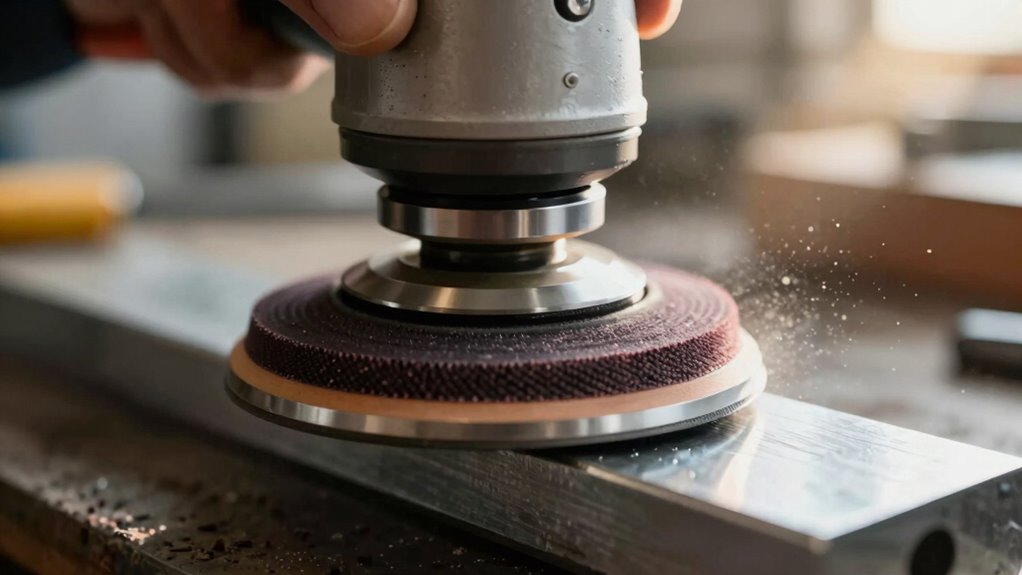
When choosing a sander for small parts, a detail or palm sander is your best bet. These tools are lightweight and easy to control, letting you navigate tight corners and intricate designs with precision. Start with a coarser grit for shaping, then move to finer grits for a smooth finish. Don’t forget to maintain your tools for peak performance. With the right techniques, you can dramatically enhance the edge quality of your projects. There’s more to explore!

Get business pricing on tools and workshop supplies
- Business-only prices and quantity discounts
- Tax-exempt purchasing
- Multiple users, one account, clear invoices
Key Takeaways
- Detail and palm sanders are ideal for small parts due to their lightweight and precision control.
- Start sanding with coarser grit to shape edges, then progress to finer grits for a smooth finish.
- Selecting the right grit for each material type enhances edge quality and overall results.
- Regular maintenance of sanding pads is crucial for optimal performance and tool longevity.
- Adjusting speed settings allows for better control on delicate edges and efficient material removal.
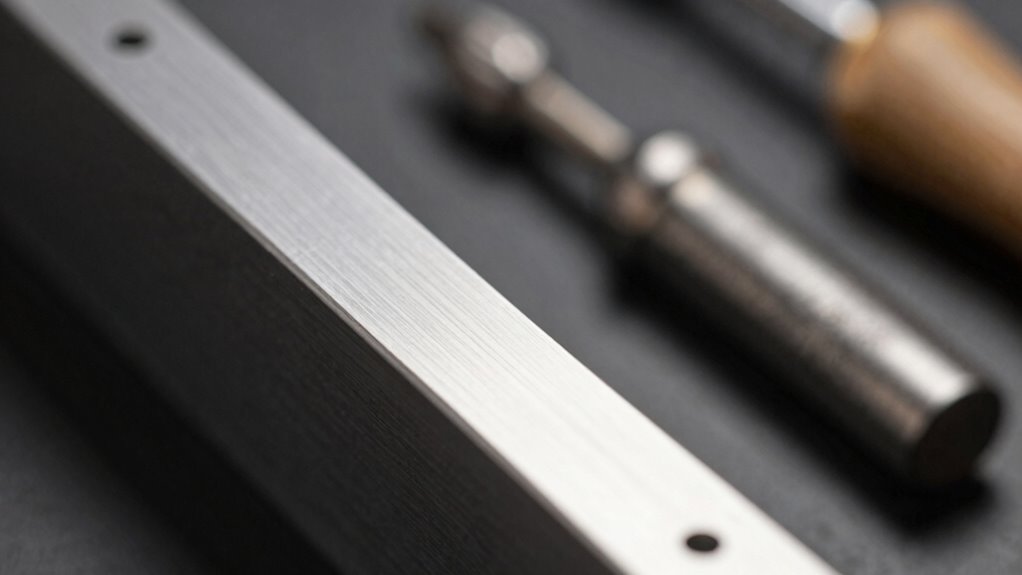
Achieving high edge quality in woodworking hinges on your choice of sander. When you’re working on small parts, a detail sander or a palm sander often works best. These tools allow you to navigate tight corners and intricate designs without sacrificing surface smoothness. They’re lightweight and easy to control, giving you the precision you need. However, it’s essential to take material compatibility into account. Whether you’re working with hardwood, softwood, or composite materials, make sure your sander and sanding techniques align with the needs of the material. Certain sanders may produce better results on different materials, so don’t hesitate to test a few options.
Your sanding technique also plays a fundamental role in edge quality. Start with a coarser grit to shape the edge, then gradually shift to finer grits for a smoother finish. This step-by-step approach helps you avoid scratches and guarantees a uniformly finished edge. You might even find that using a sanding block in conjunction with your sander can enhance your control, especially on small parts. Additionally, understanding sander types and their applications can help you select the best tool for each specific task. Knowing the appropriate sandpaper grit for each stage of sanding is equally important to achieve optimal results. Moreover, selecting the right sander accessories can make a significant difference in finishing quality.
Tool maintenance is another key aspect you shouldn’t overlook. A well-maintained sander not only operates efficiently but also extends its lifespan. Regularly check and clean the sanding pads, and replace them when they start to wear down. This simple upkeep can improve your edge quality and save you time in the long run.
Don’t forget to adjust the speed settings if your sander has them. Slower speeds give you more control on delicate edges, while higher speeds can be beneficial for removing material quickly. By mastering these techniques and maintaining your tools, you’ll notice a pronounced improvement in your woodworking projects.
In the end, the right sander combined with effective sanding techniques can transform your edge quality on small parts. So, take the time to choose wisely, practice your skills, and keep your tools in top shape. You’ll be amazed at how a small change in your approach can lead to stunning results. Your woodworking deserves that level of care and precision.
detail palm sander for small parts
As an affiliate, we earn on qualifying purchases.
As an affiliate, we earn on qualifying purchases.
Frequently Asked Questions
What Materials Are Best Suited for Edge Sanding?
For edge sanding, hardwoods, softwoods, and plywood are your best bets. Each material type requires different sanding techniques for ideal results. For hardwoods, use finer grits to avoid scratches, while softwoods may need coarser grits to remove splinters. Plywood often benefits from a gentle touch to prevent delamination. Experiment with various grits to find the right balance, ensuring smooth edges that enhance the overall finish of your project.
How Do I Maintain My Sander for Optimal Performance?
To keep your sander performing at its best, remember that a well-maintained sander can last up to 10 years longer! Start with regular checks on the sandpaper; replace it when it shows wear. Clean the dust collection system after every use, and make certain the sander types you own are lubricated according to the manufacturer’s guidelines. Finally, store your sander in a dry place to prevent rust and damage.
Can I Use a Sander for Curved Edges?
Yes, you can use a sander for curved edges! For best results, consider using a detail sander or a palm sander, as they’re designed for tight spaces. Employ curved sanding techniques, like using flexible sandpaper or sanding blocks, to follow the contours smoothly. Remember to work slowly and check your progress frequently to achieve a clean finish. With the right approach, sanding curves can be easy and effective!
What Safety Gear Should I Wear While Sanding?
“Better safe than sorry!” When you’re sanding, always wear safety goggles and a dust mask to protect your eyes and lungs. Hearing protection’s a smart choice too, especially with power sanders. Use proper sanding techniques and keep your workspace clean to enhance dust management. Gloves can also help prevent skin irritation. By gearing up, you’ll guarantee a safer, more efficient sanding experience. So, don’t skip that safety gear!
How Does Humidity Affect Sanding Results?
Humidity levels can considerably affect your sanding results. When it’s high, moisture can swell wood fibers, making them rougher and harder to smooth. You might notice your sanding techniques aren’t as effective, leading to a less polished finish. Conversely, low humidity can cause wood to dry out, making it brittle and prone to splintering. To achieve the best results, adjust your techniques based on the humidity to keep your edges clean and smooth.
Conclusion
So, if you think any old sander will do, think again! Choosing the right sander for those small parts is like picking the perfect wine for dinner; it can make or break the whole experience. Don’t settle for a tool that leaves your edges looking like a toddler’s art project. Embrace the sander that elevates your craftsmanship, and soon your projects will be so smooth, they’ll be begging for an Instagram filter! Cheers to precision!
Fall yard work Picks
leaf blowers
As an affiliate, we earn on qualifying purchases.