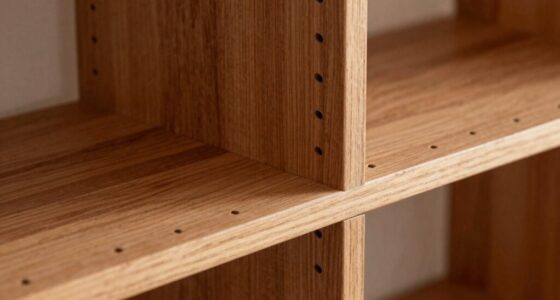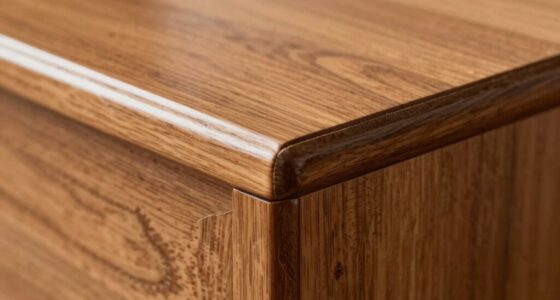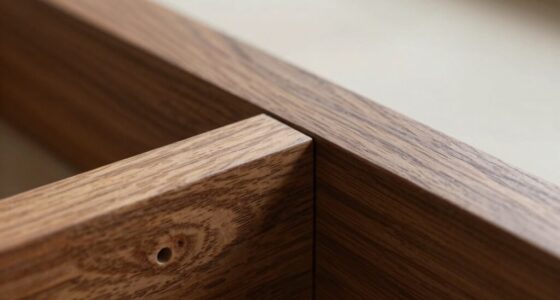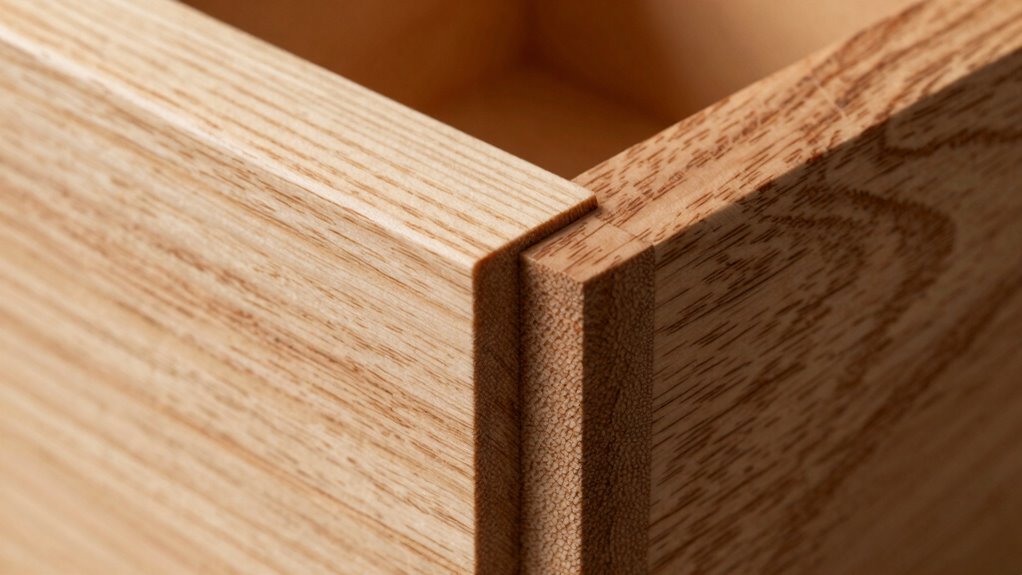
The simple reason box joints feel so satisfying is because of the perfect fit they create, which gives you a real sense of achievement. When you craft them with precision, whether using traditional techniques or modern tools, you see your skills come to life in the snug connection. Each joint feels like a small victory, blending craftsmanship with patience. If you want to discover more about what makes these joints so rewarding, keep exploring the craft behind each cut.

Get business pricing on tools and workshop supplies
- Business-only prices and quantity discounts
- Tax-exempt purchasing
- Multiple users, one account, clear invoices
Key Takeaways
- The snug fit of well-cut box joints creates a tactile sense of accomplishment.
- Precise interlocking pieces produce an audible “click,” reinforcing success.
- Achieving perfect joints blends craftsmanship with skill, fostering pride.
- The process combines traditional techniques and modern tools for satisfying results.
- Seeing the joint come together visually provides a rewarding sense of precision.
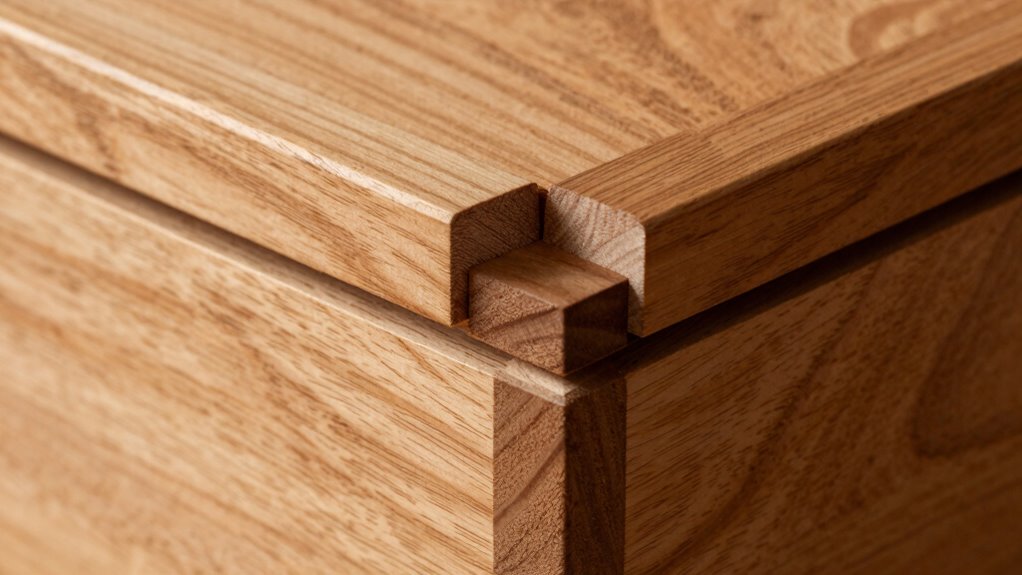
Have you ever noticed how satisfying it is to create perfect box joints? There’s a unique pleasure in fitting together precisely cut pieces of wood, and it’s no accident. This satisfaction stems from a blend of traditional craftsmanship and modern woodworking techniques that make the process both rewarding and achievable. When you craft box joints, you’re engaging in a timeless skill that has been refined over centuries, combining patience, precision, and skill. The craftsmanship behind traditional techniques emphasizes attention to detail, making each joint a small masterpiece of accuracy. These methods often involve hand tools like saws and chisels, requiring you to focus intently and develop a steady hand. That process, though meticulous, results in joints that fit together with a snug, almost satisfying click.
Creating perfect box joints combines patience, precision, and craftsmanship for a deeply satisfying woodworking experience.
Modern woodworking techniques have streamlined this process, making it more accessible and consistent. With the advent of power tools like table saws, dado blades, and specialized jigs, you can produce uniform, tight-fitting joints with less effort and greater precision. These advancements allow you to focus more on the design and assembly, rather than struggling with imperfect cuts. Whether you’re working with traditional hand tools or modern machinery, the core satisfaction of creating box joints remains the same. It’s about seeing your measurements and cuts come together perfectly, forming a strong and aesthetically pleasing connection. The accuracy achieved through these methods enhances the sense of pride in your craftsmanship. Developing hand-eye coordination is a vital part of perfecting this skill, and it adds to the overall satisfaction.
Ultimately, the satisfaction comes from knowing you’ve created something sturdy, beautiful, and precise—whether through the artful hand of traditional craftsmanship or the efficiency of modern woodworking techniques. Both approaches celebrate the craftsmanship involved, and both lead to the same satisfying feeling when your box joints click into place perfectly. It’s a small victory, but one that resonates deeply with every woodworker who values skill, patience, and the joy of crafting something with their own hands. Recognizing the importance of traditional craftsmanship and modern tools can deepen your appreciation for the skill involved. Additionally, understanding the history of woodworking can enhance your connection to this craft and enrich your overall experience.
As an affiliate, we earn on qualifying purchases.
Frequently Asked Questions
Are Box Joints Stronger Than Other Woodworking Joints?
Yes, box joints are generally stronger than other woodworking joints because they provide increased surface area for glue and interlock tightly, enhancing joint strength. Their joint aesthetics also make them visually appealing, showcasing craftsmanship. When you use precise woodworking techniques like careful cutting and fitting, box joints offer durability and a clean look, making them a preferred choice for drawers and boxes. This combination of strength and aesthetics makes them both functional and attractive.
What Tools Are Best for Making Box Joints?
You’ll want a dado blade or a router with a jig to make perfect box joints. They’re precise and easier than dovetail vs box joints, which are more intricate. For comparison, rabbet joints are simpler but less strong. Using a table saw with a dado blade guarantees tight, clean cuts, giving you those satisfying interlocking joints. A router with a dedicated jig can also provide excellent results with less setup time.
Can Box Joints Be Used for Load-Bearing Furniture?
Did you know that box joints can handle significant loads when properly constructed? Yes, they’re often used in load-bearing furniture like drawers and cabinets because of their strong interlocking design. Beyond their durability, box joints add decorative patterns that showcase craftsmanship. Historically, they’ve been used in woodworking for centuries, proving their reliability. So, if you build with precision, box joints are a solid choice for load-bearing furniture.
How Do You Prevent Gaps in Box Joints?
To prevent gaps in box joints, focus on precise joint alignment during cutting and assembly. Use a sharp saw or router with a proper jig to guarantee tight, even cuts. When gluing, apply an even layer of glue to the joint faces, avoiding excess that can cause misalignment. Clamping firmly while the glue dries helps keep the joints tight. This attention to detail ensures your box joints stay snug and gap-free.
Are Box Joints Suitable for Beginner Woodworkers?
Yes, box joints are perfect for beginner woodworkers! They’re like the stepping stones to mastery, turning simple projects into works of art with decorative patterns that wow everyone. Plus, their historical significance adds a rich, timeless feel to your work. Don’t worry about perfection—each joint teaches you valuable skills. With patience, you’ll find the process both rewarding and satisfying, making every project a proud accomplishment.
Conclusion
Once you’ve crafted a perfect box joint, it’s like fitting together the last piece of a puzzle—satisfying beyond words. I once built a jewelry box, and the tight interlock felt almost like whispering to my own craftsmanship. That moment, backed by studies showing our brains find neat, precise craftsmanship rewarding, reminds you that these joints aren’t just functional—they’re a dance of precision and patience, delivering a sense of accomplishment that’s truly addictive.
Fall yard work Picks
leaf blowers
As an affiliate, we earn on qualifying purchases.