If you want your furniture to be strong, authentic, and built to last, the mortise and tenon joint is a smart choice. This traditional woodworking method creates a tight, secure connection without fasteners, showcasing craftsmanship and durability. It combines timeless technique with modern design, ensuring furniture remains sturdy over decades. By using this old-school joint, you’re adding character and resilience to your pieces. Keep exploring, and you’ll discover even more about this remarkable craft.

Get tools and workshop supplies delivered free — and shop member deals
- Fast, free delivery on millions of items
- Access to Prime Big Deal Days deals on October 6–7
- Prime Video, Amazon Music and more included
Key Takeaways
- Mortise and tenon joints provide superior strength and durability without relying on modern fasteners.
- They embody traditional craftsmanship, adding aesthetic and historical value to contemporary furniture.
- Handcrafted joints showcase skill, patience, and attention to wood grain, enhancing furniture’s authenticity.
- Using vintage joints preserves timeless techniques that ensure long-lasting resilience.
- These joints symbolize quality craftsmanship, elevating modern furniture beyond mass-produced standards.

While modern manufacturing often relies on advanced machinery and synthetic materials, the timeless appeal of traditional woodworking joints remains unmatched. This is especially true when you consider the value of vintage craftsmanship, which emphasizes skill, patience, and a deep understanding of materials. One old-school joint, in particular, continues to elevate the quality of contemporary furniture: the mortise and tenon joint. Its enduring popularity isn’t just about aesthetic appeal; it’s about strength, durability, and the honest craftsmanship that’s been passed down through generations.
Traditional woodworking joints like mortise and tenon embody timeless craftsmanship, strength, and patience passed down through generations.
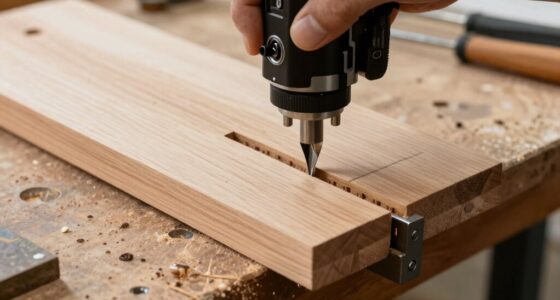
When you use traditional techniques like the mortise and tenon, you tap into a method that has stood the test of time. You cut a cavity (the mortise) into one piece of wood and shape a corresponding tenon on the adjoining piece. When joined, these two elements lock together tightly, creating a connection that’s both secure and resilient. Unlike modern fasteners that can weaken over time, this joint relies on the integrity of the wood itself, ensuring your furniture remains sturdy for decades. This technique embodies vintage craftsmanship, blending functional design with artistic precision.
The beauty of this joint isn’t just in its strength; it’s in the way it showcases traditional techniques. You can craft a mortise and tenon joint by hand, feeling the grain of the wood and carefully fitting each piece, which adds a level of authenticity and character to your work. This process requires patience and skill, but the result is a piece of furniture that’s not only functional but also a testimonial to centuries of craftsmanship. When you look at furniture built with these joints, you see the care and tradition woven into every detail—something synthetic materials can’t replicate. Preserving traditional techniques helps maintain the integrity and authenticity of handcrafted furniture.
In addition, employing these joints encourages a deeper appreciation for the artistry involved in traditional woodworking, highlighting the craftsmanship behind each piece. Using the mortise and tenon joint in your projects also means you’re preserving a form of vintage craftsmanship that values quality over convenience. It’s about creating furniture that ages gracefully and tells a story. These joints are often hidden, yet they form the backbone of classic furniture pieces, from tables to chairs. When you choose to incorporate them, you honor the techniques of the past while creating something that stands out in today’s world of mass production. This method also encourages the use of traditional woodworking techniques, which can deepen your appreciation for craftsmanship and improve your skills.
In the end, the mortise and tenon joint isn’t just a method. It’s a symbol of craftsmanship that bridges history and modernity. It reminds you that true quality comes from skill, patience, and respect for traditional techniques—elements that elevate your work beyond the ordinary and into the domain of timeless furniture making. Recognizing the value of vintage craftsmanship helps you appreciate the artistry behind each piece. Plus, understanding how these joints are made can give you a deeper respect for the materials used in traditional woodworking.
mortise and tenon woodworking joints
As an affiliate, we earn on qualifying purchases.
As an affiliate, we earn on qualifying purchases.
Frequently Asked Questions
How Durable Are Old-School Joints Compared to Modern Fasteners?
Old-school joints like mortise and tenon and dovetail joints are generally more durable than modern fasteners. You’ll find they create strong, long-lasting connections that withstand daily use. Unlike nails or screws, these joints interlock tightly, reducing movement and wear over time. If you’re aiming for furniture that lasts, using traditional joints guarantees your pieces stay sturdy and intact for years, outlasting many modern fasteners.
Are Traditional Joints Suitable for All Types of Furniture?
Traditional joints aren’t suitable for all furniture types, especially those requiring quick assembly or lightweight designs. You’ll find they excel in high-quality, handcrafted pieces where durability and aesthetic appeal matter. Modern fasteners work better for mass production or furniture needing rapid assembly. While traditional joints bring strength and authenticity, choosing between them depends on your project’s purpose, style, and the balance you want between durability and efficiency.
What Tools Are Needed to Craft Old-School Joints?
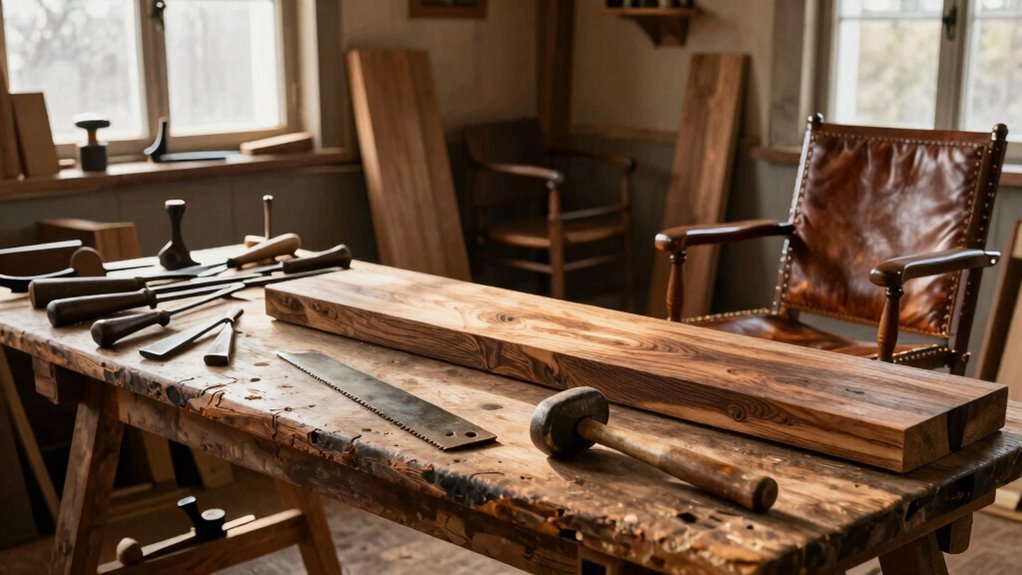
You’ll need a sharp saw, chisels, a mallet, marking gauges, and clamps to craft old-school joints with traditional woodworking techniques. These tools are essential for precise hand-cut techniques that carve out joints so tight, they seem to defy the laws of physics. With patience and skill, you transform simple wood into masterpieces, creating joints that stand the test of time and elevate your furniture to legendary status.
Can Old-School Joints Be Repaired Easily if Damaged?
Yes, old-school joints can be repaired easily if damaged. Using traditional joinery techniques, you can re-glue, reinforce, or replace the affected parts. Start by carefully disassembling the damaged joint, then clean and dry the surfaces. Apply appropriate repair methods like wood glue or dowels, and clamp the joint until secure. With patience and proper tools, your furniture will regain its strength, preserving the craftsmanship of classic joinery techniques.
Do Traditional Joints Require More Time to Assemble?
Like threading a needle through thick fabric, traditional joints often take more time to assemble. You’ll notice they demand patience, but their joint aesthetics and historical significance make the effort worthwhile. While modern techniques can speed up the process, these classic joints add authenticity and strength that many prefer. So, yes, they require more time, but their craftsmanship and enduring appeal make every minute count.
Conclusion
You’ve seen how traditional joints, like the dovetail, have stood the test of time—lasting centuries because they’re inherently strong. Remarkably, studies show that furniture crafted with these old-school techniques can last up to 50% longer than modern, glued-only pieces. By embracing these classic methods, you’re not just preserving craftsmanship but also creating furniture that’s built to endure. Next time you sit on a well-made chair, remember: some of the best innovations are rooted in tradition.
Halloween Picks
halloween
As an affiliate, we earn on qualifying purchases.