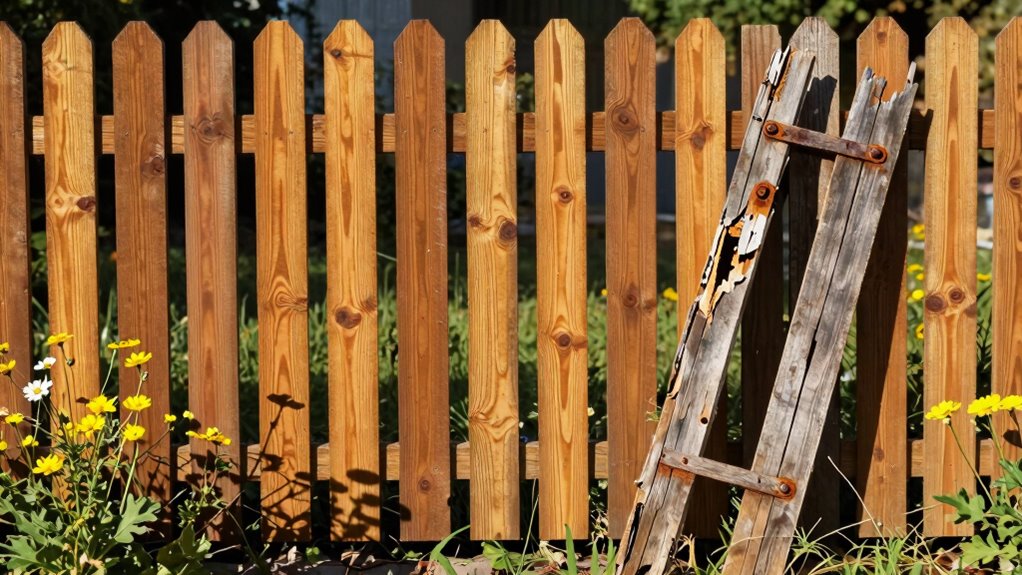
A good fence adds value and beauty to your property, providing privacy and security. It’s built with quality materials, installed correctly, and well-maintained, enhancing your outdoor space. In contrast, a frustrating fence can become an eyesore, sagging or collapsing due to poor construction or lack of upkeep. It detracts from your home’s appeal and can lead to costly repairs. Discover how to distinguish between the two and take your fence experience to the next level.
Key Takeaways
- A good fence enhances privacy and security, while a frustrating fence may leave gaps and vulnerabilities.
- Quality materials like vinyl or well-treated wood resist weathering, unlike poorly chosen materials that deteriorate quickly.
- Proper installation ensures stability and alignment, whereas a frustrating fence may sag or collapse due to shoddy workmanship.
- Regular maintenance prolongs lifespan; a good fence remains functional with care, while a neglected one can become an eyesore.
- Aesthetically pleasing designs complement the landscape, while unattractive fences detract from property value and curb appeal.
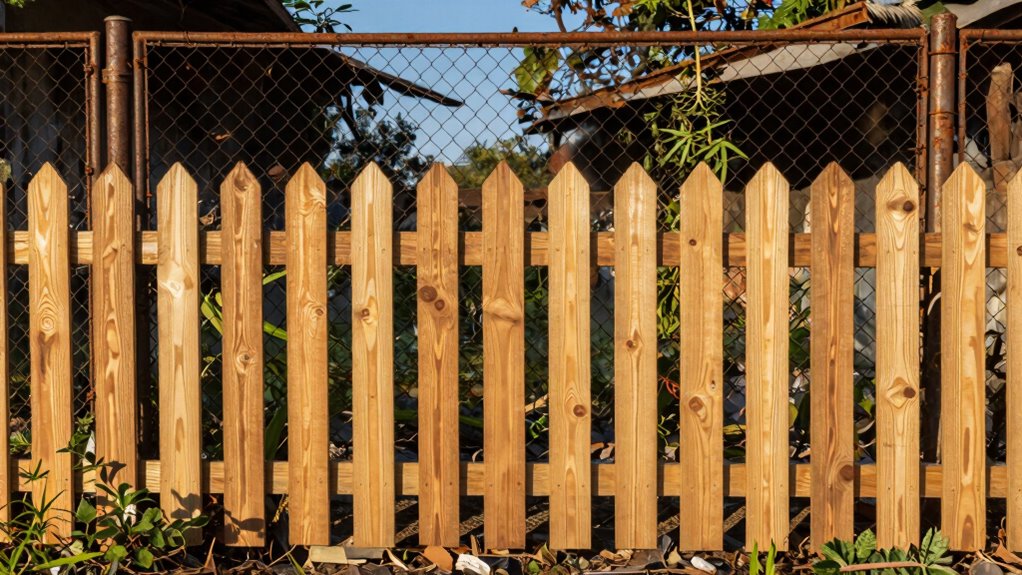
When you think about fences, you might picture a simple barrier, but a good fence does more than just mark boundaries; it enhances your space. A well-built fence can provide privacy, security, and even curb appeal, while a poorly constructed one can quickly become a source of frustration. The difference often lies in the choice of fence materials, installation techniques, and ongoing maintenance.
Choosing the right fence materials is vital. You’ve got options like wood, vinyl, metal, or composite. Each material has its pros and cons, so think about your specific needs. For instance, wood offers a classic look but requires regular maintenance to prevent rot and fading. On the other hand, vinyl is low-maintenance and resistant to weathering, making it a great choice if you want something that lasts without constant upkeep. Consider how the materials complement your landscape and home, as aesthetic appeal is just as important as functionality.
Once you’ve selected your materials, the installation techniques come into play. A good fence needs a solid foundation, so proper digging and setting of posts is necessary. If you’re tackling the project yourself, be sure to follow guidelines for spacing and depth to guarantee stability. If you hire professionals, check their reputation and experience. A poorly installed fence can lead to sagging, leaning, or even collapsing, which can be a major headache down the line. Proper installation techniques are crucial to ensure your fence’s longevity and performance. Additionally, understanding the importance of fence materials can help you make more informed decisions that suit your needs.
Maintenance tips shouldn’t be overlooked, either. Regular inspections can help you catch small issues before they turn into big problems. For wooden fences, consider sealing or staining every few years to protect against moisture and UV rays. Vinyl fences might only need a good wash to keep them looking fresh. Whatever material you choose, staying on top of maintenance will save you time and money in the long run. Additionally, being aware of maintenance routines specific to your fence type can help extend its lifespan. Ultimately, a good fence enhances your outdoor space while providing the necessary functionality. It’s not just about keeping things in or out; it’s about creating an inviting atmosphere. A frustrating fence, however, can detract from your property’s beauty and become an ongoing hassle. By focusing on quality materials, proper installation, and routine maintenance, you can make sure your fence serves you well for years to come. Investing time and thought into these aspects will make a world of difference, turning your fence from a mere boundary into a valued part of your home.
vinyl privacy fence panels
As an affiliate, we earn on qualifying purchases.
As an affiliate, we earn on qualifying purchases.
Frequently Asked Questions
What Materials Are Best for Building a Good Fence?
When building a good fence, consider your materials carefully. For wood options, cedar and redwood offer natural beauty and resistance to decay. Metal choices like aluminum and wrought iron provide strength and longevity, while vinyl benefits include low maintenance and weather resistance. If you want durability, composite materials combine wood and plastic, giving you the best of both worlds. Each option has unique advantages, so choose based on your needs and style preferences!
How Do I Maintain My Fence Over Time?
To keep your fence in top shape, think of it like a car; regular maintenance prevents breakdowns. Start with fence cleaning tips: wash it down seasonally to remove dirt and mold. Then, schedule seasonal inspections to check for damage or wear. Look for loose boards or rusted hardware, and make repairs as needed. A little effort each season will keep your fence looking great and standing strong for years to come.
Can I Install a Fence Myself?
Yes, you can install a fence yourself! Start with some DIY tips: choose the right materials and plan your layout carefully. You’ll need essential tools like a post hole digger, level, and a saw. Make sure to measure accurately and follow local regulations. If you take your time and stay organized, you’ll create a sturdy fence that meets your needs. Enjoy the process and take pride in your hard work!
What Are Common Fence Regulations to Consider?
Before diving into your fence project, check local regulations. You’ll need to confirm fence height limits, respect property lines, and possibly secure building permits. Don’t forget to discuss your plans with neighbors; their agreements can make the process smoother. Understanding these rules guarantees you build a fence that’s not only functional but also compliant, avoiding future disputes or fines. It’s always better to be informed before you start!
How Much Does a Good Fence Typically Cost?
A good fence typically costs anywhere from $15 to $50 per linear foot, depending on materials and design. You’ll want to contemplate fence longevity and aesthetics when making your choice. Investing in higher-quality materials might raise the initial cost but will pay off in durability and visual appeal. Think about what fits your budget while enhancing your property’s look and lasting performance. It’s worth weighing these factors for a smart investment.
pressure treated wood fence posts
As an affiliate, we earn on qualifying purchases.
As an affiliate, we earn on qualifying purchases.
Conclusion
In the grand tapestry of yard aesthetics, a good fence whispers of harmony while a frustrating fence shouts discord. You deserve a boundary that embraces your space, not one that tests your patience. So, as you begin this fencing journey, remember that the right choice will not only enhance your landscape but also nurture your peace of mind. With a little care, you can transform your enclosure into a haven, rather than a headache.
metal garden fencing
As an affiliate, we earn on qualifying purchases.
As an affiliate, we earn on qualifying purchases.
fence installation tools kit
As an affiliate, we earn on qualifying purchases.
As an affiliate, we earn on qualifying purchases.