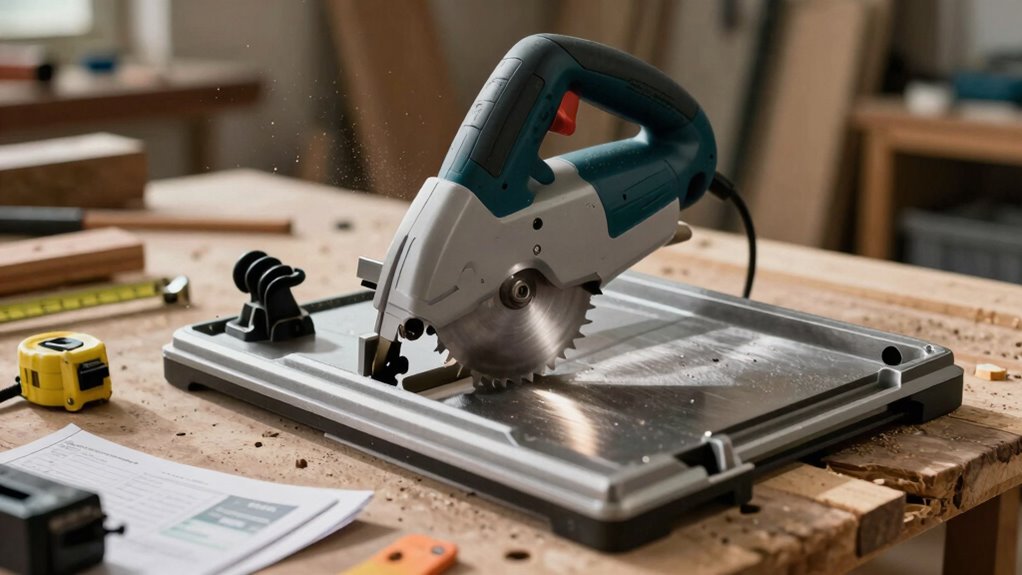
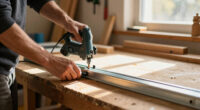
Improper blade alignment and fence calibration can make your portable table saw feel frustrating. If the blade isn’t parallel to the miter slot, you’ll face issues like binding, kickback, and jagged cuts. A miscalibrated fence leads to inaccurate measurements, compromising your project’s precision. By ensuring these setups are correct, you’ll enhance performance and feel more confident while cutting. There’s a lot more to optimize your saw, and the next steps can make a big difference.

Get business pricing on tools and workshop supplies
- Business-only prices and quantity discounts
- Tax-exempt purchasing
- Multiple users, one account, clear invoices
Key Takeaways
- Misalignment of the blade with the table or miter slot leads to poor cutting performance and increased risk of kickback.
- An improperly calibrated fence results in inaccurate measurements and can compromise the quality of your cuts.
- Rushing through measurement verification often causes mistakes; always measure twice to avoid wasting materials.
- Consistent setup procedures, including regular calibration, are essential for optimal performance and reducing cutting errors.
- Maintaining awareness of tool setup can significantly enhance safety and improve overall user experience with portable table saws.
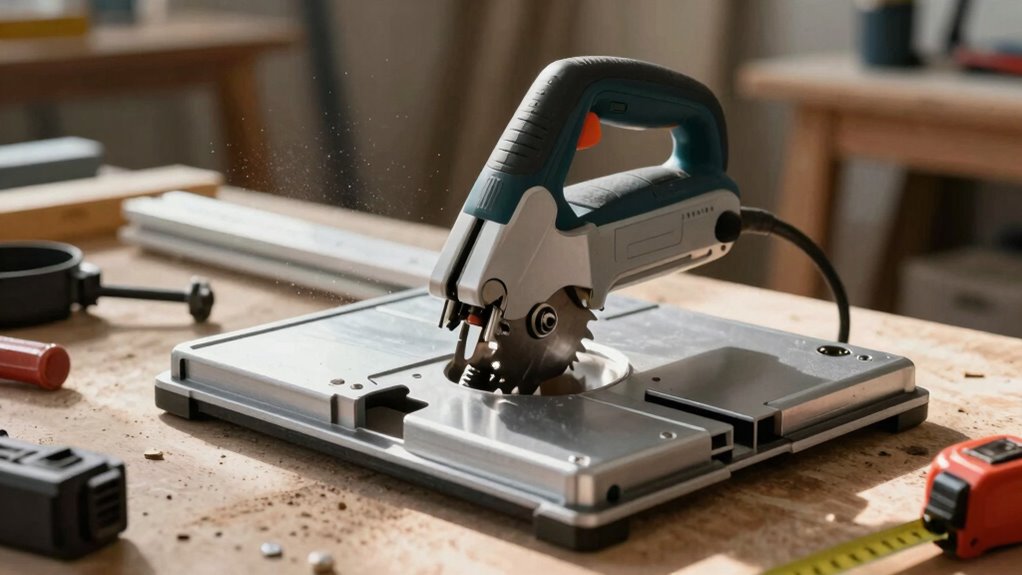
When you’re setting up a portable table saw, even small mistakes can lead to significant issues in your cuts. One of the most common errors that can frustrate you is improper blade alignment and fence calibration. You might think these adjustments are straightforward, but if you overlook them, you’ll face challenges that can throw off your entire project.
First off, let’s talk about blade alignment. If your blade isn’t perfectly aligned with the table or the miter slot, you’ll notice it when you make your cuts. A misaligned blade can cause your wood to bind, leading to jagged edges or even kickback. You want your blade to be parallel to the miter slot, guaranteeing a smooth and accurate cut every time. To check this, you can use a combination square or a dedicated alignment tool. Adjust it as needed until the blade lines up perfectly. It’s a small step that can save you a lot of headaches down the line. Proper setup procedures and calibration are essential for optimal performance. Ensuring proper blade alignment is a critical component of this process.
Next, you can’t ignore fence calibration. An improperly calibrated fence can result in inaccurate measurements, making your cuts off by fractions that add up quickly. Start by confirming your fence is square to the blade. Use a reliable square to check the alignment, and adjust the fence until it’s perfectly perpendicular. A well-calibrated fence not only enhances your accuracy but also boosts your confidence in the cuts you’re making. Regular fence calibration is vital for maintaining consistent results over time. Ensuring proper calibration of your tools is crucial for precision and safety.
After checking both the blade alignment and the fence calibration, take a moment to double-check your measurements. It’s easy to rush through this step, but that’s where mistakes often creep in. Measure twice, cut once, as they say. If you take the time to verify everything is adjusted correctly, you set yourself up for success. Additionally, understanding and precise setup of your tools can help prevent these issues from occurring in the first place.
portable table saw blade alignment tool
As an affiliate, we earn on qualifying purchases.
As an affiliate, we earn on qualifying purchases.
Frequently Asked Questions
How Do I Choose the Right Blade for My Portable Table Saw?
To choose the right blade for your portable table saw, consider the blade types that match your cutting materials. For hardwoods, a carbide-tipped blade with fine teeth works best, while a rip blade is great for cutting softwoods. If you’re working with plywood, a combination blade provides versatility. Always check the blade’s diameter and tooth count, as these factors greatly affect performance and finish quality. Make sure you select the right one for your project!
What Maintenance Should I Perform on My Saw Regularly?
To keep your portable table saw in top shape, regularly check blade alignment and adjust it as needed for precision cuts. Clean the saw after each use to prevent dust buildup, which can affect performance. Make certain your dust collection system is functioning properly to maintain a safe workspace. Lubricate moving parts to guarantee smooth operation, and inspect the power cord for wear to avoid potential safety hazards.
Can I Use a Portable Table Saw for Larger Projects?
Yes, you can use a portable table saw for larger projects, but be mindful of project limitations. Make certain your workspace setup is stable and spacious to accommodate the saw and materials. Utilize effective cutting techniques, like making multiple passes or using support stands, to enhance accuracy and control. While portable saws are versatile, they may require more careful handling compared to larger, stationary models, so plan accordingly for best results.
What Safety Gear Should I Wear While Using the Saw?
What good is a great saw if you’re not safe while using it? You should always wear safety goggles to protect your eyes from debris, and hearing protection to shield your ears from noise. A dust mask keeps harmful particles out of your lungs, while cut resistant gloves protect your hands from accidental injuries. Prioritizing safety gear not only helps you work confidently but also keeps you focused on the task at hand.
How Do I Improve Accuracy When Cutting With a Portable Table Saw?
To improve accuracy when cutting with a portable table saw, focus on your cutting techniques and alignment tips. Always use a proper fence and guarantee it’s parallel to the blade. Before cutting, double-check your measurements and make test cuts on scrap wood. Keep your hands steady and maintain a firm grip on the material. Using a push stick can also help you stay safe while securing precise cuts.
Conclusion
You’d think a portable table saw is a demon from the depths of woodworking hell, but it’s really just a setup error wreaking havoc! If you don’t align everything perfectly, it feels like you’re trying to cut through concrete with a butter knife. But fear not! With a little patience and attention to detail, you can tame this beast. So grab your tools, dial in your setup, and watch as your saw transforms into a woodworking angel!
Halloween Picks
halloween
As an affiliate, we earn on qualifying purchases.