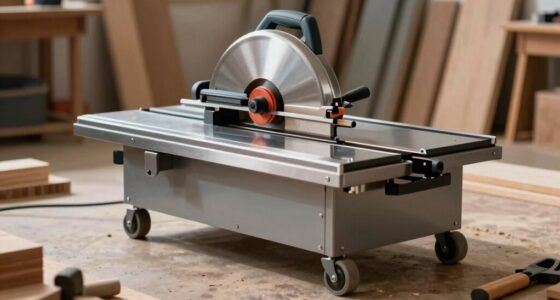

Table saw rip capacity matters more than you might think. It defines the maximum width you can cut, directly impacting your project choices. A wider capacity lets you tackle larger materials with ease, ensuring accurate cuts without constant adjustments. If your blade’s aligned and the fence is accurate, you’ll have safer operations and better results. Plus, it opens up more creative opportunities for your woodworking. Discover how improving your rip capacity can enhance your overall experience.

Get business pricing on tools and workshop supplies
- Business-only prices and quantity discounts
- Tax-exempt purchasing
- Multiple users, one account, clear invoices
Key Takeaways
- Rip capacity determines the maximum width of material you can cut, impacting project versatility and material selection.
- Adequate rip capacity minimizes adjustments, allowing for smoother workflow and efficiency in larger projects like furniture making.
- A well-aligned blade, supported by sufficient rip capacity, ensures accurate cuts and enhances safety during operation.
- Limited rip capacity restricts opportunities for working with thicker materials, hindering skill development and experimentation.
- Understanding rip capacity reduces the risk of accidents and contributes to a more enjoyable woodworking experience.
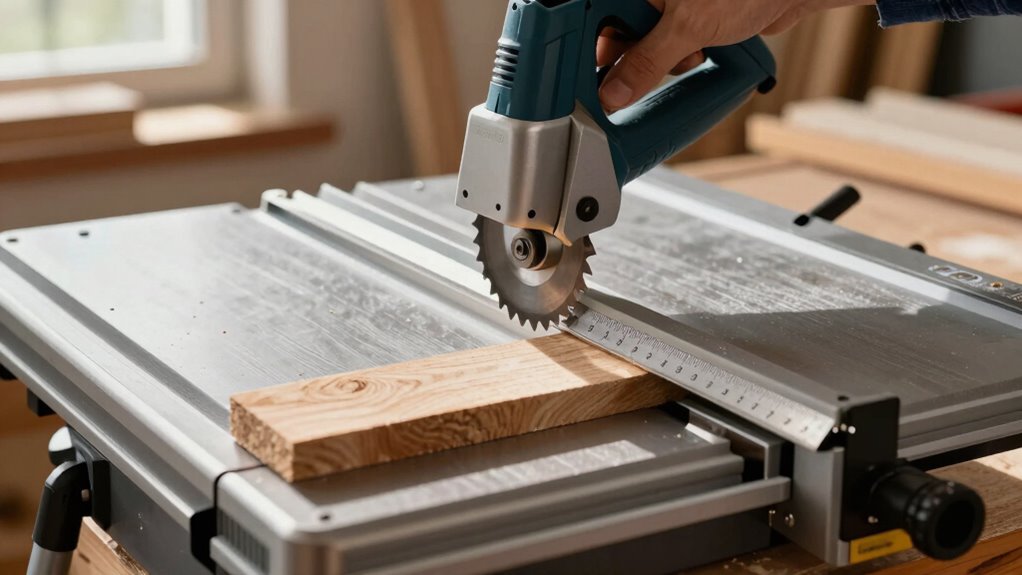
When choosing a table saw, understanding its rip capacity is vital for your projects. Rip capacity refers to the maximum width of material you can cut when using the saw’s fence. Beginners often underestimate how significant this measurement is, but it directly impacts the types of wood and sheet materials you can work with effectively. If you plan to tackle larger projects, like building furniture or cabinets, you’ll want a saw that can handle wider cuts without compromise.
Blade alignment plays a significant role in achieving accurate cuts. If your blade isn’t aligned properly, it can lead to uneven cuts, which not only affects the quality of your work but can also be dangerous. A saw with proper rip capacity allows you to make wider cuts while maintaining that essential alignment. You won’t have to worry about adjusting your setup constantly, which can become tedious and frustrating over time. Proper blade alignment is essential for both safety and precision.
Blade alignment is crucial for precise cuts; a saw with adequate rip capacity ensures wider cuts without constant adjustments.
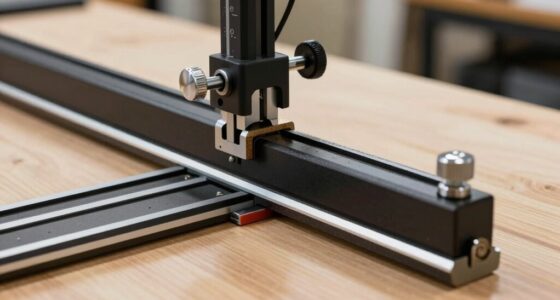
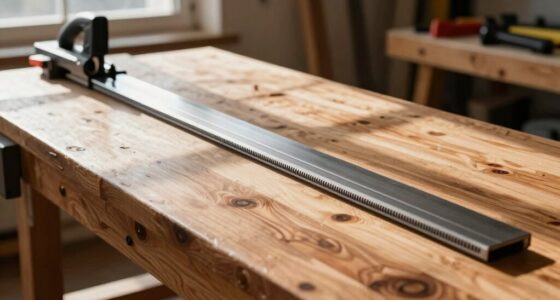
Fence accuracy is another factor that ties closely to rip capacity. A reliable fence system guarantees that your cuts remain consistent and precise, especially when working with thicker materials. If your saw can only rip narrow pieces, you’ll miss out on the opportunity to create larger projects that require wider panels. Imagine trying to rip a sheet of plywood that exceeds your saw’s limit; it’s not just inefficient—it’s also a safety risk. Always check that your fence is square to the blade for best results. Additionally, fence stability is key to maintaining consistent measurements during your cuts.
Material thickness also becomes a consideration when you think about rip capacity. If you regularly work with thicker lumber, you’ll need a saw that can handle it without strain. A robust rip capacity allows you to work with various materials, giving you the flexibility to choose what suits your project best. This adaptability is particularly important for beginners, as it encourages experimentation and growth in your woodworking skills. Additionally, understanding table saw safety guidelines is crucial when working with wider or thicker materials to prevent accidents. Having a saw with an ample rip capacity can reduce the need for multiple cuts or workarounds, making your projects more efficient and enjoyable.
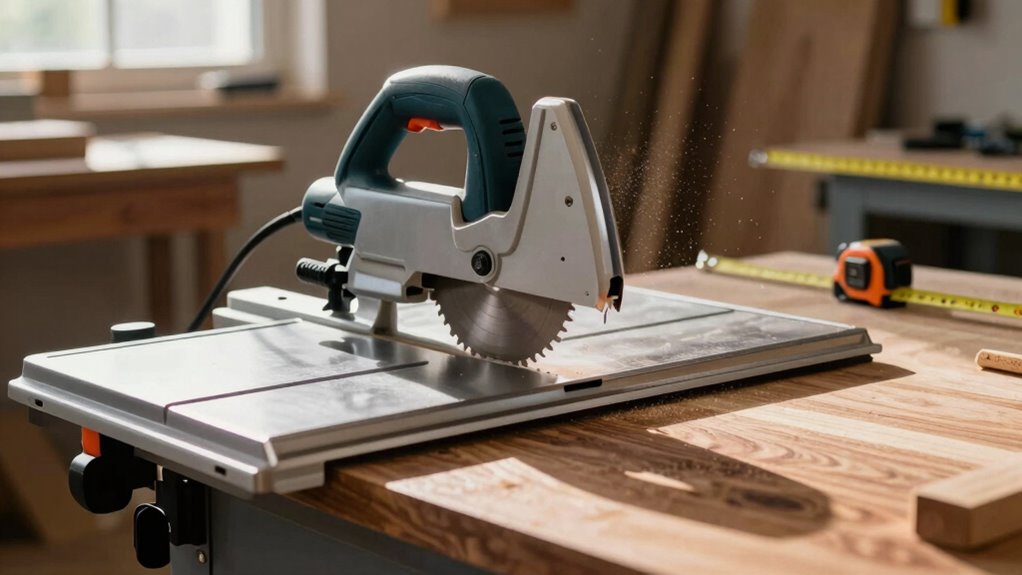
table saw with wide rip capacity
As an affiliate, we earn on qualifying purchases.
As an affiliate, we earn on qualifying purchases.
Frequently Asked Questions
What Is the Average Rip Capacity for Most Table Saws?
Most table saws have a rip capacity ranging from 24 to 30 inches. Isn’t it surprising how much that extra space can impact your projects? If you’re working with larger sheets of plywood or wide boards, that rip capacity can make all the difference. Choosing a table saw with the right rip capacity guarantees you can handle various materials without hassle, giving you more versatility in your woodworking endeavors.
How Does Rip Capacity Affect Safety During Cuts?
Rip capacity directly affects safety during cuts by ensuring you can handle wider boards without compromising blade alignment. If you’re working with material that exceeds your saw’s capacity, you might struggle to maintain control, increasing the risk of kickback. Always use a push stick for narrow cuts, keeping your hands away from the blade. By understanding your saw’s limits, you can make safer, more accurate cuts while minimizing hazards in the workshop.
Can I Modify My Table Saw for Increased Rip Capacity?
Yes, you can modify your table saw for increased rip capacity, but it’s essential to approach this safely. Imagine trying to stretch a rubber band too far—it can snap back unexpectedly. Similarly, table saw modifications require careful planning. You might add a side extension or a new fence system, but always prioritize stability and accuracy. Research your options, and consider consulting with an expert to guarantee your modifications enhance performance without compromising safety.
What Materials Are Best for Maximizing Rip Capacity?
To maximize rip capacity, you should focus on using thicker plywood and dense hardwood types like oak or maple. These materials enhance cutting efficiency, allowing you to make cleaner, more precise cuts. Pay attention to blade height as well; adjusting it properly can improve your results. By selecting the right materials and settings, you’ll notice a significant difference in your table saw’s performance and the quality of your finished projects.
How Does Rip Capacity Influence Woodworking Project Choices?
Rip capacity directly influences your woodworking project choices. For instance, a table saw with a 30-inch rip capacity can handle wider boards, allowing you to create larger project dimensions. If you’re working with thicker materials, you’ll find that cut accuracy improves with ample rip capacity. This versatility lets you explore diverse projects, from furniture to cabinetry, ensuring you can tackle anything without being limited by your tools’ capabilities.
Conclusion
In woodworking, you might think a powerful motor is all that matters, but rip capacity can make or break your project. Imagine struggling with a small board on a limited saw while your neighbor effortlessly slices through wider material. That frustration can turn your woodworking dreams into a nightmare. By understanding and prioritizing rip capacity, you’ll not only enjoy smoother cuts but also reveal the potential for more ambitious creations. So, don’t underestimate this essential feature!
Fall Picks
fall essentials
As an affiliate, we earn on qualifying purchases.