To keep rust at bay in humid shops, you need a consistent routine combining rust-resistant coatings, humidity control, and regular inspections. Apply high-quality coatings designed for moisture-rich environments and keep surfaces dry and clean. Use dehumidifiers, ventilate well, and monitor humidity levels regularly. Insulate your workspace to prevent condensation, and reapply coatings as needed. Staying proactive with these habits guarantees long-term rust prevention—discover more tips to make your routine stick effectively.
Key Takeaways
- Implement rust-resistant coatings after thoroughly cleaning and drying metal surfaces.
- Use dehumidifiers and proper ventilation to maintain low humidity consistently.
- Insulate your shop to reduce temperature fluctuations and prevent condensation.
- Regularly inspect and reapply protective coatings to ensure continuous barrier integrity.
- Establish a routine combining moisture control, surface maintenance, and real-time humidity monitoring.
Are you struggling with rust buildup in your humid shop? If so, you’re not alone. Humidity creates the perfect environment for rust to form on tools, machinery, and metal surfaces. To combat this, you need a combination of effective rust resistant coatings and proper humidity control techniques. These strategies work together to make your rust prevention routine stick, ensuring your workspace stays protected.
First, focus on applying rust resistant coatings. These coatings act as a barrier, preventing moisture from directly contacting metal surfaces. When choosing a coating, look for products specifically designed for high-humidity environments. These often contain rust-inhibiting compounds that provide long-lasting protection. Make sure surfaces are clean and dry before application to maximize adhesion. Regularly inspect coated surfaces for chips or wear, and reapply as needed. Consistent use of these coatings creates a reliable defense against rust, especially in a humid shop where moisture constantly threatens your equipment.
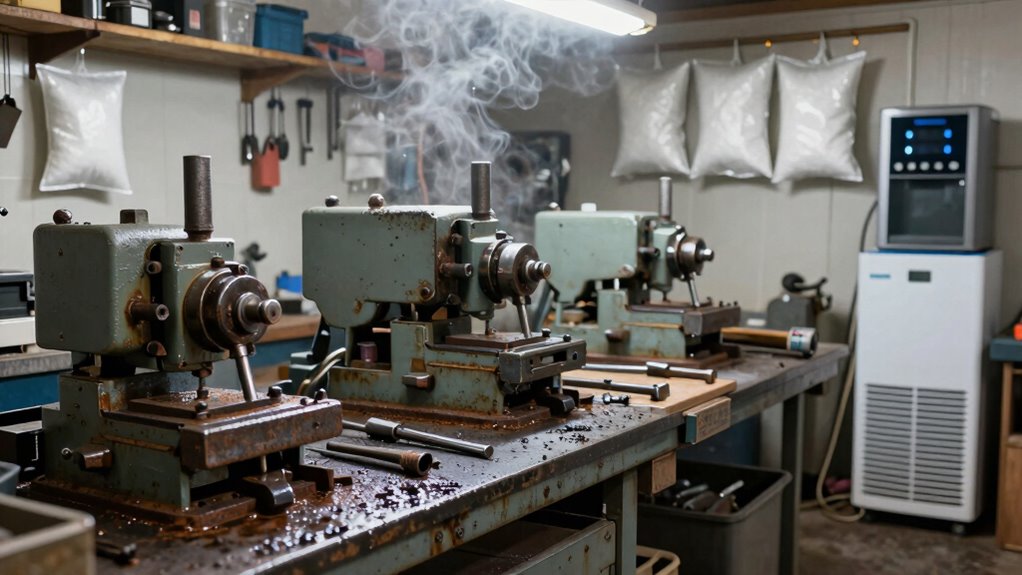
Alongside coatings, mastering humidity control techniques is vital. You want to keep the moisture levels in your shop as low and stable as possible. Using dehumidifiers is a practical step; they remove excess moisture from the air and prevent conditions conducive to rust. Place them strategically around your workspace for even coverage. Ventilation also plays a key role—ensure your shop is well-ventilated to allow moisture to escape and to prevent stale, humid air from accumulating. Installing exhaust fans or air movers can help improve air circulation, reducing humidity hotspots. Additionally, consider using moisture-absorbing products like silica gel packs or desiccants in areas where water vapor tends to concentrate.
Another effective humidity control technique is insulating your shop properly. Insulation minimizes temperature fluctuations that cause condensation, which is a major contributor to rust formation. Keep the temperature steady, especially during seasonal changes, to prevent moisture from condensing on cold metal surfaces. Regularly monitoring humidity levels with a hygrometer gives you real-time data, so you can make adjustments as needed. Incorporating water quality testing into your routine can also help identify specific issues related to moisture and corrosion, allowing for targeted interventions.
Combining these approaches—applying rust resistant coatings and implementing humidity control techniques—creates a routine that truly sticks. It’s not about one-time fixes but establishing consistent habits. Keep your shop dry, coat surfaces properly, and stay vigilant with humidity levels. Over time, this routine will markedly reduce rust buildup, keeping your tools and equipment in top shape and saving you time and money on repairs. Remember, rust prevention in a humid shop isn’t a one-off task; it’s a continuous process that, when done right, becomes second nature.

2-in-1 Rust Converter & Metal Primer, Stops Rust,Rust Inhibitor Paint for Metal, Rust Conversion Paint, Heat-Resistant Anti Rust Coating for Car, Marine, Industrial, Chassis, Long-Lasting (35 oz)
【Ultimate Rust Converter & Metal Primer – One-Step Seal & Protect】 Autosel 2-in-1 rust converter & metal primer…
As an affiliate, we earn on qualifying purchases.
As an affiliate, we earn on qualifying purchases.
Frequently Asked Questions
Can Natural Ventilation Help Prevent Rust?
Yes, natural ventilation can help prevent rust by improving airflow optimization in your shop, which reduces moisture buildup. You should also use moisture barriers to block humidity from reaching your tools and equipment. Keep windows open when weather permits, and guarantee good air circulation. Combining natural ventilation with moisture barriers creates a more effective rust prevention routine, helping your tools stay dry and corrosion-free over time.
What DIY Methods Are Effective for Rust Prevention?
When it comes to rust prevention, your best DIY methods include applying rust-resistant coatings and using desiccant dehumidifiers. These simple steps act as silent guardians, keeping moisture at bay and protecting your tools. Regularly inspect and reapply coatings, and guarantee your dehumidifiers are functioning well. By staying proactive, you create an environment that’s less welcoming to rust, making your maintenance routine both effective and sustainable.
How Often Should Humidity Levels Be Checked?
You should check humidity levels at least once a week to guarantee ideal moisture control. Regular humidity monitoring helps you catch fluctuations early, preventing rust formation. If you notice high humidity, take steps like using dehumidifiers or silica gel packs to keep moisture in check. Consistent monitoring keeps your shop environment stable, protecting your tools and equipment from rust and corrosion over time.
Are There Specific Rust Inhibitors for Certain Metals?
You should definitely use specific rust inhibitors tailored to the metal you’re working with. For example, metal coatings like rust-resistant alloys work better on steel, while specialized rust inhibitors are designed for copper or aluminum. These coatings create a barrier to moisture, preventing rust. Properly selecting and applying these treatments guarantees long-lasting protection, especially in humid environments. Always check manufacturer recommendations to choose the best rust inhibitor for your metal type.
Does Lighting Impact Rust Formation in Shops?
Lighting effects can influence rust formation in your shop by affecting moisture levels and temperature. Poor or inconsistent lighting may lead to higher humidity, creating a more conducive environment for rust. To maintain a rust-free workspace, guarantee proper lighting that promotes good shop ambiance and minimizes moisture buildup. Consider using lighting that reduces heat and humidity fluctuations, helping you keep metals dry and protected from rust.

1500 Sq.ft Dehumidifier for Basement, Trazico 21 Pint Quiet Dehumidifiers for Home with Drain Hose, Smart Humidity Control, 3 Modes, 24H Timer, Auto Defrost, for Large Room, Bedroom, and Bathroom
1500 Sq. Ft High-Efficiency Dehumidifier – Enhance your living space with this powerful dehumidifier, designed to remove up…
As an affiliate, we earn on qualifying purchases.
As an affiliate, we earn on qualifying purchases.
Conclusion
By embracing these rust prevention routines, you’re planting seeds of protection in your shop’s fertile ground. Think of your tools as loyal guardians, guarding your craft against the relentless tide of humidity. Each step you take is like strengthening their shield, ensuring they stand tall and true. With consistent care, you’re not just fighting rust—you’re nurturing a fortress of craftsmanship, where your tools can thrive free from corrosion’s shadow. Keep it up, and your shop’s legacy will shine bright.

TempPro TP50 Digital Hygrometer Indoor Thermometer Room Thermometer and Humidity Gauge with Temperature Humidity Monitor(Previously ThermoPro)
Wellness Indicator: This humidity meter with humidity level icon indicates air conditions – DRY/COMFORT/WET, allowing this humidity sensor…
As an affiliate, we earn on qualifying purchases.
As an affiliate, we earn on qualifying purchases.

Silica Gel Packets, 50PCS 5 Gram Premium Transparent Desiccant Packs for Storage, Moisture Absorbers for Control Absorbing, Desiccant Dehumidifiers Bags for Electronics, Clothes Shoes, Jewelry, Spices
【Premium Silica Gel Packets】The raw material of our desiccant packs is transparent silica gel beads, and the outer…
As an affiliate, we earn on qualifying purchases.
As an affiliate, we earn on qualifying purchases.