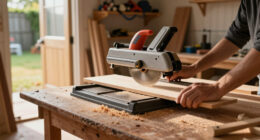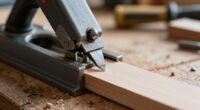
Before replacing planer knives, carefully examine the surface for lines or nicks. These marks often come from blade dullness, misalignment, or wood grain issues, not just blade damage. Check if the lines are consistent or irregular, as this helps identify the cause. Sharp, clear edges usually indicate dull blades, while uneven lines suggest misalignment or grain problems. Knowing how to diagnose these signs can save you time—stay with us to learn more about fixing these issues effectively.

Get business pricing on tools and workshop supplies
- Business-only prices and quantity discounts
- Tax-exempt purchasing
- Multiple users, one account, clear invoices
Key Takeaways
- Examine the cut surface for subtle scratches or grain tearing to distinguish between blade damage and wood grain issues.
- Check for irregular or deep lines, which typically indicate dull blades or nicks needing sharpening or replacement.
- Inspect the blade edges for chips, unevenness, or dullness during routine maintenance to identify potential causes of lines.
- Assess if the lines are consistent across the board, suggesting a blade issue, or random, pointing to grain variations.
- Confirm proper blade alignment and sharpness before replacing blades, as misaligned or dull blades can also cause line defects.
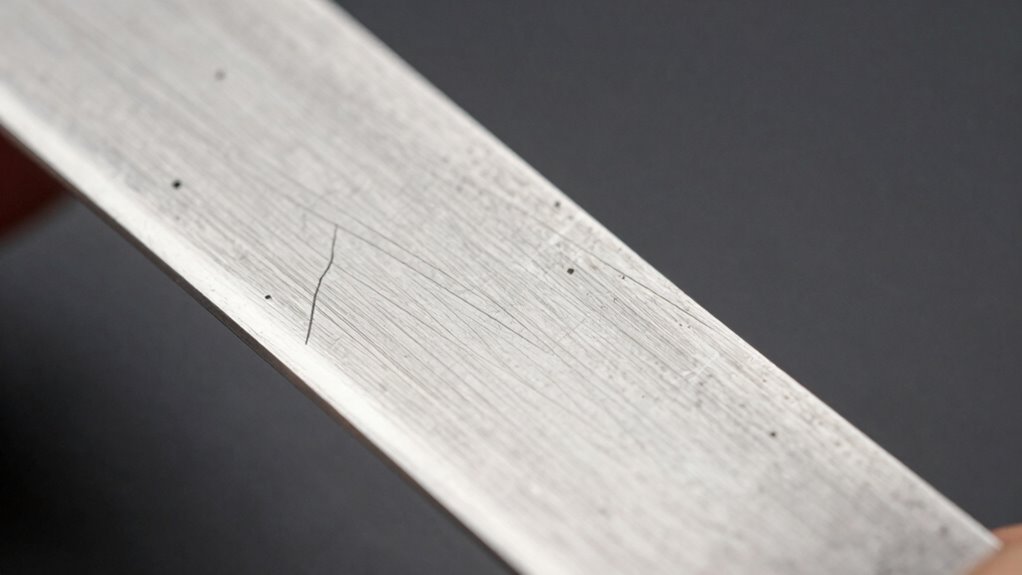
Planer knife nicks are a common problem that can considerably affect the quality of your woodworking projects. When your blades develop nicks, you might notice uneven cuts, rough surfaces, or tear-out, all of which compromise the smoothness and precision of your work. Before rushing to replace the entire set of blades, it’s vital to understand what’s causing these imperfections and how to address them effectively. One of the first steps is to examine the wood grain you’re working with. If you’re cutting through wood with a highly figured or uneven grain, it can cause the blades to catch or nick more easily, especially if the blades aren’t sharp enough. Recognizing the type of wood grain helps you anticipate potential issues and take preventive measures, such as adjusting feed rate or applying more consistent pressure during planing. Additionally, inspecting your blades for proper alignment can help prevent nicks and improve cut quality.
When you encounter nicks, the instinct might be to replace the blades immediately, but often, blade sharpening can resolve the problem more efficiently and economically. Sharpening your planer knives restores their edge, making them cut cleanly through the wood grain and reducing the likelihood of nicks. Proper blade sharpening involves checking the blades for dullness, chips, or uneven edges, then carefully honing or grinding them to a fine edge. Regular sharpening not only prolongs the life of your blades but also ensures smoother cuts and a better finish on your projects.
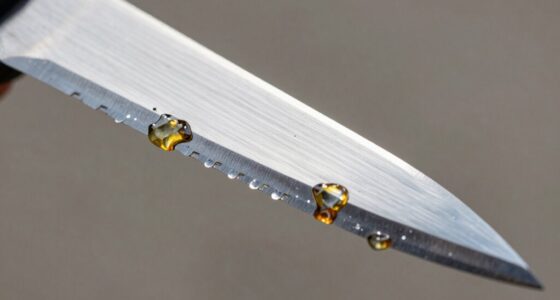
It’s vital to diagnose the lines or marks on your wood before proceeding. Sometimes, what appears to be a nick might be a subtle scratch or a slight tear in the wood grain, which can be mistaken for blade damage. By closely inspecting the cut surface, you can determine whether the issue lies with the blade’s sharpness, the alignment, or the wood itself. If you notice consistent lines or ridges in the grain, it could be a sign that your blades need sharpening or realignment. If the lines are irregular or deep, then it’s likely time to hone or replace your blades.
As an affiliate, we earn on qualifying purchases.
Frequently Asked Questions
Can Planer Knife Nicks Cause Uneven Cutting?
Yes, planer knife nicks can cause uneven cutting. Edge damage from nicks disrupts the blade’s smooth rotation, leading to inconsistent cuts. Additionally, if the knives are misaligned due to damage or improper installation, it worsens the problem. You should inspect for edge damage and check blade alignment first, as addressing these issues often resolves uneven cutting without immediately replacing the knives. Proper maintenance prevents further damage and guarantees a clean, even finish.
How Long Do Planer Knives Typically Last?
Ever wondered how long your planer knives last? Typically, they stay sharp for about 20-40 hours of use, but this depends on your knife maintenance and the wood’s grit. Regular blade sharpening can prolong their life, preventing nicks and uneven cuts. Keep an eye on the quality of your cuts, and replace or sharpen your blades promptly to ensure smooth, consistent results. Proper care keeps your planer running efficiently longer.
Are There Specific Tools for Inspecting Knife Lines?
Yes, there are specific tools for inspecting knife lines. You should use inspection tools like a magnifying glass or a flashlight to closely examine the knives. Knife line gauges are also essential—they help you measure the evenness and detect nicks or damage along the blade edges. Regularly using these tools guarantees you catch issues early, preventing costly replacements and maintaining excellent planer performance.
What Safety Precautions Should I Take When Replacing Knives?
When replacing knives, always wear safety gear like gloves and eye protection to prevent injuries. Before starting, verify the power disconnect is engaged to avoid accidental startup. Carefully follow the manufacturer’s instructions, and handle blades with care to prevent cuts. Double-check that the machine is unplugged and stable before working on it. These precautions keep you safe while maintaining the equipment effectively.
Can I Sharpen Planer Knives Instead of Replacing Them?
You can sharpen planer knives instead of replacing them, but make certain you maintain proper blade alignment during the process. Use appropriate sharpening techniques, like a fine-grit stone or a dedicated sharpening system, to restore the cutting edge. Keep the blades evenly sharpened to avoid uneven cuts and ensure safety. Regular sharpening can extend blade life, but replace them if they become severely nicked or damaged beyond repair.
Conclusion
Before swapping out your planer knives, take a close look at those lines—don’t just assume it’s a dull blade. Diagnosing nicks early is like catching cracks in a mirror before they shatter everything. By understanding whether the damage is minor or major, you save time, money, and frustration. Remember, a little detective work now can prevent a big headache later. Keep your blades sharp and your projects smooth—like a well-oiled machine ready to roll.
Fall yard work Picks
leaf blowers
As an affiliate, we earn on qualifying purchases.