CFM, or cubic feet per minute, measures your dust collector’s airflow capacity, but it’s not the only factor in keeping your shop clean. To actually control dust, you need the right balance of effective filters and well-designed ductwork that minimize resistance. High CFM alone won’t guarantee a dust-free environment. If you’d like to understand how airflow, filtration, and duct design work together to improve your shop’s cleanliness, keep exploring these essential concepts.

Get business pricing on tools and workshop supplies
- Business-only prices and quantity discounts
- Tax-exempt purchasing
- Multiple users, one account, clear invoices
Key Takeaways
- CFM (Cubic Feet per Minute) measures the volume of air a dust collection system can move, affecting its dust removal capacity.
- Higher CFM does not guarantee cleaner air; proper filtration and duct design are essential for effective dust capture.
- Matching system CFM to your shop size and dust production ensures optimal airflow and performance.
- Proper duct layout, sizing, and sealing are crucial to convert CFM into actual dust collection efficiency.
- Regular maintenance of filters and ducts maintains airflow effectiveness and keeps your shop consistently clean.

Are you wondering how to guarantee your dust collection system works effectively? The key lies in understanding the importance of proper air filtration and duct design. These elements directly influence the system’s ability to remove dust particles from your workspace efficiently. When designed correctly, your dust collection system can keep your shop cleaner, healthier, and safer. But if either air filtration or duct design falls short, no amount of CFM (cubic feet per minute) will compensate for poor airflow management. That’s why you need to focus on these foundational aspects to ensure your dust collection system performs at its best.
Air filtration is vital because it determines how well your system captures and traps airborne dust particles. Even if your system moves a high volume of air, it won’t be effective if the filters aren’t capable of trapping fine dust or if they’re clogged prematurely. Choosing the right filters with the appropriate efficiency rating ensures dust particles are captured before they escape back into the shop environment. Regular maintenance, including timely filter replacements, is equally important. Neglecting this can drastically reduce air quality, no matter how high your CFM is. Remember, a system with excellent air filtration reduces airborne dust, making your workspace healthier and preventing dust buildup on equipment and surfaces.
Proper duct design is an equally essential role in maintaining effective airflow. Poorly designed ductwork creates resistance and turbulence, which can dramatically diminish the system’s actual CFM. When ducts are undersized, overly long, or have unnecessary bends, they restrict airflow, causing your dust collector to work harder without improving dust capture. Proper duct sizing, smooth bends, and strategic layout minimize resistance and ensure consistent air movement. Additionally, placing blast gates correctly and sealing leaks helps maintain ideal airflow throughout your system. A well-designed duct system not only enhances dust collection efficiency but also prolongs the life of your equipment, reduces noise, and improves overall shop cleanliness.
To maximize system performance, understanding airflow management is crucial because it encompasses all factors that influence how effectively air is moved and filtered within your dust collection setup. Ultimately, matching the right CFM rating to your shop’s size and dust generation is critical, but it’s only part of the equation. To truly guarantee your dust collection system works effectively, you need to give equal attention to air filtration and duct design. These elements ensure that the high airflow your system produces actually translates into cleaner air and a healthier workspace. When both are optimized, your dust collection system won’t just move air—it will create a safer, more efficient environment where dust is kept in check, and your tools stay clean. So, take the time to evaluate your air filtration setup and duct layout, and watch your shop stay cleaner and safer every day.
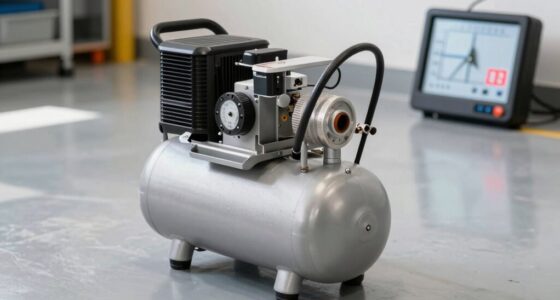
dust collection system with high CFM
As an affiliate, we earn on qualifying purchases.
As an affiliate, we earn on qualifying purchases.
Frequently Asked Questions
How Do I Calculate the Necessary CFM for My Specific Tools?
To calculate the necessary CFM for your tools, start by checking each tool’s airflow requirements. Measure or find their recommended CFM ratings, then add these together for multiple tools used simultaneously. Use an airflow calculation to guarantee your dust collection system can handle the combined CFM needs. This way, you’ll maintain effective dust extraction and keep your shop clean and safe during all your projects.
Can a Dust Collector Be Too Powerful for My Workshop Size?
Is a dust collector too powerful? Think of it as a lion in a small cage—overkill and potentially disruptive. Yes, a dust collector capacity that’s too high can cause excessive airflow, making dust collection noisy and inefficient for your workshop size. To get the best performance, match your dust collector’s capacity with your workshop size. Otherwise, you might waste energy and create unnecessary turbulence.
What Maintenance Is Required for Optimal CFM Performance?
To keep your dust collector performing ideally, you should regularly replace filters and inspect ducts for blockages or leaks. Clean or replace filters when they become clogged to maintain proper airflow and CFM. Additionally, check your ductwork for obstructions or damage, ensuring an unobstructed path for dust. Routine maintenance like this helps preserve high CFM levels, keeping your workshop clean and your dust collection system working efficiently.
How Does Duct Size Influence CFM and Dust Collection Efficiency?
Think of duct diameter as the wide river channel for your dust to flow through. Larger ducts reduce airflow restriction, allowing dust and debris to move swiftly, boosting CFM and collection efficiency. Narrow ducts act like clogged pipes, slowing down airflow and trapping dust. Choosing the right duct size guarantees your dust collection system remains a smooth, powerful current, keeping your shop cleaner and safer.
Is Higher CFM Always Better for Dust Collection Systems?
Higher CFM isn’t always better for your dust collector capacity. While increased airflow measurement can improve dust removal, pushing CFM too high might cause inefficiencies or noise issues. It’s essential to match your dust collection system to your shop’s size and equipment. Focus on achieving the right airflow for effective dust collection rather than just chasing higher numbers, ensuring your system remains efficient and safe.
Conclusion
Now that you understand how CFM shapes your dust collection system, you’re armed with the secret sauce to keep your shop sparkling. Think of CFM as the heartbeat of your cleanup crew—pumping power to sweep away chaos. When you choose the right CFM, your workspace stays as tidy as a freshly polished gem. So, set your system right, and let it breathe life into a cleaner, safer, more enjoyable shop environment.
Fall Picks
fall essentials
As an affiliate, we earn on qualifying purchases.