If you want alternatives to spline or biscuit joints for panel glue-ups, consider using laminate techniques for a smooth, seamless bond or dowel jointing for strong, precise connections. Pocket-hole screws provide sturdy, concealed fastening, while internal reinforcements like splines or corner blocks can boost durability. These options balance strength, ease, and clean appearance. To explore which method best suits your project, keep going for detailed insights.
Key Takeaways
- Laminate techniques provide seamless, strong bonds suitable for veneer panels and high-quality finishes.
- Dowels offer precise, reinforced joints with a clean look, rivaling mortise and tenon strength.
- Pocket-hole joinery creates concealed, durable connections ideal for panel assembly with minimal tools.
- Edge-gluing combined with splines or corner blocks enhances panel stability and alignment.
- Other options like biscuits or laminate bonding can be selected based on project needs and desired aesthetics.
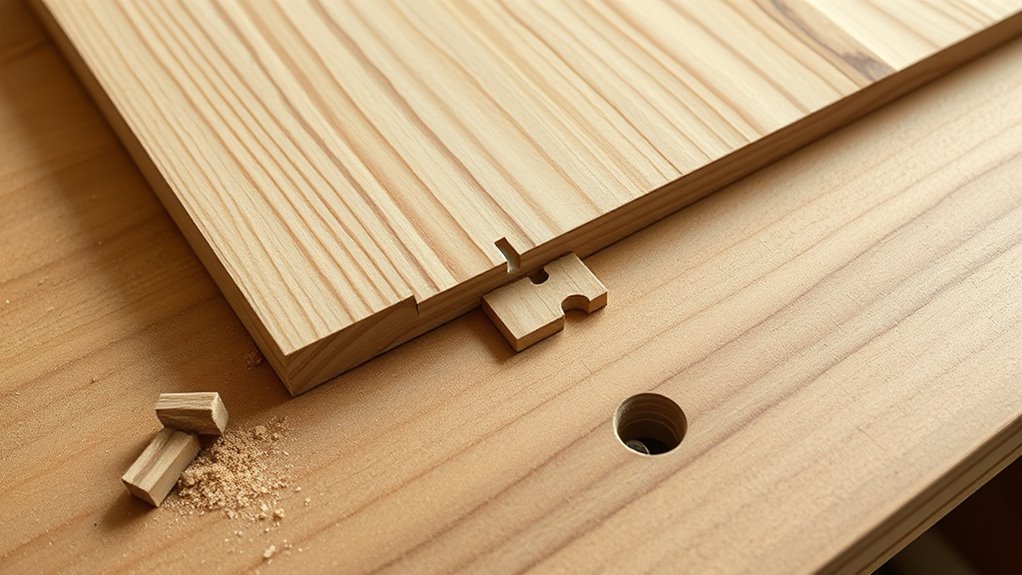
Are splines and biscuits the only options for creating strong, reliable joints in woodworking? Not at all. While these methods are popular, there are several effective alternatives that can give you sturdy, precise panel glue-ups. One of the most straightforward options is laminate techniques, which involve applying a thin layer of adhesive or laminate material to bond surfaces securely. Laminate techniques work well when you’re looking to create a flat, seamless joint—think of laminating veneer to a substrate or using a high-quality glue to bond panels together. These methods are especially useful when you want a smooth, uniform appearance and a strong bond that resists warping or movement over time. Additionally, choosing the right jointing method can depend on the specific type of wood and the conditions it will face.
Another reliable method you should consider is dowel jointing. Dowel joints use wooden dowels inserted into pre-drilled holes in each panel, aligning and reinforcing the connection. This technique offers excellent strength and precision, especially when paired with precise measurements and good-quality dowels. Dowel jointing can be faster than creating intricate joinery and provides a clean, professional look without visible fasteners. Plus, it’s versatile—suitable for both face-to-face panel joins and edge-to-edge applications. When executed correctly, dowel joints can rival the strength of traditional mortise and tenon joints, making them a popular choice for furniture and cabinet-making.
Dowel jointing offers strong, precise, and versatile bonds without visible fasteners, ideal for furniture and cabinet projects.
Beyond these, there are other methods worth exploring. For example, biscuit joinery—though not the only option—is still quite effective if you combine it with proper clamping and glue application. However, if you’re seeking alternatives, consider pocket-hole joinery, which uses a special jig to drill angled holes for screws, creating a strong, concealed joint. Edge-gluing with careful clamping and appropriate glue can also produce strong panel joints, especially when combined with internal reinforcement like spline joinery or corner blocks. Proper technique in applying these methods is key to ensuring durability and ease of assembly.
Ultimately, the choice depends on your project’s needs, tools, and desired aesthetics. Laminate techniques and dowel jointing are especially appealing because they balance strength, ease of execution, and a clean appearance. They also expand your options beyond traditional splines and biscuits, giving you more flexibility in creating durable, professional-looking panel glue-ups. By understanding these alternatives, you can select the method that best fits your project, ensuring both durability and visual appeal in your woodworking endeavors.
Frequently Asked Questions
How Do Spline and Biscuit Joints Compare in Strength?
Spline joints generally provide greater joint stability and strength because they increase surface area and guarantee better material compatibility, especially with wide panels. Biscuit joints, while easier and faster to create, offer less strength but still enhance alignment and stability. If you need maximum strength and durability, spline joints are the better choice, but for quick, moderate reinforcement, biscuits work well without compromising too much on joint stability.
Are There Cost Differences Between These Alternatives?
You’ll find that the cost comparison between spline and biscuit joints depends on material costs and tools needed. Spline joints often require additional material and precise cutting, which can increase expenses. Biscuit joints use pre-made, inexpensive biscuits, making them more budget-friendly overall. If you’re trying to save, biscuits typically cost less, especially since you might already have the necessary tools, whereas splines can add to your material costs.
Can These Alternatives Be Used With All Wood Types?
Yes, these alternatives work with most wood types, but you should consider wood type compatibility and adhesive compatibility. Hardwoods and softwoods generally respond well, but some softer woods may require stronger adhesives or specific substitutes to guarantee a secure bond. Always check the manufacturer’s recommendations for both the wood and the adhesive to avoid issues like splitting or weak joints, ensuring a durable and reliable panel glue-up.
What Tools Are Needed for Installing These Alternatives?
You need basic tools like a drill, saw, clamps, and measuring tape for installing these alternatives. The installation process involves marking your wood pieces accurately, drilling precise holes or slots, fitting the spline or biscuit, and clamping the panels securely. Using these tools guarantees a smooth, accurate join. Prepare your workspace, gather your tools, and follow each step carefully to achieve strong, seamless panel glue‑ups with these alternatives.
How Do These Options Affect the Overall Project Durability?
Using spline and biscuit alternatives can enhance your glue joint integrity, leading to improved long-term stability. These options provide better alignment and stronger connections, reducing warping or splitting over time. By choosing the right method, you guarantee your project remains durable and resilient, even with daily use or environmental changes. Overall, these alternatives positively impact your project’s longevity, giving you confidence in its structural soundness for years to come.
Conclusion
When choosing alternatives to spline and biscuit joints, think of it like exploring a toolbox full of different paintbrushes—each one suited for a unique stroke. You can craft strong, seamless panel glue-ups without relying solely on traditional methods. By experimenting with these options, you’ll find the perfect fit for your project, much like discovering a favorite color that brings your vision to life. Keep trying, and you’ll master the art of durable, beautiful panel assembly.