To master sawing by hand, focus on three key techniques. For rip cuts, line up your mark clearly and guide the saw steadily along the grain, letting the blade do the work. For crosscuts, support the wood and saw slowly for accuracy. Dovetail cuts demand patience, sharp blades, and careful control to produce tight joints. Practicing these methods enhances precision and craftsmanship—keep exploring to uncover detailed tips for perfecting each technique.
Key Takeaways
- Use proper techniques: rip cuts follow the grain, crosscuts cut across the grain, and dovetails require precise, controlled cuts.
- Ensure blades are sharp and well-maintained for clean, accurate hand sawing.
- Mark cut lines clearly, support the workpiece, and guide the saw steadily for straight, smooth cuts.
- Keep hands behind the blade, cut away from the body, and maintain control to ensure safety and precision.
- Rest periodically, double-check measurements, and maintain saw cleanliness to achieve professional results.
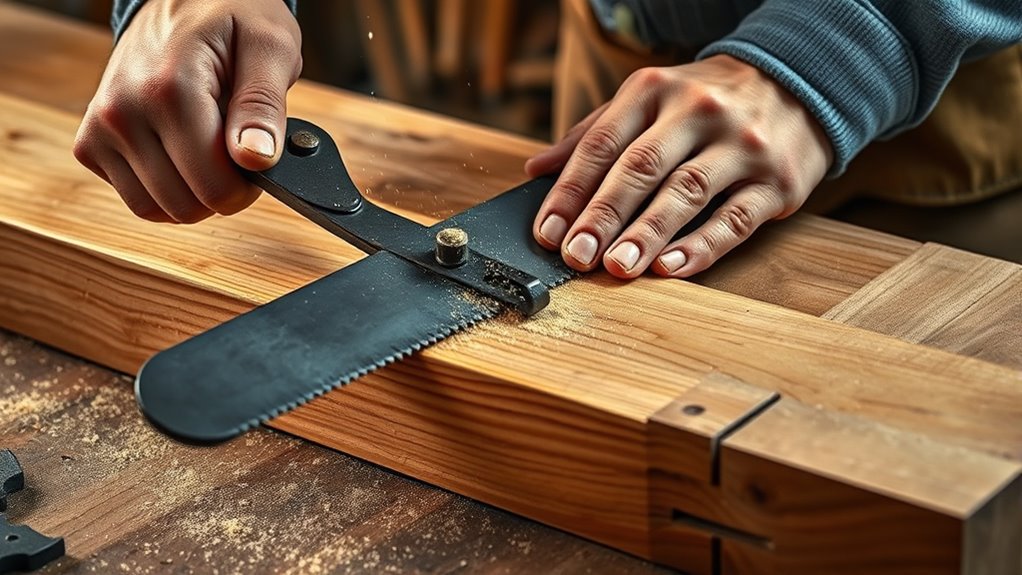
Have you ever wondered how to cut wood precisely without power tools? Mastering hand sawing techniques requires not only skill but also attention to blade maintenance and safety precautions. Properly maintaining your saw blades ensures clean cuts and extends the tool’s lifespan. Regularly inspect your saw blades for dullness, chips, or cracks. Sharpen or replace blades as needed—dull blades require more force and can cause uneven cuts or bind the saw, risking injury. When you’re preparing your workspace, always prioritize safety: secure your workpiece firmly, wear safety glasses, and keep your hands clear of the blade’s path. Using the right saw for the job and maintaining proper posture will also help you stay safe and achieve accurate cuts. blade maintenance is essential for consistent results and safety.
When performing rip cuts, which involve cutting along the grain of the wood, your focus should be on controlling the saw for straight, smooth lines. To do this, mark your cut line clearly and align it with the saw blade. Keep your body positioned comfortably, with your dominant hand guiding the saw and your other hand steadying the wood. Use long, steady strokes, letting the blade do the work—don’t force it through the wood. Regularly check your blade’s sharpness to keep cuts clean and avoid the added effort that dull blades cause. Remember, blade maintenance isn’t just about sharpening; it also involves keeping the saw clean and free of pitch and resin, which can hinder performance.
Crosscutting, or cutting across the grain, demands similar precision but also a different stance. Support the wood so it doesn’t shift as you saw, and cut slowly to ensure a straight line. Here, safety precautions become even more critical because the wood may tend to splinter or bind if not supported properly. Make sure your saw’s teeth are sharp and in good condition; dull teeth can cause rough edges and require more force, increasing the risk of slipping or injury. Always cut away from your body and keep your hands behind the saw’s cutting path. When you’re done, clean your saw and inspect the blade again, ensuring it remains in prime condition for future use.
Dovetail cuts, often used in fine woodworking, require meticulous blade control and patience. These joints are made with precision, so your blade must be sharp, and your technique consistent. Take your time, and don’t rush through the cuts. Safety precautions are especially important here, as the detailed cuts mean longer use of the saw, increasing fatigue. Rest periodically to maintain steady hands, and double-check your measurements and markings before each cut. Proper blade maintenance—keeping your saw sharp and clean—directly impacts the quality of your dovetail joints. By observing safety precautions and maintaining your blade, you’ll achieve tight, professional-looking joints that stand the test of time, all without the need for power tools.

RUITOOL Japanese Hand Saw 6 Inch Double Edge Sided Pull Saw Ryoba SK5 Flexible Blade 14/17 TPI Flush Cut Beech Handle Wood Saw for Woodworking Tools
An Idea Gift for Woodworker, Carpenter and Craft Man
As an affiliate, we earn on qualifying purchases.
As an affiliate, we earn on qualifying purchases.
Frequently Asked Questions
What Safety Gear Is Recommended for Hand Sawing?
You should always wear safety gear essentials like safety glasses to protect your eyes from sawdust and debris. Consider using a dust mask to prevent inhaling fine particles and gloves to improve grip and protect your hands, but avoid loose gloves that could get caught. Follow protective equipment tips by ensuring your gear fits well and is in good condition. Stay focused and use proper technique to keep safety a priority during hand sawing.
How Do I Maintain a Sharp Hand Saw?
To maintain a sharp hand saw, you should regularly perform saw blade maintenance by cleaning off rust and debris. Use sharpening techniques like filing the teeth with a fine file, making sure you follow the original angles and tooth shape. Keep your saw sharp by inspecting for dull or damaged teeth and sharpening or replacing them as needed. Proper maintenance ensures cleaner cuts and extends the saw’s lifespan.
What Types of Wood Are Best for Hand Sawing?
You should choose woods with a straight, consistent wood grain for easier hand sawing, like pine, cedar, or oak. These woods typically have lower moisture content, making them less likely to warp or splinter during cuts. Avoid woods with irregular grain or high moisture, such as wet or green wood, because they’re harder to cut cleanly. Properly selecting wood with favorable grain and moisture levels guarantees smoother, safer sawing.
How Do I Choose the Right Saw for Each Cut?
To choose the right saw, consider your cutting techniques. For rip cuts, pick a saw with a saw blade type featuring fewer teeth for efficient straight cuts. For crosscuts, opt for a saw with finer teeth to make cleaner, angled cuts. Dovetailing requires a saw with precise, narrow blades. Match the saw blade type to your technique, and guarantee the saw’s design supports smooth, controlled cuts for best results.
Are There Common Mistakes to Avoid When Hand Sawing?
When hand sawing, you should avoid common errors like applying too much pressure, which can cause the saw to bind or veer off course. Keep your sawing technique steady and let the saw do the work. Don’t rush, and make certain your blade is sharp. Many mistakes happen when you don’t secure the workpiece properly or force the saw. Focus on smooth, controlled strokes for accurate cuts and safer sawing.
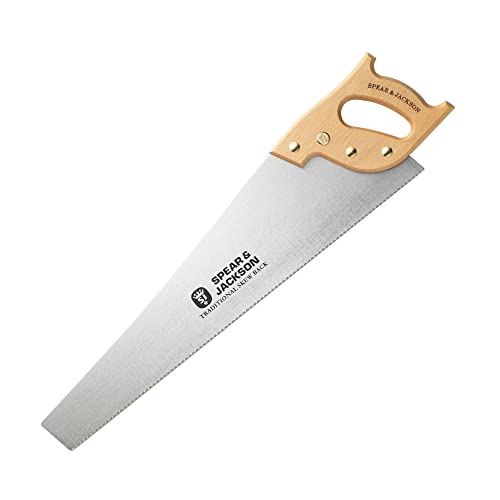
Spear & Jackson Saw Skew Back 22 inch x 10 ppi
Universal teeth for general use, cuts along and across the grain
As an affiliate, we earn on qualifying purchases.
As an affiliate, we earn on qualifying purchases.
Conclusion
Now that you’ve learned these hand sawing techniques, think of yourself as a skilled gardener tending to a delicate vine. Each rip, crosscut, and dovetail is like nurturing a new branch, shaping it with patience and precision. With practice, you’ll weave a sturdy, beautiful trellis of craftsmanship, where every cut is a step toward mastery. Remember, every skilled gardener starts with small, careful cuts—trust in your hands and watch your skills blossom.

IRWIN Hand Saw, Coarse Cut, ProTouch Handle, 15-Inch (2011201)
This carpenter saw uses M2 tooth technology and Tri-Ground teeth for fast, efficient cuts
As an affiliate, we earn on qualifying purchases.
As an affiliate, we earn on qualifying purchases.

SUIZAN Dozuki Dovetail Saw 7" Rip Cross Angle Cut – Professional Japanese Pullsaw Handsaw Woodworking Tools
JAPANESE STYLE PULL SAW: This product is a “Pull Saw.” Most people are used to European saws, called…
As an affiliate, we earn on qualifying purchases.
As an affiliate, we earn on qualifying purchases.