To make accurate hand-cut dovetails, start by carefully marking your baselines, ensuring they’re straight and aligned with the grain for smooth cuts. Keep your tools sharp and chisel along the baselines, removing small amounts of material patiently to achieve a tight fit. Focus on proper grain orientation and use consistent reference points throughout the process. If you pay attention to these details, you’ll create strong, neat joints—plus, there’s more to master for perfection.
Key Takeaways
- Establish clear baselines using sharp pencils and squares to guide accurate cuts and chiseling.
- Orient workpieces so the grain runs parallel to cut lines, reducing tear-out and ensuring cleaner joints.
- Keep chisels sharp and remove small amounts of material gradually for precise fitting.
- Use proper sound environment and focus to improve tool control and achieve consistent results.
- Test fit frequently and be patient, making incremental adjustments for a tight, durable dovetail joint.

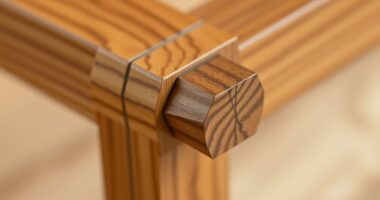
Dovetail joinery is a woodworking technique renowned for its strength and aesthetic appeal. When you’re hand-cutting dovetails, paying close attention to grain orientation is essential. The way the wood fibers run influences how cleanly you can cut and chisel your joints. You want to orient your workpiece so that the grain runs parallel to the face of the cut, which helps prevent splintering and ensures a smoother fit. Proper grain orientation also makes chiseling easier, giving you cleaner lines and reducing the risk of tear-out. Before you start, take the time to examine your wood’s grain pattern, and plan your cuts accordingly; this small step can make a big difference in the quality of your dovetails. Additionally, understanding sound design principles can help you create a quiet, distraction-free environment while working, leading to better focus and precision.
Pay attention to grain orientation for cleaner, stronger dovetails and easier chiseling.
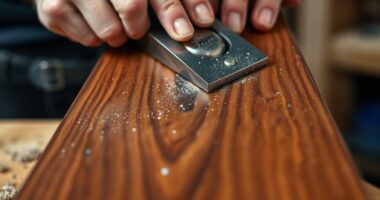
Tool sharpening is equally critical in hand-cut dovetail work. Sharp tools, especially chisels and saws, give you more control and produce cleaner, more precise cuts. Dull tools tend to tear the wood fibers, which can ruin your joints and make fitting difficult. Regularly check and sharpen your chisels to maintain a keen edge—this is key for creating tight, accurate baselines and for clean chiseling. When you sharpen your tools, focus on maintaining a consistent bevel angle, and use a fine-grit stone for honing. This ensures your tools cut effectively through the grain and produce smooth surfaces that require minimal cleanup. When your tools are sharp, you can work faster and with more confidence, knowing your cuts will be precise and your joints tight.
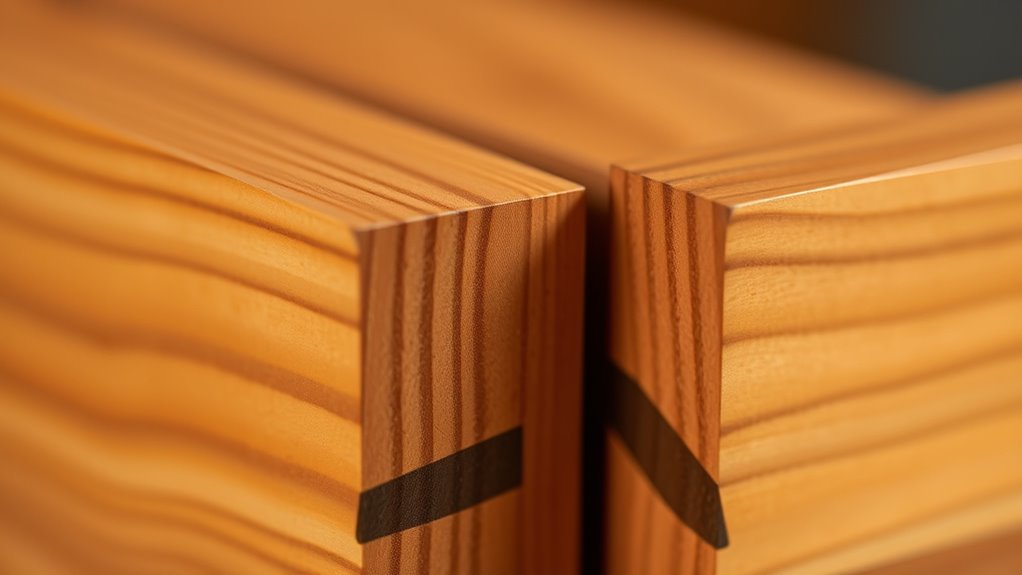
Once you’ve prepared your tools and considered grain orientation, establishing accurate baselines becomes your next priority. These baselines serve as reference points for your cuts, so they must be straight and well-defined. Use a sharp pencil or marking knife to trace your baseline, and confirm its alignment with a square. When cutting the pins and tails, keep your saw guided by these baselines, ensuring consistent depth and angle. As you chisel away waste between pins and tails, keep your chisels sharp and work carefully along the baseline; this will help you achieve a crisp, neat joint. Fitting dovetails is a matter of patience—test and adjust frequently, removing small amounts of material at a time.
Ultimately, hand-cut dovetails demand precision, patience, and attention to detail. By understanding how grain orientation affects your cuts and maintaining sharp tools, you set yourself up for success. With practice, these fundamental skills will improve your craftsmanship, resulting in dovetail joints that are both beautiful and durable. Remember, the key lies in preparation—sharp tools, correct grain orientation, and meticulous baselines make the difference between a good fit and a perfect one.
Frequently Asked Questions
What Are the Best Hand Tools for Cutting Dovetails?
For hand-cut dovetails, you should use a fine dovetail saw, chisels, and a marking gauge. While dovetail jigs and automated cutting tools are great for quick, precise cuts, traditional hand tools give you more control and craftsmanship. A sharp dovetail saw helps make accurate cuts, and quality chisels help clean up the joints. Combining these tools allows you to craft perfect dovetails with skill and precision.
How Do I Correct Mistakes in Dovetail Joinery?
If you make a mistake in your dovetail joinery, start by carefully evaluating the issue for precision alignment. Use a chisel to gently refine the joint, removing any excess material or misaligned sections. Don’t rush; take your time to adjust the fit. Small corrections can greatly improve the overall joint, ensuring a strong, clean connection. Patience and careful chiseling are key to successful joint refinement.
What Wood Types Are Ideal for Hand Cut Dovetails?
You should choose hardwoods like oak, maple, or walnut for hand cut dovetails because their tight wood grain guarantees better joint strength and easier chiseling. Softwoods like pine or cedar can work, but their looser grain may cause weaker joints or chipping. Select wood with a straight, uniform grain to achieve precise cuts and a durable, tight-fitting dovetail. This improves both the strength and longevity of your project.
How Do I Maintain Consistent Dovetail Sizes?
Imagine your dovetails as tiny, perfect puzzle pieces fitting together seamlessly—now, to keep them uniform, focus on your dovetail layout and baseline consistency. Use a sharp pencil and a marking gauge for precise lines, and always double-check your measurements before cutting. Consistent baselines guarantee each cut aligns perfectly, so your dovetails stay uniform. Practice patience and steady hands, and you’ll craft flawless, evenly-sized dovetails every time.
What Safety Precautions Should I Take During Chiseling?
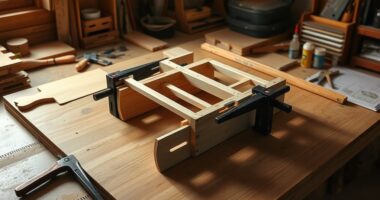
You should always wear eye protection to guard against flying chips and splinters. Keep a proper grip on your chisel to prevent slips that could cause injury. Make certain your workpiece is securely clamped, and work in a well-lit area. Use controlled, deliberate strikes to maintain safety. Staying focused and cautious helps prevent accidents and ensures precise cuts, making your chiseling safer and more effective.
Conclusion
Mastering hand cut dovetails is like sculpting a perfect piece of art—you shape each cut with care, knowing that precision creates strength and beauty. I once watched a seasoned woodworker spend extra time chiseling, and the final joint fit so snugly it was like a puzzle piece locking into place. Remember, patience and practice turn rough sketches into refined masterpieces, turning your woodworking projects from simple joints into timeless heirlooms.