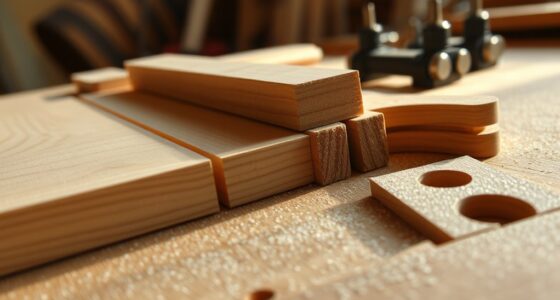
To create strong miters with keys and splines, start by precisely cutting the miter joints and carefully fitting either keys or splines into aligned grooves. Use contrasting or matching woods for added strength and aesthetic appeal. Inserting keys or splines distributes stress evenly, preventing splitting or weakening over time. For ideal results, pay attention to detail and precise cuttings. If you continue exploring, you’ll discover expert tips to enhance both the durability and visual impact of your joints.
Key Takeaways
- Precisely cut matching slots or grooves at the miter joint for inserting keys or splines.
- Use contrasting materials or decorative inlays to enhance both strength and visual appeal.
- Gluing and clamping keys or splines securely ensures a durable, reinforced joint.
- Experiment with different shapes and patterns of keys and splines for customized aesthetics.
- Properly aligned and fitted reinforcement elements prevent joint weakening under load or twisting.

Creating strong miters is essential for achieving professional-quality joints in woodworking projects. When you’re aiming for durability and a polished appearance, relying solely on glue isn’t enough. Incorporating joint reinforcement techniques, like keys and splines, can considerably enhance the strength of your miter joints. These methods not only improve the structural integrity but also open up opportunities for adding decorative inlays, giving your work a custom, refined look.
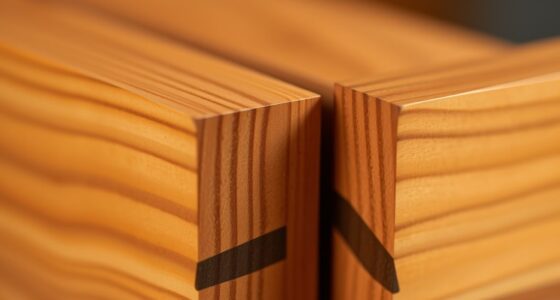
Using keys involves inserting small, shaped pieces of wood or contrasting material into precisely cut slots across the miter joint. This technique effectively resists twisting and pulling forces, preventing the joint from weakening over time. When you add keys, you’re reinforcing the joint internally, which is especially beneficial in furniture or picture frames where stability is critical. Plus, you can choose different woods or even colorful inlays for aesthetic appeal, turning a simple miter into a decorative feature. This approach allows you to combine joint reinforcement with decorative inlays, making your project both sturdy and visually engaging.
Inserting shaped keys reinforces miters internally, adding stability and decorative appeal to your woodworking projects.
Splines are another excellent method for strengthening miters. They involve cutting a groove along the mitered edge and inserting a thin strip of wood—all aligned to run across the joint. When glued in place, splines distribute stress evenly and prevent the joint from opening or splitting under load. They’re particularly useful when you’re working with wider panels or larger frames, where forces are more likely to cause joint failure. As with keys, splines can be made from contrasting woods or materials, adding a decorative element to your piece. This not only enhances the joint’s strength but also elevates the overall design, making the craftsmanship stand out.
Both keys and splines provide a reliable way to reinforce miters, but they also offer creative avenues for customization. You can experiment with different shapes, materials, and inlay designs to match the style of your project. For example, decorative inlays within the keys or along the spline can add a unique touch, turning a functional joint into a focal point. When you incorporate these reinforcement techniques thoughtfully, you’re ensuring your project will last longer, look more professional, and have that extra flair that sets your work apart. Additionally, understanding the importance of contrast in materials can help enhance both the strength and visual appeal of your joints.
Frequently Asked Questions
What Tools Are Best for Cutting Keys and Splines?
You should use specialized tools like router bits and saw blades to cut keys and splines effectively. A high-quality router with carbide-tipped bits guarantees precise, clean cuts, especially for intricate designs. For straight, accurate cuts, a saw blade on a band or circular saw works well. Always select blades designed for the material you’re working with, and make sure your tools are sharp and well-maintained for best results.
How Do I Measure for Perfect Miter Joints?
To measure for perfect miter joints, focus on measuring accuracy and joint alignment. Use a precise miter gauge or a combination square to mark your cuts accurately, ensuring angles are exact. Always double-check your measurements before cutting, and dry-fit the pieces to confirm proper alignment. Keep your tools sharp and calibrated for the best results, and take your time to achieve tight, seamless joints.
Can Keys and Splines Be Used With All Wood Types?
Yes, you can use keys and splines with many wood types, but consider wood type considerations and finish compatibility. Hardwoods like oak and maple work well because they hold splines and keys securely. Softwoods, such as pine, may require extra care to prevent splitting. Always test your materials first to guarantee the finish remains compatible, and choose appropriate adhesives for the best results with your specific wood type.
What Are Common Mistakes to Avoid When Creating Miters?
When creating miters, avoid joint misalignment by carefully measuring and aligning your pieces before cutting. Don’t rush the process, as improper adhesive application can weaken the joint. Make certain your cuts are precise and fit snugly to prevent gaps. Use clamps to hold everything steady while the glue dries, and double-check angles. These steps help you achieve strong, clean miters without mistakes that compromise the joint’s integrity.
How Do I Ensure Long-Term Durability of These Joints?
To guarantee your miter joints last, focus on proper adhesion techniques by using high-quality glue and applying it evenly. Clamp the joints securely while the adhesive cures. Additionally, protect your joints from environmental factors like moisture and temperature changes by sealing or finishing the wood. These steps strengthen the bond and prevent damage, ensuring your miters stay durable and intact over time.
Conclusion
Remember, a chain is only as strong as its weakest link. By incorporating keys and splines, you guarantee your miters are durable and reliable. Don’t settle for flimsy joints—invest a little extra effort for a professional finish. With these techniques, you’ll build stronger, more resilient projects that stand the test of time. Keep this in mind: “Strength in unity makes a house a home.” Stay diligent, and your craftsmanship will shine.