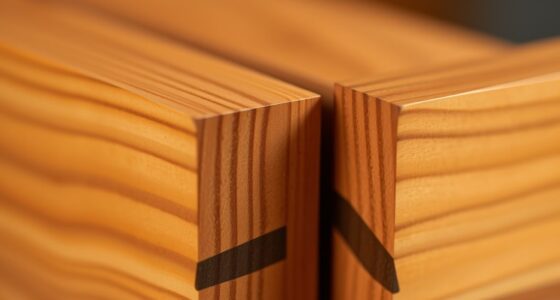
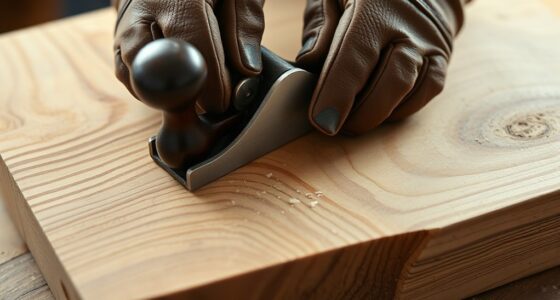
Chamfers, roundovers, and edge treatments are techniques that help you improve both the look and durability of your surfaces. A chamfer adds a beveled edge, giving a clean, angular appearance, while a roundover softens sharp corners for safety and a smoother feel. Proper edge treatments protect your projects from chips and dents, making them last longer. Keep exploring to discover how these details can truly elevate your craftsmanship and design.
Key Takeaways
- Chamfers create angled, beveled edges for a sleek, modern look and ease of assembly.
- Roundovers soften sharp corners, improving safety and durability of furniture and surfaces.
- Both edge treatments enhance aesthetic appeal by highlighting material grain and craftsmanship.
- Proper edge treatments protect edges from chips, dents, and damage over time.
- Choice of chamfers or roundovers depends on design style, safety considerations, and material type.

Edge treatments are finishing techniques that enhance the appearance and durability of various materials, from wood to fabric. When you choose the right edge treatment, you not only improve the structural integrity but also add a polished look to your project. For example, corner protection is a key benefit of certain edge treatments, especially when working with furniture or surfaces that experience frequent bumps and knocks. Rounded edges or chamfers help prevent chips and dents, making your piece last longer and stay looking new. Beyond protection, these treatments serve as aesthetic enhancements that can transform a plain surface into a sophisticated design feature. Whether you prefer a sleek, modern feel or a softer, more inviting look, selecting the appropriate edge treatment can make a significant difference.
When it comes to corner protection, roundovers are particularly effective. They soften sharp edges, making them safer and more comfortable to touch. This is especially important in homes with children or in high-traffic areas where accidental bumps happen often. Rounded edges also create a smooth transition between surfaces, which can enhance the overall flow of your design. On the other hand, chamfers introduce a beveled edge that adds a subtle angular detail, giving your project a more refined and professional appearance. Chamfers are versatile and can be used to create visual interest, directing attention to specific features or providing a seamless transition between different materials or surfaces.
Aesthetic enhancements from edge treatments go beyond just looks. They can accentuate the material’s natural beauty by adding contrast or highlighting grain patterns. For instance, a carefully crafted chamfer or roundover can emphasize the craftsmanship behind your work, making it stand out. Additionally, these treatments can hide imperfections or rough edges that might detract from the overall presentation. When you invest in proper edge finishing, you’re not just protecting your project; you’re elevating its style and perceived quality. It’s about balancing function with form—using edge treatments to create a finished, professional appearance while also ensuring longevity.
In addition, choosing the right edge treatment can also help maintain the material’s integrity, especially when working with softer or more delicate surfaces.

Yonico Chamfer Router Bits Bevel Edge Forming 45 Degree 1/4-Inch Shank 13915q
This bit has a 11/16" cutting height with an angle of 45 Degrees. This bit can be used…
As an affiliate, we earn on qualifying purchases.
As an affiliate, we earn on qualifying purchases.
Frequently Asked Questions
How Do I Choose Between a Chamfer and a Roundover?
You should choose a chamfer if you want a sleek, angular look that enhances edge safety and suits materials like metal or dense wood. Opt for a roundover if you prefer a softer, more comfortable edge that minimizes sharpness and works well with softer woods or plastics. Consider material compatibility and how the edge treatment affects safety; roundovers generally improve safety, while chamfers add a modern aesthetic.
What Tools Are Best for Creating Precise Edge Treatments?
Sure, because using the wrong tools for precise edge treatments is everyone’s dream, right? Start with quality router bits designed for detailed work—these give you clean, accurate edges. Sanding tools are essential afterward to smooth out any rough spots and perfect your finish. A good router and fine-grit sandpaper will make your edges look professional without endless frustration. Trust me, your project will thank you for choosing the right tools.
Can Edge Treatments Be Customized for Unique Furniture Designs?
Yes, you can customize edge treatments for your unique furniture designs. By exploring custom edge options, you’ll add bespoke furniture accents that perfectly match your vision. Using specialized tools and techniques, you can create intricate details or smooth finishes tailored to your project. This flexibility allows you to showcase your craftsmanship and make each piece truly one-of-a-kind, elevating your furniture’s aesthetic and appeal.
How Do Edge Treatments Affect the Durability of the Material?
Don’t judge a book by its cover; edge treatments remarkably boost your material’s durability. They help prevent material cracking and improve corrosion resistance, which means your furniture lasts longer. By choosing the right edge treatment, you protect your piece from wear and tear, ensuring it stays intact through daily use. Properly treated edges act as a shield, giving you peace of mind that your furniture remains sturdy and beautiful over time.
Are There Safety Considerations When Machining Edge Treatments?
Yes, there are safety considerations when machining edge treatments. You should always wear protective gear like gloves, goggles, and ear protection to prevent injuries from sharp edges, flying debris, or machine noise. Ensuring machine safety is essential; make sure guards are in place, follow proper procedures, and stay alert during operation. Taking these precautions helps protect you from cuts, burns, or other accidents while working with edge treatments.

TOTOWOOD Roundover Router Bit Set,4pcs Router bit Set,1/4 inch Shank,Radius in 1/8", 1/4", 3/16", 5/16",Bearing Guide for Rounding Edge bit (4pcs Roundover Router Bit)
TOTOWOOD Roundover Router Bit Set,4pcs Router bit Set,1/4 inch Shank,Radius 1/8", 1/4", 3/16", 5/16"
As an affiliate, we earn on qualifying purchases.
As an affiliate, we earn on qualifying purchases.
Conclusion
Remember, the details you choose to refine can subtly shape the overall impression. While chamfers and roundovers may seem minor, they gently guide the eye and feel, creating harmony and comfort. Sometimes, it’s the softer touches that leave the most lasting impact, whispering quality and care. So, trust your instincts and embrace the subtle art of edge treatments—they quietly tell your story without saying a word.

Stainless Steel Gua Sha Muscle Scraper Tool, Myofascial Scraping Tools for Physical Therapy, Lymphatic Drainage Massager, Soft Tissue Massage Tool
【Premium Medical-Grade Quality】Crafted with the utmost precision, our massage tools are constructed from premium medical-grade stainless steel. The…
As an affiliate, we earn on qualifying purchases.
As an affiliate, we earn on qualifying purchases.

U-Shape Edge Banding, 16.4ft Self Adhesive Veneer Edging,TPE Flexible Furniture Edge Protector for Cabinet Repair Furniture Restoration (20MM, White)
FURNITURE EDGE PROTECTION: 5M (16.4ft) long. The width and colour can be chosen at will according to your…
As an affiliate, we earn on qualifying purchases.
As an affiliate, we earn on qualifying purchases.