
To refresh your wooden utensils with lemon and salt, sprinkle coarse salt over the surface, then rub a halved lemon onto them, squeezing to release juice while scrubbing away stains and buildup. Focus on stubborn spots and rinse thoroughly with warm water. Dry immediately to prevent moisture damage. By maintaining this routine, your utensils stay clean, fresh, and beautiful—continue exploring tips to keep them in top shape for years to come.
Key Takeaways
- Sprinkle coarse salt on the wooden utensil to act as a gentle abrasive cleaner.
- Use lemon halves to scrub the salt-covered surface, squeezing for extra juice and stain removal.
- Rinse thoroughly with warm water to eliminate salt and lemon residues, preventing wood damage.
- Dry immediately with a clean towel to prevent moisture absorption and cracking.
- Regularly repeat this natural cleaning process to maintain freshness, shine, and prolong the utensil’s lifespan.

Wooden utensils add charm and warmth to your kitchen, but they require proper cleaning to stay in good condition. Maintaining your wooden utensils involves more than just rinsing them after use; it’s about implementing effective wooden utensil maintenance that keeps them safe, functional, and looking great. Natural cleaning tips are particularly useful because they avoid harsh chemicals that can damage the wood or leave residues. One of the simplest and most effective methods is revitalizing your utensils with lemon and salt, which naturally disinfect and brighten them.
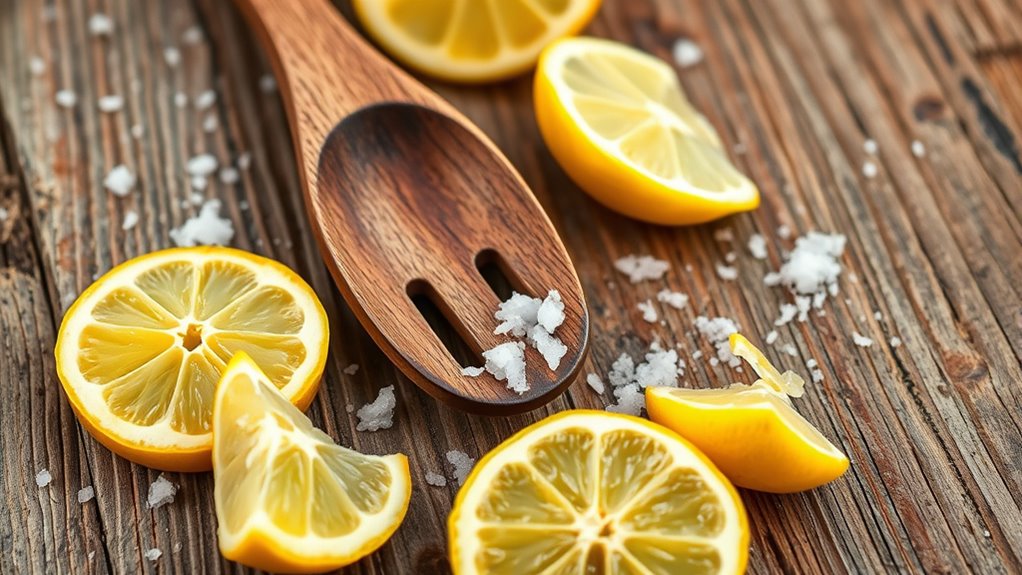
To start, sprinkle coarse salt generously over the surface of your wooden utensil. The salt acts as a gentle abrasive that helps scrub away stains, lingering food particles, and bacteria. Next, cut a lemon in half and use it as a natural scrubber. Rub the cut side of the lemon over the salted surface, squeezing slightly to release juice as you work. The acidic lemon juice helps break down grease and stains, while the salt provides scrubbing power. This combination is a natural cleaning tip that’s both eco-friendly and effective.
Sprinkle salt on wood, then scrub with lemon for a natural, eco-friendly clean.
As you scrub, pay attention to any stubborn spots, applying a little more salt and lemon juice as needed. The citrus oils from the lemon not only disinfect but also leave a fresh scent that revitalizes your wooden utensils. Once you’ve scrubbed thoroughly, rinse the utensil with warm water. Be sure to remove all salt and lemon residues because leftover acidity can, over time, degrade the wood. Dry the utensil immediately with a clean towel to prevent moisture absorption, which can cause cracking or warping. Additionally, using proper cleaning techniques can help prevent bacterial buildup on your utensils.
Regularly revitalizing your wooden utensils with lemon and salt helps maintain their appearance and extends their lifespan. This natural cleaning tip is especially helpful because it avoids the use of harsh chemicals, keeping your kitchen safe and eco-friendly. Remember, proper wooden utensil maintenance also includes occasional oiling with food-grade mineral oil to prevent the wood from drying out. When combined with routine cleaning, this simple step ensures your utensils remain smooth, durable, and beautiful over time.
Incorporating these natural cleaning tips into your routine doesn’t just preserve your wooden utensils; it also enhances their natural beauty. A little lemon and salt goes a long way in keeping your kitchen tools in top shape, making them a pleasure to use every day. With consistent care, your wooden utensils will continue to add rustic charm and warmth to your cooking space for years to come.

Holikme 6 Pack Dish Brush Kitchen Brushes Set with Vegetable Palm Brush, Bottle Brush, Dish Brush and Straw Brush, Fruit Cleaning Brushes for Cleaning Potato Skillet Wok Pot Pan Cast Iron, Yellow
Fruit and Vegetable Cleaning Brush Set. Find immense joy in washing vegetables & dishes with our kitchen cleaning…
As an affiliate, we earn on qualifying purchases.
As an affiliate, we earn on qualifying purchases.
Frequently Asked Questions
How Often Should I Refresh My Wooden Utensils?
You should refresh your wooden utensils every few weeks or when they start to look dull or stained. Regular cleaning frequency depends on usage, but a good rule is to wash them after each use with mild soap and water. To keep them in top shape, periodically use lemon and salt to clean and refresh their surface. This maintenance prevents odors and prolongs their lifespan, ensuring they stay functional and beautiful.
Can Lemon and Salt Damage Delicate Wood Finishes?
Did you know that lemon and salt are natural cleansers? They can damage delicate wood finishes if used excessively or with too much acidity. You should be cautious with their use, as they can affect wood preservation and interfere with finish compatibility. To avoid harm, use gentle scrubbing and test on a small area first. Properly balanced cleaning helps keep your utensils smooth without compromising their protective coating.
Are There Alternative Natural Cleaning Methods for Wooden Utensils?
Yes, there are alternative natural cleaning methods for wooden utensils. You can use a mixture of olive oil and vinegar to clean and condition your wooden tools, promoting wooden care and preventing cracks. Baking soda mixed with water forms a gentle scrub that removes stains without damaging the wood. Regularly wiping with a damp cloth and applying natural beeswax polish also helps maintain your utensils, ensuring they stay durable and beautiful.
How Do I Prevent Wooden Utensils From Cracking?
Think of your wooden utensils as resilient trees needing care to stand tall. To prevent cracking, you should regularly maintain them with natural cleaning techniques like lemon and salt, which nourish and remove grime. Keep them dry when not in use, avoid soaking, and periodically oil with food-safe oils to preserve their strength. Proper wooden utensil maintenance guarantees they stay sturdy and beautiful, much like a healthy tree enduring seasons.
Can Lemon and Salt Remove Deep Stains or Discoloration?
Yes, lemon and salt can help with stain removal and fading discoloration on wooden utensils. You simply sprinkle salt on the surface, then rub it with a lemon half, applying gentle pressure. The natural acids in lemon break down stains, while salt acts as an abrasive to lift discoloration. Rinse thoroughly afterward, and repeat if necessary. This method is effective for restoring your utensils’ appearance naturally.

Bare Botanics Lemon Orange Body Scrub 24oz | Made in Madison, WI | All Natural Sea Salt Exfoliator w/ Skin Loving Moisturizers | Vegan & Cruelty Free | Gift Ready Packaging w/ a Cute Wooden Spoon
Double Exfoliation: Each jar of our sea salt scrubs is a powerful exfoliator that is loaded with fine…
As an affiliate, we earn on qualifying purchases.
As an affiliate, we earn on qualifying purchases.
Conclusion
Now that you know how to refresh your wooden utensils with lemon and salt, you’ll keep them looking pristine and smelling fresh. Just like a tavern keeper of old polishing his finest goblets, you can restore their luster effortlessly. Remember, a little elbow grease and natural ingredients go a long way. With this simple trick, your utensils will stay charmingly rustic and ready for your next feast, no matter what the bard might sing about.

Kate Naturals Mineral Oil for Wood Cutting Board, Butcher Block, and Knife. Food Grade Mineral Oil for Wooden Cutting Board & Utensils (8oz, Food Safe)
FOOD SAFE MINERAL OIL FOR CUTTING BOARD: Our Food Grade Cutting Board White Mineral Oil is a smooth,…
As an affiliate, we earn on qualifying purchases.
As an affiliate, we earn on qualifying purchases.

Howard Products CBC012 Wood Cutting Board Cleaner, Wood Cleaner for Wooden Cutting Boards, 12 oz
Safe to use on any wood surface that may come into contact with food
As an affiliate, we earn on qualifying purchases.
As an affiliate, we earn on qualifying purchases.