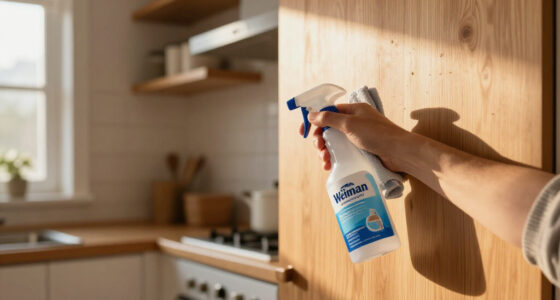
To keep your oiled surfaces in top condition, establish a regular maintenance routine. Clean them weekly with a soft cloth and gentle cleaner to remove dirt and grime. Reapply oil every few months or as needed, especially after weather exposure. Regularly inspect for signs of wear like dryness or cracks, and lightly sand affected areas before re-oiling. Consistency is key—staying on top of care guarantees your surfaces stay beautiful and durable for years to come.

Get business pricing on tools and workshop supplies
- Business-only prices and quantity discounts
- Tax-exempt purchasing
- Multiple users, one account, clear invoices
Key Takeaways
- Clean surfaces regularly with a soft cloth and mild cleaner to remove dirt and grime.
- Reapply oil periodically, especially after exposure to weather or high use.
- Inspect surfaces for signs of wear, cracking, or dullness and address issues promptly.
- Lightly sand affected areas before re-oiling to restore shine and smoothness.
- Maintain a consistent maintenance schedule to preserve appearance and extend surface longevity.

Maintaining oiled surfaces requires regular attention to keep them looking their best and functioning properly. These surfaces, whether wooden countertops, furniture, or outdoor decks, depend heavily on proper care to preserve their natural beauty and durability. Developing a consistent maintenance schedule is essential. It guarantees you stay on top of cleaning techniques that prevent dirt, grime, and moisture from compromising the oil’s protective layer. Without routine upkeep, the surface can quickly become dull, stained, or damaged, making it more difficult and costly to restore.
Regular maintenance keeps oiled surfaces beautiful and durable, preventing damage and costly restoration.
To start, you should establish a maintenance schedule that fits the usage and exposure of your oiled surfaces. For indoor furniture, cleaning once a week with a soft cloth and a gentle, pH-neutral cleaner works well. For outdoor decks or frequently used kitchen surfaces, you might need to clean more often, especially after exposure to water, food spills, or dirt. Regular cleaning techniques involve sweeping or dusting to remove loose debris, followed by wiping with a damp cloth. It’s vital to avoid harsh chemicals or abrasive scrubbers, as these can strip away the oil and compromise the protective finish.
When cleaning, always use a mild soap or a specialized cleaner designed for oiled surfaces. After wiping down, dry the surface immediately with a clean cloth to prevent moisture from seeping in. If you notice any sticky spots or stubborn stains, gently scrub using a soft-bristled brush or sponge, applying minimal pressure to avoid removing the oil layer. For outdoor surfaces exposed to weather, you might want to periodically apply a fresh coat of oil to maintain its protective barrier, especially if you notice fading or dryness. This reapplication should be part of your maintenance schedule, typically every few months, depending on exposure and wear. Additionally, applying a proper sealant or oil treatment can further enhance the longevity and resistance of the surface.
In addition to cleaning, regularly inspecting your oiled surfaces helps catch issues early. Look for signs of drying or cracking, which indicate it’s time for re-oiling. If the surface starts to look dull or uneven, lightly sanding the area before reapplying oil can help restore its luster. Remember, the key to keeping your oiled surfaces in top condition is consistency. Sticking to your maintenance schedule, using proper cleaning techniques, and re-oiling when necessary will extend their life and keep them looking fresh. With a little effort and routine care, your oiled surfaces will continue to serve their beauty and function for years to come.
wood surface oiling and cleaning kit
As an affiliate, we earn on qualifying purchases.
As an affiliate, we earn on qualifying purchases.
Frequently Asked Questions
How Often Should I Reapply Oil to Maintain the Surface?
You should reapply oil every 6 to 12 months to maintain the surface, depending on seasonal maintenance needs and oil longevity. If you notice the surface starting to look dry or dull, it’s time for a fresh coat. Regular reapplication helps protect the surface from weathering and keeps it looking its best. Adjust the frequency based on exposure and usage to make sure your oiled surface remains well-maintained and durable.
Can I Use Household Cleaning Products on Oiled Surfaces?
You shouldn’t use household cleaners on oiled surfaces because they can cause surface damage. These cleaners often contain harsh chemicals that strip the oil’s protective layer, leading to dryness or cracking. Instead, use a gentle, damp cloth to clean the surface. Regularly reapplying oil helps maintain its protective qualities, ensuring your surface stays beautiful and durable without risking damage from inappropriate cleaning products.
What Are the Signs That the Oil Coating Needs Refreshment?
You’ll notice the wood grain becomes less defined and the surface sheen dulls, indicating your oil coating needs refreshment. As the oil wears off, the surface may look dry or slightly chalky, and you might feel a rougher texture when you run your hand over it. To keep your oiled surface looking its best, reapply oil when these signs appear, restoring the wood grain’s vibrancy and maintaining an even sheen.
Is It Safe to Use Water on Oiled Wooden Surfaces?
Is using water on oiled wooden surfaces safe? Generally, it isn’t because water can cause damage and prevent proper oil penetration. Water damage may lead to swelling or warping, compromising the wood’s integrity. Instead, use a damp cloth for cleaning, followed by reapplying oil if needed. This guarantees the surface stays protected and maintains its appearance. Remember, keeping water away helps preserve your wood’s durability and beauty.
How Do Temperature Changes Affect the Oil’s Effectiveness?
Temperature changes can impact the oil’s effectiveness by altering its viscosity, making it thicker in cold weather and thinner when warm. This variation affects how well the oil penetrates and protects the surface. You should also consider thermal expansion, which can cause the wood to expand or contract, potentially affecting the oil’s bond. To maintain ideal protection, apply oil in moderate temperatures and avoid extreme heat or cold.
Conclusion
By regularly cleaning and maintaining oiled surfaces, you prevent buildup and extend their lifespan. Did you know that properly cared-for surfaces can last up to 50% longer? Consistent routine care keeps your surfaces looking great and working effectively. So, make cleaning a habit—your oiled surfaces will thank you with lasting beauty and durability. Remember, a little effort now saves you time and money later. Keep up with routine care, and your surfaces will stay in top shape.
Fall yard work Picks
leaf blowers
As an affiliate, we earn on qualifying purchases.