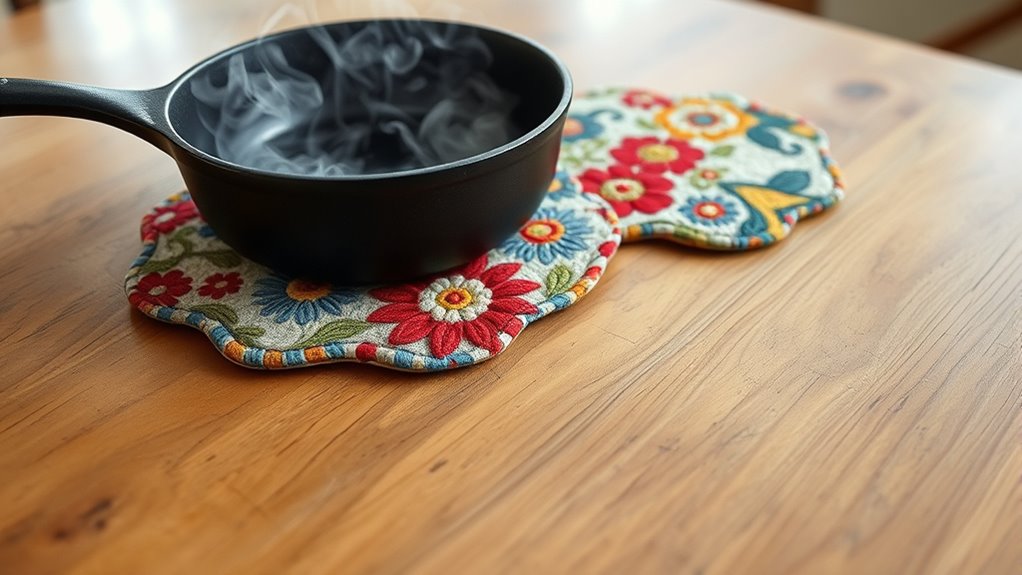

To safeguard your wooden surfaces from heat, always use trivets or hot pads when placing hot items like pots and pans. These tools act as a buffer, absorbing and dispersing heat to prevent warping, scorching, or cracking. Properly protected surfaces last longer and maintain their appearance. Applying heat-resistant finishes can also improve durability. Keep in mind, combining these methods with regular maintenance ensures your wood stays safe from heat damage—exploring more tips can help you preserve your wood furniture even better.
Key Takeaways
- Use trivets and hot pads as barriers to prevent direct contact between hot items and wood surfaces.
- Choose heat-resistant finishes, such as high-temperature sealants or varnishes, to add an extra protective layer.
- Regularly inspect and reapply heat-resistant coatings to maintain optimal protection of wooden surfaces.
- Avoid placing hot objects directly on wood; always use protective tools to disperse heat.
- Combine protective finishes with mindful habits, like using trivets, to extend the lifespan of wooden furniture.
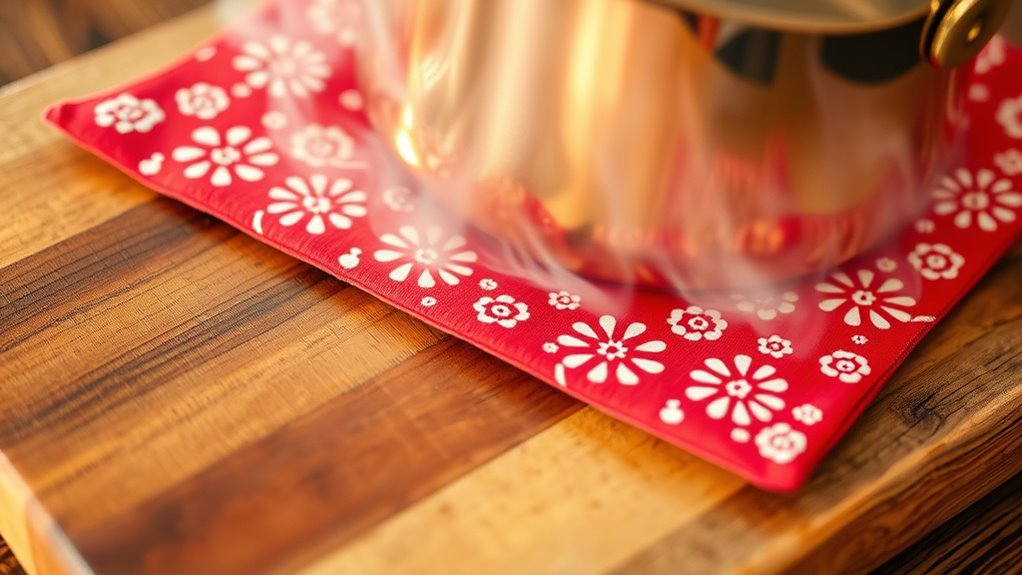
Wood is naturally vulnerable to heat, which can cause it to warp, crack, or even ignite if not properly protected. When it comes to protecting wooden surfaces, especially in kitchens and dining areas, using proper techniques is essential. One effective way to shield wood from heat damage is through finish carpentry that incorporates heat resistant finishes. These finishes create a barrier that helps prevent heat transfer, reducing the risk of warping or scorching. By selecting the right finishes, you can enhance the durability of your wooden furniture or countertops, ensuring they withstand daily use and exposure to hot items.
Finish carpentry involves more than just aesthetic appeal—it also plays a critical role in safeguarding wood from environmental hazards, including heat. Applying heat resistant finishes, such as high-temperature sealants or specialized varnishes, can markedly extend the lifespan of your wood surfaces. These finishes are formulated to withstand higher temperatures without degrading or losing their protective qualities. When done correctly, they form an effective shield that minimizes heat penetration, which is especially important for areas like kitchen tables, countertops, or wooden trays that regularly come into contact with hot cookware or dishes.
Applying heat resistant finishes extends wood lifespan by forming a protective shield against high temperatures.
In addition to finish carpentry and heat resistant finishes, using trivets and hot pads is a simple, practical step you can take. These accessories are designed to act as buffers between hot items and your wooden surfaces. When you place a hot dish or pot on a trivet, you’re effectively preventing direct contact that could transfer enough heat to cause damage. Hot pads serve a similar purpose, offering a cushioned barrier that absorbs heat and protects your wood from scorching or warping. Remember, even with the best finishes, repeated exposure to high temperatures can eventually wear down protective coatings or cause damage. Trivets and hot pads act as the first line of defense, reducing the strain on your wood and prolonging its beauty and integrity.
Proper maintenance also plays a role in protecting wood from heat. Regularly inspecting your finishes and reapplying heat resistant coatings as needed ensures ongoing protection. Keep in mind that no finish is entirely impervious—over time, heat, moisture, and daily wear can diminish their effectiveness. Combining these protective measures with mindful habits, like always using trivets or hot pads, will help you maintain your wooden surfaces in excellent condition for years to come. Ultimately, understanding how finish carpentry and heat resistant finishes work together with simple accessories empowers you to keep your wood safe from the damaging effects of heat. Moreover, applying attention to detail during installation and maintenance ensures that protective coatings are correctly applied and reapplied when necessary, maximizing their effectiveness.
Frequently Asked Questions
Are There Eco-Friendly Materials for Heat-Resistant Trivets?
Yes, you can find eco-friendly heat-resistant trivets made from recycled materials and biodegradable options. Look for trivets crafted from bamboo, cork, or silicone made from natural, sustainable sources. Recycled metal or glass also work well. These options help reduce waste and are safer for the environment. By choosing eco-friendly trivets, you protect your surfaces while supporting sustainable practices.
How Often Should I Replace Damaged Heat Pads?
Imagine you’re grabbing a hot dish, and suddenly, your heat pad shows signs of wear—cracks or scorch marks. You should replace damaged heat pads immediately to avoid accidents. The heat pad lifespan varies, but generally, you should replace heat pads once they become worn out or damaged. Regularly inspecting your heat pads and replacing heat pads when needed guarantees safety and maintains effective heat protection, preventing potential fire hazards or burns.
Can I Make DIY Trivets From Household Items?
Yes, you can make DIY trivets from household items by upcycling household items. Get creative with things like ceramic tiles, old coasters, or even a metal cooling rack for creative trivet designs. Just guarantee the materials are heat-resistant and safe for hot dishes. This eco-friendly approach not only protects your surfaces but also adds a personal touch to your kitchen decor. Have fun experimenting with different upcycled materials!
Do Heat Pads Affect the Flavor of Food?
Heat pads generally don’t affect the flavor of your food directly, but they can cause flavor interference if they trap heat too long, leading to uneven heat transfer effects. When you use them, make certain they’re not too hot or in contact with delicate dishes, as prolonged heat can subtly alter taste or texture. Proper use minimizes any flavor interference, keeping your food tasting fresh and true to its original flavor.
Are There Specific Cleaning Tips for Heat-Resistant Trivets?
Think of caring for trivets as giving them a spa day. To keep your heat-resistant trivets in top shape, regularly clean them with gentle soap and warm water. For stubborn stains, use a soft brush or sponge—avoid abrasive cleaners that could damage the surface. Rinse thoroughly, dry completely, and store flat. These simple cleaning techniques will extend their life, ensuring they stay as reliable as your favorite kitchen companion.
Conclusion
Remember, prevention is better than cure. Using trivets and hot pads protects your wood surfaces from heat damage, keeping them looking beautiful for years. Always lift hot pots rather than dragging them across tables, and never underestimate the power of a simple barrier. As the saying goes, “A stitch in time saves nine.” By taking these small steps, you’ll preserve your wood and enjoy your space for the long run.