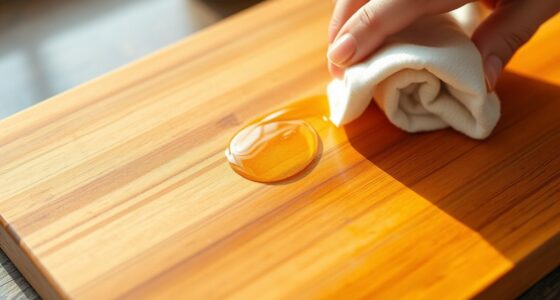
To keep your wooden bowls and salad servers in great shape, regularly oil them with food-safe oils like mineral oil, which is odorless and won’t go rancid. Make sure they’re clean and dry before applying, then use a soft cloth or paper towel to work the oil into the wood in gentle circles. Let it soak in overnight, wipe off excess, and repeat every few weeks. For more expert tips and oil options, keep exploring how to care for your wooden utensils effectively.
Key Takeaways
- Use food-safe oils like mineral oil to penetrate wood deeply and prevent rancidity or mold growth.
- Ensure bowls and servers are clean and dry before applying oil using a soft cloth or paper towel.
- Apply generous, even coats of oil with gentle circular motions, then let soak for several hours or overnight.
- Wipe off excess oil after absorption and repeat oiling every few weeks or when wood appears dry.
- Store in a dry, ventilated space away from humidity and direct sunlight to maintain the wood’s condition.
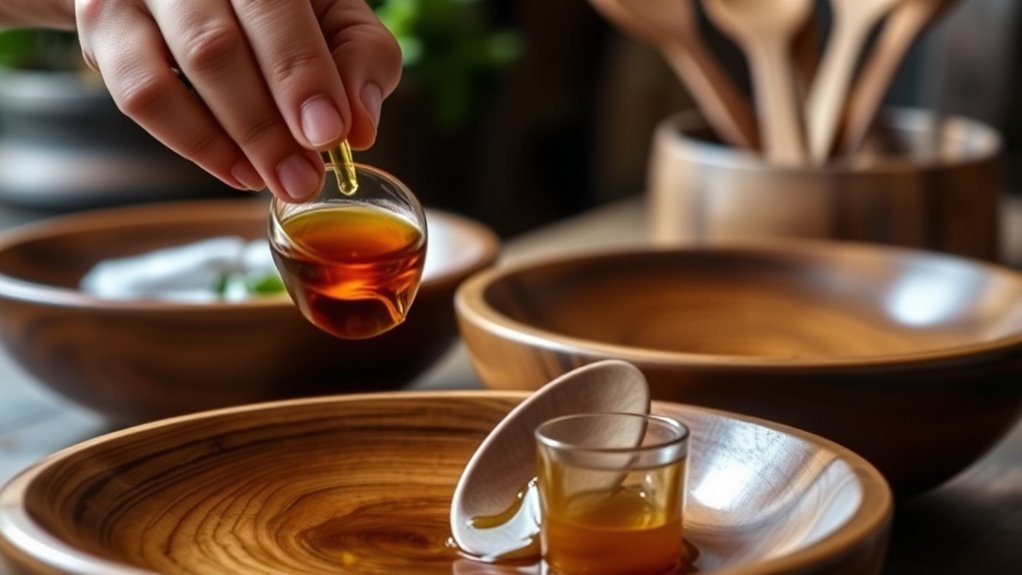
Oiling wooden bowls and salad servers is essential to keep them looking beautiful and functioning properly. Proper care and maintenance can considerably extend their lifespan and preserve their natural appeal. One of the most important steps in this process is choosing the right oils. Not all oils are suitable for wood, so selecting the appropriate type ensures your utensils stay safe, durable, and attractive over time. When choosing oils, look for food-safe options that penetrate the wood deeply, providing a protective barrier against moisture and stains. Mineral oil is a popular choice because it’s odorless, tasteless, and widely available. It won’t turn rancid or promote mold growth, making it ideal for kitchen utensils that come into contact with food. Some people prefer to use a blend of mineral oil with beeswax or carnauba wax to add a slight sheen and extra protection.
Avoid using cooking oils like olive or vegetable oils for oiling wooden utensils. These oils can become rancid over time, leaving an unpleasant smell and potentially damaging the wood. Instead, opt for specially formulated wood oils or food-grade mineral oils, which are designed for this purpose. When applying oil, ensure your wooden bowls and salad servers are clean and dry. Use a soft cloth or paper towel to apply a generous amount of oil to all surfaces, including corners and crevices. Work the oil into the wood using gentle circular motions, making sure the entire piece is coated evenly. Allow the oil to soak in for several hours or overnight, giving it enough time to penetrate deeply into the wood fibers. Proper maintenance routines also help prevent the buildup of dirt and bacteria, keeping your utensils hygienic and safe for food use.
After the oil has been absorbed, wipe off any excess with a clean, dry cloth. Regular oiling—every few weeks or whenever the wood looks dry—will keep your utensils looking their best and prevent cracking or warping. Remember, care and maintenance aren’t just about the initial application; consistent upkeep is key. Store your wooden items in a dry, well-ventilated space, avoiding excessive humidity or direct sunlight, which can cause the wood to crack or fade. By choosing the right oils and maintaining a regular oiling routine, you’ll preserve the beauty and functionality of your wooden bowls and salad servers for years to come. Proper care ensures they remain safe, functional, and a lovely part of your kitchen aesthetic.

Kate Naturals Mineral Oil for Wood Cutting Board, Butcher Block, and Knife. Food Grade Mineral Oil for Wooden Cutting Board & Utensils (8oz, Food Safe)
FOOD-GRADE MINERAL OIL FOR CUTTING BOARDS: Helps restore and protect dry cutting boards, butcher blocks, and wooden kitchen…
As an affiliate, we earn on qualifying purchases.
As an affiliate, we earn on qualifying purchases.
Frequently Asked Questions
Can I Use Any Type of Oil on My Wooden Bowls and Servers?
You shouldn’t use just any oil on your wooden bowls and servers. For food safety and to prevent unwanted flavors, choose food-grade oils like mineral oil or beeswax-based finishes. These oils are less likely to be absorbed unevenly, reducing oil absorption issues and maintaining your utensils’ durability. Avoid using cooking oils like vegetable or olive oil, as they can go rancid and compromise the safety and longevity of your woodenware.
How Often Should I Oil My Wooden Utensils?
You should oil your wooden utensils roughly once a month to keep them in top shape. Research shows regular seasoning frequency prevents cracking and preserves their beauty. For proper maintenance tips, clean your utensils thoroughly and let them dry completely before applying a food-safe oil like mineral or beeswax. This routine guarantees your wooden tools stay durable and beautiful, so stick to this schedule for long-lasting, functional utensils.
Are There Oils I Should Avoid for Safety Reasons?
You should avoid using mineral oils or commercial finishes that contain chemical additives, as they may pose food allergy concerns or health risks. Stick to food-safe, natural oils like beeswax or food-grade mineral oil, which are safe for contact with food. Always check labels for any chemical additives to avoid, ensuring your wooden utensils remain safe and non-toxic for everyday use.
Can I Use Homemade Oil Mixtures for Seasoning?
Yes, you can use DIY oil blends for seasoning, but don’t forget that natural preservatives are key. Ironically, mixing your own oils might seem safer, but some homemade concoctions lack the preservatives needed to prevent mold or rancidity. Stick to proven oils and natural preservative techniques to guarantee your woodenware stays protected and safe. Otherwise, your kitchen experiments might turn into a lesson in patience—and cleaning!
How Do I Remove Oil Stains From Wooden Surfaces?
To remove oil stains from wooden surfaces, start with stain removal techniques like applying a mixture of baking soda and water or using a gentle dish soap. Let it sit for a few minutes, then scrub lightly with a soft brush or cloth. Rinse with clean water and dry thoroughly. Regular cleaning techniques help prevent future stains and keep your wood looking fresh. Avoid harsh chemicals to protect the wood’s finish.
Kate Naturals Mineral Oil for Wood Cutting Board, Butcher Block, and Knife. Food Grade Mineral Oil for Wooden Cutting Board & Utensils (8oz, Food Safe)
FOOD-GRADE MINERAL OIL FOR CUTTING BOARDS: Helps restore and protect dry cutting boards, butcher blocks, and wooden kitchen…
As an affiliate, we earn on qualifying purchases.
As an affiliate, we earn on qualifying purchases.
Conclusion
So, after all that, you’d think oiling your wooden bowls and servers is a hassle. But really, it’s a small price to pay for keeping them beautiful and functional. Ironically, neglecting this simple step could lead to cracks or warping, ruining your cherished pieces. So go ahead—give them some love. It’s funny how a bit of oil can save you a fortune in replacements, isn’t it? Keep your wood happy, and it’ll reward you.
Kate Naturals Mineral Oil for Wood Cutting Board, Butcher Block, and Knife. Food Grade Mineral Oil for Wooden Cutting Board & Utensils (8oz, Food Safe)
FOOD-GRADE MINERAL OIL FOR CUTTING BOARDS: Helps restore and protect dry cutting boards, butcher blocks, and wooden kitchen…
As an affiliate, we earn on qualifying purchases.
As an affiliate, we earn on qualifying purchases.

Howard Products Butcher Block Conditioner and Food Grade Mineral Oil for Wood Cutting Boards, 12 Fl Oz – Enhanced Wood Care
Revitalizing blend prevents drying and cracking of hardwoods and bamboo
As an affiliate, we earn on qualifying purchases.
As an affiliate, we earn on qualifying purchases.