
To properly clean your wooden utensils, avoid putting them in the dishwasher, as high heat and harsh detergents can cause warping, cracking, or splitting. Instead, rinse them immediately after use with warm water and mild soap, then gently scrub with a soft sponge. Pat dry with a towel and allow them to air dry completely in a dry, ventilated area. Proper care and maintenance will help keep your utensils in great shape for years to come.
Key Takeaways
- Hand wash wooden utensils immediately after use with warm water and mild, chemical-free soap.
- Gently scrub with a soft sponge or cloth, avoiding abrasive cleaners or steel wool.
- Pat dry with a towel and allow utensils to air dry completely in a well-ventilated area.
- Regularly apply food-grade mineral oil or beeswax to nourish and protect the wood.
- Store in a dry, well-ventilated space away from moisture to extend utensil lifespan.
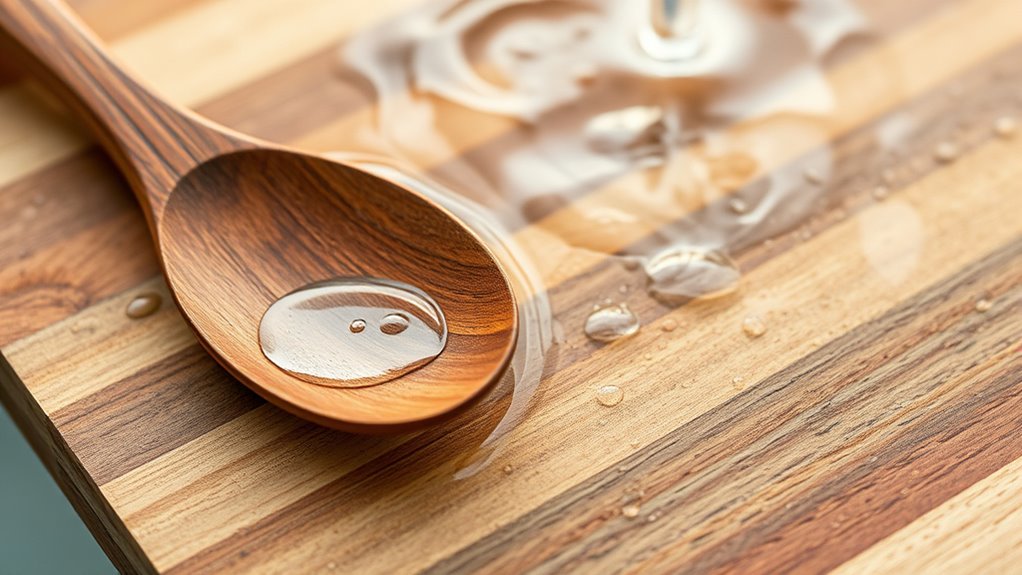
Wooden utensils require proper cleaning to maintain their durability and hygiene. Unlike plastic or metal tools, wood is a porous material that can absorb moisture, bacteria, and odors if not cared for correctly. When it comes to wooden cleaning, you need to be gentle yet thorough to ensure your utensils stay in good shape. Avoid tossing them into the dishwasher, as the high heat and harsh detergents can cause warping, cracking, or splitting over time. Instead, focus on hand-washing techniques that promote proper utensil maintenance and help preserve their natural integrity.
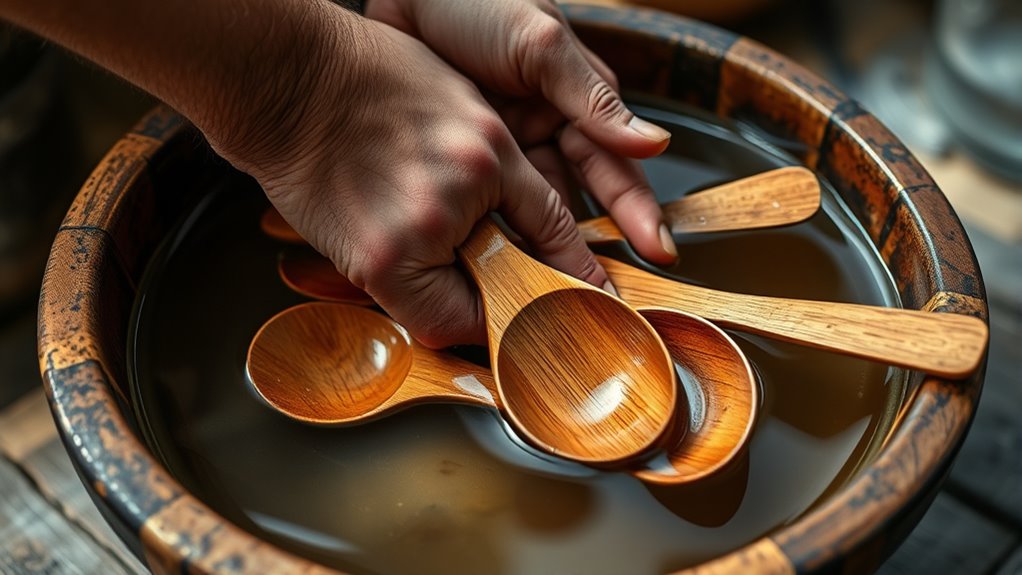
Start by rinsing your wooden utensils immediately after use to remove any food particles. Use warm water and a mild dish soap that’s free of harsh chemicals. Scrubbing with a soft sponge or cloth is usually enough to clean away residue without damaging the wood. Be cautious not to soak your utensils for extended periods, as prolonged exposure to water can cause the wood to swell or crack. After washing, pat them dry with a clean towel and let them air dry completely before storing. This step is vital for preventing mold growth and bacteria buildup, ensuring your wooden utensils remain sanitary and long-lasting.
When it comes to wooden cleaning, regular maintenance is key. Occasionally, you can apply a food-grade mineral oil or beeswax to nourish the wood and prevent it from drying out. Simply rub a small amount of oil onto the surface and let it soak in for a few hours or overnight. This not only keeps your utensils looking their best but also forms a protective barrier against moisture and stains. If your wooden utensils develop stains or odors, a simple solution of baking soda and water can help. Scrubbing gently with this paste can lift stains and neutralize unwanted smells, restoring freshness without damaging the wood. Additionally, understanding the porous nature of wood helps you appreciate why proper drying and conditioning are essential for longevity.
It’s important to avoid abrasive cleaners or steel wool, as these can scratch or gouge the surface. Also, never put wooden utensils in the dishwasher, as the intense heat and prolonged water exposure accelerate deterioration. Proper utensil maintenance involves consistent cleaning, occasional conditioning with oil, and careful storage in a dry, well-ventilated area. By following these steps, you guarantee your wooden utensils remain functional, hygienic, and aesthetically pleasing for years to come. Prioritizing proper wooden cleaning practices and avoiding the dishwasher not only prolongs the life of your utensils but also keeps your kitchen safe and bacteria-free.

Kate Naturals Mineral Oil for Wood Cutting Board, Butcher Block, and Knife. Food Grade Mineral Oil for Wooden Cutting Board & Utensils (8oz, Food Safe)
FOOD SAFE MINERAL OIL FOR CUTTING BOARD: Our Food Grade Cutting Board White Mineral Oil is a smooth,…
As an affiliate, we earn on qualifying purchases.
As an affiliate, we earn on qualifying purchases.
Frequently Asked Questions
Can I Use Vinegar to Disinfect Wood Utensils?
Yes, you can use vinegar sanitization to disinfect wood utensils. Vinegar is a natural disinfectant that helps maintain wooden utensil hygiene without damaging the wood. To do this, simply wipe your utensils with a mixture of equal parts vinegar and water, then rinse thoroughly and dry immediately. This method supports proper wooden utensil maintenance by preventing bacteria buildup and prolonging the lifespan of your utensils.
How Often Should I Oil My Wooden Utensils?
You should oil your wooden utensils every few weeks to maintain their condition. Regular oiling helps prevent cracking and keeps the wood hydrated. Use food-safe oils like mineral or beeswax, which are effective wood treatment methods. If you notice the utensils looking dry or dull, it’s time to re-oil. Consistent oiling guarantees your utensils stay durable and safe for food contact, extending their lifespan considerably.
Are There Specific Cleaning Products to Avoid?
Think of your wooden utensils as delicate art; you wouldn’t want harsh chemicals to tarnish their beauty. Avoid chemical cleaners and bleach, which can weaken the wood and cause stains. Instead, opt for mild soap and warm water. Bleach safety is essential—never use it on wood, as it can cause damage and lingering odors. Keep your utensils safe and lasting by choosing gentle, natural cleaning methods.
Can I Soak Wood Utensils Overnight?
You shouldn’t soak wood utensils overnight, as prolonged exposure to water can harm the wood, affecting its preservation and making it prone to cracking or warping. For proper utensil maintenance, wash them promptly with mild soap, rinse thoroughly, and dry immediately. This routine helps maintain the wood’s integrity, ensuring your utensils stay durable and safe for long-term use. Avoid soaking to keep your wood utensils in top condition.
How Do I Remove Stains From Wood Utensils?
Sometimes, your wooden utensils need a little tender love to restore their charm. To remove stains, try gentle stain removal techniques like rubbing a mixture of baking soda and water, or soaking in a vinegar solution. These methods help with wooden utensil restoration, brightening their appearance without damage. Be patient, and avoid harsh chemicals—your utensils will thank you, returning to their natural beauty and functionality.
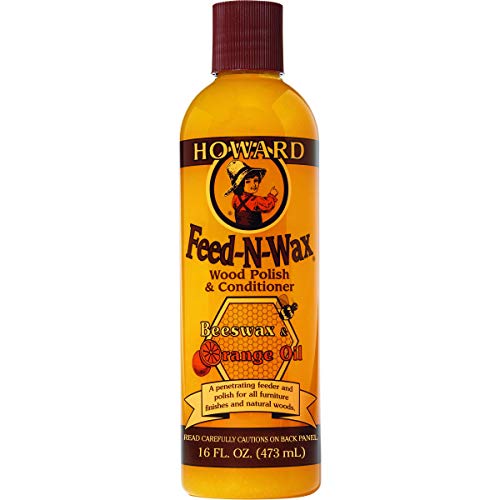
Howard Products Beeswax Wood Polish & Conditioner, Feed-N-Wax, Beeswax Furniture Polish For Wood, 16 Oz, Orange
Polishes all wood surfaces to a soft luster with a protective coating of Carnauba Wax and Beeswax
As an affiliate, we earn on qualifying purchases.
As an affiliate, we earn on qualifying purchases.
Conclusion
Think of your wood utensils as delicate garden plants—you need to tend to them gently to keep them thriving. Avoid the dishwasher’s harsh environment and instead, hand wash with warm water and mild soap. Dry them thoroughly and periodically oil them to prevent cracks. When cared for properly, your wooden utensils will flourish, serving you well like a well-tended garden, providing beauty and function for years to come. Your attention keeps them vibrant and lasting.

Kitchen Utenails Set with Holder,Kitchen Wooden Utensils for Cooking, Wood Utensil Natural Teak Wood Spoons for Cooking,Wooden Kitchen Utensil Set With Spatula and Ladle (11)
Kitchen Utensils with Holder: An ideal Wooden Kitchen Utensil Set that features all the essential cooking tools including…
As an affiliate, we earn on qualifying purchases.
As an affiliate, we earn on qualifying purchases.

Lipper International 8823 Bamboo Wood 2-Compartment Flatware Holder with Metal Clips, 6-1/4" x 3-1/4" x 5"
Durable utensil holder is a handy organizer that holds flatware and cooking utensils
As an affiliate, we earn on qualifying purchases.
As an affiliate, we earn on qualifying purchases.