If your carving knife skips or catches, it’s usually because the blade has become dull or uneven. A dull edge makes it hard to cut smoothly, causing the knife to skip instead of glide. Proper sharpening using a whetstone or honing rod can restore the angle and sharpness, improving control. Regular maintenance helps prevent dullness and keeps your cuts clean. Keep going for more tips to maintain that perfect sharpness for flawless carving.

Get business pricing on tools and workshop supplies
- Business-only prices and quantity discounts
- Tax-exempt purchasing
- Multiple users, one account, clear invoices
Key Takeaways
- A skipping knife often indicates dullness or nicks that prevent smooth cutting.
- Regularly inspect your blade for dullness, chips, or uneven edges to identify the cause.
- Proper sharpening at the correct angle (about 20°) restores the edge and eliminates skipping.
- Using the right sharpening tools, like a whetstone or honing rod, ensures effective edge maintenance.
- Consistent honing between sharpenings keeps the edge aligned, reducing skipping during carving.
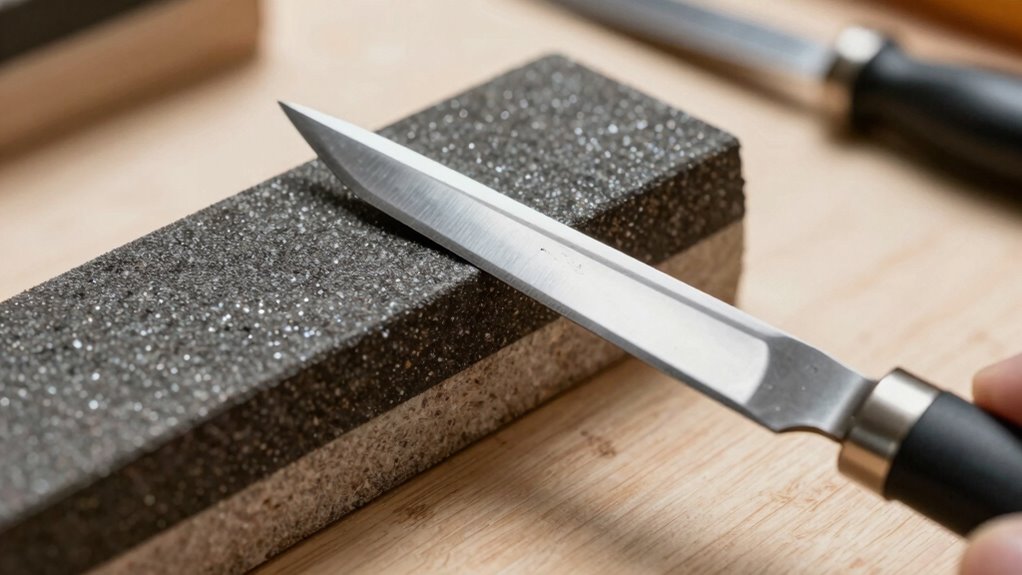
Carving tools perform best when they’re sharp, and maintaining their edge is essential for precise and clean cuts. If your knife starts to skip or catch during carving, it’s a clear sign that it needs some attention. Proper knife maintenance isn’t just about keeping it looking good; it’s about ensuring it performs at its peak. Regularly inspecting your blade for dullness or nicks helps you catch problems early. When your knife isn’t slicing smoothly, it’s time to reach for sharpening tools. These tools, ranging from whetstones to honing rods, are designed to restore the edge efficiently. Using the right sharpening tools can make all the difference, giving you a clean, sharp blade that glides through wood or other materials with ease.
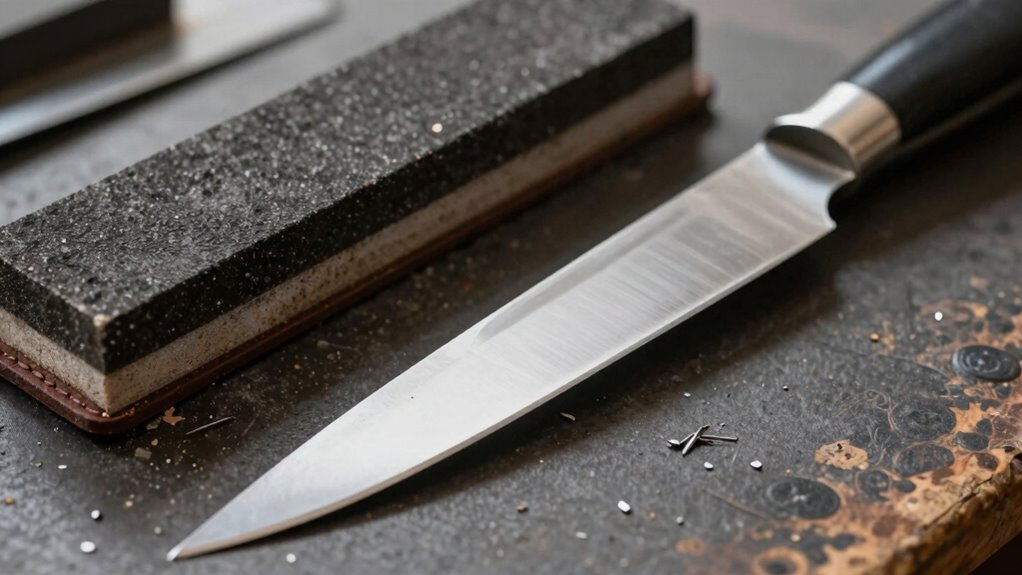
You should start by evaluating the condition of your knife. If it skips or drags, it’s likely dull or unevenly sharpened. To fix this, you’ll need to use sharpening tools appropriate for your blade. Whetstones are a popular choice because they allow precise control over the sharpening angle and can restore a very sharp edge. Begin by soaking your stone if required, then position your knife at the recommended angle—usually around 20 degrees. Draw the blade across the stone with consistent pressure, maintaining the angle throughout. Repeat the process on both sides until you notice a burr forming, which indicates a sharp edge. Finish by honing the blade on a finer stone or honing rod to remove any burrs and refine the edge.
Honing rods are great for regular maintenance between more intensive sharpening sessions. They straighten the edge and keep it aligned, preventing it from becoming dull prematurely. When honing, hold the rod vertically, and swipe the blade along at the correct angle, alternating sides. This process helps maintain your knife’s sharpness and reduces the need for frequent sharpening.
As an affiliate, we earn on qualifying purchases.
Frequently Asked Questions
How Often Should I Sharpen My Carving Knife?
You should sharpen your carving knife every 10 to 15 uses or when you notice it’s not slicing smoothly. Regular blade maintenance keeps your knife sharp and prevents skipping. The sharpening frequency depends on how often you carve and the type of cuts you make. Keep an eye on performance, and don’t wait too long—dull blades make carving difficult and less precise. Proper maintenance guarantees your knife stays sharp and effective.
What Tools Are Best for Sharpening Carving Knives?
You should use sharpening stones tailored to your carving knife’s blade material, like water stones or oil stones, for the best results. These tools allow precise control and help maintain a sharp edge. Choose a stone with the appropriate grit—coarse for dull blades and fine for polishing. Always soak or oil the stone as needed, and use steady, consistent strokes to sharpen your knife effectively.
Can Improper Technique Damage My Knife’s Edge?
Improper technique can definitely damage your knife’s edge, even if you’re just trying to maintain it. Poor blade maintenance, like applying uneven pressure or using the wrong angle, dulls the edge faster and weakens its durability. While sharpening is essential for edge longevity, improper methods can cause chips or rolls, reducing your knife’s effectiveness. You need careful technique to protect your investment and keep the blade cutting smoothly.
How Do I Know When My Knife Needs Sharpening?
You’ll know your knife needs sharpening when it starts to struggle with cuts or slips during blade maintenance. A dull blade won’t glide smoothly, making slicing less precise. To tell if you need honing or sharpening, check if the edge is just bent or misaligned—honing can fix that—versus dullness, which requires sharpening. Regularly inspecting and maintaining your knife guarantees it stays sharp and safe to use.
Is It Better to Sharpen at Home or Professionally?
You’re better off choosing professional honing for a precise, even edge, especially if you’re unsure about home sharpening techniques. While home sharpening can save money and be convenient, it often risks uneven results or damaging the blade if not done correctly. Professional honing guarantees your knife stays perfectly sharp and safe to use, making it worth the investment for peak performance. So, consider your skill level and needs before deciding.
Conclusion
Now that you know the basics of carving and sharpening, you’re better equipped to keep your knives slicing smoothly. Remember, a dull blade isn’t just frustrating — it’s dangerous. Regular sharpening and proper technique make all the difference. So next time your knife skips, ask yourself: are you giving it the care it deserves? Keep your tools sharp, and your carving will always be precise and enjoyable. Ready to sharpen your skills?
Fall yard work Picks
leaf blowers
As an affiliate, we earn on qualifying purchases.