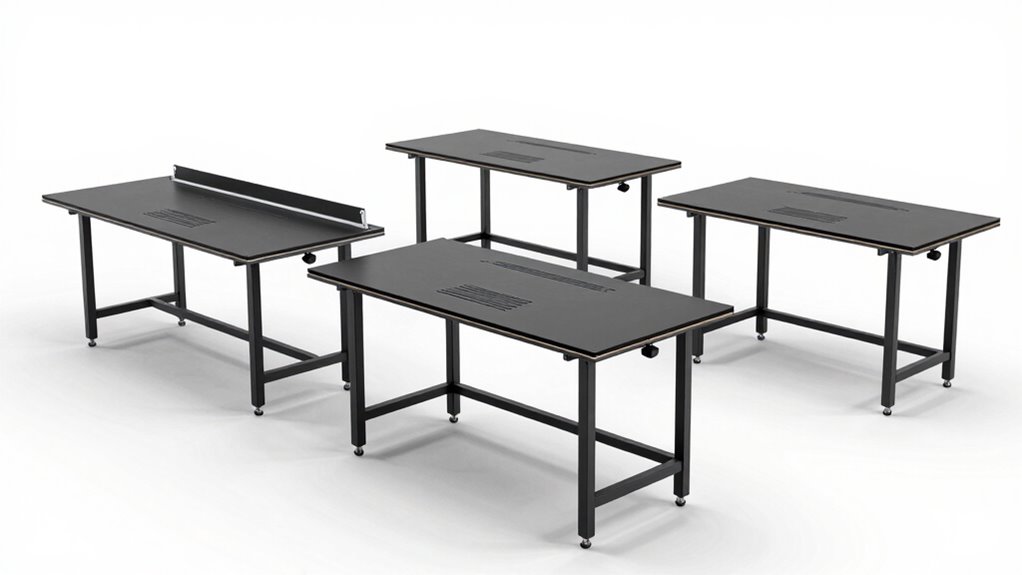
Choosing the right workshop downdraft table depends on your specific project needs and workspace constraints. The Shop Fox W1733A offers a compact yet effective solution ideal for hobbyists or small workshops, thanks to its manageable size and solid dust collection. Meanwhile, the Grizzly G0631 provides a massive surface and powerful airflow, catering to professional or industrial environments. Both have distinct advantages and tradeoffs, which makes understanding their features essential to making the best choice for your workshop.

Get business pricing on tools and workshop supplies
- Business-only prices and quantity discounts
- Tax-exempt purchasing
- Multiple users, one account, clear invoices
Complete the kit



Key Takeaways
- The Shop Fox W1733A excels in compact size and stable design, perfect for small-scale projects.
- The Grizzly G0631’s large surface and high airflow suit heavy-duty or industrial use, but it requires more space.
- Both models prioritize dust extraction but differ significantly in power and footprint.
- Price and space considerations are crucial—smaller tables tend to be more affordable and easier to fit into limited workshops.
- Choosing between these depends on whether you prioritize size, power, or budget.
| Shop Fox W1733A Downdraft Table 20-Inch by 40-Inch |  | Best Compact Solution for Small Workshops | Size: 20-inch by 40-inch | Dust Port: 4-inch | Height: 6-1/4 inches | VIEW ON AMAZON | See Our Full Breakdown |
| Grizzly Industrial G0631 28″ x 79″ Extra-Long Downdraft Table |  | Best for Industrial-Scale Dust Collection and Large Projects | Motors: 2 x 1 HP, 110V | Amps: 2 x 12A | Table surface area: 28″ x 79″ | VIEW ON AMAZON | See Our Full Breakdown |
| workshop downdraft table | Size | Dust Port | Height | Design |
|---|---|---|---|---|
| Shop Fox W1733A Downdraft Tabl | 20-inch by 40-inch | 4-inch | 6-1/4 inches | Bench top with non-skid top and feet |
| Grizzly Industrial G0631 28" x | — | — | — | — |
More Details on Our Top Picks
Shop Fox W1733A Downdraft Table 20-Inch by 40-Inch
The Shop Fox W1733A stands out for its manageable size and effective dust collection. Its 20-inch by 40-inch surface is ideal for smaller projects, yet it doesn’t compromise on stability thanks to its non-skid top and feet. Compared with larger tables, it’s easier to fit into limited spaces and is more affordable, making it a solid choice for hobbyists or those with modest workshop space. However, its limited height clearance (standing just over 6 inches tall) could restrict certain taller projects or tools. It’s a straightforward, no-frills table that handles dust well but doesn’t include advanced features like filtration systems or adjustable height, which might matter in more extensive setups.
Pros:- Large surface area for various small projects
- Effective dust collection with a 4-inch port
- Stable, non-skid top and feet for safety
Cons:- Limited height clearance for taller projects
- No additional features like filtration or height adjustability
Best for: Hobbyists or small workshop owners needing a compact, effective dust collection solution
Not ideal for: Large-scale industrial workshops or users needing extensive workspace or height adjustments
- Size:20-inch by 40-inch
- Dust Port:4-inch
- Height:6-1/4 inches
- Design:Bench top with non-skid top and feet
Our verdict“A reliable, space-efficient downdraft table ideal for small workshops or hobbyists.”
Grizzly Industrial G0631 28″ x 79″ Extra-Long Downdraft Table
The Grizzly G0631 offers a commanding 28-inch by 79-inch surface, making it suitable for large, demanding projects. Powered by dual 1 HP motors with an impressive 2874 CFM airflow, it delivers serious dust extraction capacity for workshops where air quality and dust control are critical. Its height of 31.5 inches positions it at a comfortable working level, and its sturdy construction ensures durability during intense use. The main tradeoff is its weight and footprint—this table needs more space and may be challenging to move or fit into smaller workshops. Additionally, it lacks integrated filters, so dust management may require additional equipment, and the powerful motors can generate noticeable noise.
Pros:- Extensive surface area suitable for large projects
- Powerful dual motors for high efficiency
- Sturdy, industrial-grade durability
Cons:- Heavy and requires significant space
- No built-in filters included
- Potentially high noise levels
Best for: Professional or industrial workshops requiring extensive surface area and high airflow performance
Not ideal for: Small workshops or hobbyists with limited space and lighter dust collection needs
- Motors:2 x 1 HP, 110V
- Amps:2 x 12A
- Table surface area:28″ x 79″
- Table height:31.5″
- Air suction capacity:2874 CFM
Our verdict“An industrial-grade downdraft table that excels in large-scale, demanding environments but needs ample space and budget.”

How We Picked
In selecting these two workshop downdraft tables, I focused on balancing size, power, dust collection efficiency, and build quality. I considered models that serve both hobbyists and professionals, ensuring each offers a clear role. Features like motor power, surface area, stability, and user reviews played a key part, along with understanding the typical tradeoffs—like size versus power or price versus capacity. My goal was to highlight options that stand out for specific workshop needs, providing a clear comparison for different user profiles.
Factors to Consider When Choosing Workshop Downdraft Table
Choosing the right workshop downdraft table involves balancing size, airflow, and workspace constraints. The ideal table should efficiently remove dust, fit comfortably into your workshop, and match the scale of your projects. Understanding key features like motor power, surface area, stability, and noise levels helps narrow down options. It’s also worth considering whether you need additional features like filters or height adjustments, depending on your workload and workspace size.
Size and Surface Area
The size of the downdraft table directly impacts the projects you can handle. Smaller tables, like the Shop Fox W1733A, fit well into limited spaces and are easier to maneuver, but their surface area might restrict larger projects. Larger tables, such as the Grizzly G0631, provide ample space for extensive woodworking or manufacturing tasks, but require more room and stability considerations. Match your workshop space with your project scale to determine the right size.
Power and Airflow
Motor power and airflow capacity determine how effectively dust and debris are captured. Dual high-horsepower motors, like those in the Grizzly G0631, excel at industrial-scale dust extraction, making them suitable for workshops with heavy dust generation. Conversely, smaller models with lower power, such as the Shop Fox W1733A, are sufficient for light to moderate dust and offer quieter operation. Evaluate your dust production to choose a table that provides enough suction without excess noise or energy use.
Construction and Stability
Stability is key to safe, precise work. Non-skid tops and sturdy feet, as seen in the Shop Fox model, prevent movement during operation. Industrial tables like the Grizzly G0631 are built to withstand heavy use and vibrations but tend to be heavier and less portable. Consider your workspace’s layout and whether mobility or permanent installation is more important for your workflow.
Additional Features
Extras like filters, height adjustments, or integrated dust collection systems can enhance performance but often add to cost and complexity. The Shop Fox offers a straightforward design suitable for basic dust collection, while the Grizzly’s high airflow capacity might require additional filtration solutions. Think about your long-term needs and whether investing in extra features aligns with your workshop goals.
Frequently Asked Questions
How does a downdraft table improve dust collection?
A downdraft table pulls dust and debris downward through a perforated surface, directing it into a collection system. This method captures dust at the source, reducing airborne particles and improving air quality. Effective downdraft tables, like those reviewed here, significantly lower the need for separate dust extractors, especially in smaller workshops.
Is a larger downdraft table always better?
Not necessarily. While larger tables offer more workspace, they also require more space and power to operate effectively. The best choice depends on your project size and workshop layout. For small workshops or hobbyist projects, a compact table like the Shop Fox may suffice, whereas larger, industrial projects benefit from the extensive surface and airflow of models like the Grizzly G0631.
Do these tables come with filters?
Most basic downdraft tables, including the ones reviewed here, do not include built-in filters. They rely on external dust collection systems or shop vacuums. If air quality is a major concern, consider adding dedicated filters or upgrading your dust collection system to ensure the air remains clean during heavy use.
Can I use these tables for finishing or spraying?
Using downdraft tables for finishing or spraying is possible but not always ideal unless they are equipped with proper filtration systems. Dust and paint overspray can clog perforated surfaces and filters. For finishing, a dedicated spray booth with proper ventilation is usually more effective and safer.
How noisy are these downdraft tables?
The noise level varies with motor power. The Shop Fox W1733A is relatively quiet due to its smaller motor, making it suitable for quieter workshops. Conversely, the Grizzly G0631’s dual 1 HP motors generate more noise, which could be disruptive in smaller or shared spaces. Noise considerations are important when choosing a table for prolonged use.
Conclusion
For hobbyists or small workshops, the Shop Fox W1733A provides a practical, space-saving solution that effectively manages dust without breaking the bank. It’s best suited for projects with moderate dust and limited space. On the other hand, the Grizzly G0631 stands out for professional or industrial settings where large surface area, high airflow, and durability are priorities. It’s a better fit for users handling bigger projects, with the space and budget to match. Your choice should hinge on your project scale, workspace, and dust management needs.
Halloween Picks
halloween
As an affiliate, we earn on qualifying purchases.