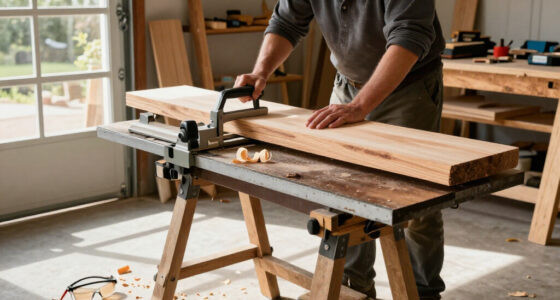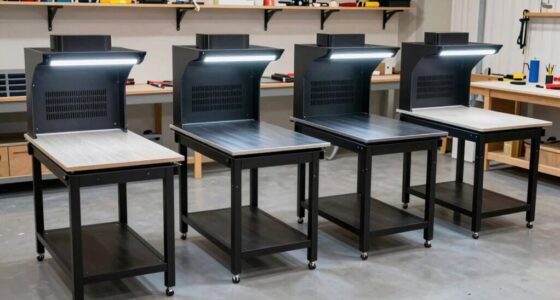
Choosing the right drum sander in Canada depends heavily on your shop size and the width of boards you plan to process. After comparing major contenders, the JET JWDS-2550 stands out as the best overall pick for serious woodworkers needing wide capacity and robust build quality. For those with tighter budgets or limited space, the VEVOR 22″ Drum Sander offers impressive value, while the JET JWDS-1020 remains the go-to choice for hobbyists needing a compact benchtop solution. The primary tradeoff you will face is between maximum sanding width and floor space, as larger industrial models require significant room to operate safely. Continue reading for a detailed breakdown of features, performance differences, and specific buyer recommendations.

Get business pricing on tools and workshop supplies
- Business-only prices and quantity discounts
- Tax-exempt purchasing
- Multiple users, one account, clear invoices
Complete the kit


Key Takeaways
- The JET JWDS-2550 offers the widest sanding capacity (25 inches), making it the only viable option for wide panel glue-ups among this list.
- VEVOR models provide significantly lower entry costs but often lack the refined feed mechanisms and dust collection efficiency found in JET units.
- Benchtop options like the JET JWDS-1020 are limited to 10-inch widths, requiring users to sand wider boards in multiple passes or use a planer first.
- Dust collection port size varies, with larger floor models typically featuring 4-inch ports that demand high-CFM shop vacuums or dedicated dust collectors.
- Oscillating drums, found in the JET JWDS-1632OSC, prevent visible sanding marks on hardwoods, a feature absent in standard fixed-drum models.
| VEVOR 22″ Drum Sander with Stand & Extension Tables, 1.75HP 1440RPM Dual Motor Drum Sander for Woodworking |  | Best for Large Workpieces | Sanding width: 22 inches | Motor power: 1.75 HP | Maximum rotational speed: 1,440 RPM | VIEW ON AMAZON | See Our Full Breakdown |
| JET JWDS-2550 25-Inch Drum Sander with Open Stand |  | Best for Maximum Width | Drum width: 25 inches | Motor power: 1-3/4 HP | Voltage and current: 115 V, 15 A | VIEW ON AMAZON | See Our Full Breakdown |
| JET JWDS-2244 22-Inch Drum Sander with Open Stand |  | Best Overall for a Dedicated Shop | Sanding width: 22 inches | Motor power: 1.75 HP | Voltage and current: 115 V, 15 A | VIEW ON AMAZON | See Our Full Breakdown |
| JET 16-Inch Drum Sander with Open Stand (JWDS-1632) |  | Best Mid-Size Footprint | Drum size: 16 inches | Motor power: 1-1/2 HP | Voltage and phase: 115 V, single-phase | VIEW ON AMAZON | See Our Full Breakdown |
| JET JWDS-1020 10″ Benchtop Drum Sander |  | Best Benchtop Pick | Drum size: 5 × 10 inches | Maximum width: 10 inches single pass; 20 inches two pass | Workpiece thickness: 1/32 to 3 inches | VIEW ON AMAZON | See Our Full Breakdown |
| JET 16-32 Oscillating Drum Sander with Stand, SandSmart Feed (JWDS-1632OSC) |  | Best for Figured Woods and Finish Control | Drum size: 5 x 16 inches | Oscillation: 1/2-inch stroke at 120 strokes per minute | Motor: 1-1/2 HP | VIEW ON AMAZON | See Our Full Breakdown |
| VEVOR 16″ Drum Sander with Stand & Extension Tables, 1.5HP 1720RPM Dual Motor Drum Sander for Woodworking – Variable Speed Conveyor Belt, 4″ Dust Collection Port for Cabinet & Furniture Finishing |  | Best for Included Workpiece Support | Sanding width: 16 inches | Workpiece thickness: 1/32–3 inches | Motor: 1.5 HP, dual-motor system | VIEW ON AMAZON | See Our Full Breakdown |
| VEVOR 10″ Benchtop Drum Sander with Variable Speed Conveyor Belt |  | Best Compact-Width Choice for Home Shops | Maximum board width: 10 inches | Board thickness: 1/32–3 inches | Motor: 1 HP, dual-motor system | VIEW ON AMAZON | See Our Full Breakdown |
| drum sander in canada | Weight | Dust port | Motor power | Dimensions |
|---|---|---|---|---|
| VEVOR 22" Drum Sander with Sta | 230.2 lb | 4 inches | 1.75 HP | — |
| JET JWDS-2550 25-Inch Drum San | 234 lb | 4 inches | 1-3/4 HP | 45 × 24 × 52 inches |
| JET JWDS-2244 22-Inch Drum San | 177 lb | — | 1.75 HP | 42 × 24 × 52 inches |
| JET 16-Inch Drum Sander with O | — | — | 1-1/2 HP | — |
| JET JWDS-1020 10" Benchtop Dru | 73 lb | 4 inches | 1 HP | — |
| JET 16-32 Oscillating Drum San | 191 lb | 4 inches; minimum 400 CFM collector specified | — | — |
| VEVOR 16" Drum Sander with Sta | 193.4 lb | 4 inches | — | 42.9 x 40.7 x 45.3 inches |
| VEVOR 10" Benchtop Drum Sander | 130.2 lb | 4 inches | — | 27.2 x 23 x 21.7 inches |
More Details on Our Top Picks
VEVOR 22″ Drum Sander with Stand & Extension Tables, 1.75HP 1440RPM Dual Motor Drum Sander for Woodworking
The VEVOR 22-inch earns this spot for woodworkers who want a full-width machine with support for longer boards included. Its two extension tables can steady workpieces that might wobble on a more compact setup, while the variable-speed conveyor lets you slow the feed for demanding sanding passes. Compared with the JET JWDS-2244, it offers a similar 22-inch capacity and dual-motor conveying, but lists a lower 1,440 RPM drum speed and a 4 A rating; the JET specifies 15 A and adds load monitoring. The VEVOR’s mobile wheels help with shop layout, though its 230.2-pound weight and nearly 49-inch length still call for substantial floor space. Buyers should also plan for dust extraction and confirm the machine’s electrical requirements suit their Canadian shop.
Pros:- 22-inch sanding capacity accommodates broad panels.
- Two removable extension tables support longer workpieces.
- Variable-speed conveyor helps tailor feed to stock and sanding needs.
- Mobile wheels and open stand make shop positioning more practical.
Cons:- At 230.2 pounds and 48.8 inches long, it demands significant space and effort to reposition.
- The listed 4 A rating and 110-volt supply details should be checked against the buyer’s intended shop circuit.
- No load-monitoring feature is specified, unlike the JET JWDS-2244.
Best for: Woodworkers sanding wide cabinet panels or long furniture parts who have room for a floor-standing machine and want extension-table support.
Not ideal for: Small-shop owners who need a machine that stores easily, or buyers who prefer a model with specified motor-load monitoring and a clearly stated 15 A electrical rating.
- Sanding width:22 inches
- Motor power:1.75 HP
- Maximum rotational speed:1,440 RPM
- Voltage:110 V
- Listed amperage:4 A
- Workpiece thickness:1/32 to 4 inches
- Dust port:4 inches
- Weight:230.2 lb
Our verdict“Choose this VEVOR if wide, long workpieces and included support tables matter more than a compact footprint or specified load-sensing controls.”
JET JWDS-2550 25-Inch Drum Sander with Open Stand
For buyers who regularly sand panels wider than 22 inches, the JET JWDS-2550 has the broadest stated drum capacity in this group. Its 25-inch width gives it an advantage over the JET JWDS-2244 and VEVOR 22-inch model when a project calls for fewer repositioning steps. SandSmart load monitoring watches motor demand to help guard against overload, a useful safeguard during heavier passes. The stand’s shelf and pre-drilled caster holes add practical storage and mobility options, although the machine’s 234-pound weight makes moving it a planned job rather than a casual adjustment. Its 115 V, 15 A supply also calls for a suitable circuit. This is a stronger fit for a dedicated shop than for occasional work or a tight space.
Pros:- 25-inch drum width exceeds the other listed floor-standing sanders.
- SandSmart monitors motor load to help prevent overloads.
- Tool-free conveyor bed parallelism adjustment simplifies setup.
- Stand includes a storage shelf and pre-drilled caster holes.
Cons:- At 234 pounds, it is difficult to move without planning or assistance.
- Requires a 115 V, 15 A corded supply.
- Its larger capacity needs more floor space than the 16- and 22-inch alternatives.
Best for: Furniture makers and cabinet shops that often sand panels near or above 22 inches wide and can dedicate floor space to a heavy machine.
Not ideal for: Hobbyists with narrow workpieces, limited shop space, or no suitable 115 V, 15 A circuit; the extra width and weight may bring little benefit for their projects.
- Drum width:25 inches
- Motor power:1-3/4 HP
- Voltage and current:115 V, 15 A
- Maximum rotational speed:1,725 RPM
- Dust port:4 inches
- Dimensions:45 × 24 × 52 inches
- Weight:234 lb
- Warranty:5 years; 2 years for commercial or industrial use
Our verdict“Pick the JWDS-2550 if your regular work benefits from 25-inch capacity and your shop can accommodate its weight and electrical needs.”
JET JWDS-2244 22-Inch Drum Sander with Open Stand
The JET JWDS-2244 is my most balanced pick for a dedicated Canadian woodworking shop: it combines a useful 22-inch width with SandSmart load monitoring and tool-free conveyor-bed alignment. Those controls distinguish it from the similarly sized VEVOR 22-inch sander, which includes extension tables and wheels but does not specify load monitoring. Against the wider JET JWDS-2550, the 2244 gives up three inches of capacity while taking less room and weighing 177 pounds rather than 234. Its variable-speed conveyor suits different stock and sanding passes, and the integrated hood connects to a 4-inch dust port. The tradeoff is still a substantial floor-standing machine, plus a 115 V, 15 A requirement. It makes less sense for narrow parts or buyers seeking a benchtop setup.
Pros:- SandSmart monitors motor load to help prevent overload.
- Tool-free bed parallelism adjustment eases alignment.
- Variable-speed conveyor accommodates different sanding needs.
- Integrated dust hood and 4-inch port support dust collection.
Cons:- At 177 pounds, it is not easy to reposition around a small shop.
- Requires a 115 V, 15 A corded supply.
- The 22-inch width is less suited to wider panels than the JET JWDS-2550.
Best for: Serious hobbyists and small furniture makers who want 22-inch capacity, load protection, and straightforward bed adjustments in a floor-standing sander.
Not ideal for: Woodworkers who mostly sand small parts, need a portable benchtop machine, or cannot provide a 115 V, 15 A supply.
- Sanding width:22 inches
- Motor power:1.75 HP
- Voltage and current:115 V, 15 A
- Maximum rotational speed:1,725 RPM
- Abrasive grit supplied:80 grit
- Dust collection port:4 inches
- Dimensions:42 × 24 × 52 inches
- Weight:177 lb
Our verdict“Choose the JWDS-2244 for a well-equipped shop that needs broad capacity and load monitoring without stepping up to the 25-inch JWDS-2550.”
JET 16-Inch Drum Sander with Open Stand (JWDS-1632)
The JET JWDS-1632 suits shops that want a floor-standing sander but do not need the 22-inch width of the JET JWDS-2244. Its 16-inch drum is a more space-conscious fit for furniture parts and smaller panels, while the stated variable feed speed up to 10 ft/min gives the operator control over the pace. The machine also has load monitoring, a precision-machined aluminum drum, and a 4-inch dust port. Compared with the JET JWDS-1020 benchtop model, it offers a stand and wider single-pass capacity, but it takes more room and is less convenient to tuck away. The product data does not give a weight or detailed width limits, so buyers should check those before planning transport or workflow. Its 115 V supply also limits where it can be placed.
Pros:- 16-inch drum offers more capacity than the JWDS-1020 benchtop model.
- Load monitoring adjusts conveyor speed in response to machine demand.
- Variable feed speed reaches up to 10 ft/min.
- 4-inch dust port and stand-mounted format suit a fixed shop setup.
Cons:- Its 16-inch width is narrower than the JET JWDS-2244 and JWDS-2550.
- Requires a 115 V single-phase power supply.
- The supplied specifications do not state machine weight or full dimensions.
Best for: Woodworkers who sand medium-size furniture components and want a stand-mounted machine without moving up to a 22- or 25-inch sander.
Not ideal for: Cabinet shops that frequently handle panels wider than 16 inches, or small-shop owners who need a lightweight machine they can store between projects.
- Drum size:16 inches
- Motor power:1-1/2 HP
- Voltage and phase:115 V, single-phase
- Variable feed speed:Up to 10 ft/min
- Dust collection port:4 inches
- Stand size:20 × 37 inches
Our verdict“Select the JWDS-1632 if a 16-inch floor-standing sander matches your parts and you do not need the wider capacity of the larger JET models.”
JET JWDS-1020 10″ Benchtop Drum Sander
The JET JWDS-1020 is the practical choice when floor space matters more than fast, wide-panel throughput. Its 10-inch single-pass capacity is narrower than the floor-standing JET JWDS-1632, but the open-end design lets it handle boards up to 20 inches wide in two passes. That makes it useful for glue-ups and figured wood without committing to a full-size stand. A variable-speed conveyor from 0 to 10 FPM helps adapt feed to the material, and the self-cooling aluminum drum is designed to limit heat damage to the wood and abrasive. The tradeoffs are slower handling of wide boards and a need for a sturdy, secured bench. A dust collector and hose are sold separately, unlike machines with an integrated stand and stated dust hood.
Pros:- Open-end design handles panels up to 20 inches wide in two passes.
- Variable feed speed ranges from 0 to 10 FPM.
- Self-cooling aluminum drum helps limit heat damage to wood and abrasive.
- Compact benchtop format takes less floor space than the JWDS-1632.
Cons:- Single-pass capacity is limited to 10 inches, making wider panels slower to process.
- Dust collector and hose are sold separately.
- At 73 pounds, it is heavy for frequent lifting and needs a stable, secured bench.
Best for: Hobbyist woodworkers and small-shop makers who need to flatten glue-ups or sand figured wood but lack space for a floor-standing sander.
Not ideal for: Production users who regularly sand wide boards in one pass, or buyers without a sturdy bench and separate dust-collection equipment.
- Drum size:5 × 10 inches
- Maximum width:10 inches single pass; 20 inches two pass
- Workpiece thickness:1/32 to 3 inches
- Motor power:1 HP
- Motor speed:1,725 RPM
- Feed speed:0–10 FPM
- Voltage and current:115 V, 8 A
- Dust port:4 inches
- Weight:73 lb
Our verdict“Choose the JWDS-1020 for space-limited shops that can accept two-pass sanding and provide a solid bench and separate dust collection.”
JET 16-32 Oscillating Drum Sander with Stand, SandSmart Feed (JWDS-1632OSC)
The oscillating drum gives this JET a distinct advantage for makers who sand figured hardwoods: its side-to-side motion spreads abrasive wear and helps limit heat, burning, and visible scratch lines. Compared with the standard JET JWDS-1632, this model adds oscillation and SandSmart feed control, which adjusts conveyor speed when the motor load rises. Its open-end design handles boards up to 32 inches wide in two passes, while the 16-inch width suits many cabinet and furniture parts in one pass. The tradeoff is a substantial 191-pound footprint, plus the dust collector, hose, and optional infeed and outfeed tables are separate purchases. For Canadian shops, it runs on 115V, but the maker recommends a 20A circuit. I’d choose it over the VEVOR 16-inch model for finish-sensitive work, not for mobility or a minimal setup.
Pros:- Oscillation helps reduce heat concentration, burning, and repeated scratch patterns.
- SandSmart monitors load and adjusts the variable-speed conveyor to reduce overload risk.
- Open-end capacity handles boards up to 32 inches wide in two passes.
- Toolless parallelism adjustment and abrasive take-up clips simplify setup and changes.
Cons:- At 191 pounds, it is difficult to reposition without optional locking casters.
- Dust collector, hose, and optional infeed and outfeed tables are not included.
- The recommended 20A circuit may require planning in a shop with limited electrical capacity.
Best for: Cabinetmakers and furniture builders who regularly sand curly or bird’s-eye maple and want controlled feeding with a cleaner finish.
Not ideal for: Small shops seeking a compact or easily movable machine, or buyers who need a complete dust-collection and work-support setup included.
- Drum size:5 x 16 inches
- Oscillation:1/2-inch stroke at 120 strokes per minute
- Motor:1-1/2 HP
- Drum speed:1,725 RPM
- Conveyor speed:0–10 FPM
- Workpiece capacity:Up to 16 inches wide in one pass or 32 inches in two; 1/32–3 inches thick
- Electrical:115V, 14A; 20A circuit recommended
- Dust port:4 inches; minimum 400 CFM collector specified
- Weight:191 lb
Our verdict“Choose this JET over the standard JWDS-1632 or VEVOR 16-inch model when figured wood and finish control matter more than portability and included accessories.”
VEVOR 16″ Drum Sander with Stand & Extension Tables, 1.5HP 1720RPM Dual Motor Drum Sander for Woodworking – Variable Speed Conveyor Belt, 4″ Dust Collection Port for Cabinet & Furniture Finishing
The VEVOR 16-inch stands out for the two included extension-table assemblies, which support longer boards without requiring separate table accessories. Its dual-motor setup assigns sanding and conveyor duties to separate motors, while the variable-speed belt lets the operator match feed to the stock. That makes it a practical alternative to the JET JWDS-1632OSC for general cabinet and furniture work when oscillation and automatic load response are less important than included support and mobility wheels. Both machines accept stock up to 16 inches wide and 3 inches thick, but the JET offers a stated 32-inch two-pass capacity and more detailed load-management features. VEVOR lists a 4-inch dust port, though a collector is still needed. The published dimensions are broad, and the 193.4-pound weight makes the wheels useful rather than optional convenience. I’d favor it for shops that value the tables; buyers prioritizing documented controls and finish-oriented oscillation should compare the JET closely.
Pros:- Two extension-table assemblies are included to support longer workpieces.
- Independent sanding and conveyor motors separate the two machine functions.
- Variable-speed conveyor allows feed adjustment for different stock.
- Stand includes mobile wheels and the machine has a 4-inch dust port.
Cons:- At 193.4 pounds, it remains heavy to transport or store despite the wheels.
- The listing does not specify oscillation or automatic load-sensing feed control.
- A dust collector is needed to use the dust port effectively.
Best for: Home and small professional woodworking shops sanding long cabinet panels or furniture parts that benefit from the included extension tables.
Not ideal for: Woodworkers who often sand figured hardwood or want oscillation and automatic motor-load-based feed adjustment, features described for the JET JWDS-1632OSC instead.
- Sanding width:16 inches
- Workpiece thickness:1/32–3 inches
- Motor:1.5 HP, dual-motor system
- Motor speed:1,720 RPM
- Conveyor:Variable speed
- Electrical:110V; listed amperage 4A
- Dust port:4 inches
- Dimensions:42.9 x 40.7 x 45.3 inches
- Weight:193.4 lb
Our verdict“Pick this VEVOR over the JET JWDS-1632OSC if included extension tables and wheels matter more to your workflow than oscillation and specified SandSmart load control.”
VEVOR 10″ Benchtop Drum Sander with Variable Speed Conveyor Belt
With a 10-inch sanding width and a 27.2-inch length, this VEVOR is the smaller-format option here for shops that mostly work on narrow boards, trim, and furniture components. Its 1 HP dual-motor arrangement and variable-speed conveyor offer more feed control than a fixed-speed benchtop design, while a 4-inch dust port provides a standard connection point for collection. Compared with the larger VEVOR 16-inch model, it gives up six inches of width and the listed stand-and-extension-table setup, but takes up less bench space and weighs 130.2 pounds rather than 193.4. That is still heavy for a benchtop machine, so it is better treated as a semi-permanent station than something to lift on and off a shelf. I’d pick it over the JET JWDS-1020 only if its dual-motor and variable-feed details suit the buyer; the 10-inch limit rules it out for wider panels.
Pros:- Smaller footprint than the VEVOR 16-inch floor-standing model.
- Variable-speed conveyor helps match feed to different wood and sanding needs.
- Dual-motor system separates sanding power from conveyor drive.
- 4-inch dust port supports connection to a shop dust collector.
Cons:- The 10-inch maximum board width excludes many cabinet panels and wider workpieces.
- At 130.2 pounds, it is heavy to lift, relocate, or store between jobs.
- A dust collector is not listed as included.
Best for: Home-shop woodworkers who mainly sand trim, narrow boards, and smaller furniture parts and can dedicate a sturdy bench to the machine.
Not ideal for: Cabinetmakers sanding panels wider than 10 inches, or buyers who need a genuinely lightweight, easily stored benchtop tool.
- Maximum board width:10 inches
- Board thickness:1/32–3 inches
- Motor:1 HP, dual-motor system
- Motor speed:1,725 RPM
- Conveyor:Variable speed
- Electrical:110V, 4A
- Dust port:4 inches
- Dimensions:27.2 x 23 x 21.7 inches
- Weight:130.2 lb
Our verdict“Choose this VEVOR for narrow stock and a dedicated home-shop bench, but move up to the 16-inch VEVOR or a JET open-end model if wider panels are routine.”

How We Picked
I evaluated these eight drum sander options available in Canada by focusing on three core criteria: sanding capacity, build durability, and operational efficiency. Capacity was the primary filter, separating benchtop hobbyist tools from floor-standing professional machines. I prioritized models with consistent conveyor feed speeds, as uneven feeding leads to gouges and uneven surfaces, which ruins expensive lumber. Build quality was assessed by looking at table surface material (cast iron vs. aluminum) and motor stability, as vibration directly impacts finish quality.
I also weighed the availability of support and parts within Canada. While VEVOR offers aggressive pricing, I noted where their lack of local service centers might impact long-term maintenance compared to established brands like JET. The ranking reflects a balance between initial investment and long-term reliability, ensuring that premium picks justify their cost through superior finish quality and durability, while value picks offer acceptable performance for occasional use.
Factors to Consider When Choosing Drum Sander In Canada
Selecting a drum sander is not just about picking the biggest machine; it is about matching the tool to your workflow. Here are the critical factors that influence your decision beyond the spec sheet.
Sanding Width vs. Shop Floor Space
The most common mistake buyers make is ignoring the footprint required for in-feed and out-feed support. A 25-inch drum sander is useless if you cannot support a 25-inch wide panel on both sides with extension tables or rollers. Measure your available floor space carefully, accounting for at least 4 to 6 feet of clearance on both the front and back of the machine. If your shop is tight, a 16-inch or 10-inch model might force you to sand wide boards in passes, but it preserves the space needed for other critical tools like a table saw. Always prioritize a size you can actually use daily over a larger machine that sits idle because it clutters your workspace.
Motor Power and Feed Consistency
Drum sanders rely on a conveyor belt to pull wood through, and the motor torque determines how well the machine handles dense hardwoods like maple or oak. Lower horsepower motors may stall or slow down when sanding thick or dense stock, leading to uneven thickness. Look for models with variable speed controls for both the conveyor and the drum, allowing you to slow the feed for aggressive sanding or speed it up for finishing. A consistent feed rate is more important than raw horsepower; a 1.5HP motor with a well-tuned gearbox will often outperform a 2HP motor with a jerky feed mechanism in terms of surface finish quality.
Dust Collection Efficiency
Drum sanders produce fine, hazardous dust that can clog lungs and ruin finishes. Dust collection port size is a critical differentiator, with professional models offering 4-inch ports versus the 2.5-inch ports on benchtop units. A 4-inch port requires a high-volume dust collector (typically 1000+ CFM) to capture dust effectively at the source. If you are using a shop vac, you will likely need multiple hoses or a specialized separator, as standard vacuums cannot maintain enough airflow for a 4-inch port. Neglecting proper dust collection not only creates a health hazard but also causes sandpaper to clog faster, reducing the life of your abrasive supplies.
Drum Oscillation Technology
Fixed-drum sanders can leave longitudinal scratches if the sandpaper is not perfectly centered or if the wood shifts slightly. Oscillating drum models move the drum side-to-side, which distributes wear evenly across the paper and minimizes directional scratching. This feature is particularly valuable for cabinet makers and furniture builders who require a flawless surface for staining or clear coating. While oscillating models cost more upfront, they save time on hand-sanding and reduce waste from spoiled panels. For rough lumber preparation or pallet projects, fixed drums are sufficient, but for fine woodworking, the oscillation is worth the premium.
After-Sales Support in Canada
When buying heavy machinery, local support availability can save weeks of downtime. Established brands like JET often have authorized service centers and readily available parts in major Canadian cities, whereas imported brands may require shipping parts from overseas. Check the warranty terms and the ease of accessing technical documentation. A machine that breaks down and cannot be repaired quickly becomes a paperweight. For professional shops where downtime costs money, paying a premium for a brand with robust Canadian infrastructure is a strategic business decision, not just a preference for brand name.
Frequently Asked Questions
Can I use a drum sander for rough lumber preparation?
While drum sanders can remove material, they are not designed for rough lumber preparation like a planer. Using a drum sander to flatten cupped or twisted boards will result in uneven thickness and wasted sandpaper because the drum follows the surface contour rather than cutting it flat. You should always run rough lumber through a jointer and planer first to get it flat and parallel. The drum sander’s role is to refine the surface, remove planer snipe, and prepare the wood for finishing. Attempting to use it for initial flattening will damage the machine’s bearings and produce poor results.
What grit sequence should I use on a drum sander?
Most woodworkers start with a 60 to 80-grit paper to remove mill marks and glue squeeze-out, then progress to 120-grit for smoothing, and finally 150 to 180-grit for finishing. Skipping grits can leave deep scratches that are difficult to remove with finer papers. It is recommended to change the paper frequently, as clogged paper burns the wood and reduces efficiency. For dense hardwoods, you may need to spend more time on the intermediate grits to ensure all scratches from the previous grit are removed. Always check the surface under raking light between grit changes to catch any remaining defects.
Is a benchtop drum sander worth it for a small shop?
A benchtop drum sander is highly worthwhile for small shops if your projects involve narrow stock, such as drawer sides, small panels, or flooring strips. It offers a consistent, flat finish that is difficult to achieve by hand. However, if your work involves wide tabletops or cabinet doors over 12 inches, a benchtop model will force you to make multiple passes, which increases the risk of uneven thickness and step-lines. For those with limited space but occasional wide-panel needs, a compact floor model like the 16-inch JET might be a better long-term investment, provided you can accommodate its footprint.
How do I prevent snipe when using a drum sander?
Snipe occurs when the leading or trailing edge of the board dips into the drum, creating a deeper cut at the ends. To prevent this, you must use support tables or rollers on both the in-feed and out-feed sides that are perfectly level with the sander’s table. Ensure the board is supported throughout its entire length so it does not pivot down as it exits. Some users also clamp a sacrificial piece of wood to the leading edge to carry the cut through. Proper support is the single most effective way to eliminate snipe, as the machine itself is designed to maintain a consistent height.
Do I need a dedicated dust collector for a drum sander?
Yes, a dedicated dust collector is highly recommended for any drum sander, especially floor-standing models. Drum sanders produce a large volume of fine dust that standard shop vacuums struggle to capture continuously. Without adequate airflow (typically 800-1000 CFM for floor models), dust will accumulate in the machine, causing it to overheat and reducing sanding efficiency. A dedicated collector keeps the shop safer by removing combustible fine dust and protects your lungs from respiratory issues. For benchtop models, a high-end shop vac with a separator may suffice, but for daily use, a cyclone dust collector is the standard expectation.
Conclusion
Selecting the right drum sander in Canada comes down to balancing your project scale with your available space and budget. If you are a professional cabinet maker or produce wide panels regularly, the JET JWDS-2550 is the best overall choice due to its wide capacity and oscillating drum technology. For hobbyists or those with limited floor space, the JET JWDS-1020 is the best for beginners, offering a manageable footprint and reliable results for smaller tasks. If you need maximum width on a budget and accept some tradeoffs in refinement, the VEVOR 22″ Drum Sander stands as the best value option. Those focusing on fine hardwood finishes should consider the JET JWDS-1632OSC as the best premium mid-size option for its scratch-free oscillating action. Match the machine to your most common project dimensions, and you will avoid the frustration of underpowered or oversized tools.