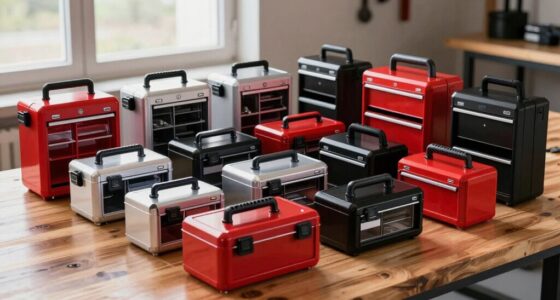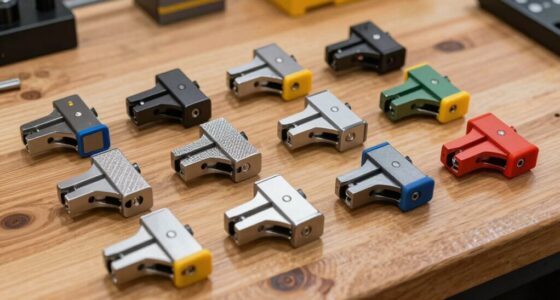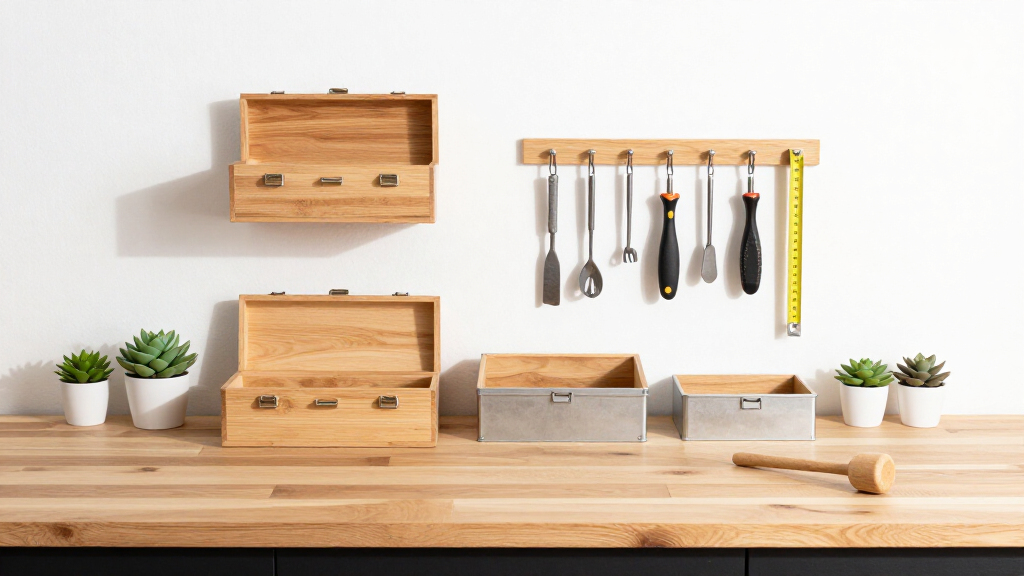

The best woodworking tool storage solutions match the tools you own, the wall space you can spare, and how often you change your shop layout. My best overall pick is the POKIPO Large Power Tool Organizer because it combines four storage levels, eight drill holders, and an integrated charging station in one wall-mounted unit. The F-Style Clamp Modular Rack three-pack offers stronger value for clamp-heavy shops, while the O’SKOOL Modular Chisel Rack gives beginners a focused and expandable way to protect edge tools. The main tradeoff is breadth versus specialization: broad organizers handle several tool categories, but dedicated racks usually provide denser storage and faster access for one tool type. Continue reading for my full breakdown of which solution fits each shop, tool collection, and budget.

Get tools and workshop supplies delivered free — and shop member deals
- Fast, free delivery on millions of items
- Access to Prime Big Deal Days deals on October 6–7
- Prime Video, Amazon Music and more included
Complete the kit


Key Takeaways
- POKIPO ranks first for broad utility because it stores and charges multiple cordless tools, though it cannot replace dedicated clamp or chisel racks.
- The F-Style Clamp Rack three-pack offers the strongest value for buyers who need distributed clamp storage across several work zones.
- Clamp type matters more than headline capacity: the Fulton, quick-release, Rockler, and F-style systems serve different bar profiles and shop routines.
- O’SKOOL is the clearest beginner pick because its modular chisel-focused layout is easier to plan than a large, mixed-tool wall system.
- Specialized storage wins on access and protection, with WoodRiver‘s turning rack and tilt-out bins covering tools that general shelves handle poorly.
| WoodRiver Turning Tool Storage Rack |  | Best for Turning Tools | Brand: WoodRiver | Capacity: Up to 6 tools | Holding Material: EVA foam | VIEW LATEST PRICE | See Our Full Breakdown |
| Fulton Woodworking Tools Pipe Clamp Modular Clamp Rack |  | Best Overall Clamp Storage | Number of Racks: 3 | Material: Heavy-duty steel | Rack Length: 16 inches each | VIEW LATEST PRICE | See Our Full Breakdown |
| O’SKOOL Modular Chisel Storage Rack for Woodworking Workshop Tool Organization |  | Best Adjustable Hand-Tool Rack | Material: Birch plywood | Number of Compartments: 10 | Compartment Design: Modular and adjustable | VIEW LATEST PRICE | See Our Full Breakdown |
| Quick-Release Bar Clamp Rack |  | Best for Quick-Release Clamps | Capacity: Up to 15 clamps | Compatible Clamp Type: Most quick-release bar clamps | Material: Galvanized steel | VIEW LATEST PRICE | See Our Full Breakdown |
| Rockler 24-Inch Parallel Clamp Rack |  | Best Compact Parallel-Clamp Rack | Capacity: Up to 12 clamps | Compatible Clamp Type: Parallel woodworking clamps | Supported Clamp Width: Up to 24 inches | VIEW LATEST PRICE | See Our Full Breakdown |
| F-Style Clamp Modular 16 Inch Clamp Rack 3 Pack |  | Best Flexible Clamp Storage | Number of racks: 3 | Rack length: 16 inches each | Material: Heavy-duty steel | VIEW LATEST PRICE | See Our Full Breakdown |
| WoodRiver Tilt-Out Bins |  | Best for Small Hardware | Number of bins: 5 | Bin width: 4-1/4 inches | Bin depth: 4-1/2 inches | VIEW LATEST PRICE | See Our Full Breakdown |
| POKIPO Large Power Tool Organizer Wall Mount with Charging Station |  | Best Power Tool Charging Station | Load capacity: 600 lbs | Number of shelves: 4 | Drill holders: 8 | VIEW LATEST PRICE | See Our Full Breakdown |
| woodworking tool storage solution | Material | Mounting Hardware |
|---|---|---|
| WoodRiver Turning Tool Storage | — | Included |
| Fulton Woodworking Tools Pipe | Heavy-duty steel | Included |
| O’SKOOL Modular Chisel Storage | Birch plywood | — |
| Quick-Release Bar Clamp Rack | Galvanized steel | — |
| Rockler 24-Inch Parallel Clamp | Galvanized steel | — |
| F-Style Clamp Modular 16 Inch | Heavy-duty steel | Included |
| WoodRiver Tilt-Out Bins | Plastic | 4 screws and 4 anchors |
| POKIPO Large Power Tool Organi | — | — |
More Details on Our Top Picks
WoodRiver Turning Tool Storage Rack
I chose the WoodRiver Turning Tool Storage Rack for woodturners who want long-handled tools visible and within reach. Its EVA foam fingers separate and grip six tools, reducing the chance of handles colliding or blades sliding from the rack. Unlike the O’SKOOL Modular Chisel Storage Rack, this model favors quick placement over adjustable compartments, making it better for a consistent set of turning tools but less adaptable to mixed hand tools. Multiple racks can be joined, so capacity can grow without replacing the original installation. That expandability helps it rank above a fixed six-slot holder, though each added section consumes more wall width. I would skip it for broad workshop organization: it has no bins, shelves, or charging space, and its narrow tool focus makes it less versatile than the POKIPO organizer.
Pros:- EVA foam fingers hold six turning tools securely
- Open design keeps frequently used tools easy to identify and reach
- Additional racks can be joined as the tool collection grows
- Mounting hardware is included
Cons:- Six-tool capacity may require multiple racks for an established collection
- Designed for turning tools rather than mixed workshop storage
- Tool positions are not adjustable
Best for: Woodturners with up to six frequently used gouges, scrapers, or similar long-handled tools who want open wall storage
Not ideal for: Woodworkers seeking one organizer for clamps, power tools, and accessories, since this rack is shaped around turning tools
- Brand:WoodRiver
- Capacity:Up to 6 tools
- Holding Material:EVA foam
- Length:16-1/4 inches
- Height:1-3/8 inches
- Depth:2-3/8 inches
- Expansion:Additional racks can be joined
- Mounting Hardware:Included
Our verdict“This is my pick for woodturners who value fast access and expandable wall storage more than multi-tool flexibility.”
Fulton Woodworking Tools Pipe Clamp Modular Clamp Rack
I rank the Fulton Modular Clamp Rack highest for clamp-heavy shops because its three-rack system handles pipe, F-style, bar, and parallel clamps rather than committing the wall to one format. Its listed configurations hold as many as 21 pipe clamps, 30 F-clamps, or 21 bar and parallel clamps, giving it far greater capacity than the 15-clamp Quick-Release Bar Clamp Rack. Modular alignment tabs also let buyers arrange the steel sections around available wall space instead of accepting one long fixed rail. That flexibility comes with more planning and installation work, and the system still contributes nothing to chisel or power-tool storage. I would choose the Rockler 24-inch Parallel Clamp Rack for a smaller, uniform parallel-clamp collection, but Fulton offers the broadest clamp compatibility and the strongest growth path in this group.
Pros:- Three modular racks support several common clamp styles
- High listed capacities suit growing or professional clamp collections
- Heavy-duty steel construction supports workshop use
- Alignment tabs and included hardware simplify custom layouts
Cons:- Installation requires suitable wall studs or drywall anchors and some assembly work
- Three separate racks demand more layout planning than a single rail
- Provides no storage for non-clamp tools or accessories
Best for: Busy furniture shops with several clamp styles and enough wall area to build a high-capacity modular storage zone
Not ideal for: Small workshops with only a few identical clamps, since three racks take more planning and wall space than a single-purpose holder
- Number of Racks:3
- Material:Heavy-duty steel
- Rack Length:16 inches each
- Mounting Surfaces:Wall studs or drywall
- Mounting Hardware:Included
- Pipe Clamp Capacity:Up to 21 clamps
- F-Clamp Capacity:Up to 30 clamps
- Bar or Parallel Clamp Capacity:Up to 21 clamps
- Layout:Modular tabs support multiple arrangements
Our verdict“I recommend this system for buyers who need scalable, mixed-clamp storage and can dedicate a meaningful section of wall to it.”
O’SKOOL Modular Chisel Storage Rack for Woodworking Workshop Tool Organization
The O’SKOOL Modular Chisel Storage Rack earns its place by adapting ten compartments to chisels, screwdrivers, plane irons, files, and carving tools. That mixed-tool support makes it more flexible than the WoodRiver Turning Tool Storage Rack, whose foam fingers are aimed at a narrower tool family. I also favor O’SKOOL for buyers who want a Birch plywood organizer that visually fits a traditional woodworking shop rather than an industrial steel fixture. Adjustable spacing helps keep cutting edges separated and easier to retrieve, but setup takes more effort than dropping tools into fixed slots. The key restriction is the 5/16-inch thickness limit at the fence blocks; thick blades and oversized tools may not fit. Its ten compartments offer useful density, yet this is still bench-tool storage rather than an answer for clamps, drills, or bulky accessories.
Pros:- Ten adjustable compartments accommodate several hand-tool categories
- Separated positions reduce blade contact and accidental drops
- Birch plywood construction complements traditional shop interiors
- Modular layout can be revised as the tool mix changes
Cons:- Fence blocks accept tools only up to 5/16 inch thick
- Assembly and compartment adjustment require more setup than fixed-slot racks
- Cannot organize clamps, power tools, or larger workshop equipment
Best for: Hand-tool woodworkers with a varied collection of slim chisels, files, plane irons, and screwdrivers who want adjustable spacing
Not ideal for: Carvers or furniture makers with thick blades and oversized tools that exceed the 5/16-inch fence-block limit
- Material:Birch plywood
- Number of Compartments:10
- Compartment Design:Modular and adjustable
- Compatible Tool Type:Chisels
- Additional Compatible Tools:Screwdrivers, plane irons, files, and carving chisels
- Fence Block Thickness Limit:5/16 inch
- Handle Detail:CNC carved
Our verdict“This is my choice for woodworkers who need adaptable storage for slim hand tools and are willing to spend time tailoring the compartments.”
Quick-Release Bar Clamp Rack
I selected the Quick-Release Bar Clamp Rack for shops built around one clamp style. Its 24-3/8-inch galvanized-steel rail holds up to 15 quick-release clamps, while a trough captures their hooks to limit wobble and reduce the chance of a clamp shifting when another is removed. Compared with the Fulton Modular Clamp Rack, this is a simpler, lower-capacity solution with far less flexibility; Fulton suits mixed collections, while this rack keeps a uniform set orderly without three separate sections. Pre-drilled holes spaced 16 inches on center match common wall-stud layouts, though buyers must supply suitable lag bolts. The fixed footprint also asks for a clear stretch of wall. I rank it below Fulton for versatility, but above broader organizers when secure quick-release clamp retention matters more than accommodating future tool categories.
Pros:- Trough-style support helps prevent stored clamps from wobbling
- Galvanized steel construction provides a durable storage surface
- Capacity of 15 clamps fits a focused hobby or small-shop collection
- Pre-drilled 16-inch-on-center mounting aligns with common stud spacing
Cons:- Compatible primarily with quick-release clamps
- Lag bolts are required but are not listed as included
- Fixed 24-3/8-inch rail needs an uninterrupted section of wall
Best for: Woodworkers with a dedicated collection of up to 15 quick-release bar clamps and wall studs spaced 16 inches on center
Not ideal for: Shops with pipe, parallel, or mixed clamp collections, since the rack is purpose-built for quick-release models
- Capacity:Up to 15 clamps
- Compatible Clamp Type:Most quick-release bar clamps
- Material:Galvanized steel
- Length:24-3/8 inches
- Mounting Type:Wall mount
- Hole Spacing:Drilled 16 inches on center
- Installation Fasteners:Lag bolts required
- Country of Manufacture:USA
Our verdict“I would buy this rack for a uniform quick-release clamp collection, but choose Fulton when clamp variety or expansion matters more.”
Rockler 24-Inch Parallel Clamp Rack
The Rockler 24-Inch Parallel Clamp Rack is my compact choice for storing up to 12 parallel clamps without devoting wall space to unused clamp formats. Its galvanized-steel body, powder-coated finish, and rust resistance suit an indoor workshop where heavy clamps need firm support and protection from routine moisture. Compared with the Fulton Modular Clamp Rack, Rockler offers lower capacity and no layout customization, but it is easier to justify for a modest, uniform collection. The rack keeps parallel clamps separated, which reduces tangling and makes the required clamp easier to pull during glue-ups. Its 24-inch width support also sets a clear buying boundary: owners of larger clamps or mixed styles should choose a broader system. With only one storage level and no accessory shelf, this remains a focused space-saving solution, not a workshop-wide organizer.
Pros:- Stores up to 12 parallel clamps in a compact wall-mounted format
- Keeps clamps separated and easier to retrieve during glue-ups
- Galvanized steel and a powder-coated finish provide durable indoor storage
- Pre-drilled holes support straightforward wall installation
Cons:- Accepts only parallel clamps up to 24 inches wide
- Twelve-clamp capacity may be restrictive for production shops
- Single-level design provides no shelf or accessory storage
Best for: Hobby furniture makers with up to 12 parallel clamps no wider than 24 inches who want a compact dedicated wall rack
Not ideal for: Large cabinet shops using clamps wider than 24 inches or several clamp styles, since capacity and compatibility are narrow
- Capacity:Up to 12 clamps
- Compatible Clamp Type:Parallel woodworking clamps
- Supported Clamp Width:Up to 24 inches
- Material:Galvanized steel
- Finish:Powder coated
- Rust Resistance:Yes
- Mounting Type:Wall mount with pre-drilled holes
- Number of Shelves:1
- Recommended Setting:Indoor workshop storage
Our verdict“I recommend this rack for a compact parallel-clamp collection, while larger or mixed collections are better served by the Fulton system.”
F-Style Clamp Modular 16 Inch Clamp Rack 3 Pack
I rank the F-Style Clamp Modular Rack as the most adaptable clamp-storage pick because its three 16-inch steel sections can be arranged around available wall space. Unlike the longer Quick-Release Bar Clamp Rack, this set does not force buyers to dedicate one continuous stretch of wall. Its stated capacity also covers pipe, F-style, bar, and parallel clamps, making it more flexible than the specialized Rockler 24” Parallel Clamp Rack. The modular tabs let a growing shop alter the layout without replacing the whole system. That flexibility has limits: these racks store clamps only, and installation requires suitable studs or dependable drywall anchors. I would choose this set for a mixed clamp collection, but buyers wanting shelves, bins, or drill storage will get more utility from the POKIPO organizer.
Pros:- Three separate racks support flexible wall layouts
- Heavy-duty steel is suited to weighty clamp collections
- Accommodates pipe, F-style, bar, and parallel clamps
- Mounting hardware is included
Cons:- Requires drilling into studs or drywall
- Provides no storage for tools beyond clamps
- Three separate sections may take longer to align than a single rail
Best for: Woodworkers with mixed clamp types who need to distribute storage across several sections of usable wall
Not ideal for: Renters who cannot drill into walls or buyers seeking one organizer for clamps, power tools, and accessories
- Number of racks:3
- Rack length:16 inches each
- Material:Heavy-duty steel
- Mounting locations:Wall studs or drywall
- Mounting hardware:Included
- Pipe-clamp capacity:21
- F-clamp capacity:30
- Bar/parallel-clamp capacity:21
Our verdict“I recommend this set for mixed clamp collections that need a configurable layout more than an all-purpose storage station.”
WoodRiver Tilt-Out Bins
I place the WoodRiver Tilt-Out Bins in the small-parts role because five compact compartments keep screws, dowels, fittings, and other easy-to-lose supplies separated yet visible. The interlocking dovetail rails allow several sets to be stacked, giving this system more layout flexibility than a fixed drawer cabinet. Compared with the F-Style Clamp Modular Rack, these bins handle the opposite end of workshop storage: tiny hardware rather than long, awkward clamps. Customizable tabs make repeated parts faster to identify, while the tilt-out action keeps contents reachable without removing a whole container. The compromise is limited bin capacity; hand tools and bulky fastener boxes will not fit. Plastic also offers less resistance to workshop impacts than the steel POKIPO organizer. I favor these bins as a focused supplement, not a shop’s primary storage system.
Pros:- Five separate bins keep small hardware sorted
- Tilt-out access makes frequently used parts easy to reach
- Dovetail rails support flexible stacking
- Customizable tabs simplify labeling
Cons:- Bins are too small for most hand tools and boxed supplies
- Plastic construction is less impact-resistant than steel storage
- Five compartments may be insufficient for large hardware collections
Best for: Woodworkers who sort small quantities of screws, dowels, fittings, and project-specific hardware at a bench
Not ideal for: Busy production shops storing heavy metal parts or buyers who need space for hand tools and power tools
- Number of bins:5
- Bin width:4-1/4 inches
- Bin depth:4-1/2 inches
- Bin height:5-1/2 inches
- Material:Plastic
- Rail design:Interlocking dovetail rails
- Identification tabs:5 customizable tabs
- Mounting hardware:4 screws and 4 anchors
Our verdict“I recommend these bins as an accessible small-hardware station for a bench area, not as a replacement for full-size tool storage.”
POKIPO Large Power Tool Organizer Wall Mount with Charging Station
I give the POKIPO Large Power Tool Organizer the charging-station role because it combines four shelves, eight drill holders, accessory storage, and four powered outlets in one wall-mounted unit. Compared with the WoodRiver Tilt-Out Bins, it is built for bulky cordless tools and batteries rather than loose screws or dowels. Its 600-pound stated capacity also separates it from the narrower O’SKOOL Modular Chisel Storage Rack, particularly for buyers consolidating several heavy tools. The integrated power strip reduces cords running back to separate outlets, turning storage into a practical charging hub. That capability demands substantial wall space, and the loaded rack needs a sound mounting surface. Uneven walls may complicate installation, while compact shops could find its four-layer frame intrusive. I rank it highly for cordless-tool owners, though it is excessive for hand-tool-focused workshops.
Pros:- Four shelves consolidate power tools, batteries, and accessories
- Eight drill holders provide dedicated cordless-tool storage
- Four-outlet power strip supports charging on the rack
- Stated 600-pound capacity suits a large tool collection
Cons:- Large four-layer design consumes considerable wall space
- Safe use at high loads depends on a strong mounting surface
- Uneven walls can make installation difficult
Best for: Cordless-tool owners with several drills, batteries, and chargers who have a strong workshop wall available
Not ideal for: Small hand-tool workshops or spaces with uneven, weak, or heavily obstructed walls
- Load capacity:600 lbs
- Number of shelves:4
- Drill holders:8
- Power-strip outlets:4
- Power-cord length:6.5 feet
- Construction:Industrial-grade metal
- Installation type:Wall-mounted
Our verdict“I recommend the POKIPO for a cordless-tool-heavy shop that needs one high-capacity storage and charging hub.”
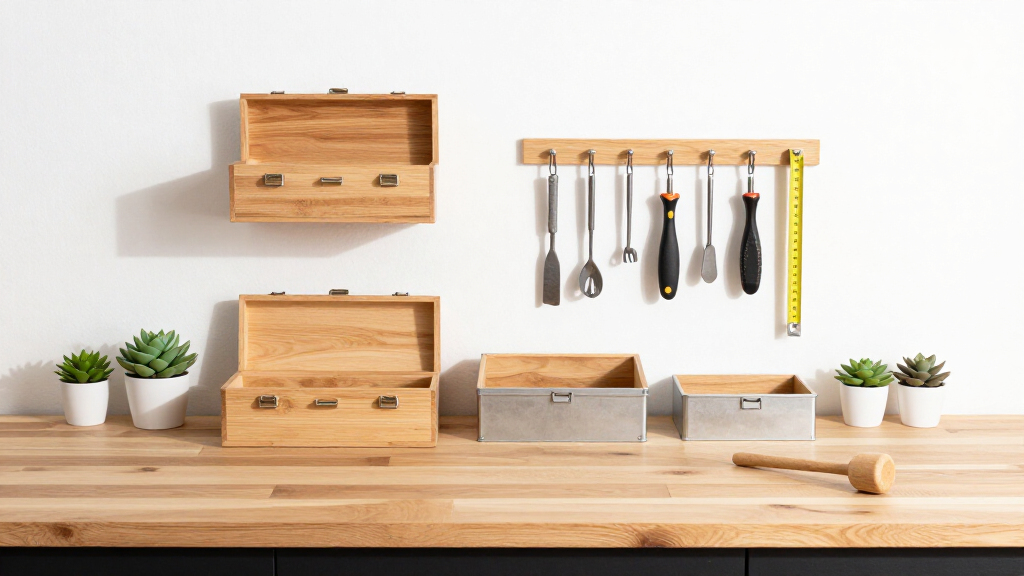
How We Picked
I ranked these products by how well they solve real workshop storage problems rather than by raw capacity alone. My main criteria were tool compatibility, space efficiency, mounting demands, access speed, build materials, and the ease of expanding or rearranging the system. I also translated manufacturer-stated dimensions, capacities, and construction details into practical outcomes, such as whether a rack concentrates weight in one wall area or spreads tools across several stations. Products that support more daily tasks placed higher unless a specialized design delivered a clear advantage for a defined buyer.
Versatility carried the most weight in the overall ranking, which places the multi-level POKIPO organizer ahead of single-category racks. Value depended on usable storage per purchase rather than the lowest price, giving the F-Style three-pack an advantage for clamp collections. I gave extra credit for protected cutting edges, clear visibility, and layouts that reduce time spent sorting through drawers. Specialized products still earned distinct roles when their fit was stronger than a general organizer, including the WoodRiver Turning Tool Rack for lathe tools and the Fulton rack for pipe clamps.
| woodworking tool storage solution | Material |
|---|---|
| WoodRiver Turning Tool Storage | — |
| Fulton Woodworking Tools Pipe | Heavy-duty steel |
| O’SKOOL Modular Chisel Storage | Birch plywood |
| Quick-Release Bar Clamp Rack | Galvanized steel |
| Rockler 24-Inch Parallel Clamp | Galvanized steel |
| F-Style Clamp Modular 16 Inch | Heavy-duty steel |
| WoodRiver Tilt-Out Bins | Plastic |
| POKIPO Large Power Tool Organi | — |
Factors to Consider When Choosing Woodworking Tool Storage Solutions
I recommend starting with the tools that create the most friction in your current workflow, not with the largest organizer that fits the wall. Clamps, cutting tools, cordless tools, and small hardware each need a different balance of support, visibility, and access. A good layout also leaves room for the collection to grow without placing every item farther from its point of use. The following factors help separate a tidy-looking purchase from a system that remains useful after the shop changes.
Match the Storage Format to the Tool Category
A universal shelf can hold many objects, but it rarely gives every woodworking tool the support it needs. Chisels benefit from separated slots that keep cutting edges apart, while turning tools need long, stable positions that make handle identification easy. Clamps place more sideways and downward force on a rack, so their bar shape and jaw design should guide the purchase. Cordless tools need open grip access plus shelf room for batteries and chargers. Small fasteners are easier to manage in visible bins than in open trays where mixed hardware spreads. I would map each tool category to its preferred storage format before comparing price or advertised capacity.
Plan Around Wall Structure and Load Distribution
Wall storage frees floor and bench space, but the mounting surface sets the real capacity limit. A rack rated for many clamps may still be a poor choice if its fasteners land between studs or the wall material cannot support the loaded weight. Heavy steel clamps create concentrated loads, especially when several hang from a narrow bracket. Wider organizers can spread weight across more mounting points, provided their hole spacing matches the wall framing. I would identify studs, estimate the combined tool weight, and select suitable hardware before choosing the final position. Secure mounting matters more than nominal rack capacity when the organizer sits above a workbench or walkway.
Choose Capacity for Growth, Not Empty Display Space
Buying exactly enough slots for the current collection often leads to another storage purchase after only a few tool additions. At the opposite extreme, an oversized organizer can consume prime wall space while holding mostly air. I find that roughly 20 to 30 percent spare capacity gives a growing shop useful flexibility without excessive waste. Modular racks make that margin easier to distribute because extra sections can sit near different benches. Fixed organizers make more sense when the tool collection is stable and consistent in size. Count usable positions after accounting for wide handles, bulky clamp jaws, cords, and battery packs rather than relying only on the advertised total.
Place Tools Where the Work Happens
The best storage location is usually tied to a task rather than to an empty patch of wall. Clamps belong near an assembly surface, chisels near the bench, and turning tools within easy reach of the lathe without entering its operating area. Shorter retrieval paths reduce workshop clutter because tools are easier to return between operations. A single large station can simplify inventory, but it may create repeated trips across a bigger shop. Several smaller racks work better when cutting, assembly, and finishing happen in separate zones. I would favor point-of-use storage unless theft control, shared access, or a very small room makes one central location more practical.
Decide When Added Features Earn Their Cost
Premium storage earns its price when stronger materials, cleaner fit, or integrated functions solve a recurring problem. A charging station can reduce cable clutter and keep cordless tools ready, but it offers little value to a shop built around corded machines or one battery platform stored elsewhere. Heavy-duty steel construction makes sense for dense clamp collections, while lighter modular pieces may be adequate for chisels or accessories. Powder coating and galvanized finishes can slow corrosion in humid garages, though indoor climate control may narrow that advantage. Replaceable or expandable parts also carry value when the workshop layout changes often. I would pay more for load support, safer tool separation, or useful power management, not merely for extra shelves that lack a clear purpose.
Avoid Mixing Tools That Create Conflicting Risks
Combining unrelated tools can save space, but some pairings create more trouble than they solve. Sharp chisels should not share an open compartment with loose metal accessories that can damage their edges. Chargers need airflow and separation from heavy dust, finishing vapors, and areas where metal shavings collect. Long clamps need clearance below the rack, while tilt-out bins need room in front for their full opening arc. Tool handles should remain visible without projecting into walkways or catching clothing. I prefer separate zones for cutting edges, heavy clamps, powered equipment, and small parts, even when those zones use products from different storage systems.
Frequently Asked Questions
Should I buy one large organizer or several specialized racks?
I would choose one large organizer when wall space is limited and the collection centers on cordless tools, batteries, and common accessories. Several specialized racks provide better density and protection for clamps, chisels, turning tools, and small hardware. They also let you place each category near the bench or machine where it is used. The downside is a more involved mounting plan and less visual uniformity across the shop. For most established workshops, a hybrid layout combining a broad power-tool station with task-specific racks offers the strongest balance.
How do I know whether a clamp rack fits my clamps?
Start by grouping the collection into pipe, F-style, parallel-jaw, and quick-release clamps because each style hangs differently. Measure the bar or pipe diameter, jaw width, and head clearance rather than relying on overall clamp length alone. Compare those figures with the rack’s slot dimensions, spacing, and stated compatibility. Allow extra room for padded jaws and handles so adjacent clamps can be removed without lifting several others. I would choose a style-specific rack for a uniform collection and a more flexible modular arrangement for mixed clamp types.
Can drywall anchors safely support a loaded woodworking tool rack?
Light accessories may work with properly rated anchors, but I would not make drywall alone the primary support for heavy clamps or several cordless tools. Manufacturer load ratings assume suitable mounting hardware and a sound supporting surface. Fastening into studs or solid masonry gives a more dependable foundation and handles repeated tool removal better. If the rack holes do not align with studs, a securely mounted plywood backer can create flexible attachment points. The combined loaded weight, not the empty organizer weight, should guide the mounting plan.
Is a built-in charging station useful in a dusty woodworking shop?
A charging station is useful when it consolidates batteries, chargers, and frequently used cordless tools near a clean power source. It is less appealing beside sanding equipment or any machine that sends fine dust directly toward electrical contacts and ventilation slots. I would place the unit in a low-dust wall zone and follow the charger manufacturer’s clearance guidance. Avoid overloading the included power strip, and route cords where tools cannot snag them. For battery-heavy shops, centralized charging saves shelf space and cable clutter; for occasional cordless use, a plain rack may be the better value.
How much extra storage capacity should I buy?
I usually recommend space for the current collection plus 20 to 30 percent growth. That margin handles new clamps, replacement batteries, or extra chisels without forcing an immediate redesign. Larger reserves can waste valuable wall area, especially in compact garages where every mounting zone competes with machines and lumber storage. Modular products reduce that risk because capacity can be added in smaller stages. Before buying, I would make a scaled wall layout that includes tool dimensions, door swings, bench height, and the clearance needed to remove each item.
Conclusion
For buyers who want one broadly useful station, my best overall choice is the POKIPO Large Power Tool Organizer because it combines layered storage, drill holders, and charging in a single wall-mounted footprint. The F-Style Clamp Modular Rack three-pack is my best value pick, especially for shops that benefit from spreading clamps across several work zones. Beginners should start with the O’SKOOL Modular Chisel Rack when protecting and organizing a growing hand-tool collection is the immediate goal. Buyers willing to pay more for a dedicated heavy-duty clamp solution should choose the Rockler 24” Parallel Clamp Rack.
For narrower needs, I would match the purchase directly to the tool profile. The Fulton Modular Clamp Rack is the better fit for pipe clamps, while the 15-clamp galvanized steel rack suits a dense quick-release bar-clamp collection. Lathe owners should choose the WoodRiver Turning Tool Storage Rack for organized handle access, and shops struggling with loose hardware should favor WoodRiver Tilt-Out Bins. The right choice is the product that removes the largest daily storage problem without occupying space needed by tools it cannot support.
Fall yard work Picks
leaf blowers
As an affiliate, we earn on qualifying purchases.