A stable workbench is essential for accurate work, so choose a height that allows your elbows to stay at about 90 degrees for comfort and efficiency. Heavier materials like hardwood or steel provide better stability and resist wobbling, which can cause measurement errors. A wobbly surface leads to misalignments and mistakes, ruining your project quality. Understanding how height, weight, and design impact stability helps you avoid issues—keep going to discover how to build the perfect workbench.

Get business pricing on tools and workshop supplies
- Business-only prices and quantity discounts
- Tax-exempt purchasing
- Multiple users, one account, clear invoices
Key Takeaways
- Correct workbench height reduces user fatigue and improves precision by maintaining ergonomic posture during tasks.
- Heavier workbenches provide stability, minimizing wobble and ensuring accurate cuts and measurements.
- Wobbly workbenches cause misalignments, leading to errors in drilling, cutting, and assembly.
- Stable, well-designed frames with proper anchoring prevent movement, enhancing work accuracy.
- Material choice and design features directly impact durability, stability, and the overall quality of work.
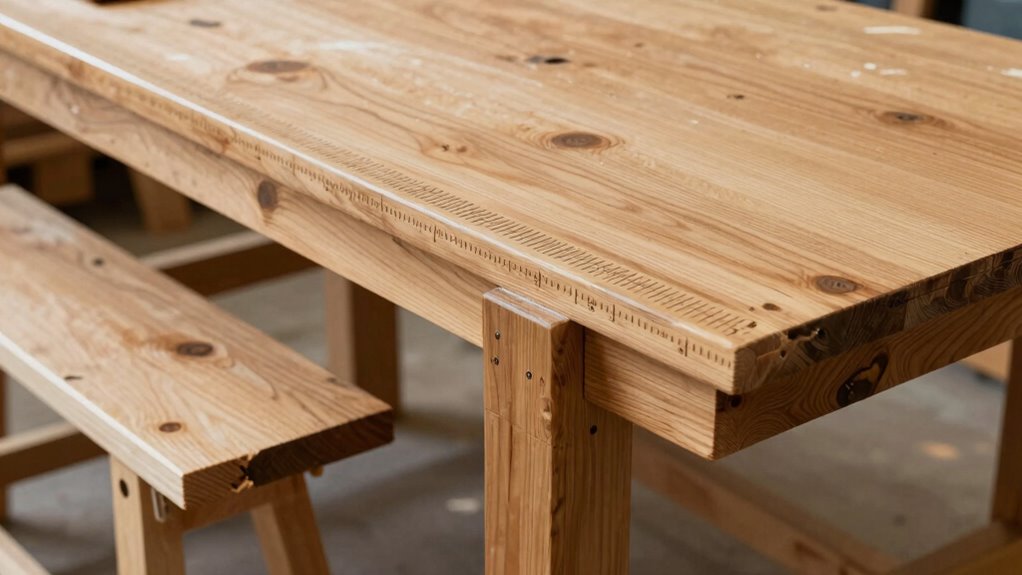
Have you ever wondered what makes a workbench essential for any workshop? The truth is, choosing the right workbench involves more than just picking a sturdy surface. It starts with understanding the materials used and how they influence durability and stability. Workbench materials are critical because they determine how well your bench withstands daily wear and tear. For example, heavy-duty hardwood like maple or oak provides a robust, long-lasting surface that resists dents and scratches, making it ideal for heavy or precision work. Conversely, steel or reinforced particleboard can offer a more affordable alternative, but they might not hold up as well over time. The material choice also impacts the weight of the bench, which is a key factor for stability. A heavier workbench anchored firmly to the ground minimizes wobbling, ensuring your work stays precise.
Along with materials, ergonomic design plays a *crucial* role in making your workbench not just stable but also comfortable to use. An ergonomic workbench is built with your body in mind — at the right height, with a surface that reduces strain during prolonged tasks. When you’re working on a bench that’s too high or too low, your posture suffers, leading to fatigue and decreased accuracy. Ideally, the height should allow your elbows to be at a comfortable angle, around 90 degrees, so you can work with precision without overextending or hunching over. Some benches incorporate adjustable height features, giving you the flexibility to customize your workspace. This ergonomic consideration also extends to the design of the edges and surface finish, which should be smooth to prevent hand fatigue and injury.
A workbench’s stability is further compromised if it wobbles or shifts during use, which can severely affect your accuracy. Even minor wobbling can cause misalignments when you’re cutting, drilling, or assembling. That’s why a heavy, well-constructed frame is essential. The design should include sturdy legs or a solid base that distributes weight evenly and resists lateral movement. When your workbench is wobble-free, you can focus entirely on your project, confident that your measurements and cuts will be precise. Additionally, proper anchoring techniques further enhance stability, especially on uneven floors or in mobile setups. When your workbench is wobble-free, you can focus entirely on your project, confident that your measurements and cuts will be precise. Remember, a stable, ergonomically designed workbench made from high-quality materials isn’t just about comfort — it’s about ensuring accuracy and safety in your work. Investing in the right combination of materials and ergonomic features guarantees that your workbench will serve you well for years to come, providing a reliable foundation for all your projects.
As an affiliate, we earn on qualifying purchases.
Frequently Asked Questions
What Materials Are Best for Building a Durable Workbench?
For a durable workbench, you should choose strong wood types like hardwoods such as maple or oak, which resist dents and wear. Metal options like steel or aluminum also provide excellent stability and longevity. Combining a hardwood top with a sturdy metal frame offers both strength and durability. Avoid softwoods that wear quickly, and guarantee your materials are thick enough to withstand heavy use and maintain stability.
How Do I Stabilize a Wobbly Workbench Effectively?
To stabilize your wobbly workbench, start with workbench leveling by adjusting the legs or adding shims under uneven corners. Secure the frame with clamps or braces, ensuring it’s square. For vibration reduction, attach rubber pads or anti-vibration mats beneath the legs. Tighten all bolts and joints regularly. These steps improve stability, minimize wobbling, and enhance your work accuracy, making your workbench more reliable for precise projects.
Can Adjustable-Height Workbenches Improve Workflow?
Yes, adjustable-height workbenches can improve your workflow by offering ergonomic benefits and space optimization. By customizing the height to suit different tasks, you reduce strain and increase comfort, allowing you to work longer and more efficiently. Plus, these benches maximize your workspace, helping you organize tools and materials better. This flexibility guarantees you can adapt your setup for various projects, boosting productivity and reducing fatigue.
What Safety Precautions Should I Consider When Using a Workbench?
When using a workbench, you should always wear personal protective equipment like safety glasses and gloves to prevent injuries. Make certain proper ventilation in your workspace, especially when working with fumes or dust. Keep your area tidy to avoid tripping hazards, and double-check that your tools are secure. Staying alert and following safety guidelines helps prevent accidents and keeps you safe while working efficiently.
How Does Workbench Design Vary for Different Crafts or Industries?
Ever wonder how workbenches differ across crafts or industries? You’ll find craft-specific features like specialized surfaces for woodworking or chemical-resistant tops for labs, all tailored to industry standards. From height adjustments for ergonomic comfort in jewelry making to heavy-duty frames in automotive shops, each design guarantees safety and precision. These variations keep your work efficient, safe, and aligned with the unique demands of your craft or industry.
Conclusion
Think of your workbench as the foundation of a mighty ship. If it wobbles or tilts, even slightly, your ship’s course drifts off. A stable, properly sized workbench keeps your projects steady and true, just like a well-built vessel stays on course through stormy seas. Invest in the right height and mass, and you’ll navigate your craft with confidence, avoiding the wreckage of inaccuracies. Your craftsmanship’s voyage depends on a solid, unwavering harbor.
Halloween Picks
halloween
As an affiliate, we earn on qualifying purchases.