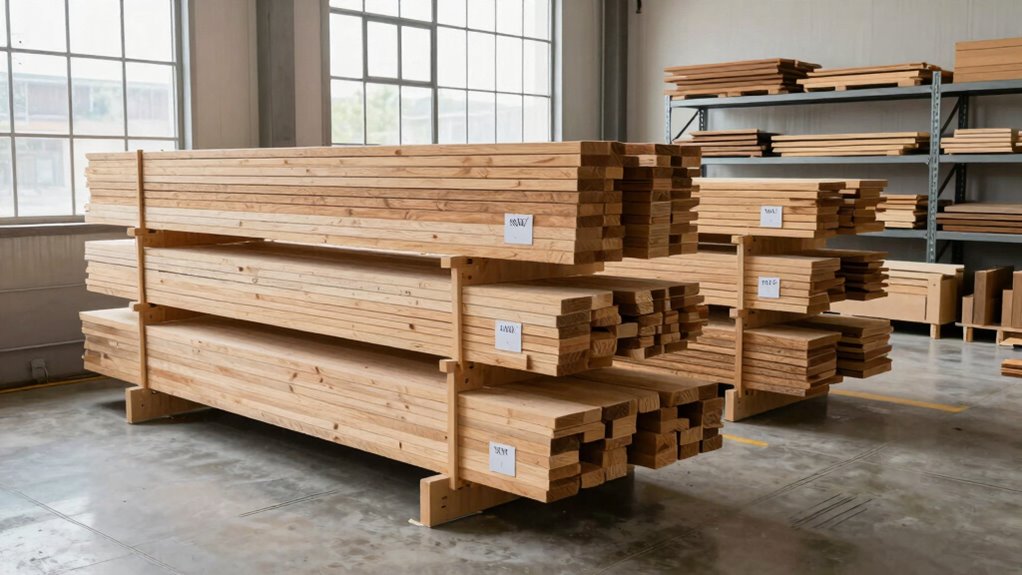

To design a lumber storage area that doesn’t fight you, focus on safety, organization, and environmental factors. Install sturdy racks, keep heavier boards lower, and leave space for easy access. Group similar types, label stacks clearly, and guarantee good lighting. Elevate stacks on pallets for airflow and longevity. Maintain a clean, well-ventilated environment and regularly inspect for hazards. Keeping these tips in mind will help you create a functional, stress-free storage space—more tips to help you optimize your setup.

Get tools and workshop supplies delivered free — and shop member deals
- Fast, free delivery on millions of items
- Access to Prime Big Deal Days deals on October 6–7
- Prime Video, Amazon Music and more included
Key Takeaways
- Plan a flexible layout that groups similar lumber types and allows easy access and future expansion.
- Use sturdy, well-ventilated racks with clear signage to ensure safety and organization.
- Keep heavier boards low and elevate stacks to prevent damage and facilitate airflow.
- Maintain a clean, dry environment to prevent warping, rot, and environmental damage.
- Regularly inspect and update storage practices to improve safety, efficiency, and sustainability.
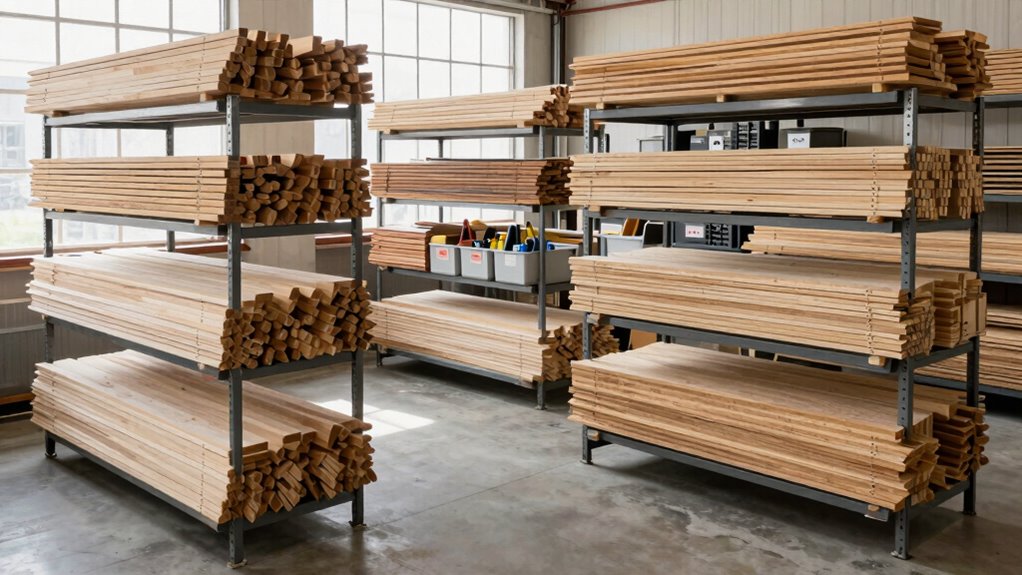
Are you planning to create an efficient lumber storage area? If so, you need to think carefully about your design to guarantee it’s safe, organized, and environmentally conscious. The first step is understanding the importance of safety precautions. A well-designed storage space minimizes risks like falling lumber, tripping hazards, and fire hazards. Make sure to install sturdy racks or shelving that can support the weight of your lumber. Keep heavier boards at lower levels to prevent accidents when reaching for them. Additionally, leave enough space between stacks to allow easy access and movement, reducing the chance of injury. Use clear signage to indicate safety protocols, and always wear appropriate protective gear when handling wood. Regularly inspecting your storage area for damaged racks or unstable stacks can prevent accidents before they happen. Incorporating biodiversity principles by maintaining a clean and healthy environment can also promote sustainability in your workspace. Proper organization and maintenance further ensure that your storage system remains safe and effective over time.
Beyond safety, environmental considerations should also influence your design. Wood is a renewable resource, but improper storage can lead to waste or damage. To reduce environmental impact, organize your lumber to prevent warping or rot by keeping it dry and well-ventilated. Elevate stacks off the ground, using pallets or racks that promote air circulation. Incorporating sustainable storage practices can further enhance eco-friendliness and resource management. Additionally, using airflow management techniques can help prevent moisture buildup and prolong the life of your lumber. Incorporate waste management strategies, like designated bins for scrap or sawdust, to encourage recycling and responsible disposal. Also, consider the proximity of your storage area to your workspace; keeping it close minimizes transportation emissions and reduces your carbon footprint. An efficient layout can also improve your overall workflow, saving time and effort during projects.
Organize lumber to prevent warping and rot by keeping it dry, well-ventilated, and close to your workspace to reduce environmental impact.
When planning your storage layout, think about accessibility and workflow. Use a logical arrangement that groups similar types or sizes of lumber, making it easier to find what you need quickly. Proper lighting is essential for safety and efficiency, so ensure your storage area is well-lit to prevent mishaps. Label your stacks clearly to avoid confusion and save time during projects. Additionally, think about future expansion—design your space with flexibility in mind so you can add more lumber as your needs grow. Planning ahead ensures your storage solution remains effective as your collection expands.
Finally, incorporating safety precautions and environmental considerations into your design creates a space that doesn’t fight you at every turn. It becomes easier to stay organized, safe, and eco-friendly. It’s also beneficial to educate yourself on storage best practices to continually improve your system. With thoughtful planning, your lumber storage area will serve you well, helping you work efficiently while protecting yourself and the environment. Remember, a good design isn’t just about convenience; it’s about creating a space that promotes safety, sustainability, and productivity.
As an affiliate, we earn on qualifying purchases.
Frequently Asked Questions
What Are the Best Materials for Durable Lumber Storage?
You should choose durable materials like heavy-duty shelving made from galvanized steel or pressure-treated wood for your lumber storage. Use weatherproof coatings on surfaces and shelving units to protect against moisture and pests, ensuring longevity. These materials withstand harsh conditions and heavy loads, keeping your lumber safe. By combining sturdy shelving with weatherproof coatings, you create a reliable, long-lasting storage area that resists damage and stays organized.
How Do I Prevent Pests in My Lumber Storage Area?
You might think pests are inevitable, but you can actually prevent them easily. Use pest-resistant materials for your storage area, like sealed, treated wood or metal. Store your lumber in rodent-proof containers, and keep the area clean and dry. Regularly inspect for signs of pests, and seal any gaps or holes. These simple steps make pests less likely to invade, proving prevention is smarter than fighting a pest invasion.
What Safety Precautions Should I Consider?
You should prioritize safety by installing clear safety signage to warn of potential hazards and guarantee everyone understands proper procedures. Keep a fire extinguisher nearby and regularly check it for functionality. Maintain a clean, organized space to prevent tripping or fire risks. Train staff on safety protocols, and always wear appropriate protective gear. These precautions create a safer environment, reducing accidents and ensuring smooth, efficient storage management.
How Can I Maximize Storage in a Small Space?
To maximize storage in a small space, you should focus on creative shelving solutions like wall-mounted racks or vertical storage, which utilize unused wall space. Implement space optimization techniques such as stacking lumber efficiently and using adjustable, multi-tiered racks. Consider installing hooks or pegboards for smaller tools and accessories. These strategies help you make the most of limited space while keeping your lumber organized, accessible, and safe.
What’s the Ideal Lighting for a Storage Area?
You’ll want a mix of lighting fixtures and natural illumination to keep your storage area bright and functional. Install bright, energy-efficient LED fixtures overhead, ensuring even coverage without shadows. Supplement with windows or skylights to harness natural light during the day, reducing energy costs. This combination prevents accidents and makes locating lumber easier, creating a safer, more efficient workspace. Proper lighting transforms your storage area into a well-lit, inviting environment.
Conclusion
By designing your lumber storage area with purpose and organization, you turn chaos into harmony, making every project feel less like a battle and more like a breeze. Think of it as creating a symphony where each tool and board plays its part in perfect sync. When your space works with you, not against you, you’ll find that building and repairing become not just tasks, but satisfying experiences. After all, a well-planned space is the foundation of success.
Halloween Picks
halloween
As an affiliate, we earn on qualifying purchases.