
To plan ducting for your dust collector effectively, start by sizing your ducts accurately to match airflow needs. Minimize bends and use gentle curves to enhance airflow. Choose durable materials like metal, but consider flexible options for tight spaces. Keep air velocity in check to prevent pressure loss. Regular maintenance is essential for peak performance and cleaner air. There’s more to optimizing your system that can improve efficiency and effectiveness.

Get business pricing on tools and workshop supplies
- Business-only prices and quantity discounts
- Tax-exempt purchasing
- Multiple users, one account, clear invoices
Key Takeaways
- Calculate and select appropriate duct sizes to optimize airflow and prevent strain on the dust collector motor.
- Design a layout with minimal bends and turns to maintain strong airflow throughout the system.
- Choose durable materials, like metal ducting, that can withstand dust and moisture levels effectively.
- Monitor air velocity and pressure loss to ensure optimal performance and efficiency of the ducting system.
- Plan for easy maintenance access to keep ductwork clear and ensure regular inspections for peak performance.
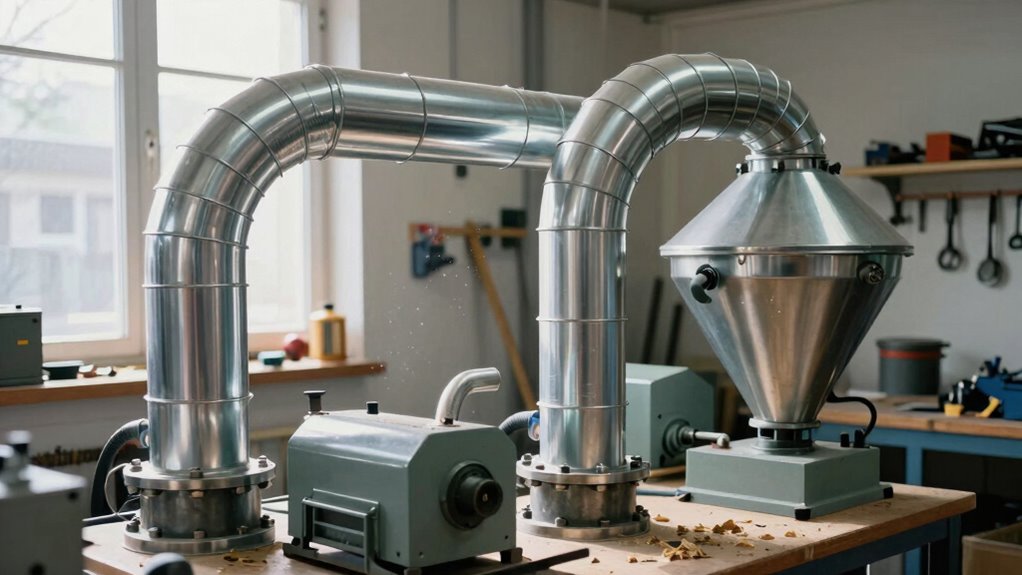
When you’re setting up a dust collector, effective ducting is key to maximizing its performance. You need to start by determining the proper duct sizes for your system. This involves careful airflow calculations to guarantee that your dust collector can effectively remove airborne particles without straining its motor. Use a duct size calculator to find the ideal diameter for your ducts based on the collector’s capacity and the distance from the source of dust.
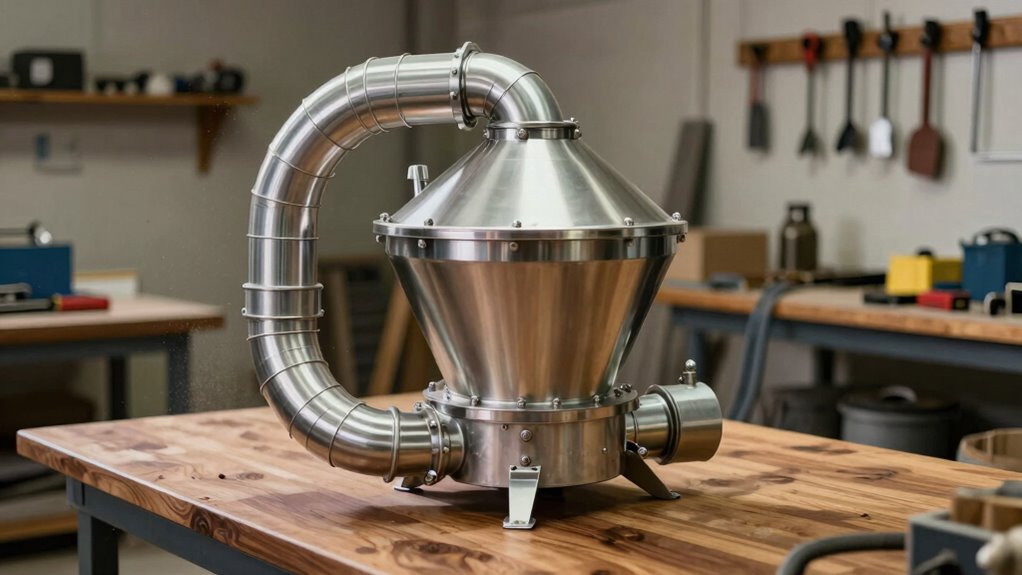
Next, consider your system layout. A well-planned layout minimizes bends and turns in the ductwork, which can impede airflow. Aim for a straight path as much as possible. If you need to incorporate bends, use gentle curves instead of sharp angles to maintain efficiency. Joint configurations matter too; secure all joints properly to avoid leaks that can reduce your system’s effectiveness. You might want to use metal ducting for durability, but also consider flexible options for tight spaces. Material selection plays a vital role—choose materials that can withstand the dust and moisture levels in your environment. Incorporating proper system design can also help prevent airflow issues and improve overall performance. Additionally, understanding airflow dynamics can help optimize your ducting design for better efficiency. Being aware of air velocity and pressure loss can further improve your setup’s effectiveness. Good planning also involves considering maintenance access, ensuring that you can easily inspect and service your ductwork when needed. Proper planning and understanding of airflow principles can significantly impact system performance and longevity.
A well-planned duct layout with gentle curves and secure joints enhances airflow and system efficiency.
When planning your ducting, remember that every detail counts. From duct sizes to joint configurations, each element works together to create an efficient dust collection system. Following these maintenance tips will help you keep everything in top shape, guaranteeing your dust collector performs at its best. By taking the time to properly plan your ducting, you’re investing in cleaner air and a more productive workspace. So roll up your sleeves, grab those tools, and get to work on setting up a dust collection system that truly delivers.
As an affiliate, we earn on qualifying purchases.
Frequently Asked Questions
What Size Ducting Is Best for My Specific Dust Collector Model?
To find the best duct size for your specific dust collector model, you’ll need to consult the manufacturer’s specifications. Generally, larger ducts improve airflow efficiency, but you must balance size with your system’s capacity. If the duct’s too big, you might lose suction; if it’s too small, airflow could be restricted. Aim for a duct size that matches your collector’s CFM rating for ideal performance and effective dust removal in your workspace.
How Often Should I Clean My Dust Collection System?
You should clean your dust collection system every month to maintain peak performance. Did you know that a clogged system can reduce efficiency by up to 50%? Regular maintenance not only extends the life of your equipment but also guarantees a healthier workspace. Use these maintenance tips: check for blockages, clean filters, and inspect ducting for leaks. Staying on top of cleaning frequency keeps your environment safe and your tools running smoothly.
Can I Connect Multiple Machines to One Dust Collector?
Yes, you can connect multiple machines to one dust collector, but verify they have compatible machine compatibility. Your ducting layout plays an essential role in performance; use larger ducts to reduce airflow resistance. Plan strategically, so each machine has a clear path to the collector, minimizing bends and turns. By optimizing your setup, you’ll maximize efficiency and keep your workspace cleaner. Just remember to balance the airflow for the best results!
What Materials Are Best for Ducting Construction?
You know what they say, “A chain is only as strong as its weakest link.” For ducting construction, you’ll want to choose materials like flexible ducting and rigid ducting. Each has its place depending on your setup. Use quality ducting materials that support airflow dynamics and guarantee smooth installation techniques. Remember, regular system maintenance keeps everything running efficiently, so pick materials that stand the test of time and wear.
How Does Ambient Humidity Affect Dust Collection Efficiency?
Ambient humidity impacts dust collection efficiency noticeably. When humidity levels rise, dust particles can absorb moisture, causing them to clump together and become heavier. This makes it harder for your dust collector to capture them effectively. Additionally, high humidity can lead to static electricity issues, reducing airflow. To optimize your system, keep an eye on humidity levels and adjust your dust collection setup accordingly to maintain peak performance.
Conclusion
When planning ducting for your dust collector, remember that proper design can boost efficiency by up to 30%. That’s not just a number; it means cleaner air and a healthier workspace. Investing time in your layout can greatly reduce airborne dust particles, which can lead to serious respiratory issues. By prioritizing effective ducting, you’re not only enhancing your equipment’s performance but also protecting your well-being and that of everyone in your shop.
Halloween Picks
halloween
As an affiliate, we earn on qualifying purchases.