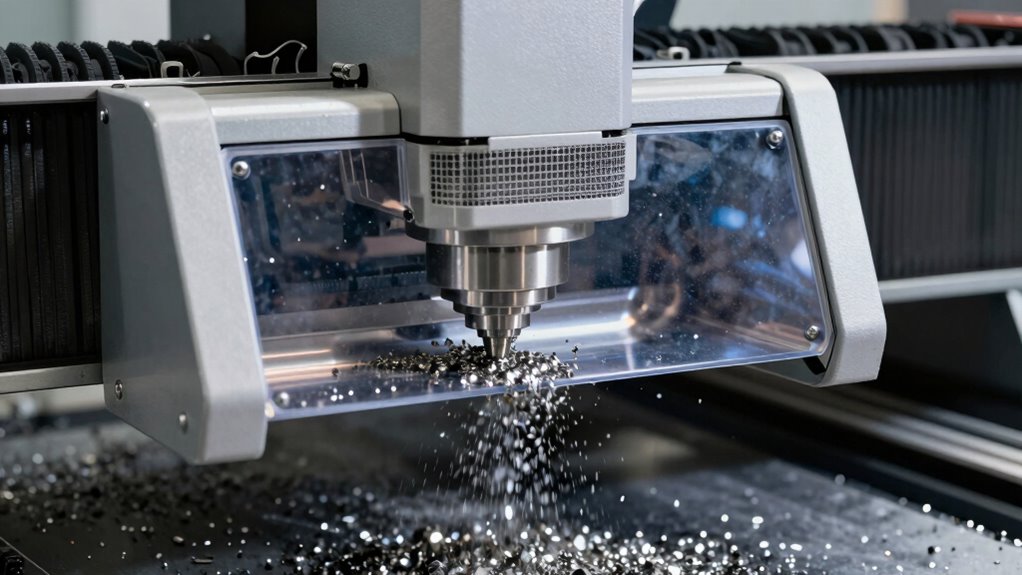

To prevent chips from exploding everywhere, you need a well-designed dust boot that fits snugly around your cutter, ensuring minimal gaps for debris escape. Combine it with optimized airflow by using a strong vacuum system and proper ducting to effectively capture chips at the source. A close fit and good airflow create a controlled environment, reducing mess and increasing precision. Want to discover how to set this up for your machine? Keep exploring to learn more.
Key Takeaways
- Properly fitted dust boots create a tight seal, directing airflow and preventing chips from escaping during machining.
- Optimized ducting and vacuum strength enhance debris capture, reducing chip explosion and scattering.
- Positioning dust extraction ports near debris-heavy zones improves chip containment and airflow efficiency.
- Adjustable or custom dust boots minimize gaps, ensuring maximum dust and chip removal.
- Regular system maintenance preserves airflow integrity and prevents chips from dispersing into the workspace.
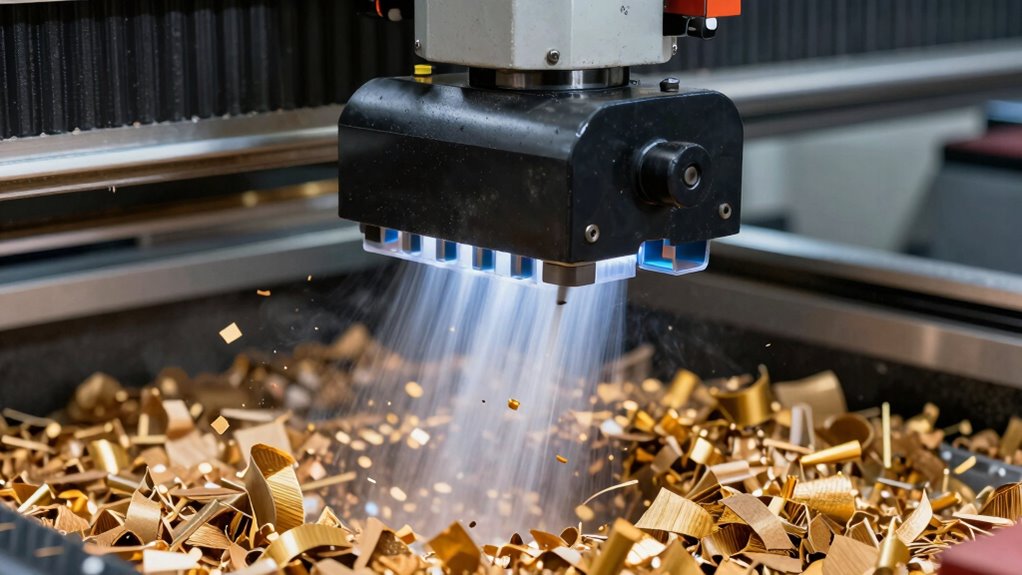
CNC dust boots play a crucial role in maintaining ideal airflow during machining, preventing debris from contaminating your machine and workspace. When you’re working with complex cuts and high speeds, dust collection becomes essential. Without proper dust management, chips and dust can quickly fill the air, clutter your workspace, and even cause damage to sensitive components. A well-designed dust boot ensures that debris is efficiently captured and directed away from the machine, helping you keep your workspace clean and safe. The key to effective dust collection lies in optimizing airflow; a properly fitted dust boot minimizes leaks and creates a controlled environment where dust and chips are drawn away swiftly.
You might not realize it, but airflow optimization is the backbone of effective dust collection. If the airflow isn’t properly balanced, dust can escape, settle on surfaces, or get sucked into your machine’s internal parts, leading to potential malfunctions or increased maintenance. When setting up your CNC, you want a dust boot that creates a tight seal around the cutting area. This seal ensures maximum vacuum efficiency, pulling debris directly into your dust extraction system. The more airtight your dust boot, the better your airflow management, which directly translates into cleaner cuts, less airborne dust, and a healthier workspace.
To achieve this, you need to pay attention to the design and fit of your dust boot. A universal fit might seem convenient, but it often compromises airflow efficiency. Custom or adjustable dust boots conform better to your specific machine and workpiece, ensuring minimal gaps and leaks. This precise fit enhances dust collection, making sure chips don’t escape into the air or fall onto your workspace. Additionally, consider the placement of your dust extraction port: it should be positioned close to the cutting zone, where debris is produced most heavily. Proper positioning maximizes airflow and ensures debris is captured before it can scatter.
Furthermore, airflow optimization isn’t just about the dust boot alone. It involves a coordinated effort with your dust collection system—vacuum strength, ducting design, and filter quality all play a role. When these elements work together, your system maintains a consistent airflow that effectively captures chips and dust, instead of letting them escape into the environment. Regularly inspecting and maintaining your dust collection setup ensures it continues to perform at peak efficiency. A clean and optimized airflow setup not only prolongs the life of your CNC machine but also keeps your workspace safer and more organized, allowing you to focus on precision cuts without worrying about debris explosions or contamination. Proper airflow management is especially important when working with Free Floating dust boots, which need to adapt to various cutting conditions for optimal performance.

Genmitsu CNC ABS Dust Shoe for CNC Machines with a 52mm Diameter Motor, fits Most 300W-500W Spindle Motors, Hose Adapter Outer Diameter 38mm (1.5″), Transparent
- Compatible Spindle Diameter: Fits 52mm spindle motors (300W-500W)
- Material and Design: Transparent ABS and aluminum construction
- Dust Removal Efficiency: Nylon brush maximizes vacuum suction
As an affiliate, we earn on qualifying purchases.
As an affiliate, we earn on qualifying purchases.
Frequently Asked Questions
How Do I Choose the Right Dust Boot for My CNC Machine?
To select the appropriate dust boot for your CNC machine, consider dust boot materials like rubber or silicone for durability and flexibility. guarantee it fits snugly around your tool and workpiece to maximize airflow control, which helps keep chips contained and improves cut quality. Measure your machine precisely, and look for compatibility with your spindle size and shape. A well-fitting dust boot will enhance safety and keep your workspace clean.
Can Airflow Be Adjusted for Different Materials?
Yes, you can adjust airflow for different materials by calibrating your dust boot’s airflow settings. Use material-specific airflow adjustments to optimize chip removal and dust collection, which improves cutting quality and safety. Start by testing airflow calibration for each material, then fine-tune the airflow to match its density and size of chips. This way, your CNC machine stays clean, and your workspace remains safe and efficient across various materials.
What Maintenance Is Required for Optimal Airflow?
You should regularly check and clean your filtration system to maintain ideal airflow. Inspect filtration efficiency to ensure dust and debris aren’t clogging filters, which can reduce airflow. Also, test airflow sensors periodically to confirm they’re functioning correctly, providing accurate readings. Keep vents clear of obstructions, and replace filters as recommended by the manufacturer. These steps help sustain proper airflow, preventing chip explosions and ensuring safe, efficient CNC operation.
Do Dust Boots Affect Cutting Precision?
Yes, dust boots can affect cutting precision by improving dust collection and airflow optimization. When your dust boot effectively channels chips and debris away from the cutting area, it keeps the workspace cleaner and reduces interference. This enhanced airflow stability guarantees your tools operate smoothly, leading to more accurate cuts. Properly maintained dust boots help maintain consistent airflow, ultimately supporting precision and prolonging your CNC machine’s lifespan.
Are There DIY Options for Customizing Dust Boots?
Imagine turning your CNC machine into a custom fortress—yes, DIY modifications are your gateway. You can easily craft personalized dust boot upgrades using everyday materials like rubber, foam, or plastic. These DIY options let you tailor the fit and airflow, ensuring chips stay contained. With some creativity and basic tools, you’ll enhance dust collection, improve safety, and achieve a cleaner workspace—all while customizing your setup to your exact needs.
Conclusion
By setting up your CNC dust boots and optimizing airflow, you’re fundamentally giving your machine a well-trained guard dog that keeps chips and dust in check. This setup acts like a barrier, preventing chaos from exploding everywhere and turning your workspace into a clean, efficient zone. When airflow flows smoothly, it’s like a gust of fresh air for your machine, helping it run longer and better. Keep these elements in sync, and your CNC will perform like a well-oiled machine.