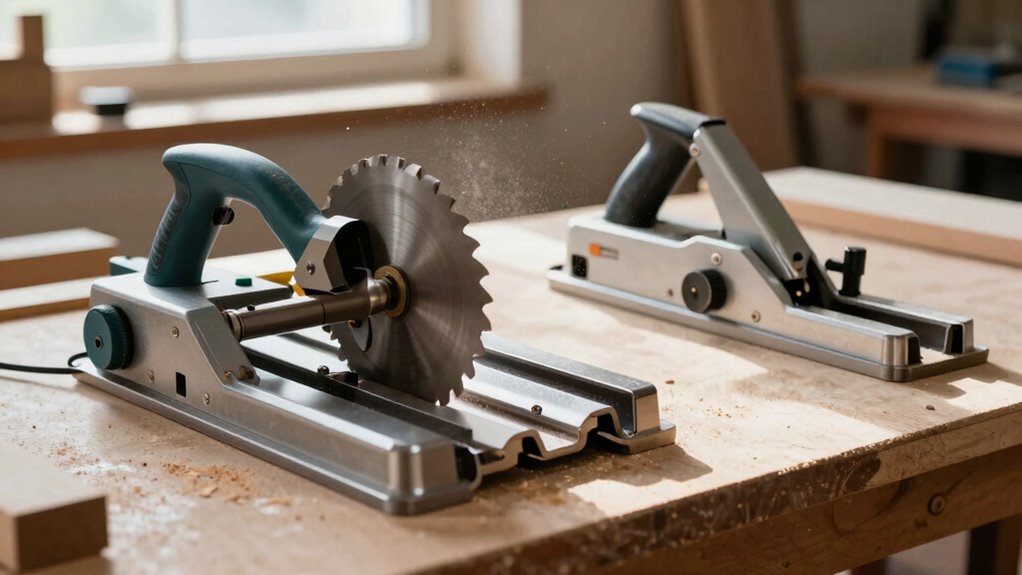

A jointer and a planer serve different purposes in woodworking. A jointer flattens and straightens edges and faces, helping you prepare rough lumber by focusing on grain alignment and surface flatness. A planer, on the other hand, guarantees uniform thickness and smooth surface finish after flattening. Understanding these roles prevents mistakes that can ruin projects. If you want to learn how to use each tool properly and avoid common pitfalls, keep exploring the details.
Key Takeaways
- A jointer flattens and straightens edges and faces, primarily used for initial surface preparation.
- A planer smooths and uniformly thicknesses wood after jointing, finishing the surface.
- Proper grain direction is essential on a jointer to prevent tear-out; planers cannot fix grain misalignment.
- Using a jointer before a planer ensures better surface quality and reduces material damage.
- Confusing their roles can lead to improper use, causing project delays or poor finish quality.
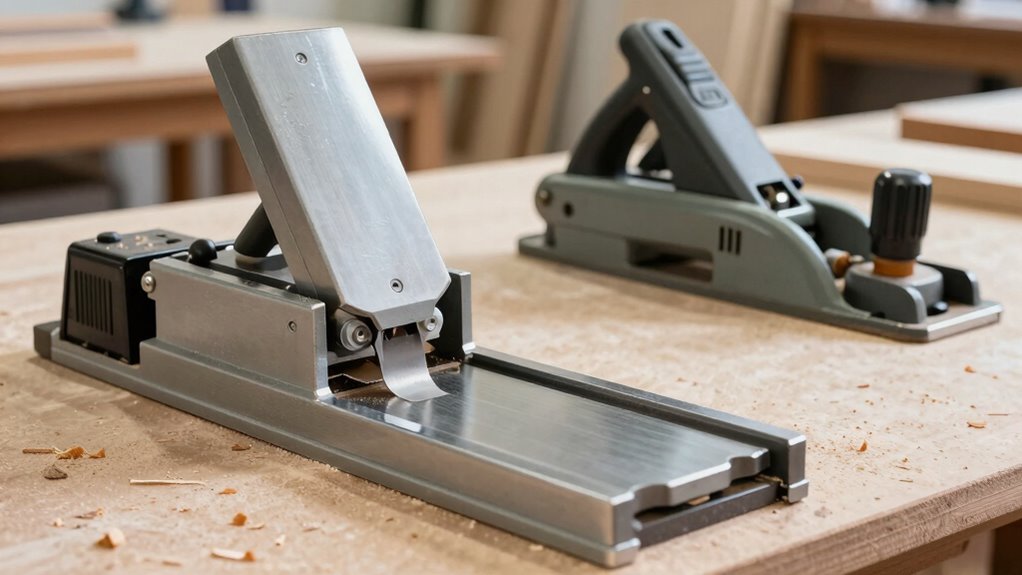
When working on woodworking projects, understanding the differences between a jointer and a planer is essential for achieving smooth, accurate results. These tools serve distinct purposes, and knowing how to use each one correctly can make or break your project. One key aspect to consider is how they handle grain orientation and cut depth. A jointer is primarily designed to flatten and straighten the edges and faces of rough lumber, ensuring the grain runs in a consistent direction. This is crucial because if the grain isn’t aligned properly, the wood can tear out or chip during subsequent cuts. When you set the cut depth on a jointer, you control how much material is removed with each pass. A shallow cut preserves more of the wood and reduces tear-out, especially when working with difficult grain patterns. By carefully adjusting the cut depth, you can achieve smooth, flat surfaces without compromising the integrity of the wood.
The grain orientation is vital when using a jointer because it determines how cleanly the tool can cut without damaging the wood. If the grain runs in the wrong direction, even a small cut depth can cause tear-out, ruining the surface. This is why you should always inspect the grain before passing the wood through the jointer and adjust your cut depth accordingly. A shallow cut at first allows you to evaluate how the wood responds and prevents excessive tear-out. Once the surface is properly flattened and the grain is running in the desired direction, you can increase the cut depth gradually for faster material removal. This strategic approach ensures that you maintain control over the grain orientation and cut depth, resulting in a smoother, more professional finish. Additionally, understanding wood grain dynamics can help optimize your woodworking process and prevent common issues.
While a planer doesn’t handle grain orientation as directly, it’s equally important to set the correct cut depth when using one. The planer’s job is to produce uniform thickness and smooth surfaces on already flattened wood. If your initial surface isn’t flat or properly aligned, the planer might simply even out the surface but won’t correct imperfections caused by improper grain direction. Adjusting the cut depth on the planer allows you to remove thin layers of material, refining the surface gradually. Too deep a cut can cause snipe or uneven thickness, so it’s better to take multiple shallow passes. By understanding how grain orientation affects your initial flattening and how cut depth influences the finishing process, you can avoid common pitfalls and produce precise, smooth wood surfaces that stand the test of time.
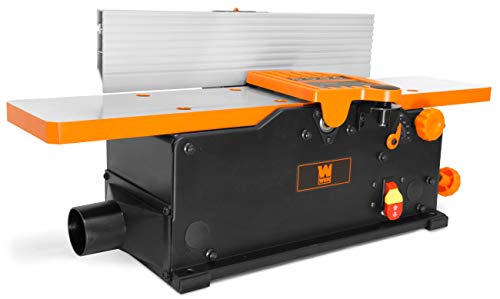
WEN JT630H 10-Amp 6-Inch Spiral Benchtop Jointer
Spiral cutterhead system utilizes 12 staggered HSS blades for an ultra fine finish
As an affiliate, we earn on qualifying purchases.
As an affiliate, we earn on qualifying purchases.
Frequently Asked Questions
Can a Planer Replace a Jointer Completely?
A planer can’t fully replace a jointer because they serve different purposes and aren’t always compatible for all tasks. While a planer mainly smooths and sizes boards, a jointer ensures flat, square edges. Considering machine compatibility and cost comparison, investing in both tools is ideal for precise woodworking. Relying solely on a planer might limit your work quality, especially when you need perfectly flat edges and surfaces.
Which Machine Is Better for Hardwoods?
When working with hardwoods, you’ll find a planer is your best friend for achieving flawless, smooth surfaces quickly. Its cutting precision shines through, revealing the beauty of the wood grain like a masterpiece. While a jointer is great for flattening edges, the planer handles the bulk of surface prep. For hardwoods, the planer’s ability to create consistent thickness and showcase intricate grain patterns makes it the superior choice for your projects.
How Do I Maintain Both Machines Properly?
To maintain both machines properly, you should regularly clean the dust collection system to prevent buildup and guarantee smooth operation. Keep blades sharp by sharpening or replacing them as needed, which improves cut quality and safety. Check belts and bearings periodically for wear, and lubricate moving parts to reduce friction. Proper storage and consistent inspection help prolong your machines’ lifespan and keep them running efficiently.
Are There Safety Concerns Unique to Each?
Safety concerns with your jointer and planer are like two sides of the same coin. You must prioritize dust collection and blade safety for both machines. Always wear eye and ear protection, keep guards in place, and turn off the machine before adjusting blades. Regularly clean dust and debris to prevent fire hazards. Being vigilant about these safety tips helps you avoid accidents, ensuring a safer woodworking experience.
Can I Use a Planer for Edge Jointing?
You can use a planer for edge jointing, but it’s not ideal because of its limitations. Planers are designed to thickness and smooth wide boards, not to create straight, flat edges. When edge jointing, you need precision and control that planers lack, which can lead to uneven edges. For best results, use a jointer for edge jointing, but a planer can handle small adjustments if you understand its limitations.

JORGENSEN No.101 Mini Wood Planer – Mini Hand Planer for Woodworking, Block Plane, Small Hand Plane for Trimming, Wood Planing, Craft, Professional Ductile Iron Body, Adjustable Cutting Depth
Professional Level Blade: The blade is made of professional level O1 tool steel, improving cutting efficiency while minimizing…
As an affiliate, we earn on qualifying purchases.
As an affiliate, we earn on qualifying purchases.
Conclusion
Think of a jointer and planer as your woodworking toolkit’s dynamic duo—like a skilled sculptor and a master painter working together to bring your project to life. Without the jointer’s precise edges, your wood is rough and unrefined; without the planer’s smooth finish, it’s flat and polished. Mastering their differences is like learning to dance—each has its unique rhythm, but when paired correctly, they turn your rough material into a masterpiece.

Hoteche Mini Wood Plane – Adjustable Smoothing Bench Hand Planer for Woodworking and Trimming – 3.5-Inch Jointer Plane with 1-Inch Blade
【Compact and Lightweight Design】The Hoteche Mini Wood Plane is designed for easy handling and control. With a body…
As an affiliate, we earn on qualifying purchases.
As an affiliate, we earn on qualifying purchases.
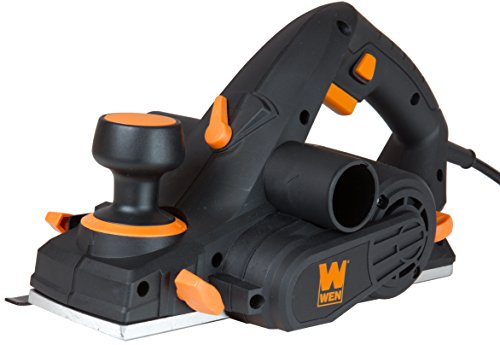
WEN 6530 6-Amp Electric Hand Planer, 3-1/4-Inch
6 Amp motor provides up to 34,000 cuts per minute
As an affiliate, we earn on qualifying purchases.
As an affiliate, we earn on qualifying purchases.