For a professional pyrography burner kit, my best overall pick is the YIHUA 939D-VI Dual Pen Wood Burning Kit with Digital Display, which pairs two pens with a clear temperature readout. The WEP 939D-II stands out for its broad accessory set, while the single-pen FIRElood LH55-1 may suit artists who want a simpler station. The main tradeoffs are between switching quickly with two pens, keeping controls straightforward, and choosing useful tips over a large accessory count. A digital display can make repeatable heat settings easier, but it does not replace careful technique or compatible replacement parts. Read on for the full breakdown and guidance on matching a kit to your workflow.

Get business pricing on tools and workshop supplies
- Business-only prices and quantity discounts
- Tax-exempt purchasing
- Multiple users, one account, clear invoices
Complete the kit

Key Takeaways
- Dual-pen stations lead this comparison for workflow flexibility: the YIHUA 939D-VI and WEP 939D-VI let users keep two pens ready, which can reduce tip changes during detailed projects.
- Accessory count alone does not define professional usefulness: the WEP 939D-II and IVSUN include many pieces, but buyers should check whether the included tips suit their techniques.
- Digital temperature controls recur across several picks: they can help users return to familiar settings, while an adjustable dial may be enough for less varied work.
- The lineup has several closely related WEP and YIHUA stations: compare the exact model’s controls, included pens, tips, and kit contents rather than assuming a shared series name means identical capability.
- Single-pen kits trade speed for simplicity: FIRElood’s LH55-1 may suit focused work, while dual-pen options make more sense when frequent tip changes interrupt a project.
| YIHUA 939D-VI Dual Pen Wood Burning Kit with Digital Display |  | Best Overall | Model: 939D-VI | Pens: 2 | Wire nib tips: 20 | VIEW ON AMAZON | See Our Full Breakdown |
| YIHUA 939-II Wood Burning Kit Station with Adjustable Temperature and Accessories | 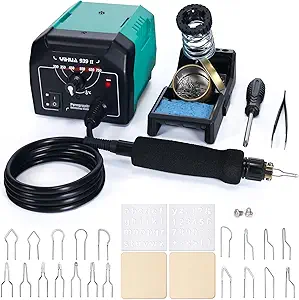 | Best for Beginners | Temperature range: 482–1382°F (250–750°C) | Nibs included: 20 | Power supply: 110–127V, 60Hz | VIEW ON AMAZON | See Our Full Breakdown |
| YIHUA 939-II Adjustable Wood Burning Kit |  | Best Straightforward Single-Pen Pick | Temperature range: 250–750°C (482–1382°F) | Included nibs: 20 wire nibs | Power: 110–127V, 60Hz | VIEW ON AMAZON | See Our Full Breakdown |
| WEP 939-III Dual Pen Wood Burning Kit 34-in-1 with Tips and Stencils |  | Best Accessory-Rich Dual-Pen Kit | Tools: 34-in-1 | Pens: 2 | Tips: 20 | VIEW ON AMAZON | See Our Full Breakdown |
| FIRElood LH55-1 Wood Burning Kit with Adjustable Temperature Pyrography Pen |  | Best Lightweight Pen | Voltage: 110V | Maximum temperature: 700°C | Pen tips: 30 | VIEW ON AMAZON | See Our Full Breakdown |
| WEP 939D-VI Dual-Pen Wood Burning Kit |  | Best for Quick Tip Changes | Temperature range: 250–750°C (482–1382°F) | Pens: 2 detachable wire-nib pens | Tips: 20 wire-nib pyrography tips | VIEW ON AMAZON | See Our Full Breakdown |
| WANDART 60W Professional Wood Burning Kit with Dual Pens, 20 Tips, and 5 Stencils |  | Best for Guided Craft Projects | Power: 60W | Temperature range: 0°F to 1550°F (listed) | Pens: 2 | VIEW ON AMAZON | See Our Full Breakdown |
| FIRElood Wood Burning Kit with Digital Temperature Control |  | Best for Lightweight Detail Work | Voltage: 110V | Maximum temperature: 700°C in description; title states up to 750°C | Temperature display: Digital | VIEW ON AMAZON | See Our Full Breakdown |
| WEP 939D-II 2-in-1 Wood Burning Kit with 86 Accessories |  | Best for Technique Variety | Model: 939D-II | Kit contents: 86 pieces, including 2 pens, 51 solid-point tips, 20 wire-nib tips, 2 wood pieces, 2 stencils, pen holder, storage tin, sponge, tip sleeves, pliers, and screwdriver | Solid-point pen temperature: 200–480°C | VIEW ON AMAZON | See Our Full Breakdown |
| WEP 939D VII 2-IN-1 Wood Burning Kit 84-IN-1 with 51 Tips and Accessories |  | Best for Practice and Setup Organization | Number of tips: 51 | Included wood pieces: 6 | Temperature range: 200–750°C | VIEW ON AMAZON | See Our Full Breakdown |
| IVSUN 116-Piece Wood Burning Kit with Adjustable Temperature |  | Best for Accessory Variety | Brand: IVSUN | Piece count: 116 | Power: 60W | VIEW ON AMAZON | See Our Full Breakdown |
| professional pyrography burner kit | Temperature range | Pens |
|---|---|---|
| YIHUA 939D-VI Dual Pen Wood Bu | 482–1382°F (250–750°C) | 2 |
| YIHUA 939-II Wood Burning Kit | 482–1382°F (250–750°C) | — |
| YIHUA 939-II Adjustable Wood B | 250–750°C (482–1382°F) | — |
| WEP 939-III Dual Pen Wood Burn | 250–750°C (482–1382°F) | 2 |
| FIRElood LH55-1 Wood Burning K | — | — |
| WEP 939D-VI Dual-Pen Wood Burn | 250–750°C (482–1382°F) | 2 detachable wire-nib pens |
| WANDART 60W Professional Wood | 0°F to 1550°F (listed) | 2 |
| FIRElood Wood Burning Kit with | — | 2 pyrography pens |
| WEP 939D-II 2-in-1 Wood Burnin | — | 2 detachable pens; can operate at the same time |
| WEP 939D VII 2-IN-1 Wood Burni | 200–750°C | 2 detachable pyrography pens |
| IVSUN 116-Piece Wood Burning K | 220–480°C | — |
More Details on Our Top Picks
YIHUA 939D-VI Dual Pen Wood Burning Kit with Digital Display
For a professional pyrography setup that can keep two techniques ready, the YIHUA 939D-VI is my strongest all-round pick. Its two pens let you switch between installed nibs without pausing to swap tips, while the digital display makes the broad 482–1382°F range easier to set deliberately. The 20 wire nibs and two wood pieces give artists a useful spread of shapes and a little material for practice. Compared with the single-pen YIHUA 939-II, this kit favors workflow and quick changes; the 939-II is a simpler choice if one pen is enough. The tradeoff is that the dual-pen setup does not remove the need to learn suitable heat for each material, and its 110–127V US plug limits where it can be used without compatible power arrangements.
Pros:- Two pens make it quicker to switch between fitted nibs and techniques
- Digital display makes temperature settings easy to read
- Twenty wire nibs support varied marks and detail
- Includes two wood pieces and an integrated pen holder
Cons:- 110–127V, 60Hz US-standard power limits direct use in many regions
- Wide temperature range still requires material-specific adjustment
Best for: Pyrographers who switch between line work and shading and want two pens ready at one station
Not ideal for: Artists outside 110–127V regions or those who prefer a simpler single-pen setup
- Model:939D-VI
- Pens:2
- Wire nib tips:20
- Temperature range:482–1382°F (250–750°C)
- Display:Digital
- Compatible materials:Wood, leather, cork, pumpkin, gourd, plastic
- Input voltage:110–127V, 60Hz
- Power plug:US standard
- Technical coverage:12 months
Our verdict“Choose this kit if two ready-to-use pens and readable digital temperature control matter more than a single-pen setup.”
YIHUA 939-II Wood Burning Kit Station with Adjustable Temperature and Accessories
The YIHUA 939-II suits a newcomer who wants room to explore different marks without starting with a dual-pen station. It pairs 20 nibs with stencils, scrap wood, tweezers, and pliers, so a buyer can practice shapes and learn basic setup with the supplied materials. Its 482–1382°F adjustment also allows experimentation across techniques, though that flexibility comes with a learning curve: beginners need to match heat and pace to the material. The 939D-VI is the better fit for artists who frequently switch between two installed tips, while this single-pen station keeps the workflow more straightforward. Its accessory selection is useful for guided practice, but may feel like extra setup for someone who only wants to draw freehand. It also uses 110–127V power.
Pros:- Twenty nibs offer a range of mark-making options
- Stencils and scrap wood provide materials for guided practice
- Adjustable temperature covers a broad range of techniques
- Includes a pen holder, tweezers, and pliers
Cons:- Learning to set temperature for different materials takes practice
- 110–127V, 60Hz power limits direct use in many regions
- The accessory set may be more involved than freehand beginners need
Best for: New pyrographers who want practice materials, stencils, and varied nibs while learning temperature control
Not ideal for: Experienced artists who regularly switch between two techniques and want two pens ready at once
- Temperature range:482–1382°F (250–750°C)
- Nibs included:20
- Power supply:110–127V, 60Hz
- Accessories:Pen holder, stencils, scrap wood, tweezers, pliers
- Pen configuration:Single-pen station
- Temperature adjustment:Adjustable
Our verdict“Pick this single-pen station if you are learning pyrography and want supplies for structured practice.”
YIHUA 939-II Adjustable Wood Burning Kit
This version of the YIHUA 939-II makes sense for buyers who want a capable single-pen station with a defined set of practice accessories. The 250–750°C adjustment gives room to tune heat for different techniques, and its 20 wire nibs, stencils, scrap wood, tweezers, and pliers cover common early projects. Compared with the dual-pen YIHUA 939D-VI, it is less suited to rapid technique changes, but its simpler pen arrangement may be easier to manage at a dedicated workbench. The tradeoff is that temperature control still depends on careful setup and practice; the product data specifically calls out following the heating instructions. Its US-standard 110–127V supply also makes it a less direct fit for artists elsewhere.
Pros:- Twenty wire nibs support a variety of line and texture work
- Adjustable temperature accommodates different techniques
- Includes stencils, scrap wood, tweezers, and pliers
- Single-pen layout keeps the station focused
Cons:- Requires careful adherence to setup instructions when heating nibs
- 110–127V, 60Hz US-standard power restricts direct use in other regions
Best for: Hobbyists establishing a single-pen bench setup who want nib variety and basic practice supplies
Not ideal for: Artists who need to switch quickly between two fitted tips or use 220V power without a compatible solution
- Temperature range:250–750°C (482–1382°F)
- Included nibs:20 wire nibs
- Power:110–127V, 60Hz
- Plug:US standard
- Color:Blue
- Warranty coverage:12 months
- Accessories:Pen holder, stencils, scrap wood, tweezers, pliers
Our verdict“Choose this model for a focused single-pen station with useful practice accessories, provided its power supply suits your workspace.”
WEP 939-III Dual Pen Wood Burning Kit 34-in-1 with Tips and Stencils
The WEP 939-III is a practical choice for artists who want two pens and a ready-made set of project accessories in one kit. Its dual-pen design keeps two fitted tips available, and the 20 tips, stencils, unfinished wood, tweezers, and pliers support a range of drawing and practice tasks. Compared with the YIHUA 939-II, it adds a second pen for faster switching; against the YIHUA 939D-VI, the supplied details do not specify a digital display, so temperature readability is less clearly defined. It takes about one to two minutes to heat, a small wait to account for when returning to the bench. Its 110–127V supply and initial setup learning curve make it less suited to international users or anyone seeking a plug-and-draw tool.
Pros:- Two pens allow techniques to stay fitted and ready
- Twenty tips support detailed work across different mark styles
- Includes stencils and two unfinished wood pieces
- Adjustable temperature supports different materials and techniques
Cons:- Requires a one-to-two-minute warm-up before use
- 110–127V, 60Hz supply is not suited to 220V regions
- Setup and temperature adjustment take practice
Best for: Artists who want two pens plus stencils and practice wood for varied projects at a home bench
Not ideal for: Buyers who need 220V compatibility or expect to start working immediately without warm-up and setup
- Tools:34-in-1
- Pens:2
- Tips:20
- Temperature range:250–750°C (482–1382°F)
- Power supply:110–127V, 60Hz
- Other included items:2 stencils, 2 unfinished wood pieces, pen holder, tweezers, pliers
Our verdict“Choose the WEP 939-III if you want a dual-pen workflow with project accessories and can accommodate its warm-up and US voltage.”
FIRElood LH55-1 Wood Burning Kit with Adjustable Temperature Pyrography Pen
The FIRElood LH55-1 takes a pen-first approach, with a 33-gram handle and 0.75-inch diameter that may suit artists who prefer a light, compact grip for detailed work. Its 30 tips exceed the 20 supplied with the YIHUA 939-II, giving more shapes to explore without relying on a dual-pen station. The maximum temperature of 700°C covers many wood-burning tasks, but it is below the 750°C ceiling of the YIHUA models and WEP 939-III. The product data describes digitally adjustable temperature but does not specify a display or station configuration, so buyers should not assume the same bench controls as those models. Its 110V supply narrows compatibility, and the number of tips and setup may be more than a casual user needs.
Pros:- Light 33-gram pen can suit extended detail work
- Thirty tips provide more supplied options than the 20-tip YIHUA kits
- Adjustable temperature supports work on wood, leather, and other materials
- Heat-insulated ergonomic handle is designed for a comfortable grip
Cons:- Maximum temperature of 700°C is lower than the 750°C ceiling of several station kits here
- 110V power limits compatibility
- Product details do not specify dual pens or a separate station
Best for: Detail-focused pyrographers who value a lightweight pen and want a broad selection of tips
Not ideal for: Artists who need a dual-pen station, a stated 750°C upper range, or power beyond 110V
- Voltage:110V
- Maximum temperature:700°C
- Pen tips:30
- Pen handle diameter:0.75 inches
- Pen weight:33 grams
- Temperature control:Digitally adjustable
- Compatible materials:Wood, leather, and other materials
Our verdict“Pick the LH55-1 if a lightweight grip and 30 tips matter more to you than a dual-pen station or higher stated maximum temperature.”
WEP 939D-VI Dual-Pen Wood Burning Kit
The 939D-VI’s two detachable wire-nib pens let me keep different tips installed and switch pens with the A/B control, which suits projects that alternate between outlines and shading. Its 250–750°C adjustment and LED display give clearer heat control than the WANDART 60W kit’s temperature listing, which starts at 0°F and may be inaccurate. The 20 tips cover a range of wood and leather work, while the dual-barrel holder and tip tools help keep a small work area organized. The tradeoff is a 1–2 minute heat-up, so switching pens does not mean an instant start from cold. Its 110–127V, 60Hz input also makes it a poor fit for direct use on 220V outlets.
Pros:- Two pens and an A/B switch make changing between installed tips straightforward.
- LED display and adjustable 250–750°C range support controlled heat selection.
- 20 wire tips support varied wood and leather techniques.
- Includes a dual-barrel holder, tip tools, and wood practice pieces.
Cons:- Wire-nib pen takes about 1–2 minutes to heat up.
- 110–127V, 60Hz input is not suitable for direct connection to 220V.
Best for: Wood and leather crafters who change between two installed wire tips during a project and use 110–127V power.
Not ideal for: Artists who need rapid cold starts or buyers whose local supply is 220V and do not have compatible power equipment.
- Temperature range:250–750°C (482–1382°F)
- Pens:2 detachable wire-nib pens
- Tips:20 wire-nib pyrography tips
- Input voltage:110–127V, 60Hz
- Included accessories:Dual-barrel holder, tip collector tin, screwdriver, tweezers, 2 wood pieces, and 2 spare screws
- Warranty and support:1-year USA technical support
Our verdict“Choose this kit if you want two ready-to-use wire-tip pens and clear temperature feedback on compatible 110–127V power.”
WANDART 60W Professional Wood Burning Kit with Dual Pens, 20 Tips, and 5 Stencils
The WANDART kit pairs two lightweight pens with five stencils, making it a more guided option for crafters planning repeatable designs than the WEP 939D-VI, which supplies practice wood but no stencils. Its 20 wire tips and adjustable control offer room to move from simple patterns into more detailed work on wood, gourds, and leather. The ergonomic pen design may also suit longer sessions, though the listing provides no handle weight or diameter to compare directly. One spec needs caution: the stated range begins at 0°F and reaches 1550°F, so that lower endpoint may be a data error. With no clearer temperature range or voltage information in the supplied specs, buyers who need precise heat guidance or confirmed electrical compatibility may prefer the more fully specified FIRElood kit.
Pros:- Two pens allow different tips to remain installed for switching between techniques.
- 20 wire tips provide options for varied marks and detail.
- Five stencils help plan or repeat decorative patterns.
- Lightweight ergonomic pens are intended for extended craft sessions.
Cons:- The listed 0°F minimum may be a product-data error, making the usable low end unclear.
- Supplied specs do not state input voltage, so electrical compatibility is harder to confirm.
Best for: Craft hobbyists who want two pens, stencil guidance, and multiple wire tips for patterned wood, gourd, or leather projects.
Not ideal for: Buyers who need a dependable stated minimum temperature or confirmed voltage compatibility before choosing a burner.
- Power:60W
- Temperature range:0°F to 1550°F (listed)
- Pens:2
- Tips:20 wire nib tips
- Stencils:5
- Item length:6 inches
- Included components:Wood burning pens, wire nib tips, and stencils
Our verdict“Pick WANDART for stencil-led craft work with two pens, provided you can confirm the temperature and power details before buying.”
FIRElood Wood Burning Kit with Digital Temperature Control
At 33 grams per pen with a 0.75-inch handle diameter, this FIRElood set is the compact-feeling choice in this group for detailed work where pen handling matters. Its two pens and 30 interchangeable tips give it more tip variety than the 20-tip WEP 939D-VI, while the digital display makes heat selection easier to read. The kit is described for wood, leather, paper, and gourds, so it covers more craft surfaces than a wood-only setup. There is a specification mismatch to keep in mind: the title says up to 750°C, while the description gives a 700°C maximum. Tip changes also require a screwdriver, which interrupts a project more than the 939D-VI’s two-pen switching approach. The supplied voltage is 110V.
Pros:- Two pens and 30 tips offer a broad set of marking options.
- Digital temperature display makes the selected heat easier to read.
- Lightweight 33-gram pens and 0.75-inch handles support detailed handling.
- Described for use on wood, leather, paper, and gourds.
Cons:- The listed maximum conflicts between the title’s 750°C and the description’s 700°C.
- A screwdriver is required to replace pen tips.
- The listed 110V input may limit compatibility with other electrical supplies.
Best for: Detail-focused crafters who value light pens, a digital readout, and a broad tip assortment for several materials.
Not ideal for: Artists who switch tips frequently and want to avoid screwdriver changes, or buyers who need a confirmed maximum temperature.
- Voltage:110V
- Maximum temperature:700°C in description; title states up to 750°C
- Temperature display:Digital
- Pens:2 pyrography pens
- Tips:30
- Handle diameter:0.75 inches
- Pen weight:33 grams
- Included accessories:Pen stand, screwdriver, sponge, small wooden board, engraving pen, and user manual
Our verdict“Choose FIRElood for lightweight, multi-material detail work if the conflicting temperature maximum is acceptable.”
WEP 939D-II 2-in-1 Wood Burning Kit with 86 Accessories
The 939D-II is the most technique-focused WEP in this batch: it combines a solid-point pen for shading and outlining with a wire-nib pen for finer work, and its two pens can operate at the same time. That gives it a broader working setup than the wire-only WEP 939D-VI, especially for artists moving between different mark-making styles. Its 86-piece kit includes 51 solid-point tips and 20 wire tips, along with a mounted holder that helps keep both tools accessible. The tradeoff is a longer 2–3 minute heat-up for the solid-point pen, and the digital display is specified for that pen only. Like the 939D-VI, this model is not compatible with direct 220V outlets, so its versatility depends on having the right power supply.
Pros:- Solid-point and wire-nib pens support distinct shading, outlining, and detail techniques.
- Both detachable pens can operate at the same time.
- Wide temperature ranges and 71 tips offer substantial technique flexibility.
- Mounted pen holder and storage accessories help organize the station.
Cons:- Solid-point pen takes 2–3 minutes to heat up.
- Digital display is specified for the solid-point pen only.
- Not compatible with direct connection to 220V outlets.
Best for: Experienced pyrography artists who use both solid-point and wire-nib techniques and want a large selection of tips in one station.
Not ideal for: Buyers who need a fast-heating solid-point pen, a digital readout for both pens, or direct 220V compatibility.
- Model:939D-II
- Kit contents:86 pieces, including 2 pens, 51 solid-point tips, 20 wire-nib tips, 2 wood pieces, 2 stencils, pen holder, storage tin, sponge, tip sleeves, pliers, and screwdriver
- Solid-point pen temperature:200–480°C
- Wire-nib pen temperature:250–750°C
- Pens:2 detachable pens; can operate at the same time
- Digital display:Specified for the solid-point pen
- Warranty and support:1-year USA technical support
Our verdict“Choose the 939D-II if you need both solid-point and wire-nib methods and can accommodate its warm-up time and voltage limits.”
WEP 939D VII 2-IN-1 Wood Burning Kit 84-IN-1 with 51 Tips and Accessories
The 939D VII stands out for its six included wood pieces and integrated tip storage, giving buyers more material to practice on and a place to keep frequently used accessories together. Like the WEP 939D-II, it is a dual-function kit with two detachable pens and adjustable temperature, but the supplied specs do not break out separate temperature ranges for solid-point and wire-nib pens. That makes the 939D-II easier to evaluate if you rely on specific heat settings for each technique. The 51 tips, soft-touch handle, and secure holder make this a capable setup for beginners building skills as well as experienced artisans who want a tidy station. Its 110–127V supply and 2–3 minute solid-point warm-up are practical limits for some workspaces.
Pros:- Two detachable pens and adjustable temperature support varied pyrography techniques.
- 51 tips and accessories provide options for detailed work.
- Six included wood pieces provide material for practice.
- Integrated storage and a secure holder help keep the work area organized.
Cons:- Solid-point pen takes 2–3 minutes to heat up.
- 110–127V, 60Hz supply is not compatible with direct 220V outlets.
- Supplied specs do not give separate temperature ranges for the two pen types.
Best for: New and experienced wood burners who want practice boards, two pen types, and built-in storage in a single station.
Not ideal for: Buyers who need separate published temperature ranges for each pen or use 220V power without compatible equipment.
- Number of tips:51
- Included wood pieces:6
- Temperature range:200–750°C
- Power supply:110–127V, 60Hz
- Pens:2 detachable pyrography pens
- Holder and storage:Secure pen holder and integrated tip storage
- Warranty:1 year
Our verdict“Pick the 939D VII if practice wood and organized storage matter more to you than pen-specific temperature details.”
IVSUN 116-Piece Wood Burning Kit with Adjustable Temperature
The IVSUN 116-piece kit is a strong fit for crafters who want one set of tools and materials for several kinds of projects. Its 59 burning tips, stencils, carbon paper, wood pieces, and colored pencils give beginners plenty of ways to practice and help experienced users switch between designs. The 220–480°C adjustable range and roughly 30-second heat-up offer useful control, though the supplied details do not describe a separate control station or dual pens like the YIHUA 939D-VI. That makes Ivsun more compelling for breadth of accessories than for uninterrupted work across multiple pen styles. It also handles soldering and materials including leather, cork, and paper, adding flexibility beyond wood. The tradeoff is a crowded kit that may be more than a wood-only artist needs, and the manufacturer cautions against pressing too hard while burning.
Pros:- 59 interchangeable burning tips support a wide range of marks and project styles
- Adjustable 220–480°C temperature gives users control across different materials
- Includes practice materials, stencils, carbon paper, and a storage box and carry bag
- Can also be used for soldering and work on leather, cork, and paper
Cons:- The large assortment may be unnecessary for artists focused only on wood pyrography
- No separate temperature-control station or dual-pen setup is listed, unlike the YIHUA 939D-VI
- The manufacturer warns that excess pressure can affect burning, so the pen requires a light touch
Best for: Crafters who want a broad starter assortment for wood burning, mixed-material projects, and occasional soldering
Not ideal for: Wood-only artists seeking a focused professional station or dual-pen workflow; this kit emphasizes accessory quantity and does not list a separate control station or second pen
- Brand:IVSUN
- Piece count:116
- Power:60W
- Temperature range:220–480°C
- Heating time:About 30 seconds
- Burning tips:59
- Included accessories:12 colored pencils, 10 carbon papers, 14 stencils, wood pieces, soldering accessories, storage box, and carry bag
- Uses:Wood burning, crafting, and soldering
Our verdict“Choose the Ivsun if you want a versatile, accessory-heavy kit for varied craft projects, but look elsewhere for a listed dual-pen professional station.”

How We Picked
I ranked these kits around the needs implied by professional pyrography: controllable heat, a pen setup that suits sustained work, practical tip variety, and a station that supports repeatable results. Digital displays and dual-pen operation earned weight when they offered clear workflow benefits; a long accessory list counted only when it could serve a range of techniques. I also considered usability and the likely learning curve, since a feature-rich station is less useful if its controls or included tools make routine work harder.
The order reflects those tradeoffs rather than accessory totals alone. The YIHUA 939D-VI leads for its pairing of digital readout and two-pen flexibility. Other dual-pen stations follow where their feature or kit details serve more specific priorities, while simpler or accessory-heavy single-pen kits fit focused work and new users. Product names and bundle contents can vary by listing, so I would verify the exact included tips, pens, and replacement-part compatibility before choosing.
Factors to Consider When Choosing Professional Pyrography Burner Kit
Choosing a professional pyrography burner kit is mostly a matter of matching the station to the way you work. A large bundle can look versatile, but pen handling, temperature adjustment, and the time spent changing tips may matter more once projects become demanding.
Match pen count to your project rhythm
Think about how often you switch between line work, shading, and lettering during one session. A dual-pen station can keep two tips ready, reducing interruptions when the pens are independently usable and the station supports that workflow. It also means more equipment to position and manage at the bench. If you tend to finish one technique before moving to another, a single pen may be easier to handle and store. Avoid paying for a second pen solely because it sounds professional; consider whether switching tips currently slows your work. Check how the station controls each pen before assuming dual-pen operation means independent temperature settings.
Choose controls that support repeatable heat
Digital readouts can help you return to a familiar setting across sessions, especially when a project uses several woods or techniques. A readable display shows the selected temperature directly, while a dial may require more trial and adjustment. Neither format measures your actual results on every wood surface, so material, tip shape, and hand speed still affect the burn. Make a small test mark on scrap from the same board before working on the final piece. Check whether the control range and adjustment increments fit your intended work rather than treating a display as proof of precision. For occasional work at a narrow range, simpler controls may be all you need.
Prioritize useful tips over bundle size
Tip variety matters when it gives you tools for the marks you actually make, such as fine lines, broad shading, or lettering. A high piece count may include stencils and accessories that are convenient for exploration but do little for a practiced artist’s core techniques. Before buying, identify the tip shapes you rely on and compare them with the included set. Also check whether replacement tips are available and fit the pen; a broad starter selection is less useful if worn parts are difficult to replace. Beginners can benefit from variety for learning, while experienced users may prefer a smaller set of familiar, compatible tips. Store loose tips safely so changes do not interrupt work or create a handling hazard.
Plan for long sessions and safe bench setup
For extended work, the comfort of the pen and the layout of the station can shape your pace as much as the heating element. Look for a pen that feels manageable in hand and a stand that keeps a hot tip away from the work surface. Keep the cord routed so it does not pull the pen or cross the area where your hand moves. Allow the tool to reach its working state as directed, and set it down in its holder whenever you pause. A second pen adds flexibility but also takes up bench space and needs a safe resting place. If you work in a small studio, confirm that the station and its accessories fit your actual workspace.
Check serviceability before committing
A kit is only practical for ongoing work if its consumable parts can be replaced. Look for clear information about compatible tips, pen replacements, and support from the manufacturer or seller. Similar names across a product line do not guarantee that parts interchange, so match the exact model number before ordering spares. This check matters more than a large initial accessory bundle if you expect to use the tool regularly. Keep the listing or manual with the model details for future reference. When compatibility information is unclear, treat that uncertainty as a real ownership tradeoff.
Spend for workflow, not the word professional
Pay more when a feature removes a recurring bottleneck: dual pens for frequent technique changes, or a clear display for repeatable settings. Extra stencils and decorative accessories may be useful for learning, but they should not outrank control and pen comfort for detailed work. A new user may get more from a manageable single-pen kit and scrap wood than from a station with many controls they do not yet use. Conversely, someone producing varied work may value quick changes and consistent settings enough to prioritize those functions. Decide which frustration you are trying to solve before comparing bundles. That keeps the purchase tied to your process instead of a headline feature.
Frequently Asked Questions
Is a dual-pen pyrography station worth choosing over a single-pen kit?
It is most useful when you switch between different tips often and want to keep two pens prepared. That can make detailed, varied projects flow more smoothly, but it adds bench space and another pen to manage. If you usually complete one type of mark at a time, changing tips on a single pen may be a minor inconvenience. Check whether the station lets each pen operate as you expect; dual pens do not automatically mean separate temperature control. Choose based on how your sessions are organized, not the pen count alone.
Does a digital temperature display make a kit more accurate?
A display makes the selected setting easier to read and repeat, which can help when you return to familiar materials or techniques. It does not guarantee that every burn will look the same, since wood density, tip condition, pressure, and movement all affect the mark. A dial can still serve well if you work within a small range and are comfortable testing settings on scrap. Look at the control range and how clearly the station presents its settings. Treat the display as a workflow aid, not a substitute for practice.
Should I choose the kit with the most accessories?
Only if the included pieces support work you plan to do. A broad set can help a beginner experiment with different marks, while an experienced artist may get more value from a few familiar tips and reliable access to replacements. Check whether the bundle’s tips match your pen and whether you can buy compatible spares. Stencils and other extras can be useful, but they do not improve temperature control or pen handling. Compare what you will use against what is included before making accessory count a deciding factor.
Can a beginner start with a professional-style burner kit?
Yes, provided the controls and setup feel manageable and the user is prepared to practice on scrap. Digital readouts can make settings easier to revisit, while a simpler single-pen station may reduce the number of things to learn at once. A large tip bundle can encourage experimentation, but it can also add clutter before you know which shapes you prefer. Learn how the tool rests safely and follow its operating instructions before working on a finished piece. Beginners should value clear controls and replaceable parts as much as advanced features.
What should I verify before buying a replacement tip or pen?
Start with the exact model number, then confirm that the replacement is listed as compatible with that station and pen. Product families can include similar-looking models with different connections or bundle contents. Check the manufacturer’s documentation or seller’s compatibility details rather than relying on appearance alone. Also confirm whether the replacement part is sold individually or only as part of a set. This small check can prevent downtime after a frequently used tip wears out.
Conclusion
For most experienced users seeking a flexible station, my best overall recommendation is the YIHUA 939D-VI, whose digital readout and dual pens support varied work. The best value for accessory variety is the WEP 939D-II, provided its included pieces match your needs. For a premium workflow, I would favor a dual-pen model with controls and replacement parts that suit sustained use, with the WEP 939D VII worth comparing for its extensive tip bundle. The best beginner fit may be the FIRElood LH55-1 if a straightforward single-pen setup feels easier to learn. For frequent tip changes, choose a dual-pen station; for focused work and a simpler bench, choose a single-pen kit. Verify the exact model contents and compatibility before ordering.
Fall yard work Picks
leaf blowers
As an affiliate, we earn on qualifying purchases.