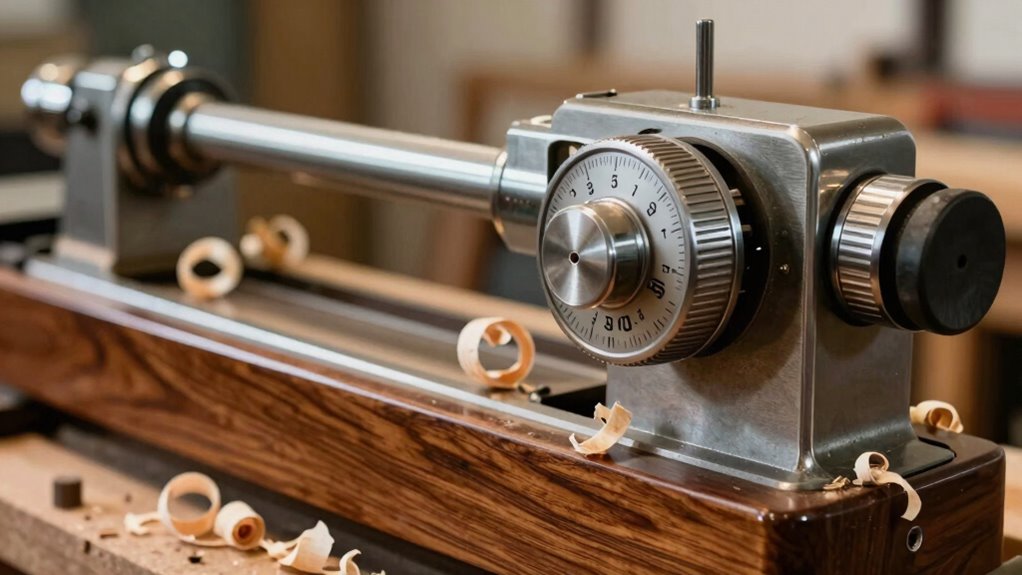
The variable speed feature on a wood lathe is essential for fine-tuning your craftsmanship. It lets you start at lower RPMs for rough shaping, minimizing the risk of tearing wood fibers. As you refine your work, you can increase speed for smoother finishes. Different woods require different speeds, and knowing how to adapt can make all the difference. Mastering this aspect of woodturning transforms your projects into works of art. There’s much more to explore about perfecting your technique.
Key Takeaways
- Variable speed control allows for tailored techniques, enhancing the overall crafting experience in woodturning.
- Starting at lower RPMs minimizes wood fiber tearing during the roughing stage.
- Higher speeds are optimal for sanding and finishing, resulting in smoother surfaces.
- Different woods require specific speed adjustments to prevent damage and achieve the best results.
- Regular lathe maintenance ensures reliable speed adjustments and extends the tool’s lifespan.

When you explore the world of woodturning, you’ll quickly realize that a variable speed feature on a wood lathe can greatly enhance your crafting experience. Speed control plays an essential role in how you approach different turning projects. Whether you’re shaping a delicate bowl or crafting a sturdy table leg, adjusting the speed allows you to tailor your techniques to the specific requirements of each piece. This flexibility not only improves your results but also boosts your confidence as you become more adept at various woodworking techniques.
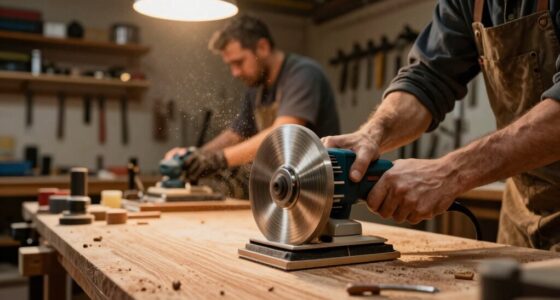
By utilizing a lathe with variable speed, you can start at a lower RPM for roughing out your project. This slower speed minimizes the risk of tearing the wood fibers and helps you maintain better control. Once you’ve established the shape, you can ramp up the speed for finer sanding and finishing. This shift between speeds is important; it allows you to achieve a smoother surface and enhance the overall quality of your work. You’ll find that mastering speed control can transform your woodturning from a basic skill into an art form.
Utilizing variable speed on your lathe allows for precision, enhancing control and elevating your woodturning from skill to art.
Proper lathe maintenance also ties into your use of variable speed. Keeping your lathe in top shape guarantees that the speed adjustments are responsive and reliable. Regularly checking belts, bearings, and the motor will help you avoid unnecessary disruptions during your turning sessions. A well-maintained lathe not only runs more smoothly but also extends its lifespan, making your investment worthwhile. You’ll appreciate how a little preventive care goes a long way in enhancing your woodworking journey. Maintaining optimal lathe performance is essential for safe and efficient operation.
As you begin on various turning projects, you might discover that different woods react differently to speed. Softer woods, for instance, can often handle higher RPMs without issues, while harder woods may require more finesse and lower speeds to prevent chipping or splintering. Understanding these nuances will give you an edge in your woodworking techniques, allowing you to adapt as needed based on the material at hand. Recognizing wood characteristics and how they influence speed choices is crucial for successful projects. Learning about wood properties can help you select the appropriate speed and technique for each type of wood. Additionally, gaining knowledge of material-specific techniques can further improve your craftsmanship and outcomes.
As an affiliate, we earn on qualifying purchases.
Frequently Asked Questions
How Do I Choose the Right Speed for Different Woods?
To choose the right speed for different woods, you need to evaluate the wood types and their grain characteristics. Start with a lower RPM for softer woods to avoid tear-out, and increase speed for harder woods to achieve a smoother finish quality. Experiment with speed selection while applying various turning techniques; this helps you find the ideal RPM for each project. Adjust as needed for specific wood densities and desired effects.
Can Variable Speed Lathes Handle Larger Workpieces Effectively?
Absolutely, variable speed lathes can handle larger workpieces effectively, much like a master conductor leading an orchestra. With precise speed control, you manage torque, ensuring your wood turning remains smooth and stable. This stability is essential when you’re shaping hefty wood, allowing you to adapt to its unique demands. As you fine-tune your lathe’s speed, you’ll find that larger projects become manageable, yielding impressive results that showcase your skill and creativity.
What Maintenance Is Required for Variable Speed Mechanisms?
To keep your variable speed lathe running smoothly, you’ll need to guarantee proper belt tension and follow lubrication intervals. Regularly check the belt for wear and adjust its tension to avoid slippage. Lubricate the moving parts as per the manufacturer’s schedule, usually every few months, to reduce friction and prolong the mechanism’s life. By staying on top of these maintenance tasks, you’ll guarantee peak performance and longevity for your lathe.
Are There Specific Safety Precautions for High-Speed Operations?
When operating at high speeds, it’s essential to maintain high-speed stability to avoid accidents; studies show that 70% of woodturning injuries occur due to inadequate safety measures. Always wear proper safety gear, including goggles and a face shield, to protect against flying debris. Keep your workspace tidy and guarantee your lathe is securely positioned. Regularly check for any loose parts or vibrations, as they can lead to dangerous situations during high-speed operations.
How Does Speed Affect Tool Wear and Longevity?
Speed affects tool wear and longevity considerably. When you manage speed effectively, you enhance tool durability. Higher speeds can lead to quicker wear, causing tools to dull faster and require more frequent replacements. On the other hand, using lower speeds for specific tasks can prolong tool life and maintain performance. By being mindful of your speed settings, you can optimize your tools and save money in the long run.
Conclusion
In the world of woodworking, the variable speed feature stands as a significant strength. It lets you adjust the rotation to suit your specific project, ensuring smoother surfaces and stunning shapes. By embracing this essential element, you’ll enhance your expertise and elevate your experience. So, as you select your next lathe, remember: speed settings can shape your success. Stay savvy, and let the lathe’s luxurious versatility lead you to woodworking wonders!