
To build a smarter sanding system around dust extraction, start with a quality sander and a high CFM dust extraction setup. Use hoses that match your sander’s dust port for ideal suction, and always sand with the grain to avoid scratches. Regularly check your vacuum filters and hoses for clogs. This not only improves your sanding results but keeps your workspace clean and safe. There’s more to explore about techniques and maintenance that can elevate your projects even further.

Get business pricing on tools and workshop supplies
- Business-only prices and quantity discounts
- Tax-exempt purchasing
- Multiple users, one account, clear invoices
Key Takeaways
- Choose a quality sander and a high CFM dust extraction system to maximize efficiency and dust control.
- Ensure vacuum hoses match the sander’s dust port diameter to maintain optimal suction.
- Implement a quick-connect system for easy swapping between multiple sanders and streamlined dust management.
- Sand with the grain using the appropriate grit progression to achieve a smooth finish while minimizing airborne dust.
- Regularly maintain vacuum filters and hoses to prevent clogs and ensure effective dust extraction performance.
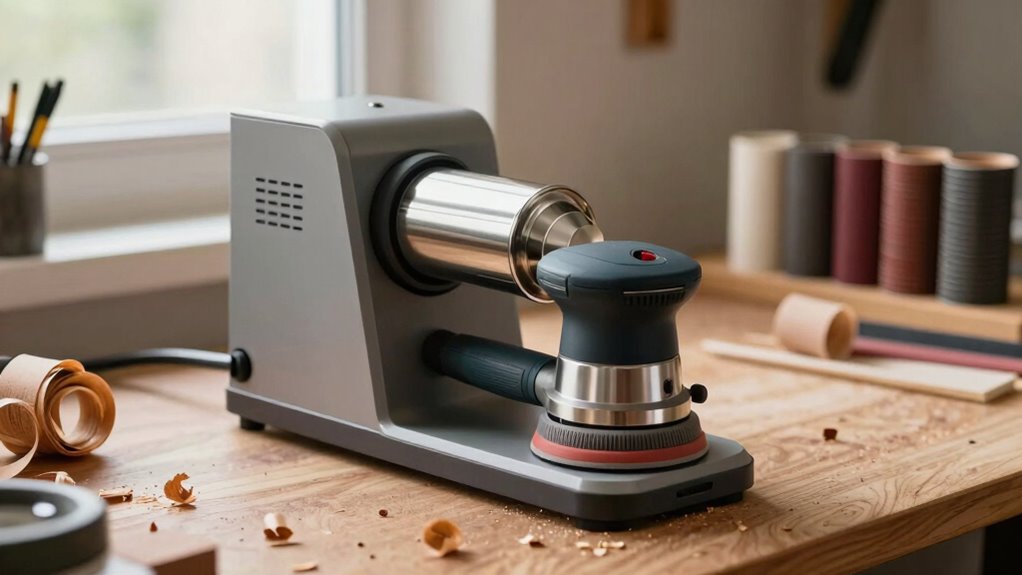
Building a sanding system can transform your woodworking projects, allowing you to achieve smooth finishes with ease. When you incorporate effective dust extraction, you’re not just improving your workspace; you’re enhancing your overall sanding techniques. A clean environment makes it easier to see imperfections, leading to better results in your work. So, let’s explore how you can create a more efficient sanding setup that prioritizes dust control.
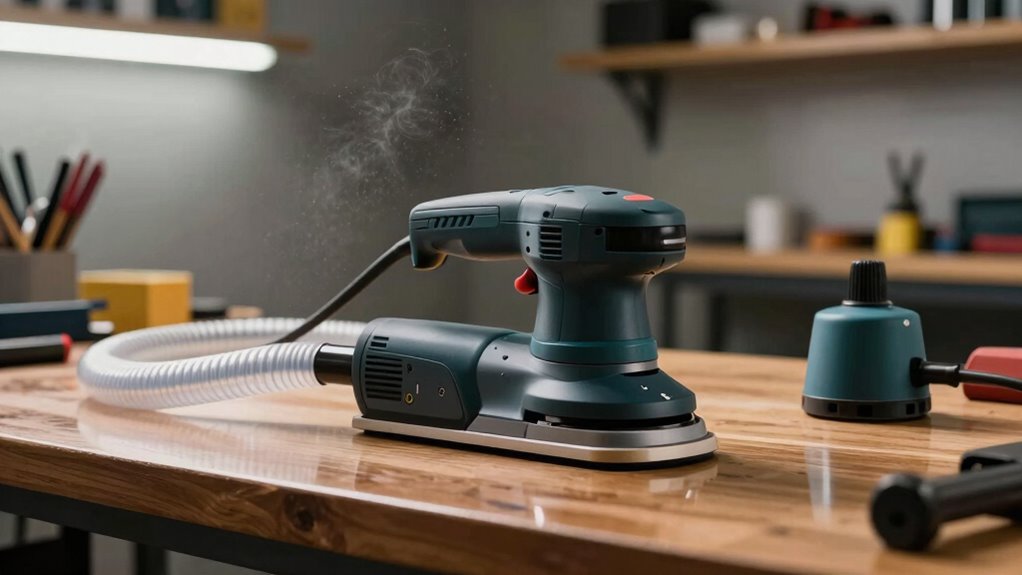
First, consider the tools you’ll need. An effective sanding system starts with a quality sander—whether it’s a random orbital sander or a belt sander, choose one that fits your projects. Pair it with a dust extraction system, which can be a dedicated shop vacuum or a dust collector. Confirm it has a high CFM (cubic feet per minute) rating to effectively pull dust from the sanding surface. This setup not only keeps your workspace cleaner but also protects your health by minimizing airborne particulates.
Next, focus on the connections. Use vacuum hoses that match the diameter of your sander’s dust port for maximum suction. You might need to purchase adapters to guarantee a snug fit, but this small investment pays off in the long run. If you’re using multiple sanders, consider a quick-connect system that lets you switch tools easily without sacrificing dust control. Proper connection techniques enhance overall efficiency and dust management. Additionally, ensuring your hoses are free of leaks and obstructions can significantly improve dust extraction performance.
Now, let’s talk about sanding techniques. You should always sand with the grain to avoid scratches. When you have your dust extraction in place, you can take longer strokes without worrying about the dust piling up on your workpiece. This allows for a more even finish. It’s also wise to use the right grit sandpaper for each stage of your project. Start with a coarser grit to shape your material, then gradually move to finer grits for that smooth finish. The dust control system will help keep your work area clear, making it easier to see your progress.
Lastly, don’t forget maintenance. Regularly check your vacuum filters and hoses for clogs, which can greatly affect performance. Cleaning your equipment not only extends its life but also guarantees you’re getting the best dust control possible. Incorporating dust extraction into your workflow helps maintain a healthier, safer workspace. Remember, proper air quality solutions play a vital role in creating a cleaner, healthier environment in your workshop.
high CFM dust extractor for woodworking
As an affiliate, we earn on qualifying purchases.
As an affiliate, we earn on qualifying purchases.
Frequently Asked Questions
What Types of Sanders Work Best With Dust Extraction Systems?
Orbital sanders and random orbit sanders work best with dust extraction systems due to their vacuum compatibility. Belt sanders also perform well, especially for larger surfaces. Detail sanders are great for intricate work but may require specific attachments for ideal dust collection. By choosing the right sander and employing effective sanding techniques, you can greatly reduce dust in your workspace, making your project cleaner and more efficient.
How Often Should I Replace Dust Extraction Filters?
You should replace dust extraction filters every 6 to 12 months, depending on usage. Studies show that clogged filters can reduce suction by up to 50%, impacting your sanding efficiency. Keeping an eye on the filter lifespan is vital; if you notice a drop in performance or increased dust, it’s time to swap it out. Regular maintenance not only guarantees a cleaner workspace but also keeps your equipment running smoothly. Don’t neglect those filters!
Can I Use a Shop Vacuum for Dust Extraction?
Yes, you can use a shop vacuum for dust extraction. One of the shop vacuum benefits is its portability and suction power, which enhances dust extraction efficiency. By connecting it to your sanding tools, you’ll greatly reduce dust in your workspace. Just make sure to use the right filter for fine dust. This setup not only keeps your area cleaner but also improves your overall sanding experience.
What Are the Signs of a Clogged Dust Extraction System?
If you’re wondering how to tell if your dust extraction system’s clogged, watch for a few key signs. You’ll notice airflow reduction; your vacuum might sound different or struggle to pick up debris. Clog detection can be tricky, but if your filters fill up quickly or you see dust escaping, it’s time to check. Regular maintenance keeps your system running efficiently, so don’t ignore those warning signs!
How Do I Maintain My Sanding Equipment for Optimal Dust Extraction?
To maintain your sanding equipment for ideal dust extraction, regularly clean or replace filters and check for clogs. Use appropriate sanding techniques, like gentle pressure, to minimize dust buildup. Confirm your equipment compatibility by matching your sander with the right dust extractor for maximum efficiency. Inspect hoses and connections frequently for leaks, and keep surfaces clear to enhance airflow. This routine will help you achieve cleaner results and prolong your equipment’s lifespan.
Conclusion
So, you’ve mastered your sanding system and think you’re done, right? Ironically, that’s just the beginning. While you’ve tackled dust extraction like a pro, remember that the real challenge lies in maintaining that pristine workspace. It’s easy to overlook the small stuff, but those tiny particles can cause big headaches down the line. Embrace the irony: in your quest for perfection, the mess often teaches you the most. Keep refining your system, and you’ll truly sand smarter.
Halloween Picks
halloween
As an affiliate, we earn on qualifying purchases.