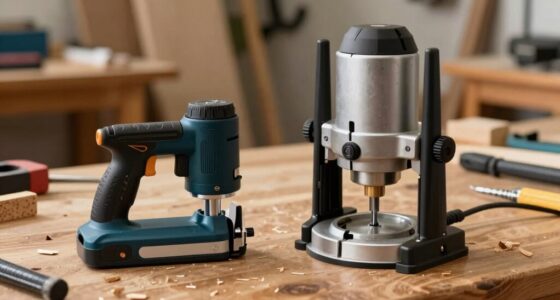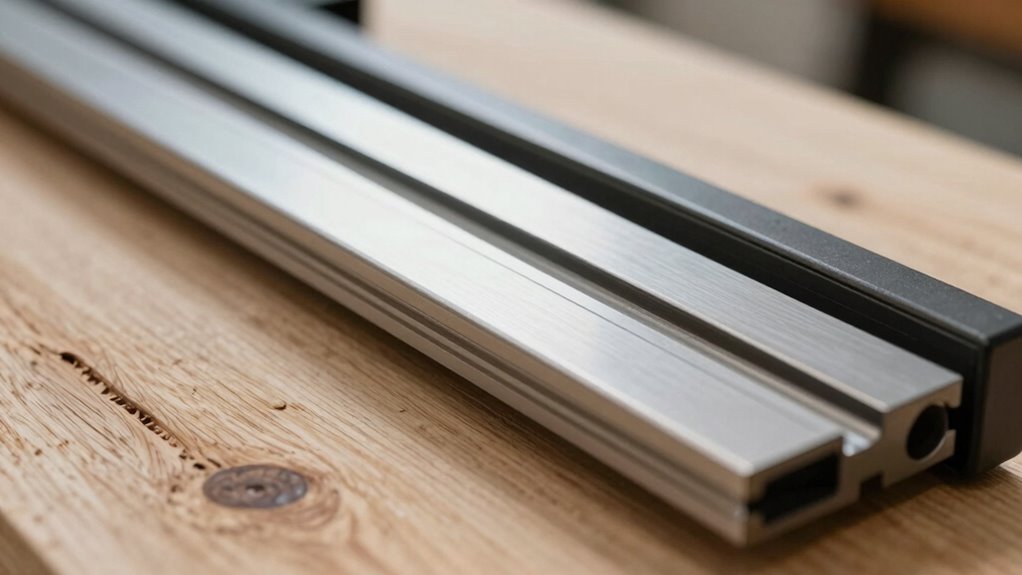

The guide rail is what makes track saws truly worth using. It’s your backbone for precision, ensuring clean and accurate cuts every time. With proper alignment, you’ll avoid jagged edges, enhancing your cutting experience. The splinter guard minimizes tear-out, especially on delicate materials. Plus, the right rail length fits various project sizes, making tasks smoother. So, if you want to achieve professional results and tackle more challenging projects, there’s plenty more to discover about maximizing your track saw’s capabilities.

Get business pricing on tools and workshop supplies
- Business-only prices and quantity discounts
- Tax-exempt purchasing
- Multiple users, one account, clear invoices
Key Takeaways
- The guide rail ensures precise, straight cuts, enhancing the overall cutting experience and results.
- Proper alignment with the guide rail is crucial for achieving clean, accurate edges in your projects.
- The splinter guard feature significantly reduces tear-out, maintaining the integrity of materials like plywood and MDF.
- Available in various lengths, guide rails accommodate projects of different sizes, from large sheets to small tasks.
- Familiarity with the guide rail improves alignment accuracy and boosts confidence in handling diverse cutting tasks.
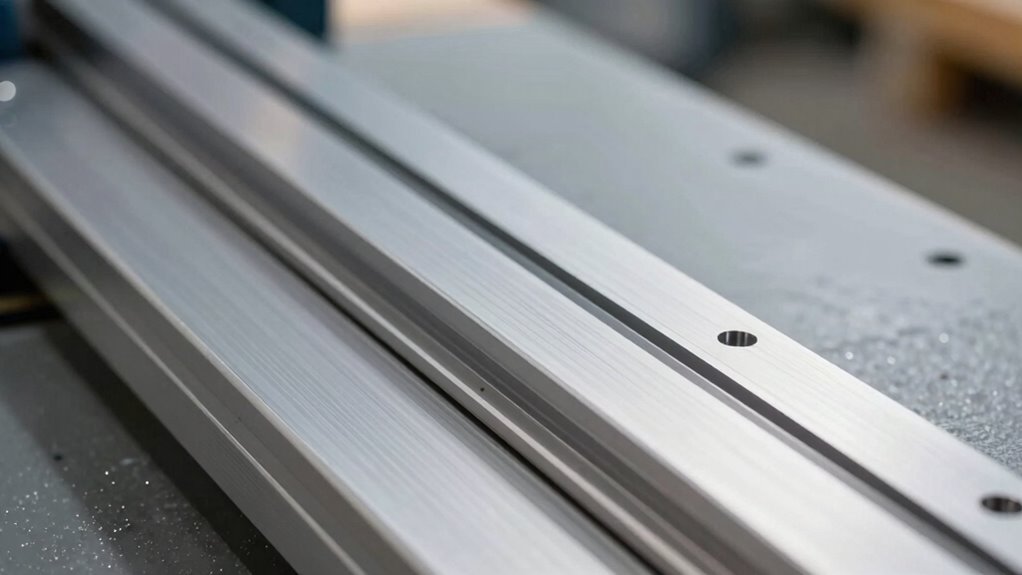
When it comes to achieving precise cuts with track saws, understanding guide rail detail is vital. The guide rail is the backbone of your track saw setup, and mastering its nuances can greatly enhance your cutting experience. You want to guarantee that your cuts are not just accurate but also clean, and that’s where the guide rail comes into play. It provides the necessary track precision that allows you to make straight, consistent cuts every time.
One of the key features of a guide rail is its alignment accuracy. When you place your track saw on a properly aligned guide rail, you’re setting yourself up for success. If your rail isn’t aligned correctly, even the best saw can produce jagged edges or uneven cuts. It’s important to take the time to position your guide rail accurately before you start making any cuts. Simple adjustments can make a world of difference in your results.
Alignment accuracy is crucial for your guide rail; even minor adjustments can transform your cuts from jagged to precise.
You’ll also notice that many guide rails come with a splinter guard. This feature is often overlooked but is extremely important for achieving clean edges. The splinter guard helps to minimize tear-out, especially when cutting materials like plywood or MDF. When you align your guide rail with the splinter guard in place, you’re protecting the surface of your material and assuring that the cuts maintain their integrity. This small detail can elevate your work from mediocre to professional.
Another aspect to take into account is the length of the guide rail. Depending on the size of the material you’re working with, you might need different lengths to achieve the best results. Longer guide rails allow you to cut larger sheets without repositioning, while shorter rails are easier to manage for smaller projects. Regardless of the length, always prioritize the quality of the rail. A sturdy, well-manufactured guide rail will guarantee that you maintain that vital track precision throughout your cuts. Additionally, choosing a guide rail with proper alignment features can help ensure consistent accuracy over multiple uses.
Furthermore, paying attention to the material compatibility of your guide rail can prevent common issues like slipping or misalignment during cuts. Finally, don’t underestimate the importance of practicing with your guide rail setup. Familiarizing yourself with how to adjust and secure it can lead to a smoother workflow. The more comfortable you are with your equipment, the better your alignment accuracy will be, and the more confident you’ll feel when tackling various projects.
As an affiliate, we earn on qualifying purchases.
Frequently Asked Questions
How Do I Maintain My Guide Rail for Optimal Performance?
To maintain your guide rail for peak performance, regularly check track alignment to guarantee smooth cuts. If you notice any misalignment, adjust it immediately to prevent issues. Rail cleaning is essential, too—use a soft brush or cloth to remove dust and debris that can affect performance. Periodically inspect for wear and tear, and replace any damaged parts. Keeping your guide rail in top shape will enhance your cutting precision and efficiency.
Can I Use Any Track Saw With My Guide Rail System?
You can’t use just any track saw with your guide rail system. Compatibility factors play a big role here. Different track saw brands have unique designs and dimensions that may not fit your rails properly. Always check the specifications of both your guide rail and track saw to verify they’re compatible. Investing in the right combination will enhance your cutting accuracy and overall performance, making your tasks much smoother!
What Materials Are Best Suited for Track Saw Cutting?
When you’re looking to achieve precision, you can’t go wrong with plywood cutting and laminate trimming. Yet, hardwood slicing and MDF processing also shine in track saw applications. Each material demands its own approach; metal cutting requires a different blade for accuracy. You’ll find that mastering precision angles across these materials elevates your craftsmanship. Whether you’re tackling sheets or solid stock, your track saw will deliver the clean cuts you need.
Are There Specific Safety Tips for Using Track Saws?
When using track saws, always prioritize safety precautions. Wear eye protection and hearing protection to shield yourself from debris and noise. Confirm the track is stable and secure before starting. Use proper cutting techniques by aligning the saw correctly and maintaining a steady pace. Keep your hands clear of the blade, and never remove safety guards. Finally, double-check your measurements to avoid mistakes that could lead to accidents. Stay safe and focused!
How Do I Transport My Guide Rail System Easily?
To transport your guide rail system easily, consider investing in dedicated guide rail accessories like carrying cases or straps. These transport solutions help you secure the rails and make them easier to handle. You can also attach the rails together for a more compact package. When loading them, make certain they’re stable to avoid any shifting during transit. With the right setup, moving your guide rail system becomes a breeze!
Conclusion
In the world of woodworking, precision and ease often clash. With the guide rail detail of track saws, you can effortlessly blend accuracy with simplicity. Instead of wrestling with traditional methods or dealing with uneven cuts, you’ll glide through your projects, achieving flawless results. This contrast transforms your experience, making the once tedious task of cutting into a smooth, enjoyable process. Embrace the power of the guide rail, and watch your craftsmanship soar to new heights.
Halloween Picks
halloween
As an affiliate, we earn on qualifying purchases.