When choosing an air compressor for nailers or spray guns, it’s essential to understand their air requirements. Nailers need quick bursts of air at 70 to 90 PSI, so a smaller, portable compressor with a 2 to 6-gallon tank works best. In contrast, spray guns require a steady air supply at 30 to 50 PSI and generally need a larger tank of 10 gallons or more. Matching the CFM ratings guarantees peak performance. There’s more to take into account for the best results.

Get business pricing on tools and workshop supplies
- Business-only prices and quantity discounts
- Tax-exempt purchasing
- Multiple users, one account, clear invoices
Key Takeaways
- Nailers require compressors with 2-6 gallons capacity, while spray guns need at least 10 gallons for steady airflow.
- Ensure nailers operate at 70-90 PSI and spray guns at 30-50 PSI for optimal performance.
- Nailers typically need 2-4 CFM, whereas spray guns require 6-12 CFM to function effectively.
- Choose lightweight, portable compressors for nailers; dual-stage compressors are ideal for spray guns to maintain consistent airflow.
- Match the duty cycle of the compressor with your project needs to avoid overheating and ensure durability.
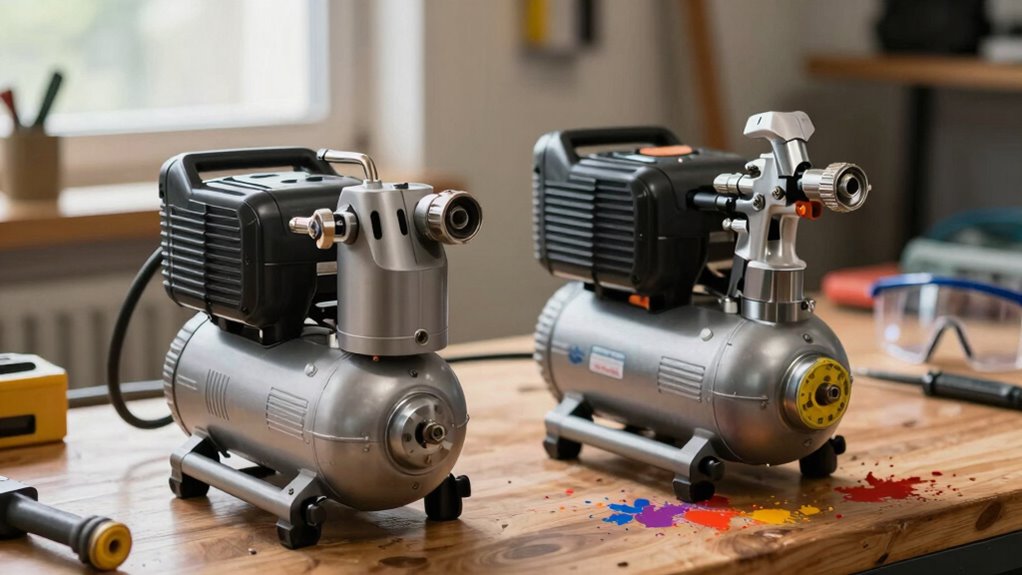
When you’re in the market for an air compressor, it’s vital to evaluate your specific needs before making a decision. Different applications, like using nailers versus spray guns, come with distinct requirements, and understanding these differences can save you time and money. Nailers typically require quick bursts of air, while spray guns need a steady and continuous supply. Knowing this helps you narrow down the compressor types that will work for your projects.
Evaluating your specific needs is essential when choosing an air compressor, as nailers and spray guns have distinct requirements.
For nailers, most standard models will suffice. They usually require a lower pressure, around 70 to 90 PSI, which means you can choose a smaller, portable compressor. These compressors are often lightweight and easy to move around, making them ideal for DIY projects or jobs where you need to access tight spaces. Confirm the compressor you pick has a suitable tank capacity; a 2 to 6-gallon tank is generally enough for nailers. This will allow you to work efficiently without constant interruptions for refills.
On the other hand, spray guns have different pressure requirements. They typically operate between 30 to 50 PSI and often need a higher volume of air to guarantee a smooth finish. For this, you’ll want a compressor with a larger tank—around 10 gallons or more—to provide a consistent airflow. If you’re using a spray gun regularly, investing in a dual-stage compressor might be worthwhile. These compressors can handle the higher demands of spray painting, assuring you get a flawless finish without the compressor cycling on and off too frequently. Additionally, understanding air compressor types can help you select the best model for your needs.
Furthermore, considering the duty cycle of the compressor is important, especially for larger projects, as it indicates how long the compressor can run before needing to cool down. Understanding air flow requirements ensures that your compressor can deliver consistent performance during prolonged use. It’s also essential to consider air compressor maintenance, as regular upkeep extends the lifespan and maintains optimal performance of your equipment.
Always check the CFM (cubic feet per minute) ratings of the compressors you’re considering. Nailers usually require around 2-4 CFM, while spray guns often need 6-12 CFM. Matching these specifications with your tools is vital for peak performance. Additionally, understanding the air pressure and its relationship to the tools’ requirements can help you avoid underpowered or overpowered equipment.
As an affiliate, we earn on qualifying purchases.
Frequently Asked Questions
What Is the Ideal Tank Size for Home Use?
For home use, an ideal tank size is around 6 to 10 gallons. This capacity strikes a balance between providing enough air for most tasks while keeping noise levels manageable. Smaller tanks can run more frequently, leading to increased noise, while larger tanks might be quieter but take up more space. Choose a tank that meets your needs without overwhelming your workshop with sound or size, ensuring efficient and comfortable operation.
How Often Should I Service My Air Compressor?
You should service your air compressor every six months to keep it running smoothly. Curiously, regular maintenance can extend its lifespan by up to 50%! To guarantee peak performance, follow these maintenance tips: check the oil levels, clean or replace filters, and drain moisture from the tank. Taking these steps regularly not only prevents breakdowns but also enhances efficiency, making your air compressor a reliable tool for your projects.
Can I Use a Compressor for Both Nailers and Spray Guns?
Yes, you can use a compressor for both nailers and spray guns, but you’ll need to pay attention to their requirements. Nailers typically require less air pressure and volume, while spray guns often need higher pressure for a smooth finish. Make sure your compressor meets the specifications for both tools. If you balance the tank size and output, you’ll enjoy seamless operation for both projects without constant adjustments.
What Is the Difference Between Oil-Lubricated and Oil-Free Compressors?
Ever wondered which type of air compressor suits your needs? Oil-lubricated compressors generally offer better performance, providing smoother operation and longer life, but they require regular maintenance, like oil changes. On the other hand, oil-free compressors are easier to maintain and more portable, but they might not perform as well under heavy use. Consider your projects and follow maintenance tips to choose the right one for you.
How Do I Determine the Right PSI for My Projects?
To determine the right psi for your projects, start by reviewing your project requirements. Check the tools you’re using; each typically has a recommended pressure setting. For nailers, it’s usually between 70-120 psi, while spray guns might need 30-60 psi. Adjust your compressor accordingly, ensuring it meets the lower end of the range for peak performance. Always refer to the tool’s manual for specifics to avoid damage and achieve the best results.
Conclusion
When picking an air compressor, think of it like choosing the right tool for a job. Just as you wouldn’t use a hammer to drive a screw, you can’t rely on the same compressor for nailers and spray guns. For instance, my friend once tried using a small compressor for a paint job and ended up with drips everywhere. Picking the right compressor can make all the difference in your project’s success, ensuring smooth, efficient work every time.
Halloween Picks
halloween
As an affiliate, we earn on qualifying purchases.