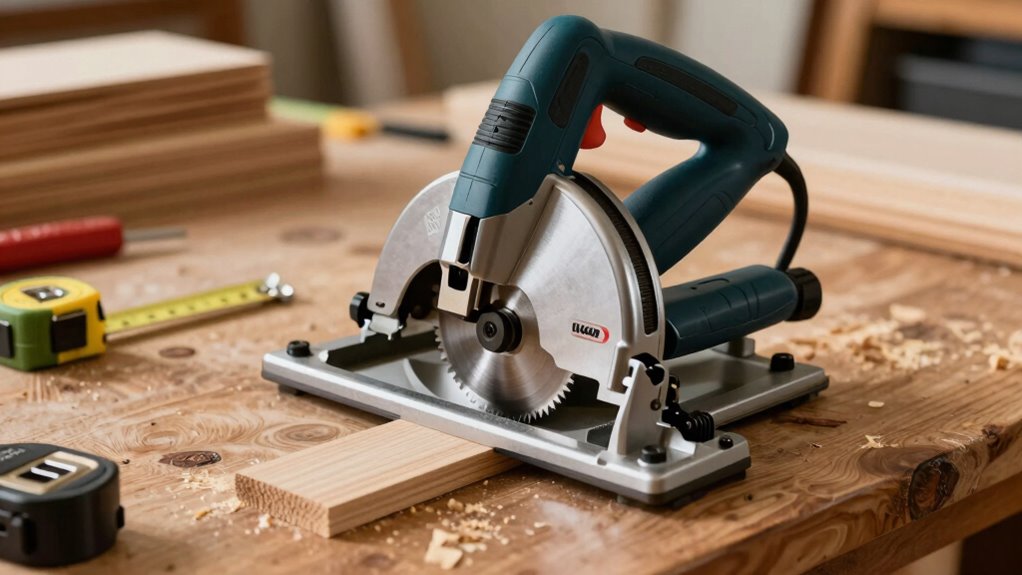

Blade size alone doesn’t make the best miter saw. You need to evaluate motor power, which impacts how well the saw handles different sizes. Blade material affects cut quality and durability too. Plus, features like bevel angle adjustments and safety mechanisms are key for precision and protection during cuts. It’s about balancing all these elements to get peak performance. Stick around to discover more factors that can elevate your miter saw game.
Key Takeaways
- Blade size affects cut depth and width, but accuracy relies on other factors like motor power and material quality.
- High-quality blade materials, such as carbide, significantly enhance cutting performance, often more than size alone.
- A powerful motor is essential for effectively utilizing larger blades and ensuring consistent cut quality across various materials.
- Bevel angle adjustments improve versatility and precision, which larger blades alone cannot achieve.
- Safety features, like blade guards and electric brakes, are critical for safe operation, regardless of blade size.
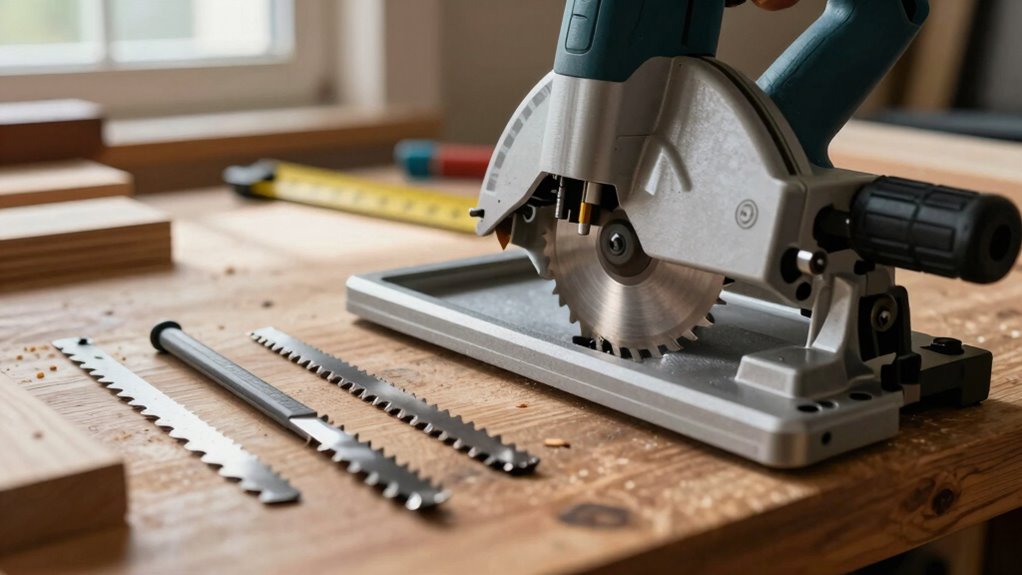
Choosing the right miter saw blade size is fundamental for achieving precise cuts in your projects. However, focusing solely on blade size can lead to overlooking other important factors that contribute to the overall performance of your miter saw. While a larger blade might seem appealing, it’s not the only determinant of cut accuracy and efficiency.
First, consider the blade material. A high-quality blade made from carbide or high-speed steel can greatly improve your cutting performance, regardless of its size. These materials provide durability and enhance the saw’s ability to make clean cuts through various types of wood. So, while size matters, the material can often be the deciding factor in achieving the best results.
Motor power is another essential aspect you can’t ignore. A powerful motor can handle larger blades more effectively, guaranteeing that you achieve consistent cuts without bogging down. If you’re using a smaller blade with a weak motor, you might struggle to maintain cut accuracy, especially with tougher materials. Consequently, the interplay between blade size and motor power plays a key role in your overall cutting experience.
Bevel angle adjustments are also important. If your miter saw can easily adjust to different bevel angles, you’ll find it much more versatile for various projects. A saw that allows for quick and accurate bevel adjustments will enable you to tackle intricate cuts, which is something a larger blade alone won’t achieve. Additionally, adjustable features can significantly enhance your versatility when working on complex projects.
Safety features shouldn’t be underestimated either. A reliable miter saw should come equipped with features like blade guards and electric brakes. These elements add an extra layer of protection, particularly when you’re working with larger blades that can pose more considerable risks. Prioritizing safety assures that you can focus on your project without unnecessary worries. Moreover, safety considerations are crucial for preventing accidents and ensuring a secure work environment.
Furthermore, blade material plays a crucial role in how well your miter saw performs, especially when cutting tougher materials. A well-made blade from durable materials will last longer and provide cleaner cuts, regardless of the size. It’s also important to consider ease of adjustment, which can make switching between blade sizes and angles more efficient, saving you time and effort during your projects. Additionally, paying attention to dust collection systems can significantly improve your workspace cleanliness and visibility during operation.
Lastly, consider the brand reputation. A well-known brand usually signifies quality and reliability. Investing in a reputable brand can give you peace of mind, knowing you’re getting a miter saw designed for longevity and performance.
best miter saw with adjustable bevel angles
As an affiliate, we earn on qualifying purchases.
As an affiliate, we earn on qualifying purchases.
Frequently Asked Questions
What Types of Materials Can I Cut With a Miter Saw?
You can cut various materials with a miter saw, including wood, plywood, and even some plastics. If you’re working with metal, make certain you have the right blade for cutting precision. Different miter saw types, like compound or sliding, can handle thicker materials and angled cuts more effectively. Always check your saw’s specifications to maximize its capabilities and achieve the best results for your projects. Happy cutting!
How Often Should I Change My Miter Saw Blade?
You should change your miter saw blade every 20 to 30 cuts if you’re working with hard materials or whenever you notice significant blade wear. If you’re cutting softer materials, you might stretch this to 50 cuts. Regularly checking your blade’s condition is essential; a dull blade can lead to poor cuts and increased effort. If you’re using your saw frequently, don’t hesitate to replace the blade more often for peak performance.
Can I Use a Miter Saw for Rip Cuts?
You can use a miter saw for rip cuts, but it’s not ideal. Miter saws excel in crosscut techniques, making them perfect for cutting across the grain. If you attempt rip cuts, verify your blade compatibility suits the material. A blade designed for ripping will perform better, but remember, a table saw is typically the better choice for those types of cuts. Always prioritize safety and proper setups for any project.
What Safety Gear Is Recommended While Using a Miter Saw?
When you use a miter saw, always wear safety goggles to protect your eyes from flying debris. Imagine a scenario where a small wood chip flies past and hits you—definitely not fun! You should also wear hearing protection to guard against loud noises, a dust mask to keep harmful particles out of your lungs, and work gloves to guarantee a solid grip. Staying safe while you work is key to enjoying your projects!
Are There Any Maintenance Tips for Miter Saws?
To keep your miter saw in top shape, regularly check blade alignment for accurate cuts. If the blade isn’t aligned, adjust it according to the manufacturer’s guidelines. Also, don’t forget motor care; keep it clean and free of debris. Lubricate moving parts as needed, and inspect the brushes for wear. With consistent maintenance, you’ll guarantee your saw operates smoothly and lasts longer, making your woodworking projects more enjoyable.
Conclusion
In the end, choosing the best miter saw isn’t just about blade size. Think of a woodworker tackling intricate crown molding; they need precision and versatility, not just a large blade. A smaller, high-quality blade can make cleaner cuts and offer better control for detailed work. So, when you’re shopping, remember to look beyond the size and consider features like bevel capabilities and motor power for a saw that truly meets your needs.