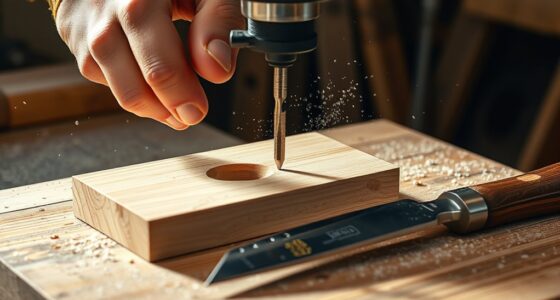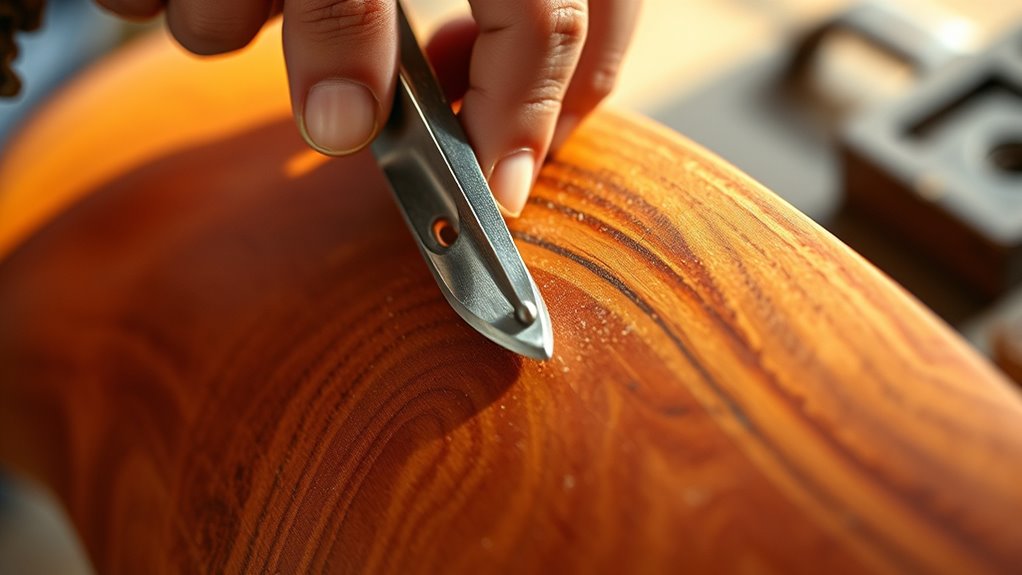

To shape curves with precision using a spokeshave, start by ensuring your blade is sharp and properly aligned to the sole for smooth cuts. Use controlled, light strokes and follow the natural grain of the wood to prevent tear-out. Plan your cuts carefully, working gradually to refine the shape. Keep your tool clean and well-maintained for peak control. If you want to master precise curves, there’s more to explore on setup, technique, and safety.

Get business pricing on tools and workshop supplies
- Business-only prices and quantity discounts
- Tax-exempt purchasing
- Multiple users, one account, clear invoices
Key Takeaways
- Ensure the spokeshave blade is sharp and properly aligned for smooth, controlled shaping of curves.
- Use small, gradual strokes to carefully follow the desired curve, avoiding forcing the tool.
- Plan your cuts to follow the natural grain direction for cleaner, tear-out-free results.
- Maintain a steady hand and consistent pressure to achieve precise and even curves.
- Regularly clean and sharpen the tool to ensure optimal performance during detailed shaping.

Have you ever wondered how to smooth and shape wood with precision? If you’re tackling curved surfaces or delicate details, a spokeshave is an invaluable tool. Its versatility allows you to craft smooth, flowing curves that would be difficult with other woodworking tools. To get the best results, understanding the importance of grain orientation and proper tool maintenance is essential. Grain orientation guides how easily you can carve or shave the wood without splintering or tearing. Always pay attention to the direction of the grain; shaving along the grain produces cleaner cuts and reduces the risk of damaging your workpiece. When you work against the grain, you’ll likely encounter roughness, tear-out, or uneven surfaces, which can ruin your project. Before starting, examine your piece of wood carefully, and plan your cuts to follow the natural grain lines. Additionally, understanding the beach environment can help you select appropriate wood types that are less prone to warping or splitting during shaping.
Using a spokeshave effectively begins with setting it up correctly. You want the blade to be sharp and properly adjusted for smooth, controlled shaving. Regularly check and sharpen your tool; dull blades put extra strain on your hand and produce rough, uneven results. Proper tool maintenance isn’t just about keeping the blade sharp; it also involves keeping the sole and cutting edges clean and free of debris. When your spokeshave is well-maintained, you’ll experience smoother cuts, less effort, and better control. Keep the blade aligned parallel to the sole, and make small, controlled strokes, gradually shaping the wood. It’s better to take multiple light passes than to force the tool through the material, which can cause splintering or gouging.
As an affiliate, we earn on qualifying purchases.
Frequently Asked Questions
Can a Spokeshave Be Used on Metal or Only Wood?
A spokeshave is designed primarily for wood, so it’s not suitable for metal working. Its blade and design aren’t built to handle metal’s hardness or properties. If you’re considering tool versatility, stick to metal-specific tools like files or rasps for shaping metal. Using a spokeshave on metal can damage the tool and isn’t effective. Focus on the right tools for each material to get precise, safe results.
What Safety Precautions Should I Take When Using a Spokeshave?
Like a knight preparing for battle, you should gear up with personal protective equipment before using a spokeshave. Always wear safety glasses and gloves to protect against wood splinters. Proper handling is essential: keep your hands dry and maintain a firm grip. Work in a well-ventilated area, and stay alert. These precautions guarantee your safety while shaping curves with precision, making your woodworking experience both enjoyable and secure.
How Do I Choose the Right Spokeshave for My Project?
You should choose the right spokeshave based on your project considerations, like the type of wood and the curves you need to shape. For fine, detailed work, opt for a smaller, lighter spokeshave; for larger curves, a robust, adjustable one works best. Consider spokeshave types such as the convex, concave, or flat-bottomed models. Match your choice to your project’s demands to achieve precise, smooth results efficiently.
Can I Sharpen a Spokeshave at Home?
Think of sharpening your spokeshave as tending to a well-loved sword. Yes, you can sharpen it at home using basic sharpening techniques like honing on a stone or strop. Keep your tool in top shape with regular maintenance tips—clean the blade, check for nicks, and maintain the proper bevel angle. With patience, you’ll keep your spokeshave sharp and ready for precise, smooth curves every time.
What Are Common Mistakes to Avoid When Shaping Curves?
When shaping curves with a spokeshave, avoid common mistakes like going against the grain, which causes tearing and rough surfaces. Maintain consistent pressure to guarantee smooth, even cuts, preventing dips or uneven edges. Also, don’t rush; taking your time helps you follow the curve accurately. Always check your work frequently and adjust your technique as needed, focusing on the grain direction and applying steady, even pressure for the best results.
Conclusion
Now that you’ve mastered the spokeshave, imagine the possibilities. With each careful pass, you’re not just shaping wood—you’re creating something truly unique. But the real test lies ahead: will your next project reveal the perfect curve or a surprise twist? Keep your grip firm and your eyes sharp. The journey of craftsmanship is full of surprises, and with your newfound skill, you’re ready to uncover what’s just beyond the next cut—waiting to be revealed.
Halloween Picks
halloween
As an affiliate, we earn on qualifying purchases.