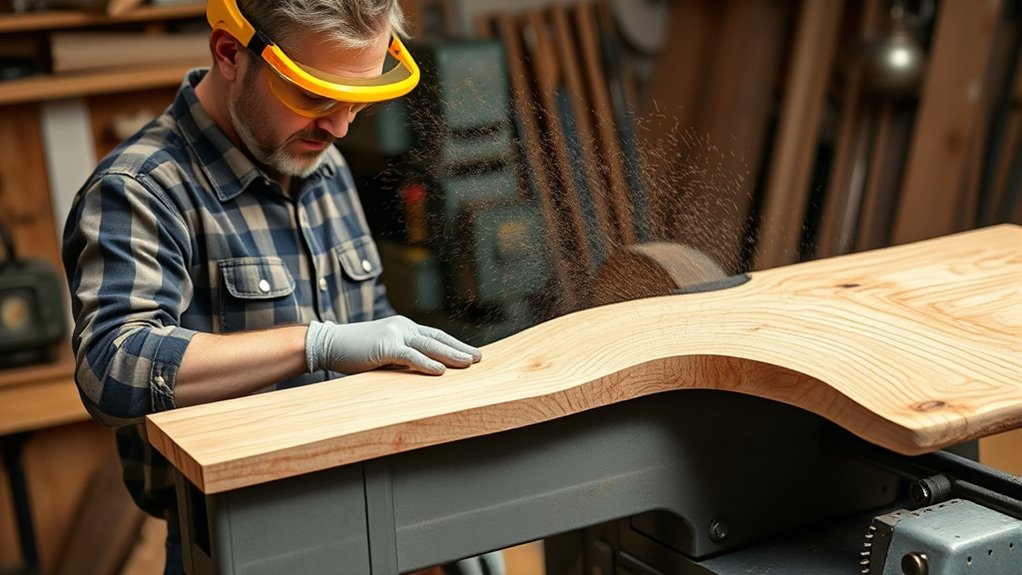

To use a bandsaw safely for resawing and curved cuts, you should inspect and maintain your blade regularly, ensuring proper tension and cleanliness. Always wear safety gear like eye and hearing protection, keep your hands clear, and guide the material smoothly using push sticks when needed. Control your cuts with patience, especially for intricate curves. Following best practices will help you achieve accurate results while staying safe—keep going to learn more tips for mastering your bandsaw work.
Key Takeaways
- Ensure the blade is sharp, properly tensioned, and tracking correctly before resawing or curved cuts.
- Use push sticks or blocks to guide small or thin materials, keeping hands well away from the blade.
- Adjust feed rate gradually and follow marked lines steadily for precise, safe curved cuts.
- Wear appropriate safety gear, including eye protection, hearing protection, and a dust mask.
- Maintain a clean, well-lit workspace and avoid rushing to ensure safe, controlled operation.

Have you ever wondered how to make precise, curved cuts in wood or other materials? Using a bandsaw for resawing or intricate curves can be incredibly effective, but it requires understanding some key safety and maintenance practices. Before you start, ensure your blade is in top condition. Blade maintenance is vital; a dull or damaged blade can cause rough cuts, binding, or even dangerous kickbacks. Regularly inspect your blade for signs of wear, such as missing teeth or excessive dullness, and replace it when necessary. Proper tension and tracking are equally important—if the blade isn’t aligned correctly, it can drift or wobble, compromising your cut quality and safety. Keep the blade clean from pitch and resin buildup, which can cause overheating or slipping during operation. Additionally, understanding the international market can help you select the best tools and materials for your projects, ensuring safety and efficiency. Safety equipment is essential every time you use a bandsaw. Always wear eye protection to shield your eyes from flying debris and dust. Hearing protection helps guard against prolonged noise exposure, especially when working on longer projects. Gloves are generally not recommended while operating the saw because they can catch on the blade, but if you handle the blade or perform maintenance, they provide extra safety. A dust mask or respirator is also wise, particularly when cutting materials that produce fine dust, which can be harmful if inhaled over time. Make sure your work area is well-lit and that you have a stable, uncluttered workspace. Keep your hands well away from the blade and use push sticks or blocks when guiding small or thin pieces through the cut. When making curved cuts, it’s important to control your material carefully. Use a steady, smooth feeding motion, avoiding forcing the wood into the blade. For intricate or tight curves, adjust your workpiece gradually, following your marked lines with patience. Keep in mind that the bandsaw’s design allows for smooth, controlled cuts when you maintain proper blade tension, tracking, and feed rate. Trust your safety equipment—if something feels unstable or unsafe, stop and reassess before proceeding. Never rush a cut or ignore safety protocols; a calm, deliberate approach minimizes the risk of accidents.

Wood-Mizer BMS25 Sawmill Bandsaw Blade Sharpener
Required 12V Battery Sold Separately
As an affiliate, we earn on qualifying purchases.
As an affiliate, we earn on qualifying purchases.
Frequently Asked Questions
How Do I Choose the Right Blade for Resawing?
To select the right blade for resawing, you should consider blade width and tooth configuration. A narrower blade, around 1/4 inch, offers better control for curved cuts, while wider blades provide stability for straight resawing. Opt for teeth with a fine-tooth configuration, like 3-4 TPI, to make certain smooth cuts and reduce tear-out. Matching your blade to your project’s needs will give you cleaner, more precise results.
What Safety Gear Should I Wear When Using a Bandsaw?
Think of your safety gear as your trusty armor on a woodworking adventure. You should always wear protective eyewear to shield your eyes from flying debris and hearing protection to guard against loud noise. Gloves aren’t recommended, as they can get caught, so skip those. Keep your hair tied back and avoid loose clothing. Wearing the right safety gear keeps you safe and lets you focus on creating beautiful pieces.
How Do I Maintain and Clean My Bandsaw for Optimal Performance?
To keep your bandsaw performing well, regularly check the blade tension to make sure it’s neither too tight nor too loose. Clean the blade and wheels frequently to prevent dust buildup, which can affect cuts. Also, inspect wheel alignment and adjust if needed, as misaligned wheels cause uneven cuts and wear. Keep the table and fence clean and lubricate moving parts periodically for smooth operation and accurate cuts.
Can I Use a Bandsaw for Cutting Metal or Plastics?
You should not use your bandsaw for cutting metal or plastics unless it’s specifically designed for those materials. Metal cutting requires a bandsaw with a special blade and coolant system, while plastics need a fine-tooth blade to prevent melting and chipping. Using a standard wood bandsaw for these materials can damage your equipment and pose safety risks. Always select the right tools for metal cutting and plastic work to ensure safety and quality cuts.
What Are Common Mistakes to Avoid During Curved Cuts?
When making curved cuts, avoid common mistakes like improper blade tension, which can cause wobbling or binding. Guarantee you maintain consistent guiding techniques, keeping steady pressure and following the curve smoothly. Don’t rush, as hesitation or sudden movements can lead to inaccuracies or blade damage. Check that the blade is sharp and aligned correctly, and use a suitable guide or fence to help you stay on track for clean, precise cuts.
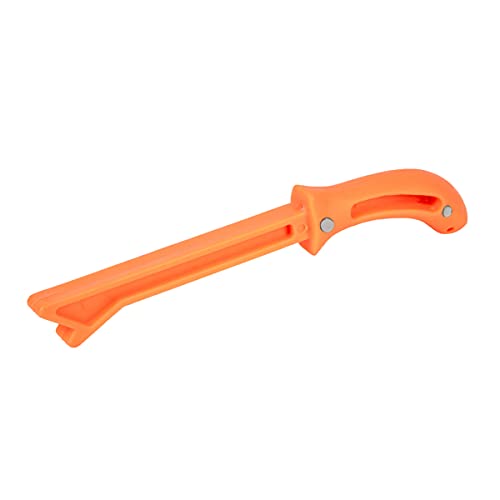
POWERTEC Magnetic Push Stick. Fits Table Saw, Router Table, Jointer. Ergonomic Design Handle Grip. Wood Pusher Reduces Kickback & Increases Safety for Wood working Accessories (71029)
INCLUDES: (1) Deluxe 11.5” Tablesaw Push Stick
As an affiliate, we earn on qualifying purchases.
As an affiliate, we earn on qualifying purchases.
Conclusion
By mastering proper techniques, you can safely tackle resawing and curved cuts on your bandsaw. For example, imagine rebuilding a custom birdhouse with precise curved cuts—your skills guarantee clean, accurate results without accidents. Always prioritize safety, use the right blade, and follow guidelines carefully. With practice, you’ll confidently create intricate designs and projects that showcase your craftsmanship. Remember, patience and respect for your tools are key to safe, successful woodworking.

Gryphon Band Kit for All C40 Saws,Includes 2 Bands & Bushings
Complete Maintenance Kit – Includes 2 bands and 1 pair of bushings.
As an affiliate, we earn on qualifying purchases.
As an affiliate, we earn on qualifying purchases.

3423VPC 93.5" by 3/4" Timber Wolf Bandsaw Silicone Steel Low Tension Resaw Blade
Milled teeth are 50 PERCENT SHARPER than competitors stamped or crush ground blades
As an affiliate, we earn on qualifying purchases.
As an affiliate, we earn on qualifying purchases.