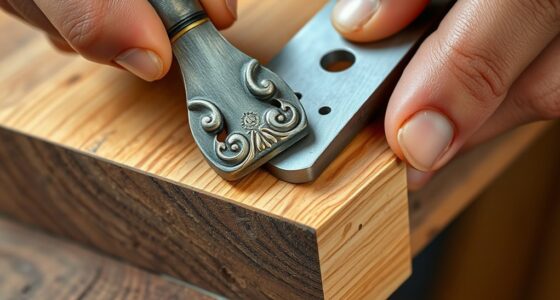
To master advanced chisel techniques like paring and skewing, start by understanding your wood’s grain and preparing a smooth, clean surface. When paring, hold the chisel at a shallow angle and use controlled, deliberate slices along the grain to achieve fine details. For skewing, tilt the chisel to make long, precise cuts, especially in tight spaces. Paying attention to grain direction and surface prep makes these techniques more effective; continue exploring to refine your skill further.

Get tools and workshop supplies delivered free — and shop member deals
- Fast, free delivery on millions of items
- Access to Prime Big Deal Days deals on October 6–7
- Prime Video, Amazon Music and more included
Key Takeaways
- Proper surface preparation ensures control and precision during paring and skewing techniques.
- Always assess grain direction to optimize cut smoothness and minimize tearing when paring or skewing.
- Hold the chisel at a shallow angle for paring to create thin, controlled slices with minimal force.
- Tilt the chisel at an angle aligned with the grain when skewing for long, clean cuts and decorative edges.
- Mastering grip, angle, and surface readiness enhances finesse and reduces the risk of splintering in advanced techniques.

Have you ever wondered how skilled woodworkers achieve such intricate and precise carvings? It all comes down to mastering advanced chisel techniques like paring and skewing. These methods require a keen understanding of the wood’s grain direction and meticulous surface preparation. Before you even start carving, you need to assess the grain. Grain direction influences how the chisel moves through the wood, affecting the smoothness of your cuts and the risk of tearing. Always work with the grain whenever possible, as carving against it can cause splintering and rough edges. To do this effectively, you need to carefully examine the surface and plan your cuts accordingly. Proper surface preparation is critical here; you want a clean, smooth surface free of dust and debris so the chisel can glide effortlessly. If the surface isn’t well-prepared, the chisel might catch or slip, ruining your work and increasing frustration. Paying attention to grain orientation is essential for achieving clean cuts and smooth finishes. When you begin paring, you hold the chisel at a shallow angle, allowing you to shave thin slices off the wood’s surface. This technique produces fine, controlled cuts that reveal intricate details. To do it well, keep in mind that your grip should be firm but relaxed, and your movements should be deliberate. The goal is to pare away small layers gradually, following the grain direction precisely to avoid tearing. Surface preparation plays a *crucial* role here; if the wood isn’t flat or smooth, your paring will be uneven. Sanding the surface lightly before starting helps create a consistent plane, making your paring more predictable and clean. Skewing is another advanced technique where you tilt the chisel at an angle to the workpiece, enabling you to make long, controlled cuts, especially in tight spaces or when creating decorative edges. When skewing, understanding the grain direction is equally important because a cut against the grain can cause splintering. You want to angle your chisel so it slices along the grain, reducing resistance and producing a cleaner finish. Again, surface preparation is *essential*—an uneven or rough surface will make skewing more difficult and less precise. Ensuring your workpiece is well-prepared, with a smooth surface and clear grain direction, allows you to wield the skewing technique effectively, giving your work a polished, professional appearance. Mastering these advanced chisel techniques hinges on paying close attention to grain direction and surface preparation. By understanding how the wood responds to your tools and ensuring your surface is ready, you’ll execute each cut with confidence and precision. These small but significant details make all the difference between a rough, amateurish piece and a finely crafted work of art. Keep practicing these principles, and you’ll develop the skill to carve with finesse and accuracy in even the most complex projects.
As an affiliate, we earn on qualifying purchases.
Frequently Asked Questions
How Do I Choose Between Paring and Skewing Techniques?
You should choose paring or skewing based on your project’s considerations and the desired results. Paring works well for precise, detailed cuts and shaping, while skewing is better for smooth, angled cuts or surfaces. Consider the material and the finish you want. Your technique selection depends on the specific task, the tools available, and your skill level to guarantee accuracy and efficiency in your work.
Are There Specific Materials Best Suited for Advanced Chisel Techniques?
You’ll find hardwoods like maple and oak are best suited for advanced chisel techniques because of their material compatibility and durability. Softwoods may tear or chip during paring and skewing, so surface preparation is essential—ensure the material is properly cleaned and leveled. Using the right materials not only improves your precision but also extends your tool’s lifespan, making your chisel work smoother and more enjoyable.
What Safety Precautions Should I Follow During Intricate Chisel Work?
When doing intricate chisel work, you should always wear personal protective equipment like safety glasses and gloves to protect your eyes and hands. Keep your workspace clean and well-lit to avoid accidents. Use clamps to hold your material securely, and stay focused to prevent slips. Regularly inspect your tools for damage. Following these safety precautions helps prevent injuries and guarantees your workspace remains safe during detailed chiseling tasks.
Can These Techniques Be Applied to Modern or Synthetic Materials?
Yes, you can apply paring and skewing techniques to synthetic materials and modern applications. These methods help you achieve precise cuts and smooth finishes, even on plastics and composites. Just remember to adjust your tools and pressure accordingly, as synthetic materials can behave differently from wood. By mastering these techniques, you’ll enhance your craftsmanship and expand your versatility in modern projects, ensuring clean, accurate results every time.
How Do I Maintain Precision Over Extended Chisel Sessions?
Think of your chisel like a fine instrument; with proper care, it stays sharp and precise. To maintain accuracy during long sessions, regularly sharpen your tool, and practice ergonomic tips like proper grip and posture to avoid fatigue. Keep your tools well-maintained, ensuring smooth, consistent cuts. Taking short breaks also helps you stay focused and precise, turning a tiring session into a productive, enjoyable craft.
Conclusion
By mastering paring and skewing techniques, you’ll elevate your woodworking skills and achieve cleaner, more precise cuts. You might think these methods are too challenging at first, but with practice, they become second nature. Don’t let hesitation hold you back—embrace the learning process, and soon you’ll be carving with confidence. Keep honing your skills, and you’ll open a new level of craftsmanship that truly makes your projects stand out.
Halloween Picks
halloween
As an affiliate, we earn on qualifying purchases.