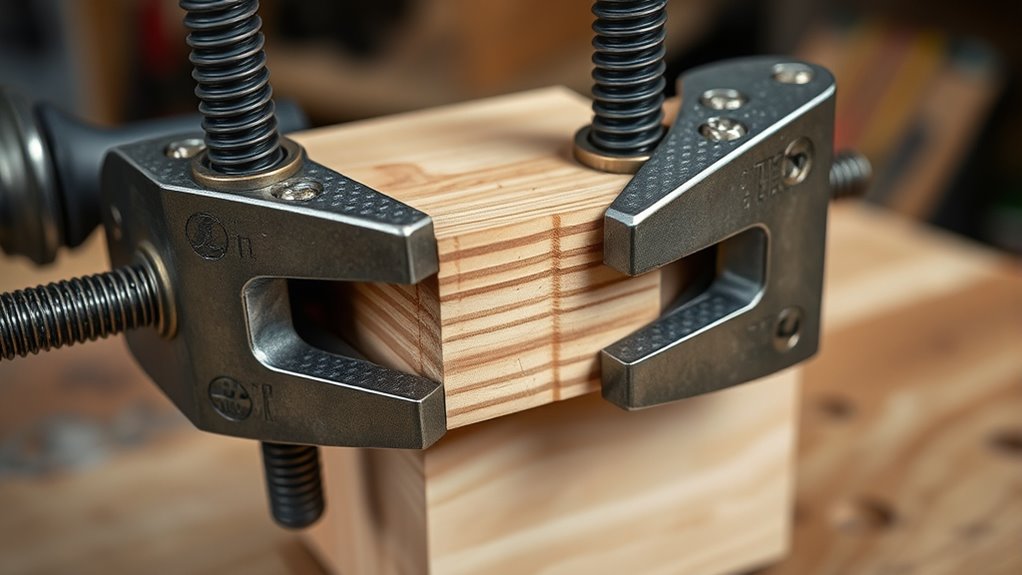

To guarantee proper pressure distribution, use multiple clamps spaced evenly across your workpiece. Apply gentle initial pressure and gradually tighten, checking for even contact and avoiding over-tightening that could damage materials. Use clamp pads or scrap wood to distribute force more evenly, especially on delicate surfaces. Keep an eye on how the pressure affects the materials and readjust if you notice uneven contact. For more tips, you’ll discover effective strategies to improve your clamping approach.

Get business pricing on tools and workshop supplies
- Business-only prices and quantity discounts
- Tax-exempt purchasing
- Multiple users, one account, clear invoices
Key Takeaways
- Use multiple clamps spaced evenly to ensure uniform pressure across the work surface.
- Distribute force with clamp pads or scrap wood to protect delicate materials and promote even pressure.
- Gradually tighten clamps, monitoring contact and adjusting to prevent uneven pressure and material distortion.
- Select appropriate clamp types (bar, C-clamp, spring) based on the task and desired pressure distribution.
- Regularly check for signs of warping or shifting, reposition clamps if necessary, to maintain consistent pressure.

Clamps are essential tools in woodworking, metalworking, and various assembly processes, providing the necessary pressure to hold materials securely in place. Mastering effective clamping techniques is vital because how you apply pressure directly impacts the quality of your work. Proper pressure application ensures your pieces stay aligned, prevents slipping, and reduces the risk of damage. When you’re using clamps, understanding the nuances of pressure distribution becomes key to achieving precise results.
First, focus on evenly distributing pressure across the entire surface. If you tighten a clamp too much in one spot, you risk warping or distorting your material. To avoid this, you should use multiple clamps spaced appropriately along the workpiece. This strategy helps create uniform pressure, which is especially important when gluing or bonding surfaces. When applying pressure, start with gentle tightening and gradually increase it, checking for consistent contact. This gradual approach prevents over-tightening and potential damage.
Your choice of clamps also influences pressure application. Different clamps are designed for specific tasks—C-clamps, bar clamps, or spring clamps each offer unique advantages. For example, bar clamps provide adjustable pressure and can span larger distances, making them ideal for holding larger pieces. Spring clamps, on the other hand, are quick to set up and perfect for light-duty tasks. When you’re selecting clamps, consider the material’s fragility and the amount of pressure needed. Over-tightening can squeeze out glue or cause cracks, while under-tightening might result in weak joints or shifting workpieces.
Another vital aspect is the technique used to tighten clamps. It’s best to tighten gradually rather than all at once. As you tighten, check the workpiece for any signs of distortion or uneven pressure. If you notice uneven contact, readjust the clamp or reposition it slightly. Using a clamp pad or a piece of scrap wood between the clamp and your workpiece can also help distribute pressure more evenly and protect delicate surfaces. Additionally, understanding the importance of pressure distribution in different materials and projects can help you avoid common mistakes and improve overall craftsmanship.
Finally, remember that pressure application isn’t just about tightness; it’s about control. You want enough force to hold everything securely without causing damage. Regularly check your clamps during the process, especially if you’re working on a project that requires several hours or days to complete. Adjust the pressure as needed to maintain a consistent, even hold. By mastering clamping techniques and paying close attention to pressure distribution, you’ll improve your craftsmanship and ensure your projects turn out as intended.
As an affiliate, we earn on qualifying purchases.
Frequently Asked Questions
How Do Clamp Types Affect Pressure Distribution?
Different clamp types impact pressure distribution based on their design, which influences pressure uniformity. For example, screw clamps provide adjustable, even pressure, ensuring uniform distribution across surfaces. C-clamps concentrate force at specific points, creating uneven pressure. Toggle clamps offer quick, consistent pressure but may not suit all shapes. Choosing the right clamp type depends on your project’s needs to achieve ideal pressure uniformity and effective clamping.
What Materials Best Optimize Pressure Evenly?
Did you know that rubber and silicone provide 30% better pressure uniformity compared to metal clamps? Choosing the right clamp material is essential for ideal pressure distribution. Rubber and silicone materials absorb uneven surfaces and adapt better to materials being clamped, ensuring pressure is evenly spread. For the best results, prioritize these flexible, resilient materials to enhance pressure uniformity and prevent damage during clamping.
How Can Uneven Pressure Cause Material Deformation?
Uneven pressure from clamp slip or pressure hotspots can cause your material to deform. When certain areas experience higher pressure, they stretch or compress more than others, leading to warping or permanent damage. This uneven force disrupts the material’s structure, weakening it and compromising your project’s integrity. To prevent this, you should guarantee proper clamp placement and pressure distribution, avoiding hotspots that cause localized deformation.
Are There Specific Clamping Techniques for Delicate Materials?
Yes, for delicate materials, you should choose appropriate clamp material selection, like soft or padded clamps, to prevent damage. Use tension adjustment strategies to apply gentle, even pressure, avoiding deformation. Always start with light tension and gradually increase as needed, monitoring the material closely. This approach guarantees secure holding without risking cracks or warping, keeping your delicate items safe while working effectively.
How Does Clamp Placement Influence Overall Pressure?
You might think tight clamps always mean better hold, but clamp placement influences overall pressure more substantially. Proper clamp alignment ensures even pressure distribution, preventing damage to delicate materials. By focusing on pressure modulation, you can avoid concentrated stress points that cause warping or cracking. When you position clamps thoughtfully, you optimize grip, maintain material integrity, and achieve a smoother, more controlled clamping process overall.
Conclusion
By mastering clamps and clamping strategies, you guarantee ideal pressure distribution for secure, reliable results. Did you know that improper clamping can cause up to 30% of workpiece failures? This highlights how essential proper pressure control is to avoid costly mistakes and improve your craftsmanship. Remember, choosing the right clamp and applying correct pressure not only enhances safety but also guarantees precision and quality in every project you undertake.
Halloween Picks
halloween
As an affiliate, we earn on qualifying purchases.