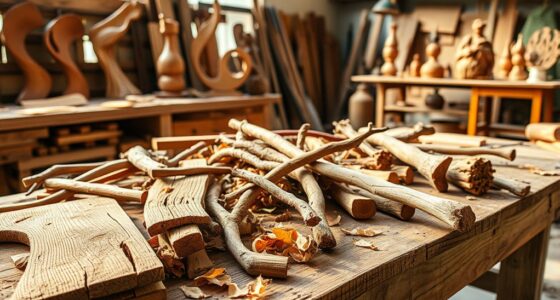
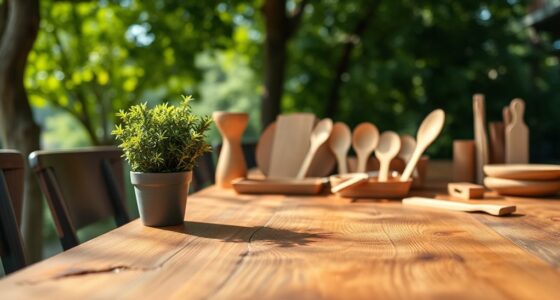
Fast-growing species like bamboo and cork are revolutionizing woodworking because they mature quickly and are highly sustainable. Bamboo can grow up to 35 inches per day and matures in just 3-5 years, making it a renewable resource. Cork, harvested from bark without harming trees, renews within a few years and offers eco-friendly versatility. By choosing these materials, you support eco-conscious craftsmanship and environmental health—discover how their growth benefits your projects.

Get business pricing on tools and workshop supplies
- Business-only prices and quantity discounts
- Tax-exempt purchasing
- Multiple users, one account, clear invoices
Key Takeaways
- Bamboo and cork are rapidly renewable materials suitable for sustainable woodworking projects.
- Bamboo grows up to 35 inches daily and matures in 3-5 years, enabling quick harvest cycles.
- Cork is harvested from bark without harming trees, allowing continuous, eco-friendly production.
- Using these species reduces reliance on slow-growing hardwoods, supporting environmental conservation.
- Both materials offer durable, versatile options that promote ecological health and sustainable craftsmanship.

Have you ever wondered which species grow the fastest in nature? If so, you’re likely surprised to learn that bamboo and cork top the list. These fast-growing plants are revolutionizing woodworking and sustainable craftsmanship. Their rapid growth not only shortens the time needed to harvest usable material but also offers considerable environmental benefits. By choosing these species, you can help reduce deforestation and lessen your ecological footprint.
Bamboo and cork grow rapidly, transforming sustainable woodworking and reducing environmental impact.
Bamboo, in particular, is a remarkable grass that can grow up to 35 inches in a single day under ideal conditions. Its quick growth cycle makes it a highly sustainable resource. Unlike traditional hardwoods that can take decades to mature, bamboo matures in just three to five years. This rapid turnaround allows for sustainable harvesting practices. When you harvest bamboo properly—taking only mature stalks and leaving the younger shoots intact—you ensure the plant’s health and continued growth. This selective harvesting promotes a cycle of renewal that benefits the environment by maintaining soil stability and reducing erosion. Furthermore, bamboo’s ability to absorb large amounts of carbon dioxide helps combat climate change, giving it a double environmental benefit. Additionally, bamboo’s fast growth rate makes it an ideal candidate for environmentally conscious sustainable forestry practices.
Cork trees, native to the Mediterranean, are another fast-growing species that’s gaining popularity in woodworking. Cork harvesting is a sustainable process because it involves stripping the bark without cutting down the tree. This bark regenerates within a few years, making cork harvesting a renewable practice. The environmental benefits extend beyond the renewal process; cork forests act as essential habitats for various species, help conserve water, and prevent desertification. As a natural, biodegradable material, cork is an eco-friendly alternative to synthetic products. Its durability and flexibility make it an excellent choice for various woodworking projects, from flooring to accessories, all while supporting sustainable forestry practices.
Incorporating these fast-growing species into your woodworking projects can considerably reduce environmental impact. You get durable, versatile materials that are harvested in a way that promotes ecological health. Bamboo and cork exemplify how sustainable harvesting can be aligned with high-quality craftsmanship. They prove that you don’t need to sacrifice environmental benefits for the sake of aesthetics or functionality. Instead, you can choose materials that grow rapidly and renew themselves, making your woodworking practices more eco-conscious. Embracing these species not only enriches your craft but also contributes to a greener, more sustainable future.
As an affiliate, we earn on qualifying purchases.
Frequently Asked Questions
How Sustainable Are Bamboo and Cork Compared to Traditional Hardwoods?
Bamboo and cork are more sustainable than traditional hardwoods because they have a lower carbon footprint and cause less biodiversity impact. You’ll find that bamboo grows quickly, reducing environmental strain, while cork harvesting doesn’t harm the oak trees. These materials regenerate faster, helping you create eco-friendly projects. By choosing bamboo and cork, you support sustainable practices that protect ecosystems and lower overall environmental impact.
What Are the Environmental Benefits of Using Bamboo and Cork?
You’ll love the environmental perks of bamboo and cork—they’re practically superheroes. They actively sequester carbon, helping fight climate change, and their rapid growth means less habitat disruption, reducing biodiversity impact. Plus, you get a sustainable, stylish material that’s guilt-free to use. So, when you choose bamboo or cork, you’re not just making eco-friendly furniture—you’re championing a greener planet, one piece at a time.
How Do Growth Rates of Bamboo and Cork Vary by Climate?
You’ll notice that bamboo’s growth rate varies with climate impact, thriving fastest in warm, humid regions, while cooler areas slow its regional growth. Cork oak trees also depend on climate, growing more rapidly in Mediterranean climates with dry summers. Understanding these differences helps you select the right species for your project’s location, ensuring sustainable sourcing and ideal growth, which benefits both your work and the environment.
Are There Any Disadvantages to Using Fast-Growing Species in Woodworking?
Using fast-growing species might seem like a game-changer, but it can have serious downsides. You could compromise environmental impact if harvesting isn’t managed sustainably, causing habitat loss. Material durability might also suffer, as some fast growers aren’t as sturdy or long-lasting as traditional woods. So, while they’re eco-friendly and quick to renew, you need to weigh these risks to avoid future regrets in your woodworking projects.
What Are the Best Finishing Techniques for Bamboo and Cork Products?
You should start with proper sanding techniques to smooth bamboo and cork surfaces, ensuring an even finish. After sanding, apply a high-quality varnish using even strokes to enhance durability and appearance. Multiple thin coats work best, allowing each to dry thoroughly. Be sure to sand lightly between coats for a flawless finish. This approach protects your products and highlights their natural beauty, making your work stand out.
Conclusion
You might think fast-growing species like bamboo and cork are just trendy choices, but they’re actually sustainable, practical options backed by science. Some say these materials can’t match traditional hardwoods, but research shows they’re just as durable and eco-friendly. So next time you pick a wood, consider these speedy growers—you’ll help the planet and get beautiful, functional pieces in the process. After all, faster growth doesn’t mean sacrificing quality; it’s just smart woodworking.
Fall yard work Picks
leaf blowers
As an affiliate, we earn on qualifying purchases.