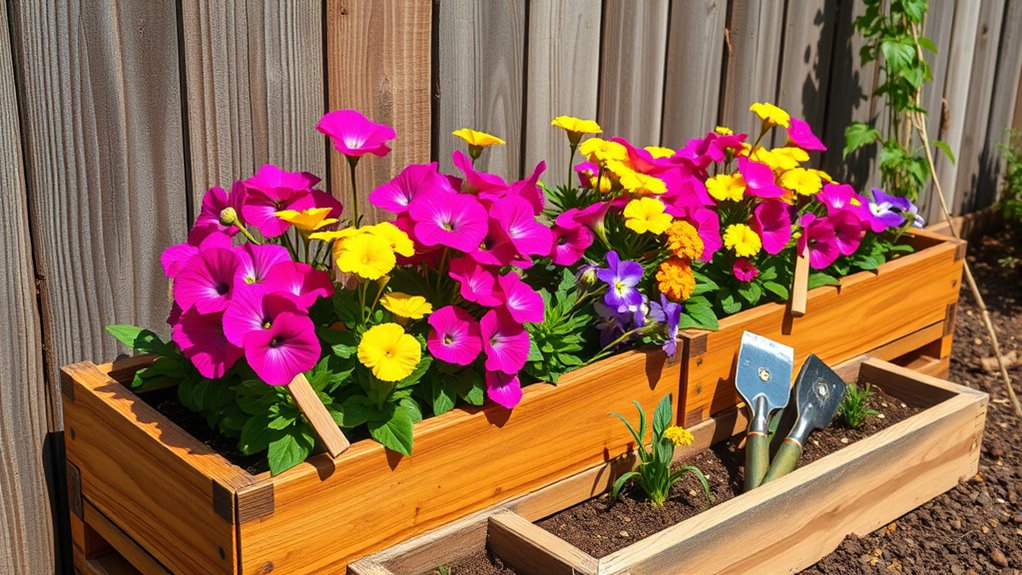

Spring planter boxes are a quick and easy way to add vibrant color and charm to your outdoor space. Choose containers that suit your style and make sure they have proper drainage. Select bright annuals like petunias or pansies, and mix in greenery for contrast. Position your planters where they get plenty of sunlight and water regularly. With a bit of planning, you can create a stunning display that transforms your garden in no time—more tips await to help you succeed.
Key Takeaways
- Select lightweight, attractive containers with proper drainage to facilitate quick setup and seasonal changes.
- Use bright, fast-growing annuals like petunias and pansies for instant color.
- Group planters together for a cohesive, dramatic display and easier watering.
- Position planters in sunny spots to ensure healthy blooming throughout the season.
- Regularly water and fertilize to maintain vibrant blooms and maximize garden appeal.

Are you ready to transform your outdoor space this spring? If so, spring planter boxes are the perfect way to add instant charm and color to your garden. You don’t need to be a professional landscaper to create stunning displays; a few simple steps can turn ordinary containers into eye-catching focal points. When it comes to garden design, using planter boxes allows you to organize your space efficiently and creatively. You can mix and match plants, experiment with different heights, and create layers that add depth to your garden. Container gardening is especially versatile because it lets you tailor your plant choices to your climate, sunlight, and personal style. Plus, it’s easy to move planters around, so you can find the best spots for your blooms or adjust your design as the season progresses.
Getting started with spring planter boxes is straightforward. First, choose the right containers—think about size, material, and drainage. Wooden boxes lend a rustic look, while ceramic or metal planters offer a modern vibe. Make sure they have drainage holes to prevent waterlogging, which can damage your plants. Next, select your plants with care. Bright annuals like petunias, pansies, and snapdragons are great for quick color, and they thrive in spring’s mild weather. Consider mixing flowering plants with greenery to add texture and contrast. When planting, use high-quality potting soil that retains moisture but drains well, giving your plants the nutrients they need without risking root rot. Additionally, investing in high-quality projectors can help you enjoy your garden displays even during evening hours.
To ensure your spring planter boxes flourish, think about placement. Position them where they’ll receive adequate sunlight—most flowering plants love at least six hours a day. Grouping your planters together can create a more dramatic display and make watering easier. Water your plants regularly, especially as they establish, but avoid overwatering. Fertilize with a balanced liquid fertilizer to encourage healthy growth and vibrant blooms. As the season advances, you can swap out annuals for new ones, or add trailing plants for spillover effects. These quick builds for bloom season not only beautify your space but also give you a satisfying sense of accomplishment.

8pcs Window Box Planter,17 Inches Flower Window Boxes, Rectangle Planters Box with Drainage Holes and Trays, Plastic Vegetable Planters for Windowsill Patio Garden Home Decor Porch Yard (Red)
2 DRAINAGE HOLES & ATTACHED SAUCER – This box planter for window was created with an integrated planter…
As an affiliate, we earn on qualifying purchases.
As an affiliate, we earn on qualifying purchases.
Frequently Asked Questions
What Are the Best Materials for Durable Planter Boxes?
For durable planter boxes, you should choose materials with high durability and weather resistance. Cedar and redwood are excellent options because they naturally resist rot and insects. Treated wood also offers good durability, but guarantee it’s safe for plants. Metal, like galvanized steel or aluminum, provides exceptional weather resistance and longevity. Avoid cheap plastics that may degrade quickly. Picking the right material ensures your planter boxes withstand the elements and last through many blooming seasons.
How Do I Prevent Planter Boxes From Overheating?
You can prevent planter boxes from overheating by managing plant temperature with shade solutions. Start by placing your boxes in a shaded area or using shade cloths during peak sun hours. Adding mulch helps retain soil moisture and keeps roots cool. Consider painting the exterior with light colors to reflect heat. Regularly check soil temperature and adjust shade methods as needed, ensuring your plants stay healthy and thrive all season long.
Can Planter Boxes Be Recycled or Reused?
Yes, you can recycle or reuse old planter boxes. Recycling planter materials involves repurposing wood, plastic, or metal boxes instead of discarding them, reducing waste. Reusing old planter boxes is also a great idea; clean them thoroughly and give them a fresh coat of paint or sealant. This not only saves money but also adds character to your garden, making your planting efforts more sustainable and eco-friendly.
What Drainage System Works Best for Spring Planter Boxes?
You should use drainage solutions like drainage holes or a layer of gravel at the bottom of your planter boxes to prevent waterlogging. These help excess water escape, keeping roots healthy. Combine this with proper watering techniques—water deeply but infrequently—to avoid overwatering. This combination guarantees your spring planter boxes stay well-drained and vibrant, encouraging healthy growth and beautiful blooms all season long.
How Often Should I Fertilize My Spring Plants in the Boxes?
You should fertilize your spring plants in the boxes every 2 to 4 weeks to guarantee proper plant nutrition. Consistent fertilizer frequency helps promote healthy growth and vibrant blooms. Use a balanced, water-soluble fertilizer for quick absorption, and adjust the frequency based on your plants’ needs and the type of fertilizer you choose. Regular feeding keeps your plants thriving throughout the bloom season and prevents nutrient deficiencies.
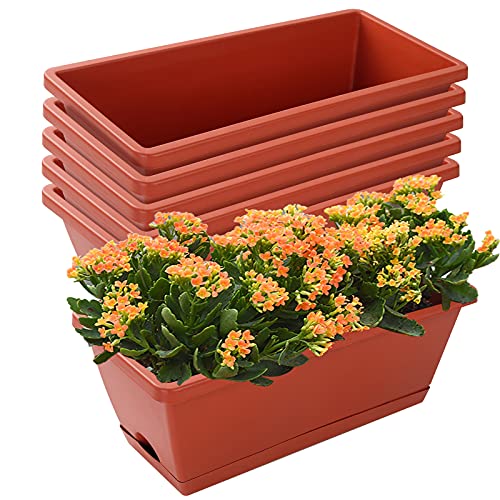
CHUKEMAOYI Window Box Planter, 7 Pack Plastic Vegetable Flower Planters Boxes 17 Inches Rectangular Flower Pots with Saucers for Indoor Outdoor Garden, Patio, Home Decor (Red)
WINDOW BOX PLANTERS DIMENSIONS – Includes pack rectangular plastic planters. The size of plastic flower planters: L16.6 x…
As an affiliate, we earn on qualifying purchases.
As an affiliate, we earn on qualifying purchases.
Conclusion
As you finish your planter boxes, imagine the bare, gray soil transforming into a burst of vibrant color—like a quiet winter fading into lively spring. These quick builds not only bring beauty to your space but also offer a sense of accomplishment amid the chaos. With each bloom, your garden becomes a canvas of life, proof that simple, swift projects can turn a dull landscape into a joyful, blooming masterpiece.

Classic Home & Garden Whiskey Barrel Planters – Wooden Finish Flower Planter Pot – Decorative Garden Pots – Indoor & Outdoor Resin Planters – Weather-Resistant Planting Pots (15” Oak Brown, Pack Of 1)
BUILT FOR RESISTANCE: The wooden barrel planter is made from high-quality resin, offering excellent weather resistance. Moreover, the…
As an affiliate, we earn on qualifying purchases.
As an affiliate, we earn on qualifying purchases.

Fruivity Zinnia Seeds for 2026 Planting, 5000+ Flowers Seeds, 7 Vibrant Colors Mix & Large Bloom, Non-GMO Heirloom Wildflower Seeds for Pollinator Garden Outdoor Borders, Easy to Grow Annual Flowers
5000+ Premium Seeds: This large pack includes 5000+ USA-packed zinnia seeds, plantable area up to 400 sq ft….
As an affiliate, we earn on qualifying purchases.
As an affiliate, we earn on qualifying purchases.