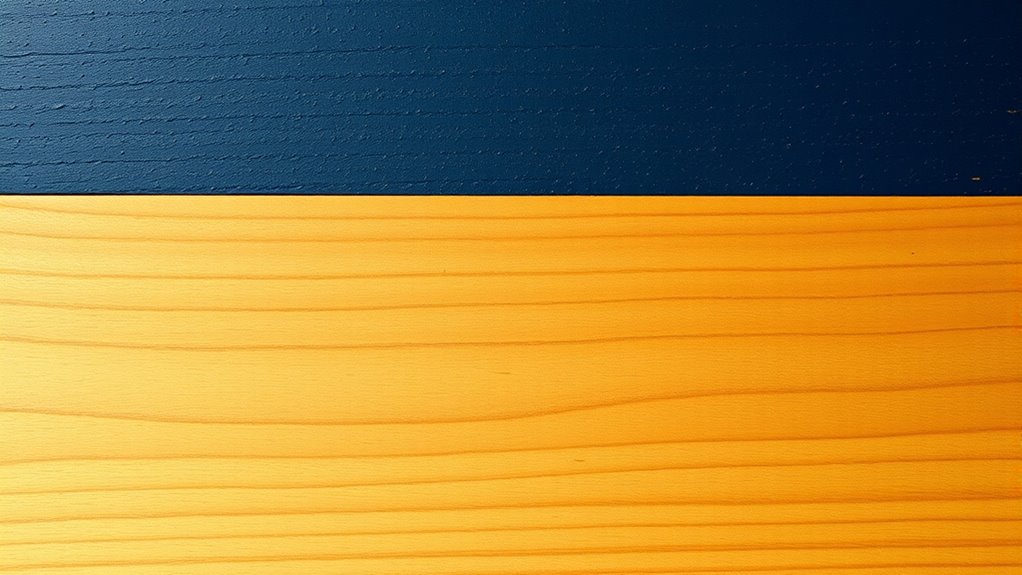

Combining paint and stain for a two-tone effect lets you create striking visual interest and highlight architectural details. You can blend these finishes to achieve a variety of styles, from rustic to modern, and experiment with color contrasts or complementary shades. Using techniques like masking or blending with brushes and sponges helps guarantee seamless transitions. Thoughtful planning and product selection make your design durable and personalized. For tips on perfecting this look, keep exploring how to combine these techniques effectively.
Key Takeaways
- Choose complementary or contrasting colors to create visual interest and highlight architectural details.
- Use sharp edges with painter’s tape for precise two-tone divisions or softer blends for rustic looks.
- Apply stain first to penetrate wood, then paint over or adjacent areas for layered visual effects.
- Consider lighting and color placement to enhance contrast and overall aesthetic impact.
- Plan your design carefully, selecting durable products and techniques for a long-lasting, polished two-tone finish.
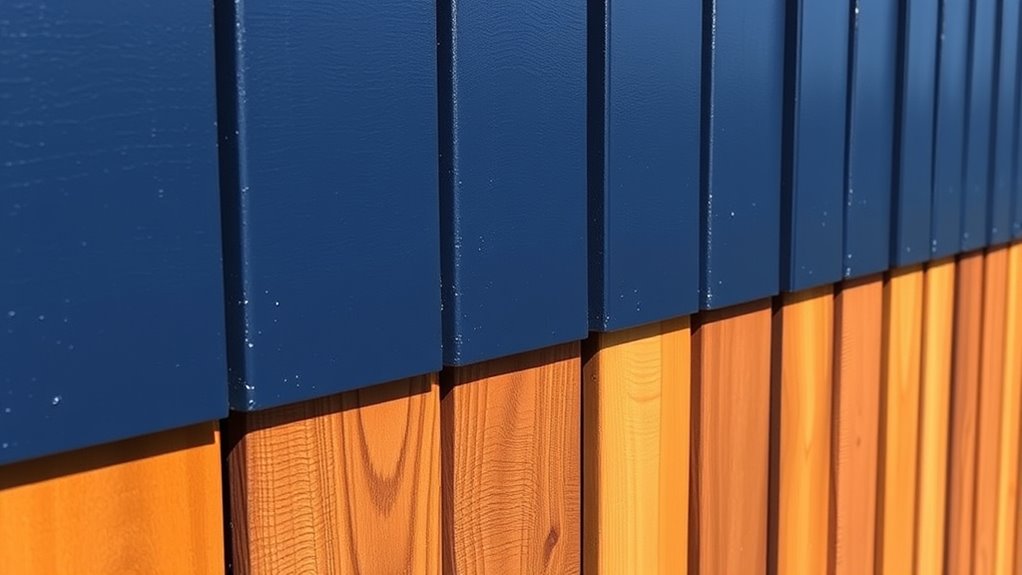
Combining paint and stain can create striking visual effects and enhance the character of your space. By thoughtfully blending these two finishes, you can craft a unique look that highlights architectural details and adds depth. When planning your project, consider how color coordination will play a role in achieving the desired aesthetic. Picking complementary or contrasting colors helps define different areas or features, making your space feel more dynamic and personalized. For instance, pairing a rich, darker stain with a lighter, painted area can draw attention to specific elements like trim, cabinetry, or accent walls. This approach not only elevates the visual appeal but also allows you to experiment with different styles—from rustic and traditional to modern and sleek.
Blending paint and stain creates dynamic, personalized spaces that highlight details and add visual depth.
One of the key factors in successfully combining paint and stain is understanding finish durability. Stains generally penetrate wood surfaces, enhancing their natural grain and providing a protective layer that resists wear and tear over time. Paint, on the other hand, offers a more uniform, opaque finish that can be easily refreshed or changed. When you mix these finishes, it’s essential to select high-quality products that can withstand daily use. For example, choosing a durable stain or a high-grade paint with good adhesion and resilience ensures that your two-tone design remains vibrant and intact for years. Proper surface preparation and applying the right topcoats will also contribute profoundly to the longevity of your project.
As you combine paint and stain, think about the transition lines and how they’ll affect the overall look. Sharp, clean edges work well if you want a modern, precise effect, while softer blends might suit a more rustic or vintage feel. Using painter’s tape or stencils can help you achieve crisp boundaries, but if you prefer a more seamless transition, blending the two finishes with a brush or sponge can create a subtle gradient. Keep in mind that lighting plays a role too—natural light accentuates the contrast, so plan your application accordingly to maximize impact. Additionally, understanding the types of finishes and their compatibility can help you make better decisions during your project.
Ultimately, the success of your two-tone project hinges on careful planning and attention to detail. By choosing the right colors, guaranteeing finish durability, and applying techniques suited to your desired style, you’ll craft a space that’s both beautiful and resilient. Combining paint and stain isn’t just about aesthetics; it’s about creating a lasting impression that reflects your personality and taste, all while maintaining the quality you expect from your surfaces.
Frequently Asked Questions
Can I Use Different Types of Stain and Paint Together?
Yes, you can use different types of stain and paint together, but you need to take into account color contrast and material compatibility first. Make sure the stain and paint are designed for the same surface material, like wood or concrete. Test small areas to see how they interact, ensuring the contrast looks appealing. Proper preparation and choosing compatible products will help you achieve a seamless, attractive two-tone effect.
How Long Should I Wait Between Applying Stain and Paint?
You should wait at least 24 to 48 hours between applying stain and paint to guarantee proper adhesion and avoid smudging. During this time, check the stain’s finish and color coordination before proceeding. If you’re using a matte finish, give it more time to cure. When planning your project, consider the finish selection and how the colors will complement each other for a seamless two-tone look.
Will Combining Stain and Paint Affect Durability?
Combining stain and paint can affect durability if you choose the wrong stain types or don’t follow proper painting techniques. Some stains may not adhere well over paint or vice versa, leading to peeling or chipping over time. To guarantee longevity, select compatible stain types, properly prepare surfaces, and apply sealers. This careful approach helps your two-tone finish stay durable and beautiful, even with the mix of stain and paint.
Are There Specific Surfaces Best Suited for This Technique?
You’ll get the best results on smooth, porous surfaces like wood or MDF, where surface preparation is key. These surfaces absorb stain well and hold paint securely, making color coordination easier. Avoid glossy or heavily sealed surfaces, as they resist absorption and can cause uneven finishes. Properly prepping your surface guarantees the two-tone look stays vibrant and durable, showcasing your skill in blending stain and paint seamlessly.
How Do I Fix Mistakes or Uneven Areas?
To fix mistakes or uneven areas, start with touch-up techniques by lightly sanding the rough spots to smooth the surface. Then, carefully blend colors using a damp cloth or brush to seamlessly merge the patch with the surrounding finish. If needed, apply a thin layer of matching stain or paint and blend it in gradually. Take your time, and always test on a small area before fixing the whole section.
Conclusion
By combining paint and stain, you can effortlessly create a stunning two-tone look that elevates any space. Some might worry it’s too complicated or time-consuming, but with careful planning and patience, it’s simpler than you think. Don’t hesitate to experiment—you’ll be surprised at how easily you can achieve a professional finish. Embrace the process, and enjoy the unique, personalized style that this technique brings to your home.