To finish painted furniture with a protective topcoat, start by choosing the right type, like clear polyurethane or polycrylic, depending on use. Apply thin, even coats with a high-quality brush, and let each layer dry thoroughly before adding the next. Lightly sand between coats for a smooth finish. Proper surface prep and patience make certain your furniture stays beautiful and durable for years. Keep going to discover expert tips for a flawless, long-lasting finish.

Get business pricing on tools and workshop supplies
- Business-only prices and quantity discounts
- Tax-exempt purchasing
- Multiple users, one account, clear invoices
Key Takeaways
- Choose the appropriate topcoat (polyurethane, polycrylic, or varnish) based on furniture use and desired finish.
- Prepare the surface thoroughly: clean, dry, and free of dust before applying the topcoat.
- Apply thin, even coats with high-quality brushes, allowing proper drying time between layers.
- Lightly sand between coats if needed to ensure smoothness and adhesion.
- Allow sufficient curing time after the final coat for a durable, long-lasting finish.

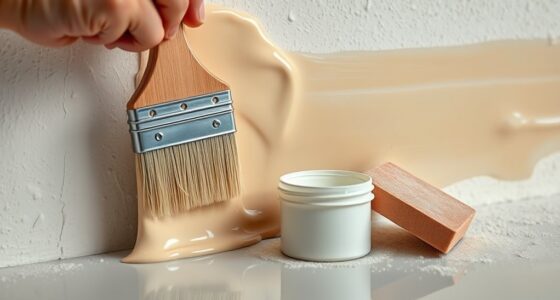
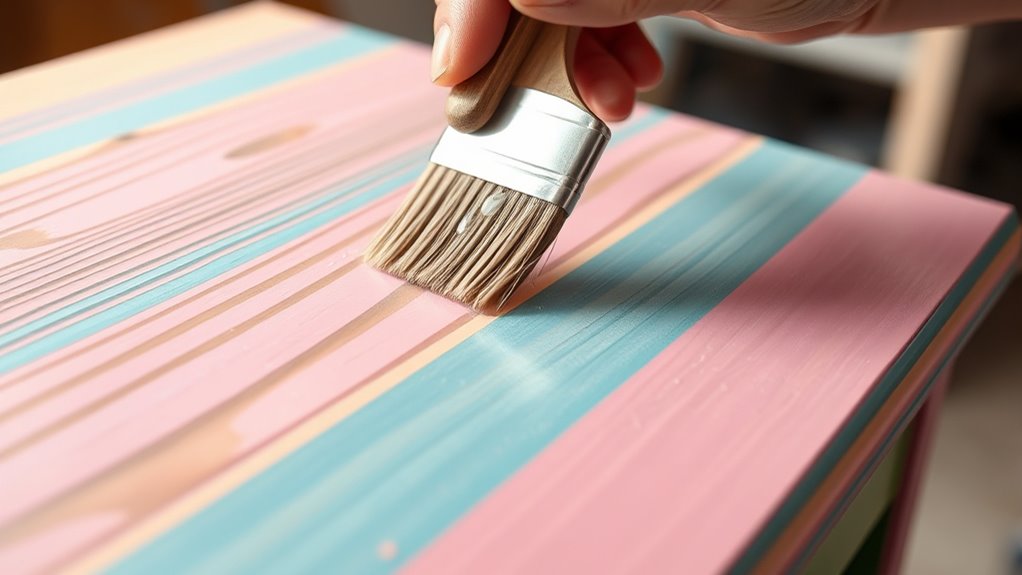
Have you ever wondered how to guarantee your painted furniture looks polished and lasts for years? The secret lies in choosing the right protective topcoat and applying it correctly. A good topcoat not only enhances the appearance but also defends your furniture against scratches, moisture, and everyday wear. When it comes to applying this final layer, your brush techniques can make all the difference. Using smooth, even strokes ensures a flawless finish that highlights your craftsmanship. Start by selecting a high-quality brush suited to your topcoat; natural bristles work well for oil-based finishes, while synthetic brushes are ideal for water-based products. Before applying, lightly dip your brush and remove excess paint to prevent drips and uneven coverage. Work in long, steady strokes, maintaining a wet edge to avoid lap marks. Overlapping each stroke slightly helps achieve a uniform coat, and don’t rush—patience pays off in a smooth, professional-looking finish. Proper brush techniques not only improve the aesthetic but also contribute to the topcoat’s overall finish durability. A well-applied layer adheres better, resists chipping, and maintains its sheen longer, extending the life of your painted furniture.
Choosing the right topcoat is equally critical. Clear polyurethane, polycrylic, or varnish options each have their advantages, depending on the furniture’s use and your desired look. For high-traffic pieces like tables or chairs, opt for a durable polyurethane with excellent finish durability. For decorative pieces or items exposed to less wear, a lighter, water-based finish might suffice. No matter which you choose, make sure the surface beneath is clean, dry, and free of dust or grease. Sand lightly between coats if necessary, and always follow the manufacturer’s instructions for drying times and application methods.
Applying your topcoat in thin, even layers helps prevent drips and uneven texture, ensuring maximum protection. Multiple light coats are better than one thick layer, providing a more resilient finish and a smoother appearance. Once you’ve finished applying the topcoat, allow ample drying time before using or handling the furniture. This helps the finish cure properly, further boosting its durability. Remember, patience is key—rushing the process can compromise the finish, leading to imperfections or premature wear. With careful brush techniques and a quality topcoat, you can be confident that your painted furniture will maintain its beauty and integrity for years to come.
clear polyurethane topcoat for furniture
As an affiliate, we earn on qualifying purchases.
As an affiliate, we earn on qualifying purchases.
Frequently Asked Questions
How Long Should I Wait Before Applying a Topcoat?
You should wait at least 24 hours before applying a topcoat, but drying time can vary based on humidity and temperature. During the curing process, avoid touching or placing objects on the surface. Check that the paint feels dry and is no longer tacky. Rushing this step can ruin your finish, so patience guarantees a smooth, durable protective layer. Always follow the manufacturer’s recommendations for the best results.
Can I Apply Multiple Coats of Protective Finish?
Did you know that applying multiple coats of protective finish can increase durability by up to 50%? Yes, you can definitely add several layers. Just guarantee each layer has the right thickness—about 2-3 mils—and that you properly prep the surface between coats. This approach strengthens the finish and prevents peeling, giving your painted furniture a long-lasting, professional look.
What Environmental Conditions Affect Topcoat Drying Time?
Environmental conditions like humidity impact your topcoat’s drying time, making it take longer in high humidity because moisture slows evaporation. Temperature considerations also matter; if it’s too cold, the topcoat dries slowly, while excessive heat speeds up drying but can cause uneven finishes or cracking. To guarantee proper curing, aim for a stable, moderate environment with low humidity and a consistent temperature between 65-75°F.
Are There Eco-Friendly Topcoat Options Available?
Yes, you can choose eco-friendly finishes and natural topcoats to protect your painted furniture. These environmentally conscious options are designed to be safer for you and the planet, offering durability without harmful fumes. Look for products labeled as low-VOC or zero-VOC, and select natural topcoats like beeswax or plant-based oils. By choosing these eco-friendly finishes, you guarantee your furniture stays beautiful and sustainable, all while reducing your environmental impact.
How Do I Fix a Mistake if I Spill Topcoat?
If you spill topcoat, act quickly to fix it. Use a clean brush for brush correction, gently feathering out the spill edges. For sanding mistakes, lightly sand the affected area once the topcoat dries, then reapply a thin layer. Be patient and precise, avoiding new smudges. This approach helps maintain a smooth, professional finish without damaging your painted furniture.
Conclusion
Now that you know the importance of finishing your painted furniture with a protective topcoat, imagine the stunning piece you’ll create—but wait, there’s more to discover. Will your chosen finish stand the test of time or reveal unexpected surprises? The secret lies in the details, and your next decision could make all the difference. Keep experimenting, stay curious, and your furniture will not only look beautiful but remain protected for years to come. The final reveal awaits—are you ready?
Fall yard work Picks
leaf blowers
As an affiliate, we earn on qualifying purchases.