You can transfer measurements without a ruler by using your hands or common household objects as references. For example, your thumb span is about an inch, and the distance from your fingertip to the base of your thumb is roughly three inches. Coins like quarters are about an inch wide, and paper clips measure about an inch each. By lining up or stacking these objects, you can estimate longer distances. Keep exploring to discover more useful tips and tricks.

Get business pricing on tools and workshop supplies
- Business-only prices and quantity discounts
- Tax-exempt purchasing
- Multiple users, one account, clear invoices
Key Takeaways
- Use your thumb or fingertips to estimate lengths, as thumb spans are roughly 1 inch and fingertips about 3 inches.
- Line up common objects like coins or paper clips to compare and transfer measurements across surfaces.
- Mark measurements lightly with pencil or tape based on familiar objects, then transfer those marks to your work area.
- Practice estimating with your hand or objects regularly to improve accuracy and consistency without tools.
- Combine visual references with known object sizes to approximate measurements when a ruler isn’t available.
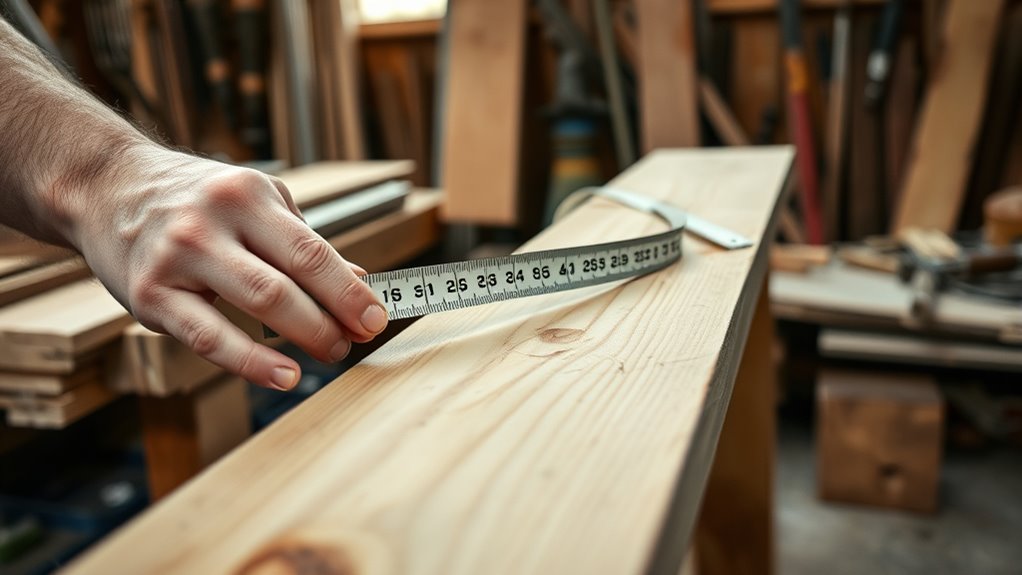
When you don’t have a ruler on hand, measuring objects might seem tricky, but there are simple ways to transfer measurements accurately. One effective method involves measuring with your hands, a skill that’s surprisingly precise once you get the hang of it. Your hands are a natural measuring tool because they’re consistent in size and easily accessible. For example, the width of your thumb—called a thumb span—is roughly an inch. By using your thumb to gauge lengths, you can quickly compare small objects or distances. Similarly, the length from your fingertip to the base of your thumb is approximately three inches, which can be handy for estimating larger measurements. Incorporating common objects like coins and paper clips can further improve your measurement accuracy, especially since these items have standardized sizes. Using everyday objects for measurement is another practical approach. Common items like coins, paper clips, or even your phone can serve as reference points. For instance, a standard paperclip is about an inch long, so lining up several paperclips can help you measure longer objects. Coins are also useful; a quarter, roughly 1 inch in diameter, provides a quick reference for small measurements. When you need to measure something longer, you can stack or line up these objects along the length you’re estimating. This method becomes especially handy in situations like DIY projects or when you’re shopping and want to compare sizes without a ruler. To improve accuracy, it helps to memorize or familiarize yourself with the approximate sizes of these everyday objects. Practice makes perfect, so take a moment to compare these objects against a standard ruler when you do have one available. Once you know their lengths, you can quickly transfer that knowledge to your measurements without needing an actual ruler. Using automation technologies like robotics is also transforming how industries approach measurement and manufacturing, making processes more efficient. When measuring with hands or using everyday objects, it’s best to keep your references consistent—use the same hand or objects each time to maintain accuracy. Another tip is to mark your measurements lightly with a pencil or a piece of tape when possible, especially if you’re working on a project that requires multiple measurements. This way, you can transfer the measurement to your work surface without repeatedly estimating. Remember, while these methods might not replace precision tools, they’re highly effective in everyday situations where exact measurements aren’t critical. With some practice, measuring with hands and using everyday objects becomes second nature, saving you time and tools while still delivering reliable results.
As an affiliate, we earn on qualifying purchases.
Frequently Asked Questions
Can I Transfer Measurements Accurately Without Any Tools?
Yes, you can transfer measurements accurately without tools by using crafting analog measurements and DIY measurement techniques. For example, you can compare objects of known size, like a piece of paper or your hand, to estimate lengths. Marking with a pencil or thread helps transfer these measurements precisely. With patience and practice, these methods become reliable alternatives for measuring when tools aren’t available, ensuring your project stays on point.
What Household Items Can Be Used as Makeshift Rulers?
Did you know a standard credit card is about 3.37 inches long? You can use household tools like a standard credit card, a piece of paper, or a dollar bill for makeshift measuring. These items provide consistent measurements for homemade measuring tasks. Just place the object alongside what you’re measuring, and you’ll get a fairly accurate estimate using household tools effectively.
How Do I Ensure Precision When Transferring Measurements Manually?
To guarantee precision when transferring measurements manually, you should focus on calibration techniques and measurement consistency. First, calibrate your makeshift ruler against a known standard, like a printed scale or a verified object. Then, mark your measurements carefully and double-check each transfer. Keep your measuring tools steady, record measurements consistently, and compare multiple readings to minimize errors, ensuring accurate results in your project.
Are There Digital Methods to Transfer Measurements Without a Ruler?
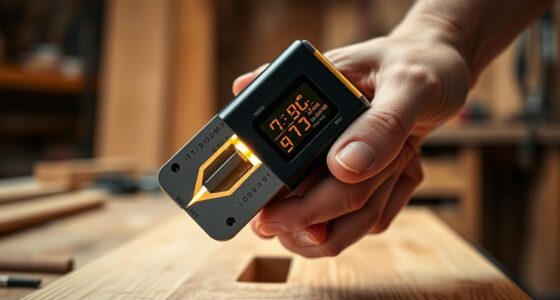
Imagine opening a secret passage to precise measurements—yes, digital calipers and smartphone apps can do just that. Digital calipers provide accurate, easy-to-read measurements, while smartphone apps allow you to measure objects using your device’s camera or sensors. These tools eliminate guesswork, giving you reliable results without traditional rulers. Embrace these digital methods to transfer measurements smoothly, ensuring your work remains precise and hassle-free.
What Are Common Mistakes to Avoid During Measurement Transfer?
When transferring measurements, avoid calibration errors by double-checking your tools before starting. Be cautious of inconsistent markings, which can lead to inaccuracies. Don’t rush the process; take your time to guarantee each mark is precise. Always verify measurements after transferring to catch mistakes early. By paying attention to calibration and markings, you minimize errors and improve the overall accuracy of your measurement transfer.
Conclusion
Now that you know how to transfer measurements without a ruler, you’re all set to tackle projects with confidence. Remember, sometimes you have to think outside the box to get the job done. With a little ingenuity and a steady hand, you won’t be caught empty-handed when precision is needed. Keep practicing these techniques, and soon you’ll be able to measure on the fly—showing that you’re never at a loss when it comes to getting things just right.
Fall Picks
fall essentials
As an affiliate, we earn on qualifying purchases.